The home of architecture and design in the Asia-Pacific
Get the latest design news direct to your inbox!

Get the latest design news direct to your inbox!
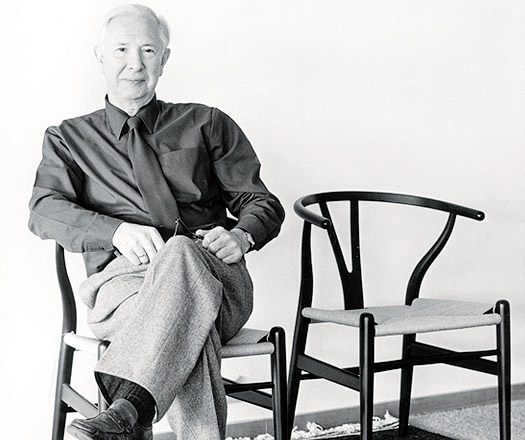
No one really knows how many chairs Danish designer Hans J. Wegner really made. Indesignlive meets with his furniture producer to find out more.
March 9th, 2009
“Some people say Wegner has produced more than 1,000 pieces of furniture, but nobody really knows,” says William Boesen, president of Carl Hansen & Son (CH&S).
CH&S have been reproducing Wegner’s furniture since the mid-1900s and even now, two years after Wegner’s death, new prototypes and one-offs are being discovered in the basements and attics of family members and friends.
“[Wegner’s] family have the rights to all his drawings and designs, and occasionally, by coincidence, in an old drawer or somewhere, they find a new chair,” says Boesen. In other cases people contact the family with photos of a chair Wegner made for them decades ago.
The newly-released ‘Elbow’ chair, which brings Boesen out to Australia on this particular occasion, experienced similar coincidental beginnings.
While visiting Wegner’s daughter, the third-generational owner of CH&S stumbled across a chair in her basement. As the story goes, Wegner gave the chair to his daughter as a childhood birthday present.
“It took us over a year to make the prototype, it was really difficult to make; we eventually found drawings, but the carving and craftsmanship was really tough,” says Boesen.
He says Wegner was ahead of his time, skills-wise, because many of his chairs were too difficult to make at the time of design.
“He often made things with his hands and then put them on paper. He didn’t necessarily have a plan, and factories did not possess the manufacturing skills to do it.”
Even today, CH&S employ highly skilled craftspeople to apply their unique wood bending and weaving abilities to Wegner’s decade-defying chairs. Despite all the advances in technology, it would seem a pair of skilled hands are irreplaceable.
“Wegner is special because he was a carpenter first and then become an architect, and that meant he had the balance between practical and theoretical.”
The ‘Elbow’ chair, produced by Carl Hanson & Sons, is available through Corporate Culture, alongside many of Wegner’s other designs.
Corporate Culture
info@corporateculture.com.au
corporateculture.com.au
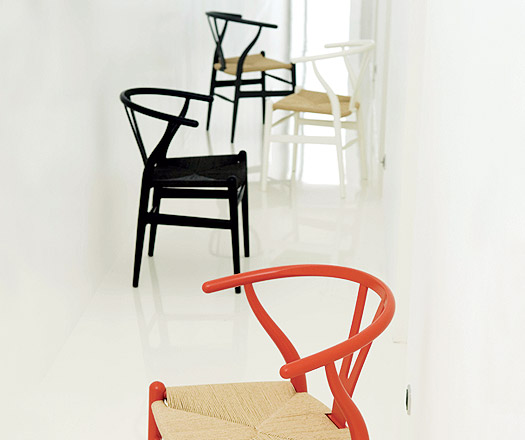
’CH24’ chair
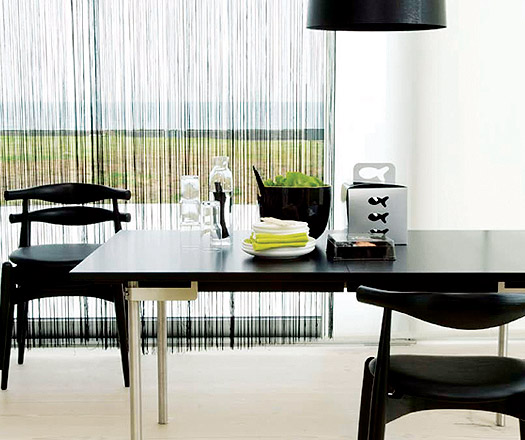
’CH20’ chair
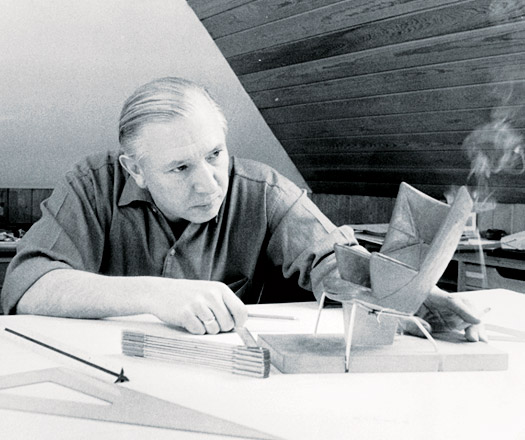
Hans J. Wegner
INDESIGN is on instagram
Follow @indesignlive
A searchable and comprehensive guide for specifying leading products and their suppliers
Keep up to date with the latest and greatest from our industry BFF's!
The internet never sleeps! Here's the stuff you might have missed