The home of architecture and design in the Asia-Pacific
Get the latest design news direct to your inbox!

Get the latest design news direct to your inbox!
Our New Zealand correspondent Sam Eichblatt meets an award-winning designer dividing his time between Auckland and New York.
August 12th, 2010
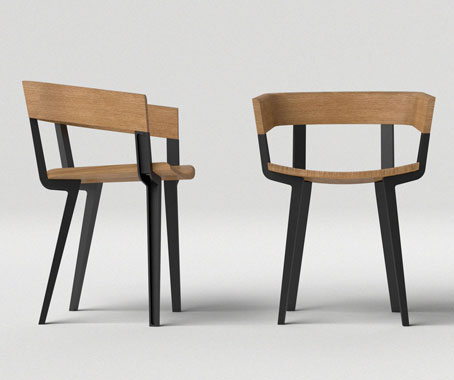
The simplest way to understand Jamie McLellan’s work is to see him as a creator of three-dimensional objects with a deceptively uncomplicated blend of form and function.
The designer recently took the HOME New Zealand Designer of the Year title for the second time running, for his spare, utilitarian ‘Flyover’ table.
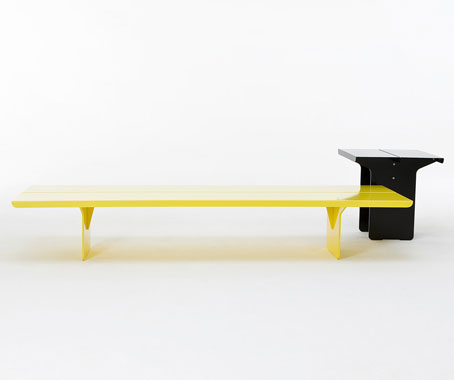
Originally commissioned for the New Zealand Room at the 2009 Venice Biennale, the Flyover was constructed using steel and flatpacks down for shipping.
The quirky colour is a standardised powder coating, which adds to its utilitarian appeal.
“I use the structure of an object as the beautiful part in itself. Rather than add something beautiful, I find the beauty within the engineering of the object,” says McLellan.

The Twig coat stand, which snagged him the 2009 prize, was also driven by pure geometry, he says. “It utilises that clichéd idea of branches tapering down in size because that’s the simplest way to hang six items of clothing.”
Both the Flyover and Twig are now in production by regular collaborators of McLellan’s, designer-manufacturer Fletcher Systems (Twig) and Simon James’ ‘Resident’ brand (Flyover).
Having worked in a variety of world centres including Milan, Hong Kong and London, as a senior designer with Tom Dixon, McLellan now commutes between New York and Auckland.
Working with the famous autodidact Dixon has clearly had a huge effect on him.
“It made me more savvy. These days I’m only satisfied doing things that interest me – but that’s not a bad way to be.”
While he works mostly as a furniture designer in New Zealand, the designer’s fascination with structural beauty and engineering places him in a broader design context, reflected in an exhibition of his pieces at Auckland gallery Objectspace last year, and his work for international clients, which includes bicycle projects with Avanti
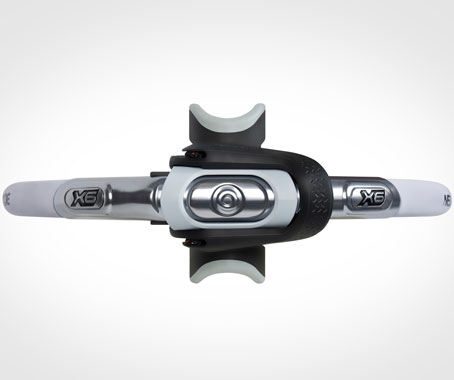
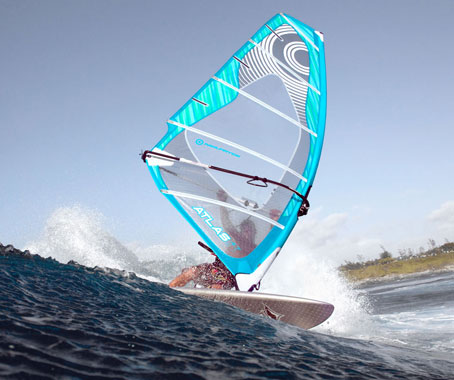
and windsurfing design for the American company Neil Pryde.
Jamie McLellan
jamiemclellan.com
INDESIGN is on instagram
Follow @indesignlive
A searchable and comprehensive guide for specifying leading products and their suppliers
Keep up to date with the latest and greatest from our industry BFF's!
The internet never sleeps! Here's the stuff you might have missed




![Ode to the industrial [style] revolution](https://cdn.indesignlive.com/wp-content/uploads/Casing-Boutique_Adele-Mcnab_03-270x180.jpg "Ode to the industrial [style] revolution")