Let’s do a quick thought experiment. Imagine a sparse, cavernous showroom or gallery. What sounds or music can you hear, if any? Compare that to a buzzing local café, filled to the brim with voices and background music. Would you change your behaviour in each accordingly? Where does the design stop and the culture of the space begin?

For Chris James, fresh blood on the hospitality design scene and founder of Chris James Studio, music is not yet on the radar of designers. And it should be.
Not only is James an accomplished and rising talent in design by day, but by night he moonlights across Melbourne playing soulful, crowd-pleasing tunes.
Through this experience, he has seen first-hand just how much music can change and influence the ambience of a space. It can also create a raw and astounding change in people’s behaviour; this notion being something that many designers cite as their design intent. But eliciting an emotional or behavioural response through design can only be achieved through the engagement of all five senses, and all too often designers only focus on the visual and tactile qualities, with scent coming in as close third.

Above Board is a 14-seat bar in Collingwood.
Where does that leave sound and how exactly does it manifest in James’ work? “I think of [music] as being the design that goes beyond the table,” he says, offering sound design as a service. For example, an on-brand curated playlist that complements the way the food service ramps up throughout the night.
.
“I think of [music] as being the design that goes beyond the table.” – Chris James, founder Chris James Studio
.
“I love Balearic beats. It’s eclectic and fuses different styles together, which some people don’t like. But creating a response in someone, even if it’s only momentary, is what I set out to do. Music can do it in such a visceral way,” shares James.

In addition to the musical input, James pays careful attention to the material selection on his projects. Excessive noise is an all too common complaint in many modern restaurants draped in marble, concrete and stainless steel. By using the right combination of finishes, the surrounding din and chatter can either be amped up or brought back down to maintain just the right aural equilibrium.
Other points of inspiration
It’s not just music that serves as a point of departure for James. An outstanding project worth mentioning is Above Board. A minuscule 14-seat cocktail bar, Above Board is all about offering the end user a personal touch and a place to truly indulge – or escape the humdrum of everyday life. Despite its petite size, James’ design brings an acute attention to detail. Cork lines the face of the bar, while those sitting in the banquette seats can pull out a stealth cork-lined draw – the perfect spot to put down a drink while kicking back.

“I kept thinking about the end user. Maybe they’ve had a really average day. I wanted them to come into the space and have it be the highlight of their day. It’s a place to relax and just be taken care of, both from the hospitality and the thought that has gone into the design,” explains James, adding, “I feel like people have become numb to the world around them, and good design has the ability to impress and surprise.”
James is a deep thinker. He reads into the mechanics of social psychology and notes this as another point of inspiration in his work.
.
“I feel like people have become numb to the world around them, and good design has the ability to impress and surprise.” – Chris James, founder Chris James Studio
.
He also offers up several dichotomies that when deployed in a project can create the right kind of tension – order vs. chaos, expectations vs. reality. These oppositions can appear in a more physical sense (think the tried and true compression and release tactic) or are realised in more subtle ways, like how guests at Above Board can sit behind the bartender, thus having an unexpected voyeuristic experience.
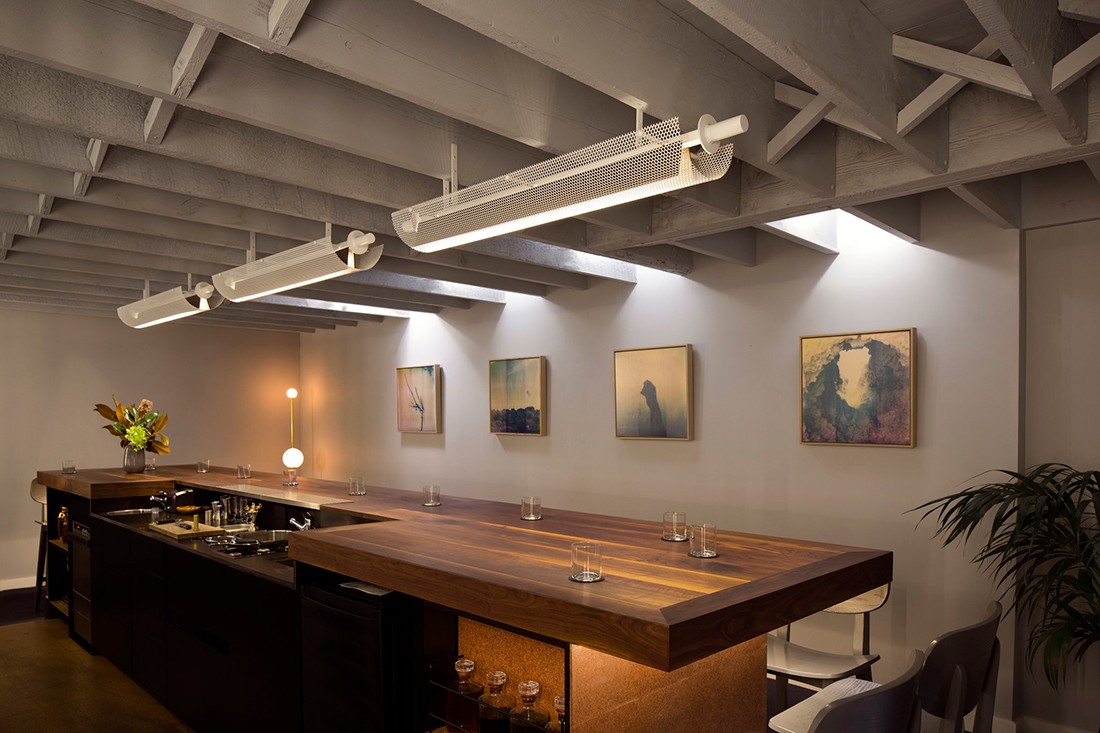
View from behind the bar at Above Board.
James is setting a new course for the next generation of Australian designers, one that eschews the gimmicky and explores new ways of thinking. One thing is for certain though, Chris James Studio is one to keep firmly bookmarked to watch.
All photography by James Morgan.
Chris James was featured as a Design Entrepreneur in issue #74 of Indesign Magazine, this is an extended interview for Indesignlive.com.
–
Discover the fresh design faces before the rest. Sign up for our newsletter.