The home of architecture and design in the Asia-Pacific
Get the latest design news direct to your inbox!

Get the latest design news direct to your inbox!
Two years after winning the 2017 Prodigy People’s Choice Award, 2019 INDE Awards Ambassador and co-founder of ACME & Co Vince Alafaci discusses the business of commercial design.

Flowerchild

Flowerchild

Flowerchild

The Grounds of the City

The Grounds of the City

Charlie Parker's

Charlie Parker's

Charlie Parker's

Archie Rose
If you’ve hit Sydney’s food and drink scene within the past few years, chances are you’ve stepped into a space designed by ACME & Co. From bars to brunch spots, architect Vince Alafaci and interior designer Caroline Choker, the duo behind the six-year-old studio, have imbued Sydney’s hospitality sector with a much-needed dose of cool.

The Grounds of the City
“Our focus is within the commercial and hospitality realm, with an intention to change the way patrons feel and engage within spaces,” Alafaci explains, “Fundamentally, curating their sensory experiences.” This intention underpins every ACME & Co project and is manifest in thoughtful design choices that surprise and delight. No two spaces are alike: whether you’re enjoying a sun-drenched brunch at The Grounds of Alexandria, basking in the fresh, dewy air at Flower Child, or slipping into a speakeasy daydream at Charlie Parkers, Alafaci and Choker’s evocative environments are rife with design details and idiosyncrasies that create a strong sense of place.
Flowerchild.
Carefully balanced – often muted – colour palettes, a restrained material selection, and a focus on craftsmanship are common threads throughout ACME & Co’s portfolio, though the team never resorts to a signature ‘look’. “For us it’s all about the psychology of a space and delivering a spatial personality that connects the patron to the client’s brand and offering,” Alafaci says, adding that the team visits each project after completion to observe how patrons and staff engage with the space.
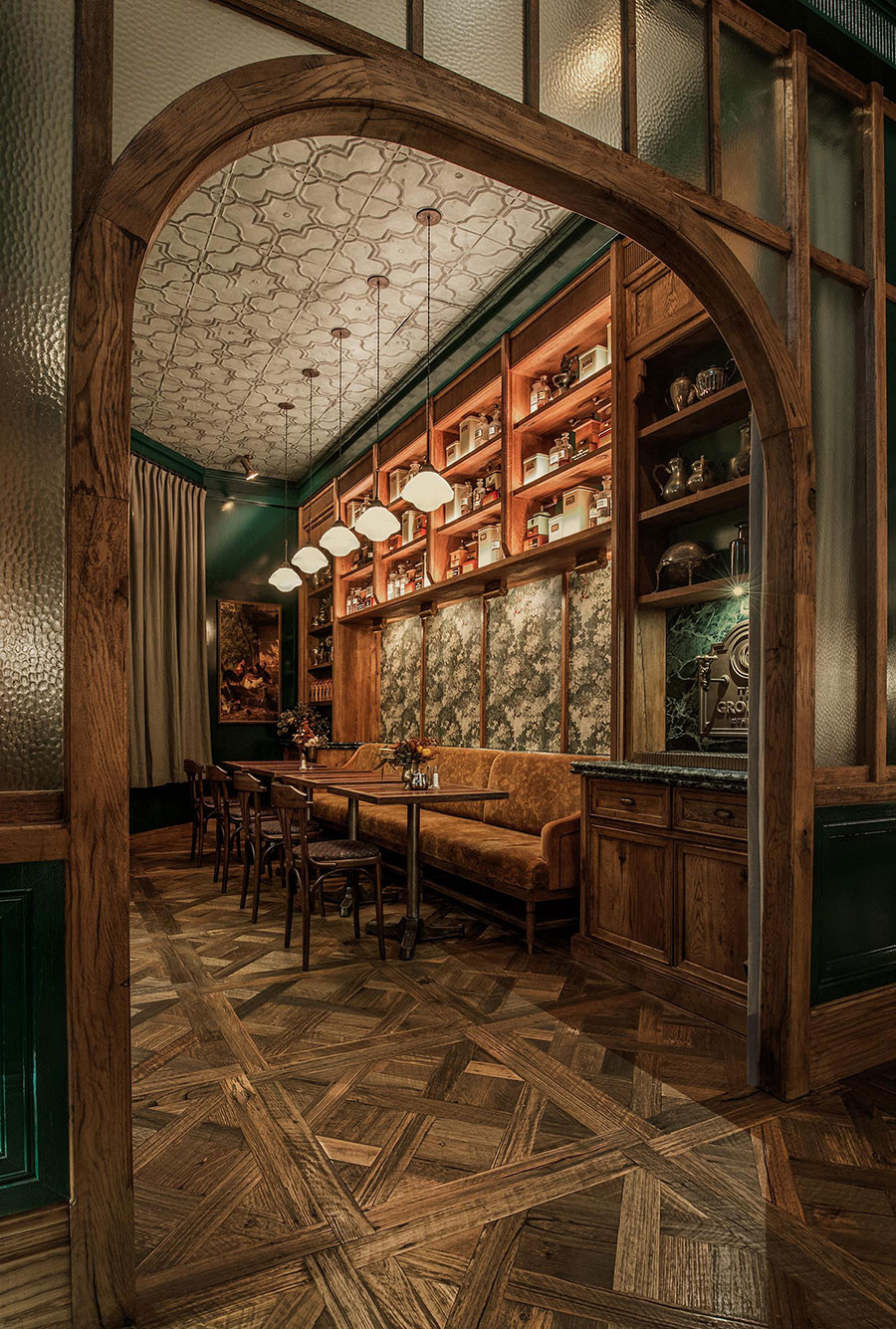
The Grounds of the City
This strong focus on creating connections and communicating brand intentions reflects both ACME & Co’s experience-driven design approach and their uncanny commercial acumen. “ACME is continually evolving and trying to push boundaries to create memorable spaces and places,” says Alafaci, “[Our intent is] to create holistic design solutions which seamlessly integrate with our client’s vision, commercial objectives, brand language, and – of course – the offering.”
Charlie Parker’s
The studio’s fluent translation of commercial objectives into immersive design sets them apart from their peers, enabling them to create engaging spaces that convey brand identities without sacrificing the user experience and design integrity. It’s also one of the characteristics that has won them numerous industry accolades, including The Prodigy People’s Choice trophy at the 2017 INDE Awards. Returning to the 2019 INDE Awards as an official ambassador, Alafaci describes the win as “a massive part of ACME’s journey” and reiterates the importance of the program within the Asia Pacific design industry. “It’s an acknowledgement of hard work and an opportunity to celebrate characteristics including authenticity, dedication, flexibility, passion, perseverance, experience, and knowledge,” he says.

Archie Rose
In the two years since the duo’s win, ACME & Co have lived up to the Prodigy moniker, raising the bar for Australian hospitality design and inspiring others to follow their lead. Asked what’s next, Alafaci is coy. “ACME is currently collaborating on some exciting projects with inspiring clients,” he says, “The results should be real game changers.” One thing’s certain: if the studio’s past work is any indication, whatever comes next is sure to push the boundaries of hospitality design even further – and we’ll raise a glass to that.
INDESIGN is on instagram
Follow @indesignlive
A searchable and comprehensive guide for specifying leading products and their suppliers
Keep up to date with the latest and greatest from our industry BFF's!
The internet never sleeps! Here's the stuff you might have missed