The home of architecture and design in the Asia-Pacific
Get the latest design news direct to your inbox!

Get the latest design news direct to your inbox!
Idea generation, creativity and mental stamina: this is the currency of the modern-day knowledge worker. What sort of environment is required for the people who innovate through ideation?


July 11th, 2019
Creativity is what keeps the ball rolling and money flowing in this fast-paced digital world. Engineers, academics, designers, programmers, marketing experts and strategists (amongst others) are valued for their ability to think and work with ideas rather than objects. Their chief capital is knowledge and the sectors they work in are heavily invested in research and development. This is because the knowledge worker has to stay ahead of the pack to keep making contributions that are valuable.
Indeed, progress is imperative and so is the role design plays in fostering creativity, idea generation and mental stamina. But there’s a condition. “Spaces need to engage the knowledge worker and companies must engender a sense of place that gives meaning and purpose to everyday work life,” says Bates Smart director Brenton Smith. “If the culture isn’t about learning and collaboration – the biggest drivers bringing knowledge workers together – no amount of design is going to make it happen.” The challenge for architects and designers is therefore how to attract and retain these workers.
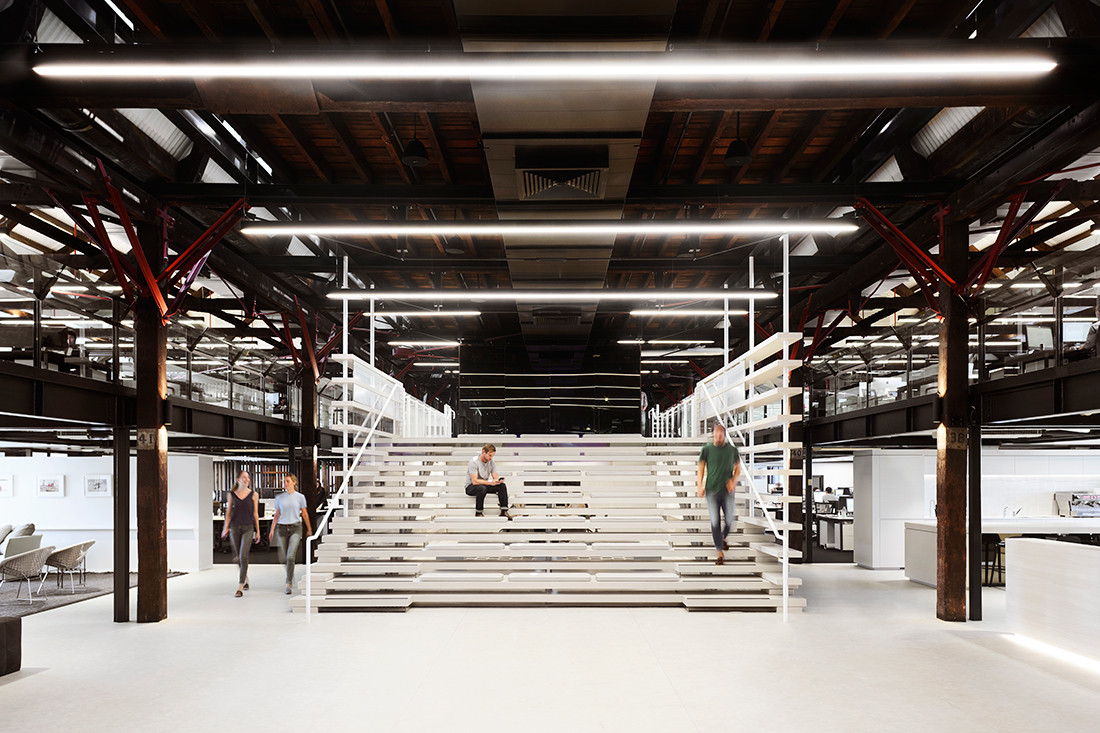
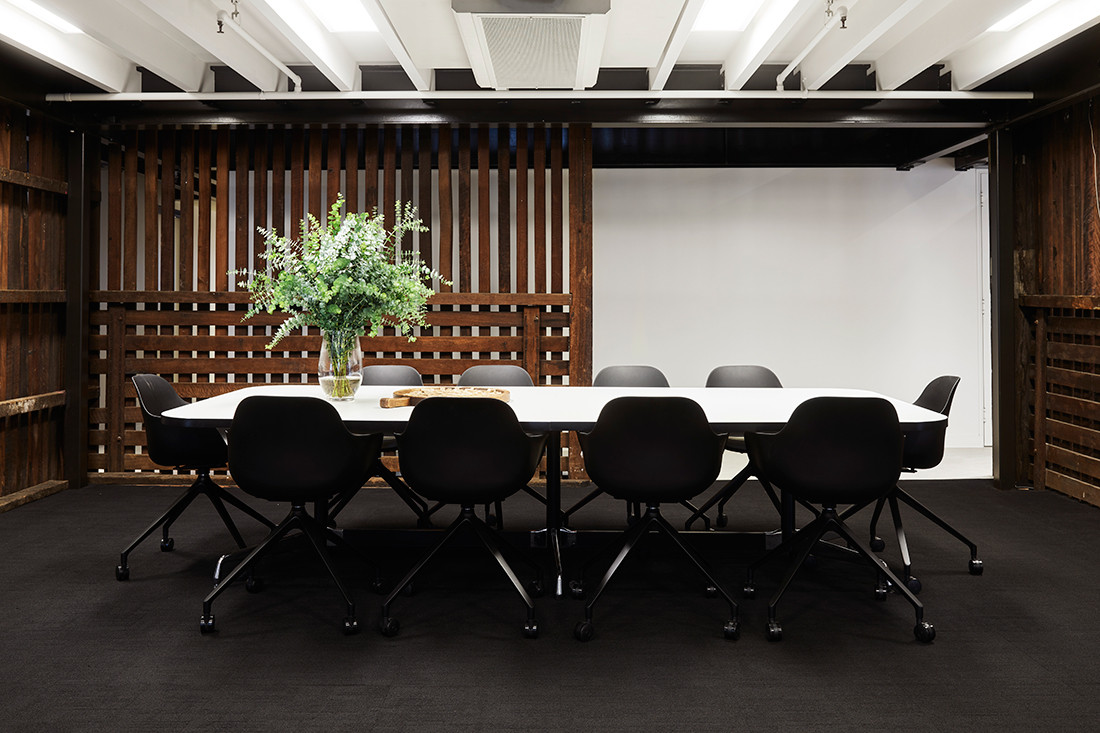
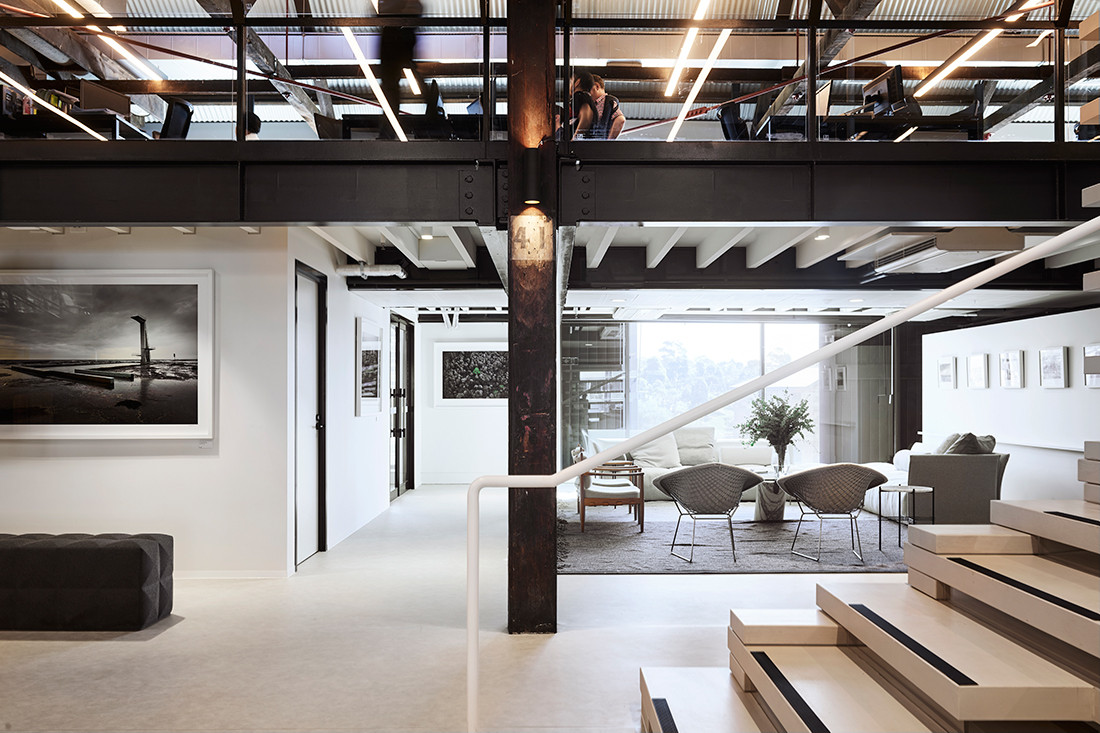
In designing the new Sydney ‘campus’ for Clemenger Group, one of the country’s largest end-to-end marketing and communications companies, Bates Smart made the most of the agency’s new three-level interior on the historic Pier 8/9 in Sydney’s Walsh Bay. The idea was to reflect the group’s creative work through flexible and fluid spaces, while also giving them the modern office environment they so desired. Bates Smart’s concept imagines a roll of butcher’s paper unravelled down the centre of the space and translates it as a series of white insertions that accommodate collaboration and knowledge-sharing zones.

Work stations are located at the perimeter and all settings contrast perfectly with the existing timber and black and red steel supports, clearly defining old from new. However, the fit-out’s most compelling feature is a bleacher. Positioned at the heart of the workplace, this landmark provides a centralised multi-functional point that’s very popular amongst staff.
As Smith explains, “The structure is a manifestation of the business – a place where this collective of knowledge workers can meet to teach, learn, problem-solve and generally make incredible stuff happen. And its presence at the workplace’s entrance speaks of an agency that’s all about creative collaboration.” There’s rigour and ingenuity in the design and while it purposely fosters creativity, it also provides a framework for incidental interactions and conversation. The large café likewise supports this, with a bookcase that symbolically embeds learning within a social context. Bates Smart’s fit-out undeniably reflects Clemenger Group’s dynamic, forward-thinking identity and this brand cohesion is important to all knowledge workplaces, regardless of sector.

In Adelaide, for example, start-up business and digital advisory consultancy Escient recently commissioned Snøhetta to design its head office, which will be used as a prototype for its other offices across Australia. “We wanted to design a ‘home’ that was distinct to the company and this led us to create a central place where everyone could come and go,” says Snøhetta interior designer Lisa Lee. “It’s not a typical nine-to-five workplace, so we had to design a space people want to come back to.”

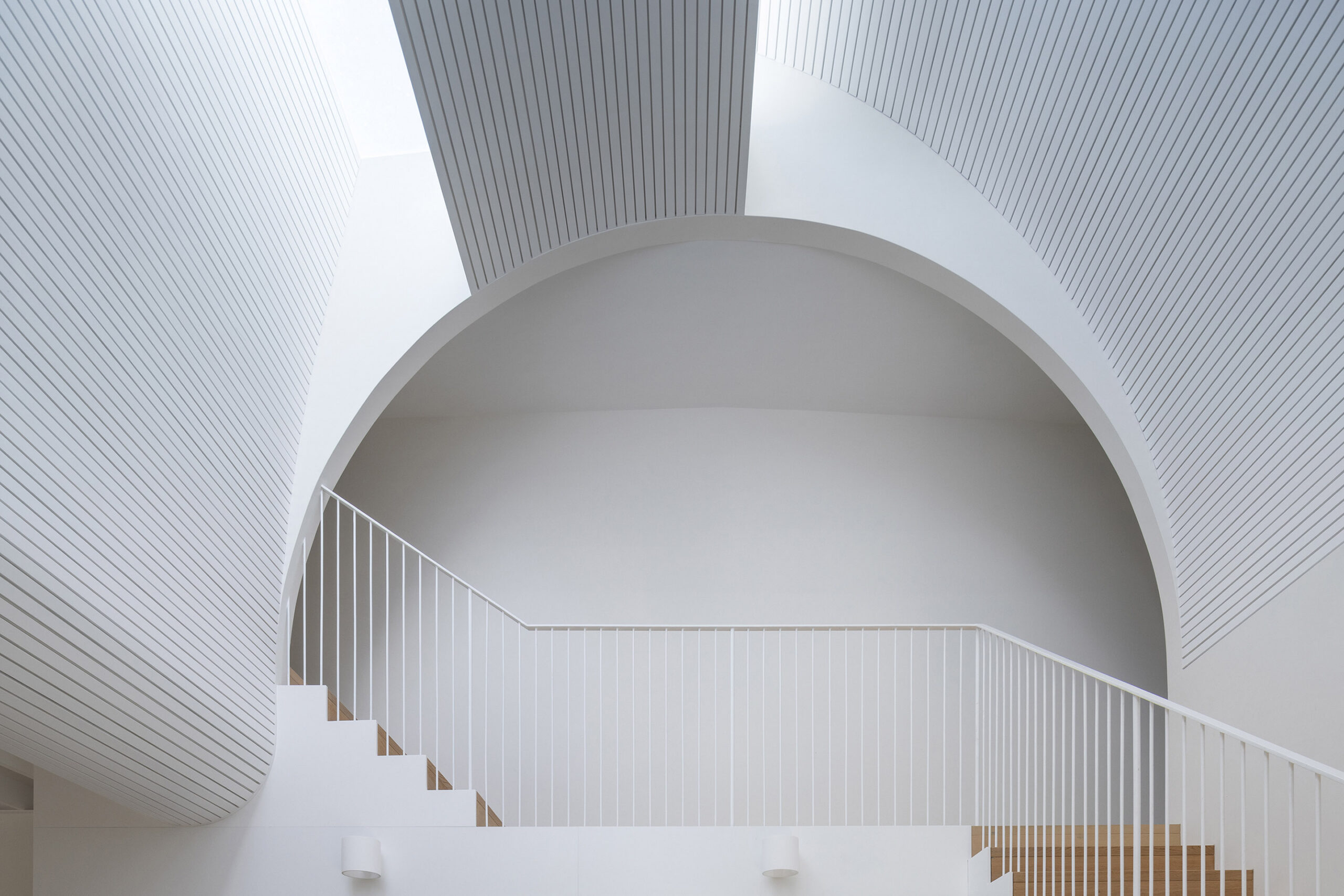
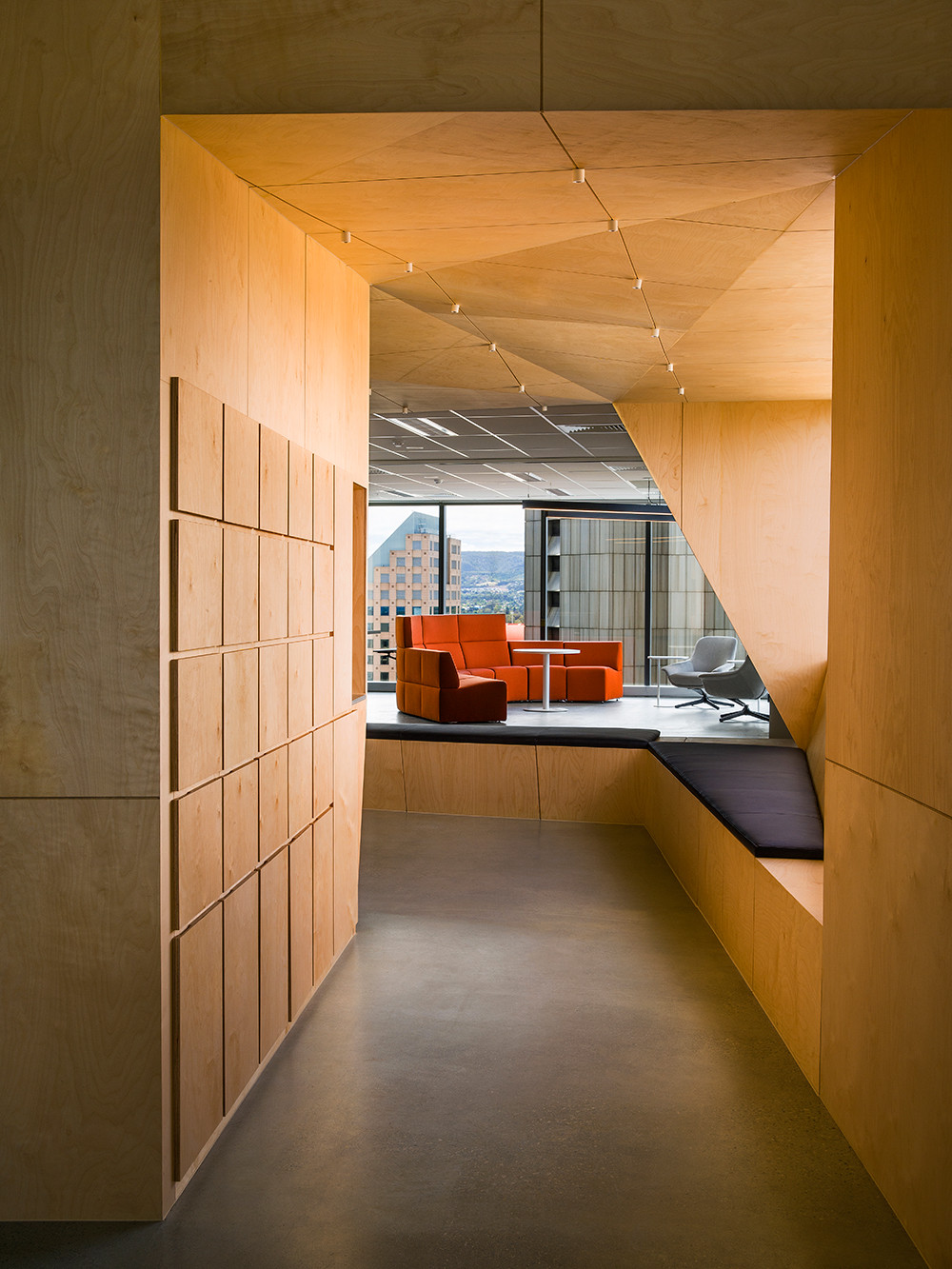
Like Clemenger Group’s bleacher, the pod greeting visitors at Escient’s office entrance is a compelling structure that visually draws people in. Its concept is based on the way in which a tree often denotes a meeting place, but Lee and the team have re-imagined it as a faceted cocoon-like form that serves multiple functions, from housing lockers to incorporating seating for meetings and quiet reflection.
To the east of the pod, a series of open informal spaces can be sectioned off for private meetings and to the west, work stations provide a formalised setting, while the kitchen boasts a generously sized dining table for meetings or casual conversation. This diversity of spaces not only meets the functional requirements of staff, it also provides them with much-needed flexibility.
“It’s about allowing them a certain level of autonomy so they can do what they do best and it’s also about facilitating collaboration,” explains Lee. “Knowledge workers want to learn and this particular non-hierarchical, technology-enabled design supports ongoing learning and growth, all in a space that is largely non-prescriptive.”
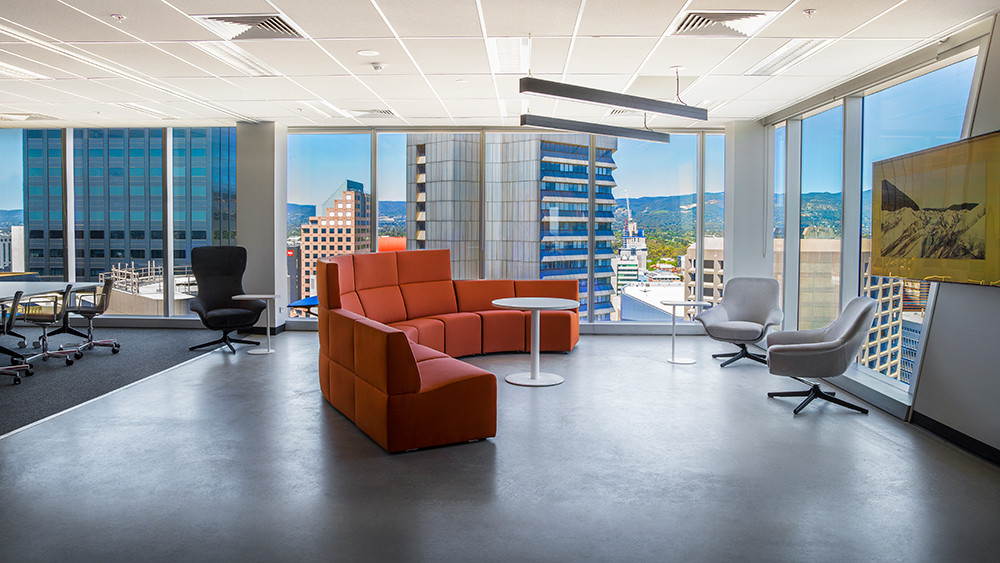
The view from Escient’s level 20 office in the heart of the CBD was not lost on the client or interior designer and full-height glazing on the east and west facades makes the most of this vantage point. Clear sight lines mean anyone can stand in the middle of the space and take in the panorama, from the Adelaide Hills to the ocean. It’s a striking perspective and one that also informed the scheme. The intention was to create a fit-out that inspires and that’s exactly what was delivered, proving design and a workplace culture completely in sync will always affect creativity.
This article originally appeared in issue #77 of Indesign magazine – the ‘Knowledge Economy’ issue.
INDESIGN is on instagram
Follow @indesignlive
A searchable and comprehensive guide for specifying leading products and their suppliers
Keep up to date with the latest and greatest from our industry BFF's!
The internet never sleeps! Here's the stuff you might have missed