The home of architecture and design in the Asia-Pacific
Get the latest design news direct to your inbox!

Get the latest design news direct to your inbox!
A pro-bono project with heart, Melbourne City Mission Frontyard Youth Refuge has been given a world-first design solution combining accommodation and support services for Melbourne’s most vulnerable.

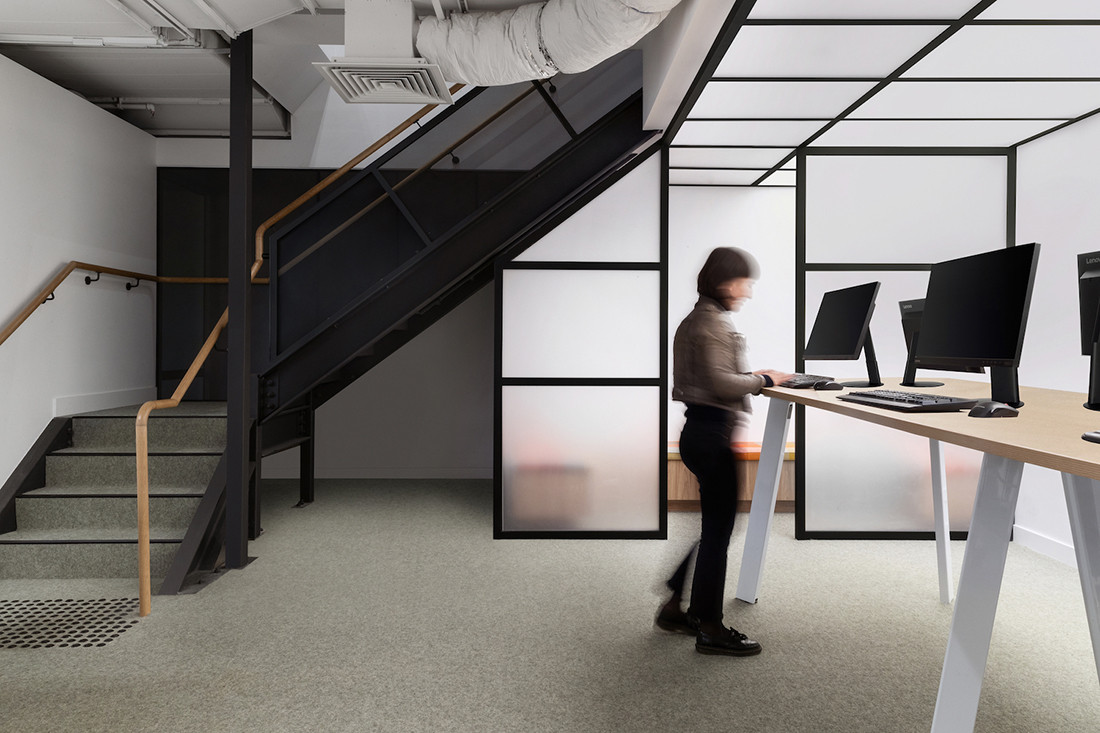
Homelessness in Melbourne, in particular, youth homelessness, is a troubling issue. Melbourne City Mission is an organisation trying to combat it and its newest offering has had the helping hand of design.
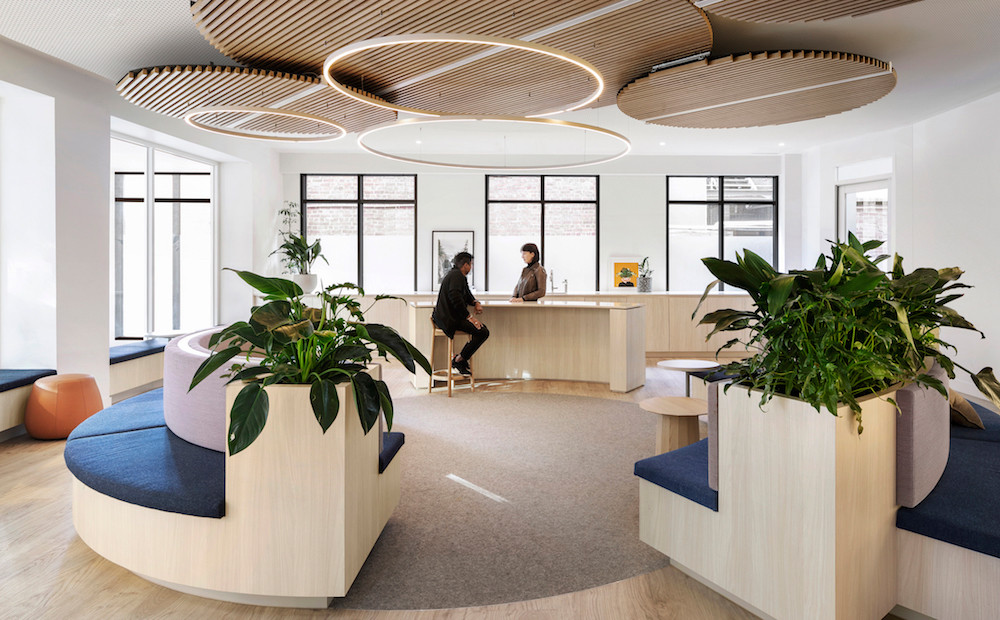
Located on King Street, Melbourne City Mission Frontyard Youth Refuge brings accommodation and 24-hour support services for people under 25, alongside the organisation’s own offices. The initiative is a large undertaking, but one that aims to alleviate a pressing issue.
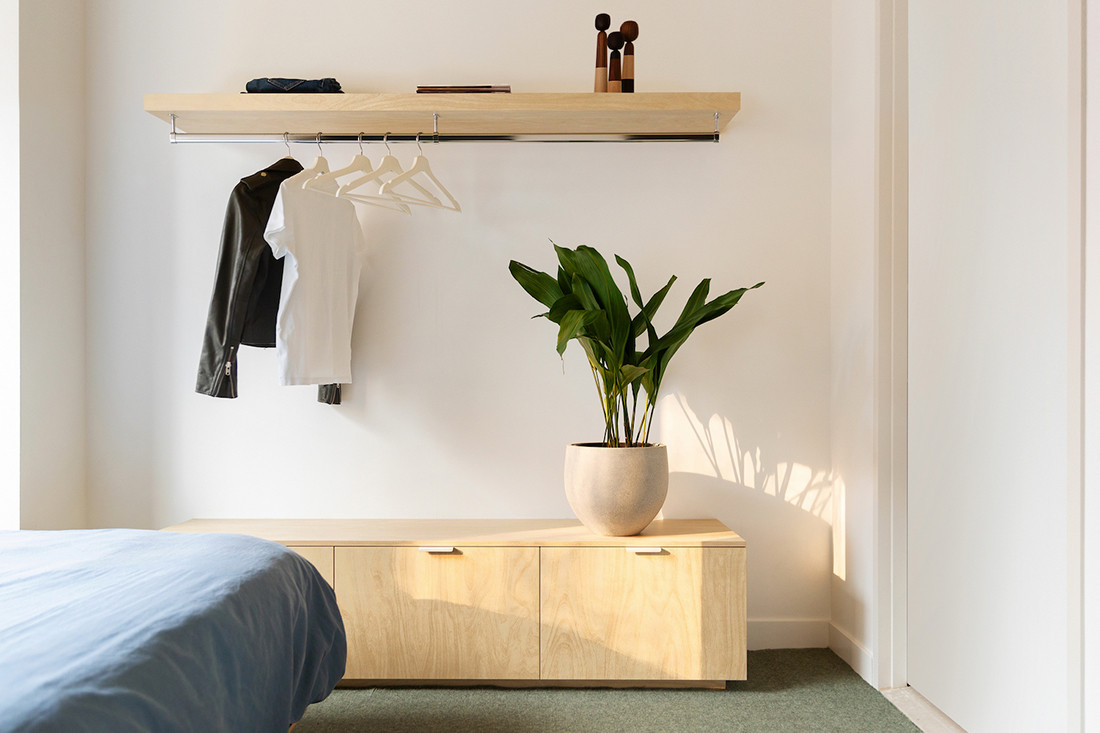
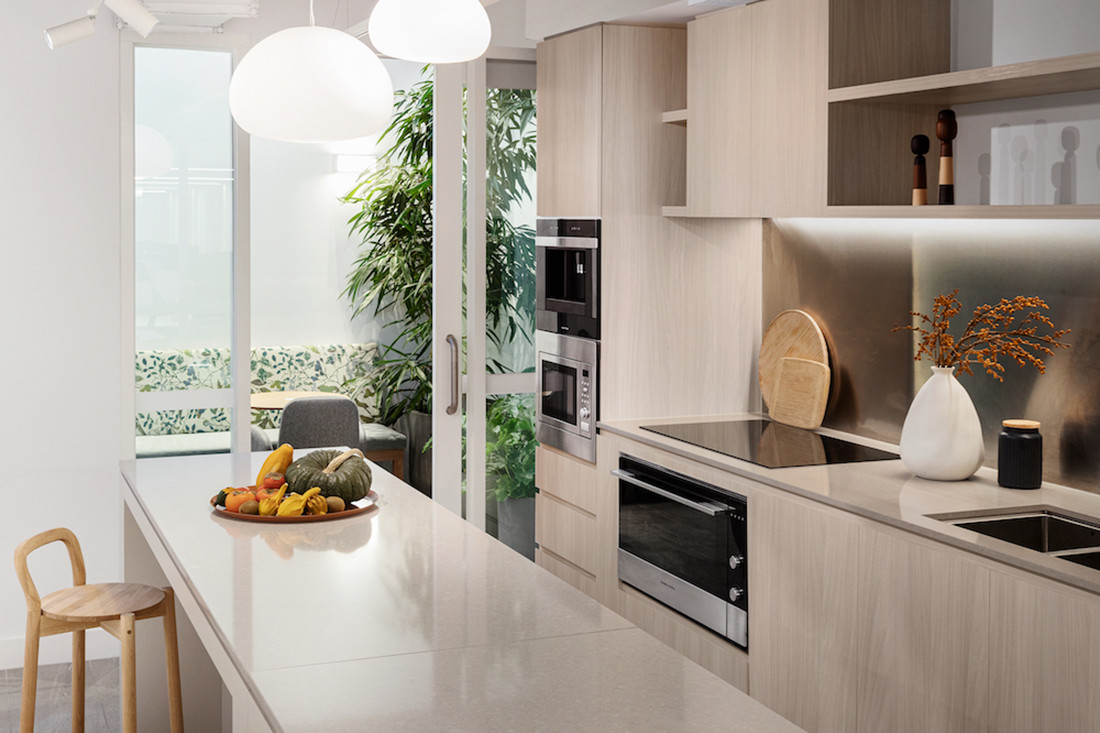
The new space is split into two key zones with the upper levels housing 18 bedrooms, and a mix of communal areas and kitchens. While the lower levels have the open plan office and a mix of spaces designed for privacy and confidential meetings.
Fender Katsalidis worked on the project as a pro-bono, with 15 members of the team pitching in to see it through to completion. “Our driving ambition was to improve the lives of disadvantaged young people through the design of both the accommodation facilities and the offices of Melbourne City Mission staff who play a vital role in helping those seeking assistance,” says project director David Sutherland on the motivation for getting involved, “It’s a special mixed-use project which needed an original design solution.”
Fender Katsalidis proposed to bring the office and its services together with the housing to create a unique mixed-use offering and take advantage of the real estate already available. “Our approach replaced two floors of Melbourne City Mission’s operations with accommodation and to ensure operations would not be minimised, we transformed the basement area. Within the confines of the existing building, we worked hard to optimise the use of every available square metre,” Sutherland adds.
Aesthetically, the project incorporates highly durable materials and finishes, all with a light and natural touch. The intention being to create a calming space for the users, but also bring a high level of practicality and longevity that the project requires.
“We approached the accommodation as if it was akin to a residential project for a large family,” says Fender Katsalidis associate director Wuff Keeble.
“Each person staying at the facility has their own bedroom with ensuite. It is an approach which respects the personal needs of the clients of Melbourne City Mission and is very different from a shared accommodation model,” she says.
For the office spaces on the lower levels, there was a need to have diverse working options, particularly for the private meeting zones where support services take place. These two requirements meant the designers had to create a balance of private and public, but it also extends to the need for oversight into the accommodation as well.
“We hope that what has been designed can not only act as a refuge for young people but also contribute in some way in helping them get back on their feet,” adds associate director Jessica Lee.
We think you’d like this extract from Fender Katsalidis’ monograph, written by Peter Wilson. Get regular design inspiration, join our mailing list.
INDESIGN is on instagram
Follow @indesignlive
A searchable and comprehensive guide for specifying leading products and their suppliers
Keep up to date with the latest and greatest from our industry BFF's!
The internet never sleeps! Here's the stuff you might have missed