A note from the editor:
Adaptive reuse is core to every sustainable city conversation right now, so it was no surprise that a recent panel discussion on the very topic, attracted a crowd that left standing-room only. Presented by Communications Collective as part of Melbourne Design Week, the panel collectively tackled the topic of Adaptive Reuse: Redefining the Melbourne Skyline Through Sustainable Design.
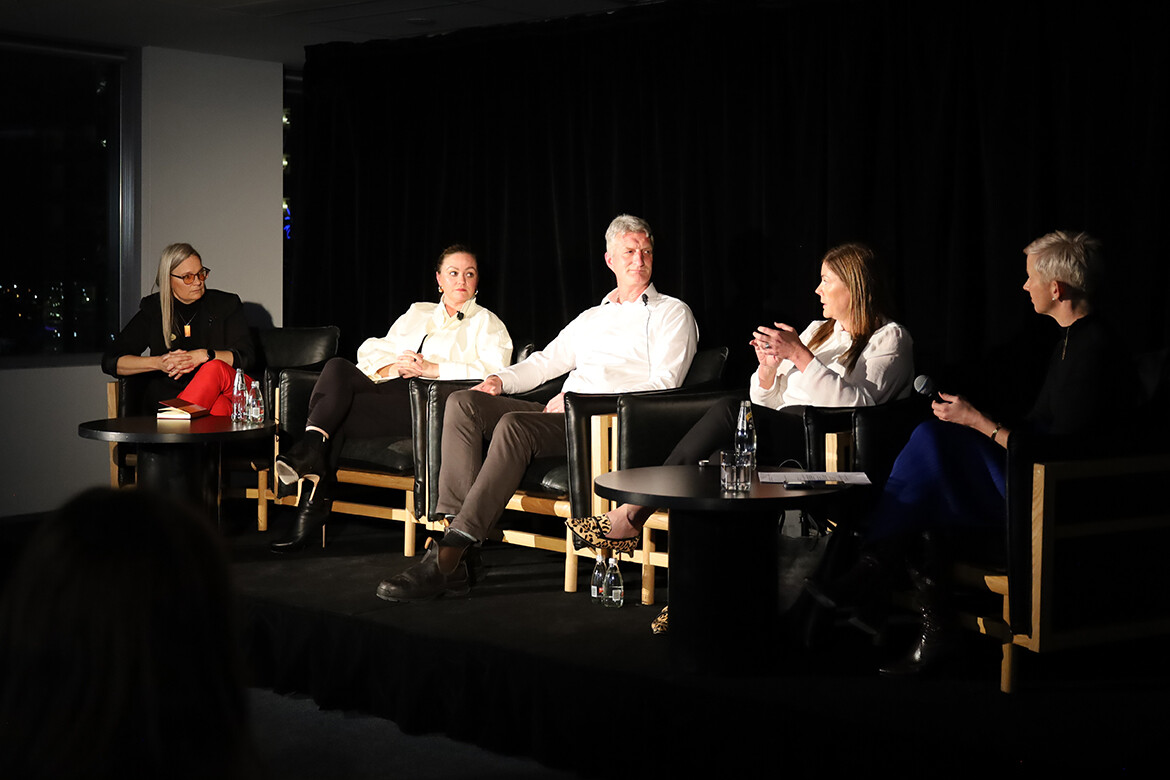
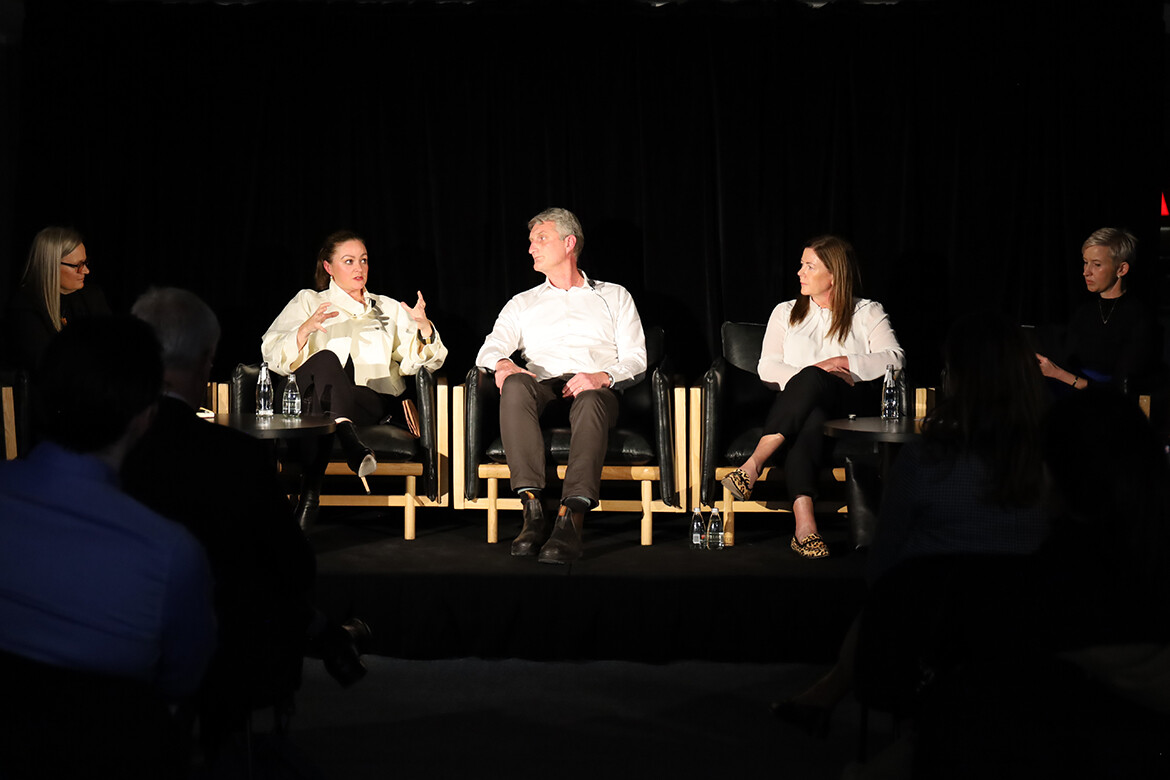
Panellists included (pictured above, left to right), Dr Dominique Hes of City of Melbourne, Nicky Drobis of Fender Katsalidis, Professor Brendon McNiven of University of Melbourne, Edwina Molony of Mirvac, and moderator Alice Blackwood of Indesign Media.
Off the back of this discussion, Fender Katsalidis partner, Nicky Drobis, proposes three ways Australian cities can increase adoption of adaptive reuse projects.
3 ways Australian cities can increase adoption of adaptive reuse projects, written by Nicky Drobis
Buildings, in their construction and daily operation, are responsible for up to 38 per cent of global carbon emissions. Addressing this challenge has been on the agenda for government, developers and designers as we collectively seek to incorporate more sustainable ways to build up and out within our cities.
By “re-lifing” our towers – rather than knocking them down and beginning again – there is an opportunity to deliver modern, comfortable and environmentally-friendly homes and offices without the waste and carbon emissions associated with a new build.
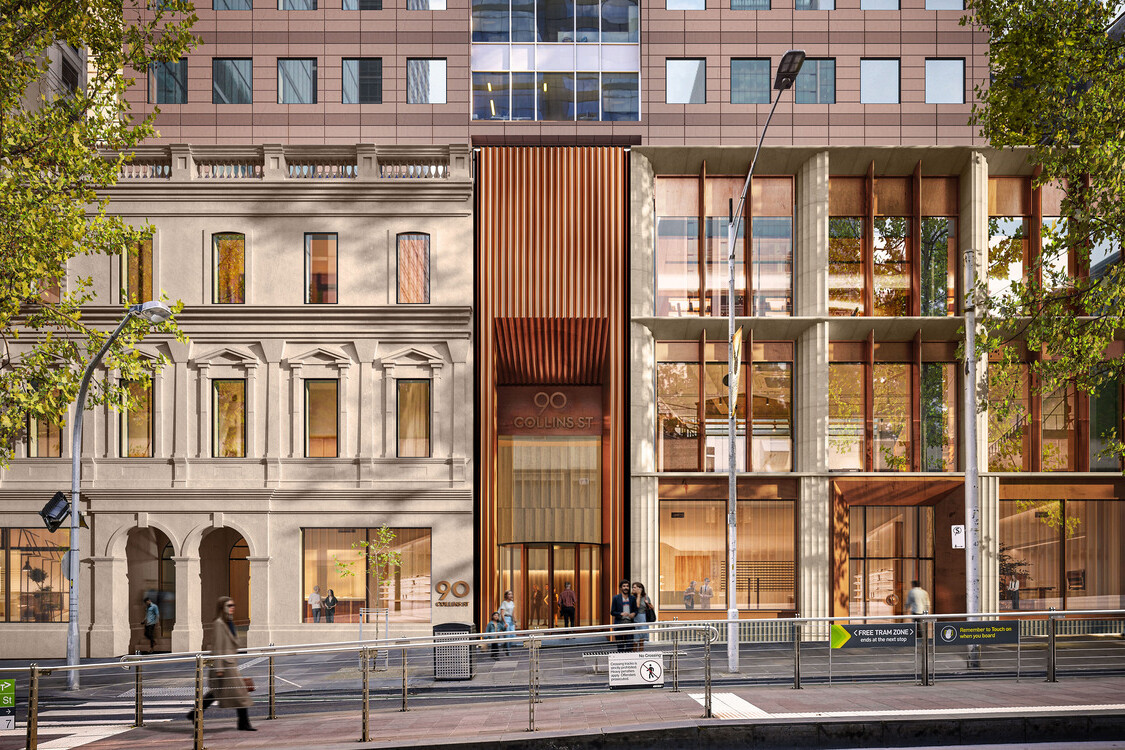
To date, the industry has been much faster to embrace the adaptive reuse approach for historically significant (and architecturally beautiful) buildings. However, this should further extend to re-lifing buildings that have simply reached the end of their lifespan.
Aesthetic grounds are not meaningful grounds for our cities. We need to think more deeply about what the best urban outcomes are, and inevitably, those outcomes are all irrevocably tied to the reduction of carbon emissions and the increased well-being of citizens and the environment.
Here, I outline three ways to encourage the adaptive reuse of our cities’ ageing assets.

Government policy
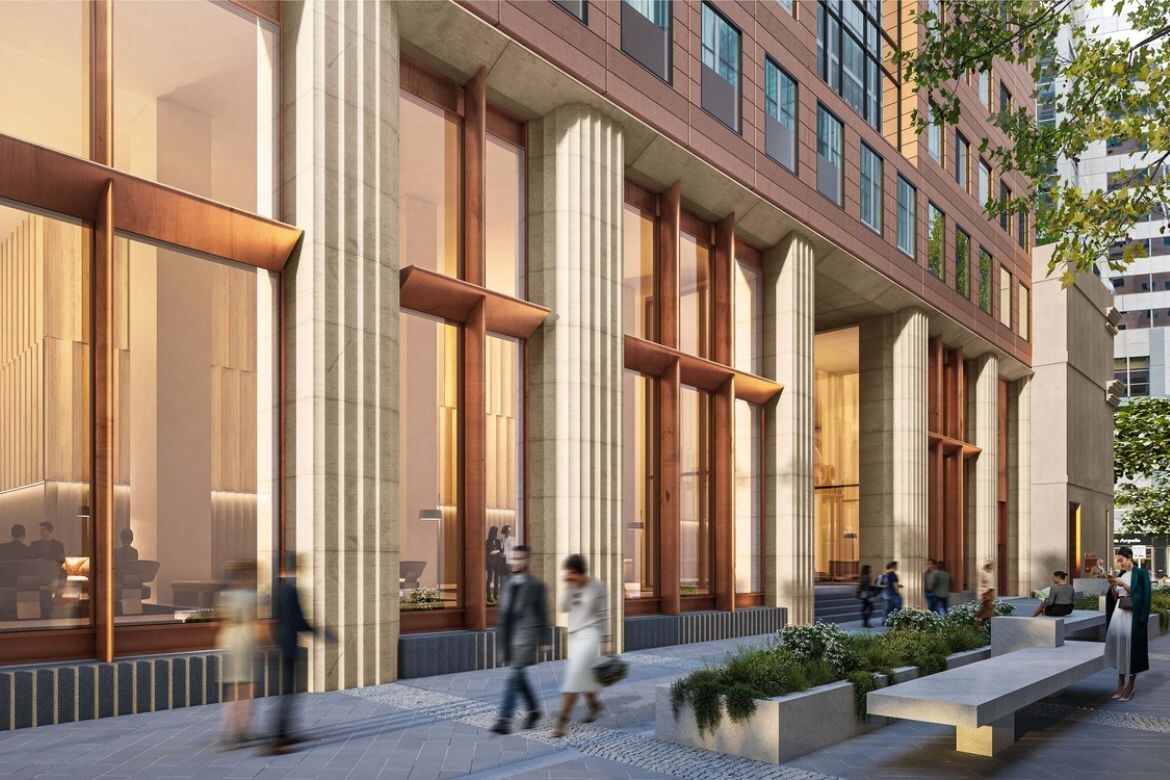
Improving the viability of re-life projects is one of the best ways to achieve better environmental outcomes for our cities, and government incentives can play a major role in this. Take Melbourne as an example. Later this year, the City of Melbourne’s Zero Carbon Building Plan will set out various initiatives to ultimately increase the amount of adaptive reuse projects by more than ten times the current supply. This dramatic increase reflects a radical gear shift in the urgency to address the environmental impact of our buildings. I strongly endorse these efforts to increase the amount of re-life projects in Melbourne CBD, and welcome increased discussion around the country about the initiatives that will significantly improve the commercial viability of such projects.
Industry-wide incentives
One challenge currently hindering the adoption of the adaptive reuse approach is that demolition is often a cheaper solution to upgrading our buildings, and so, there is a need to increase the viability and incentives for going the extra mile. Currently, Melbourne has very stringent plot ratio and setback controls, so it could be worthwhile to start to reassess how those rules should apply if you’re retaining a building rather than starting from scratch. Carefully considered reform around our planning schemes could unlock many projects and sustainable practices that simply were not commercially feasible before.
Rewarding good behaviour
There are some components already in our planning scheme that offer incentives for wider community contribution, such as artwork, laneways or green space. Perhaps, there could be flexibility in area or height for adaptive reuse, if the existing building is meeting existing plot controls, and some extra floors could be added on. Increased allowances will redetermine how many re-life projects can go ahead, and help the city meet its environmental targets. With a shared goal for highly sustainable outcomes, and the right initiatives to make these projects a reality, we can correct the mistakes of the past and improve our built environment with biophilic design, comfortable floor plates and efficient ventilation — creating healthier cities and happier people. Rather than asking, “Why should we retain this building?” I believe the defining question councils, developers and architects should be asking is, “What are the reasons for knocking it down?”. After all, when it comes to sustainability, we have so much to gain, or everything to lose.
Nicky Drobis is partner at Fender Katsalidis. Read Nicky’s recent story outlining 4 ‘big ideas’ that will shape architecture in 2023.
We think you might like this article about McGregor Coxall and Yulendj Weelam Lab partnership.