The home of architecture and design in the Asia-Pacific
Get the latest design news direct to your inbox!

Get the latest design news direct to your inbox!
Japanese dining goes grungy at Hong Kong temakeria TMK, where Charlie & Rose took design inspiration from 1980s Japanese punk rock.

Hong Kongers in search of an immersive and surprising Japanese dining experience have a new option in TMK – a basement temakeria just opened in the popular dining district of Sheung Wan. Interior design firm Charlie & Rose created a grungy, whacky interior inspired by 1980s Japanese punk rock.
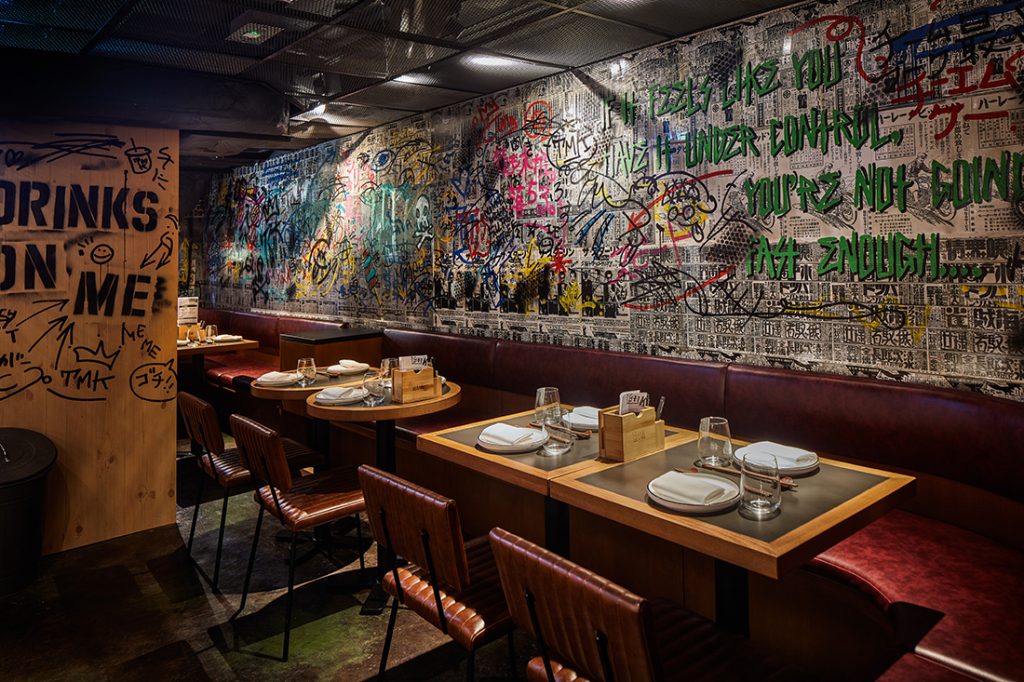
“We wanted to develop a contemporary Japanese concept that would go beyond the safe minimal norm,” says Charlie & Rose founder and designer Ben McCarthy. Freshly made temaki rice rolls and signature cocktails are served in a space of metal and wooden furniture, walls with graffiti, and electric lighting.
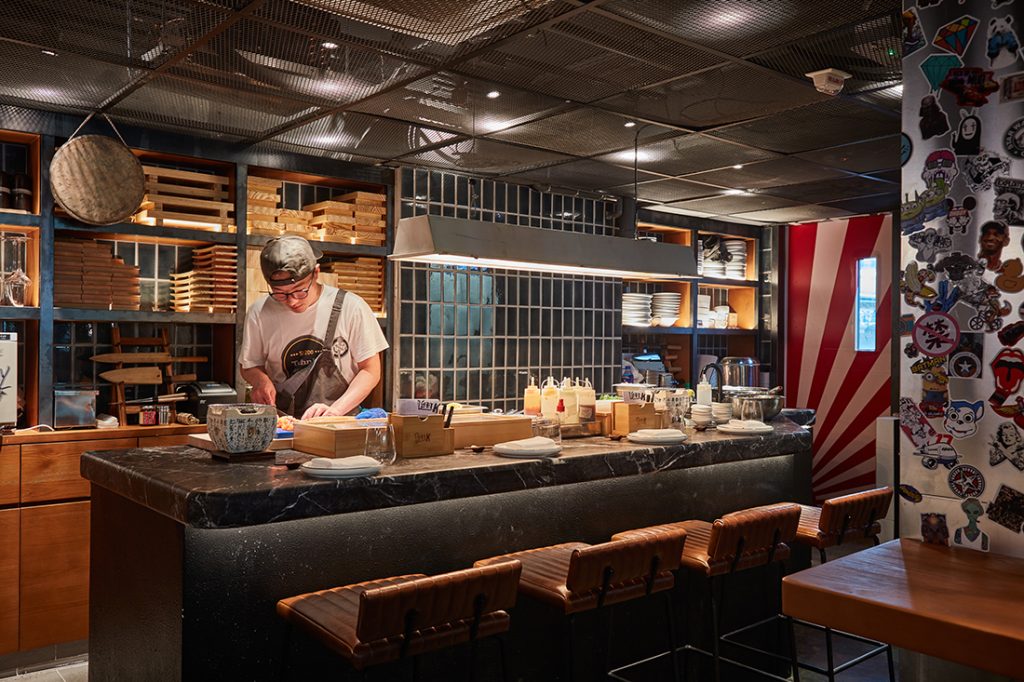
Charlie & Rose say they developed a narrative around the often-seen image of a Japanese salaryman or an average Japanese person asleep on the train after work. The design is an depiction of what they might be dreaming about – a home that is a bit retro-futuristic, a bit Bruce Wayne.
“This was a liberating project for us because the concept is so dynamic and there was a lot of room for expressive freedom,” McCarthy says.
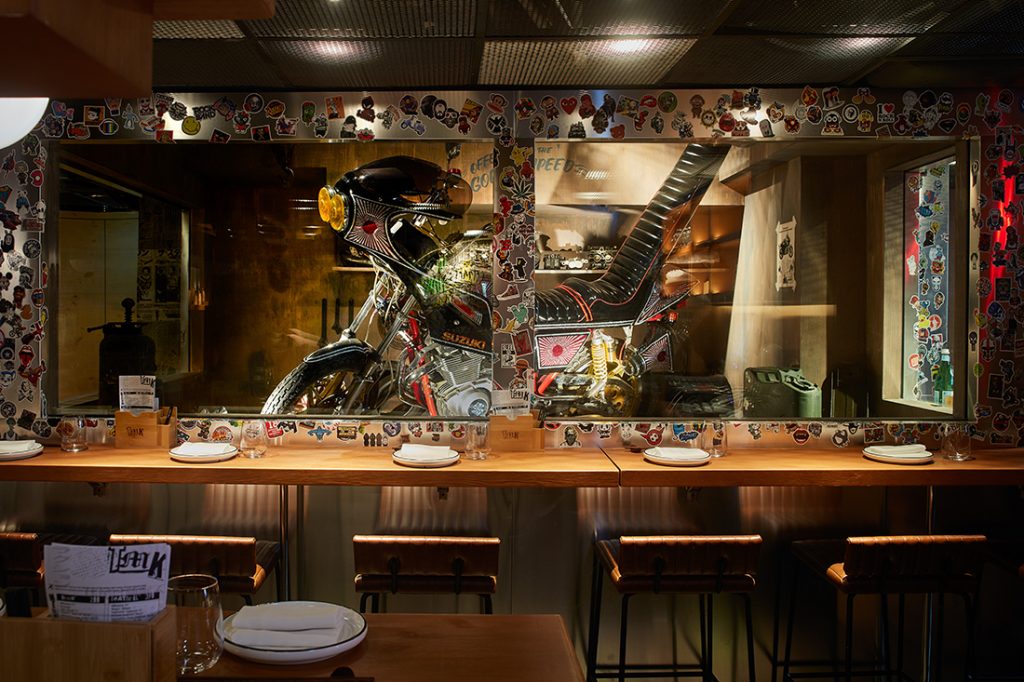
They began with a deep dive into punk rock. The space is filled with punk paraphernalia including pop art stickers and graffiti. Full-sized robots, a custom Japanese motorcycle in a glass display, and an ice-filled trough for sake bottles set within a communal table inform a very casual dining experience.
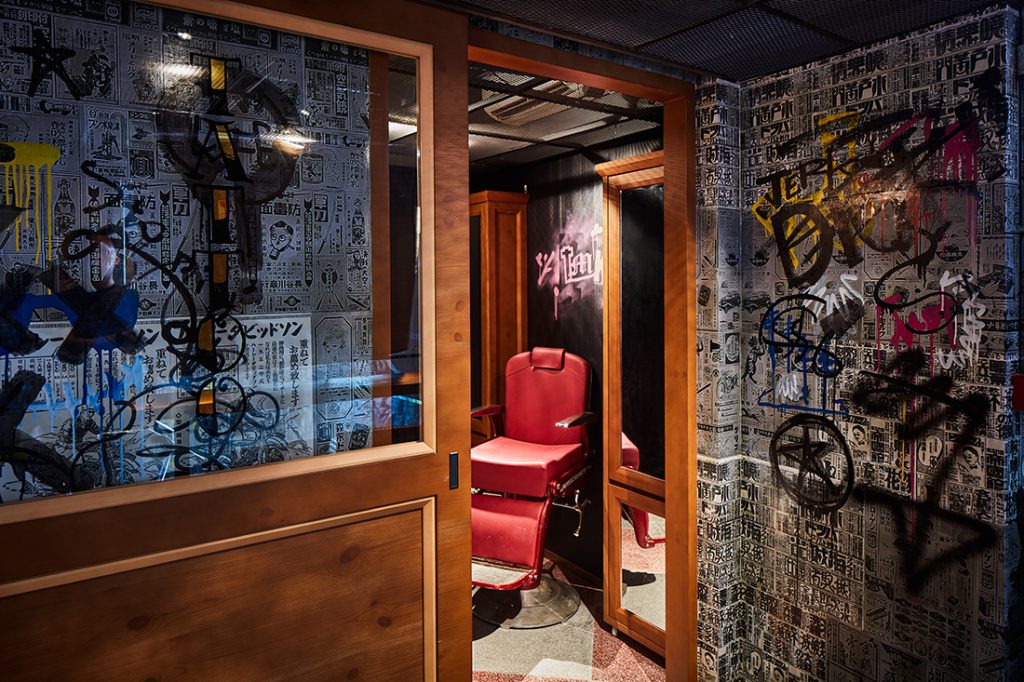
Guests are encouraged to add to the graffiti and the bathroom is tattoo-inspired. The overall palette at TMK is retro, with a lot of the colour inspired by vintage Japanese toys such as tin robots.
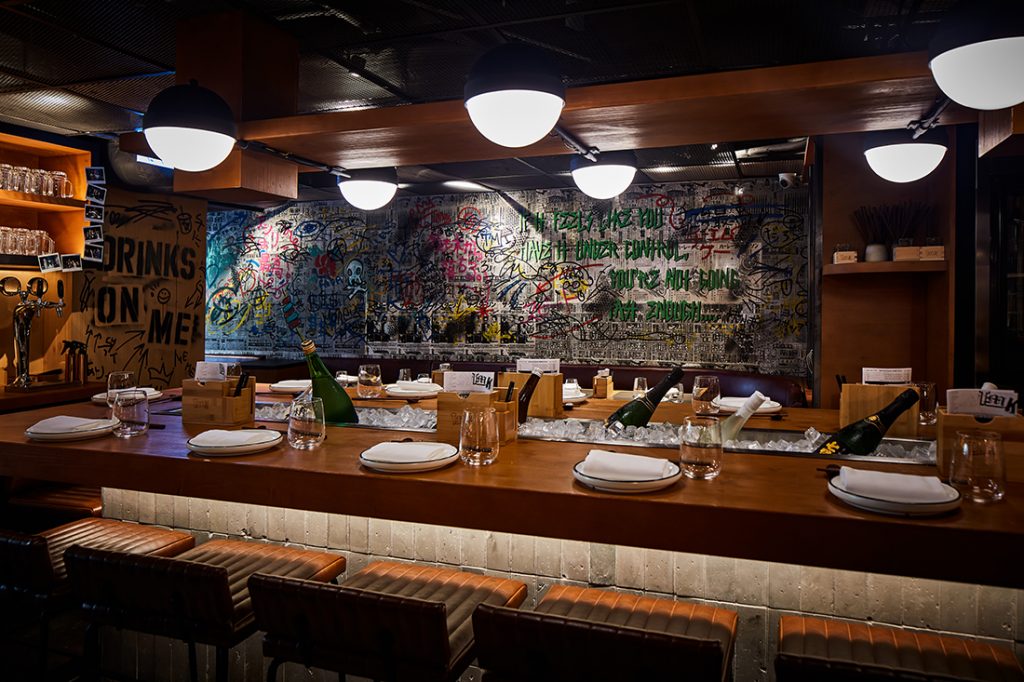
The design also features “daggy” or pre-loved, unfashionable materials in different ways. Wooden and metal furniture features a burr veneer and millwork, while alabaster is used in contemporary light fittings.
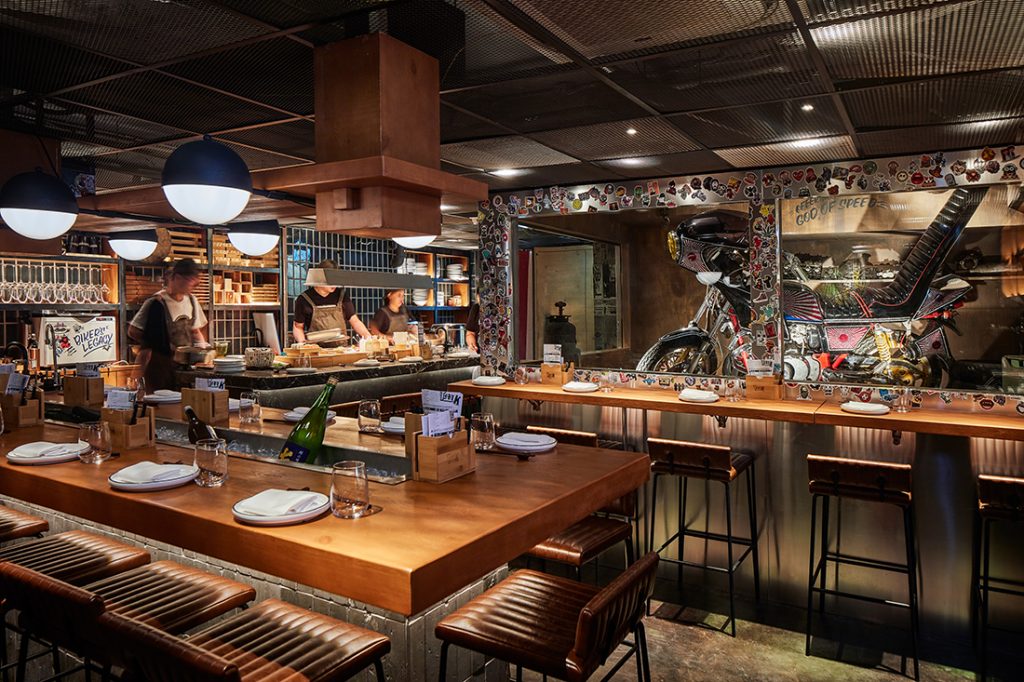
McCarthy says one of Charlie & Rose’s favourite aspects of TMK is the non-typical bar arrangement with a centre table and cocktails station to one side: “It’s a great interactive experience with other guests and bartenders.”
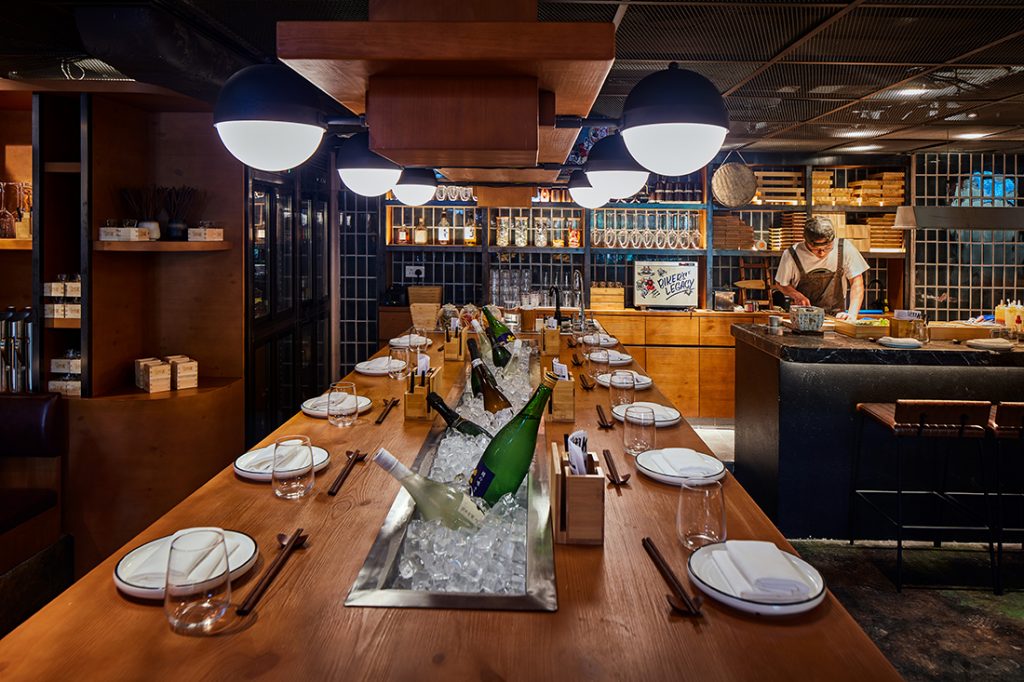
Charlie & Rose say the fast-paced restaurant scene in Hong Kong – where new outlets open every week – means the expectations of clients and customers constantly increases. They look for something unique; which is why Charlie & Rose concentrate on work that is “eclectic, highly detailed, and tongue-in-cheek.”
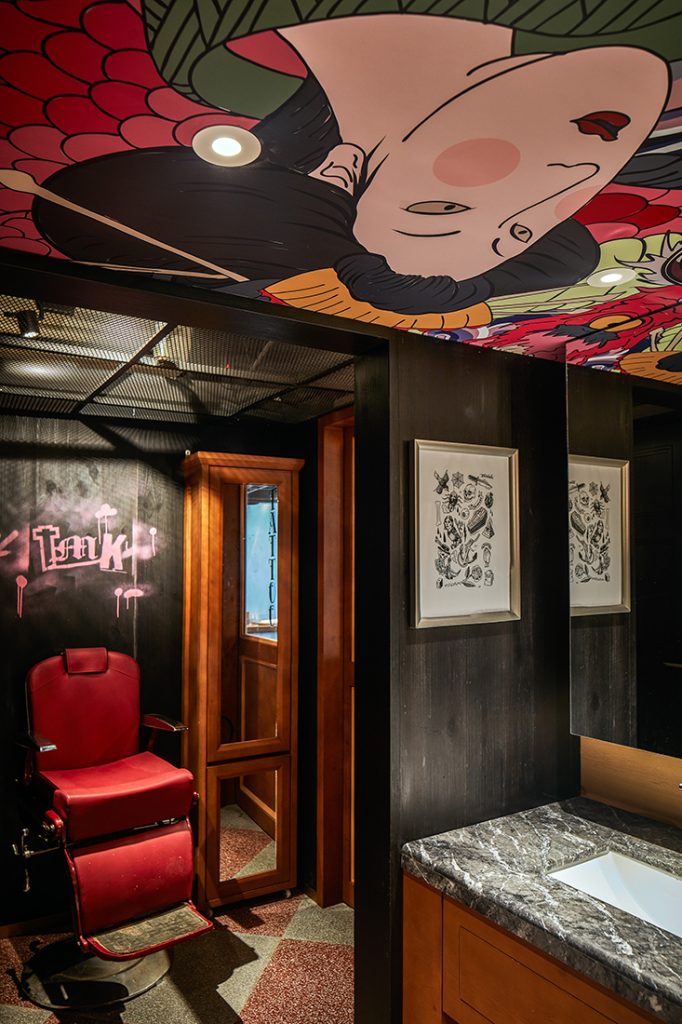
“Whenever I step into TMK, I never want to leave,” says Manuel Palacio, Co-founder of Pirata Group, which is behind the restaurant. “From the crazy interior and the wacky team with never-ending enthusiasm to the great food, we always have a good time and we hope that the people of Hong Kong will come to love the restaurant as much as we do.”
INDESIGN is on instagram
Follow @indesignlive
A searchable and comprehensive guide for specifying leading products and their suppliers
Keep up to date with the latest and greatest from our industry BFF's!
The internet never sleeps! Here's the stuff you might have missed