The home of architecture and design in the Asia-Pacific
Get the latest design news direct to your inbox!

Get the latest design news direct to your inbox!
Aedas, CSWADI and New Era Airport Design Institute have won a competition to design the new Yantai International Airport Terminal 2 in China.

As part of the Phase 2 expansion of Yantai International Airport, a competition was held for the design and construction of a new terminal that is scheduled to open in 2021. Aedas, as lead design architect and part of an international team consisting of CSWADI and New Era Airport Design Institute, has been awarded the job. The Aedas team is being led by Max Connop (Global Design Principal) and Albert Tong (Executive Director – Hong Kong).
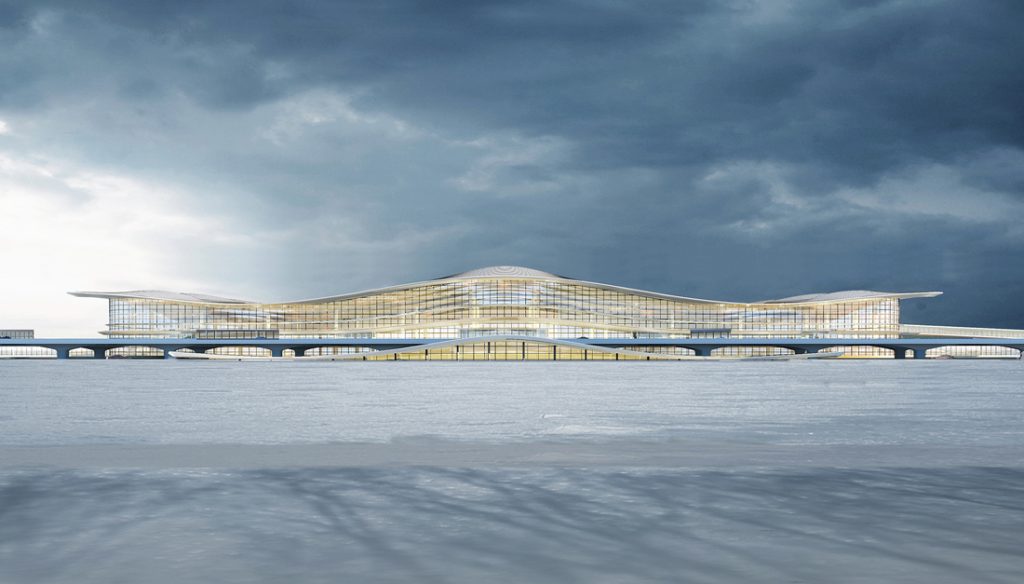
The form of the new 167,000-square-metre Terminal 2 will reference the coastal mountainscape of Yantai (in particular the Kunyu Mountain) with a sweeping, undulating roof. The concourses are arranged to form a long coastline, says Aedas, with generous space for the movement of people and the parking of aircraft.
Skylights have been designed to guide passengers intuitively toward the gates, and to bring natural light deep into the terminal’s departure check-in and processing halls.
Yantai International Airport Terminal 2 is expected to serve 23 million passengers by 2030, and will be crucial in responding to rapidly increasing demand for air travel generated by the growing Yantai and Shandong economy. Says Aedas, “Terminal 2 will be the new intelligent and sustainable gateway for the city.” An expansion of the new terminal has already been planned, and by 2040 it will reach over 200,000 square metres and serve 34 million passengers.
INDESIGN is on instagram
Follow @indesignlive
A searchable and comprehensive guide for specifying leading products and their suppliers
Keep up to date with the latest and greatest from our industry BFF's!
The internet never sleeps! Here's the stuff you might have missed