The home of architecture and design in the Asia-Pacific
Get the latest design news direct to your inbox!

Get the latest design news direct to your inbox!
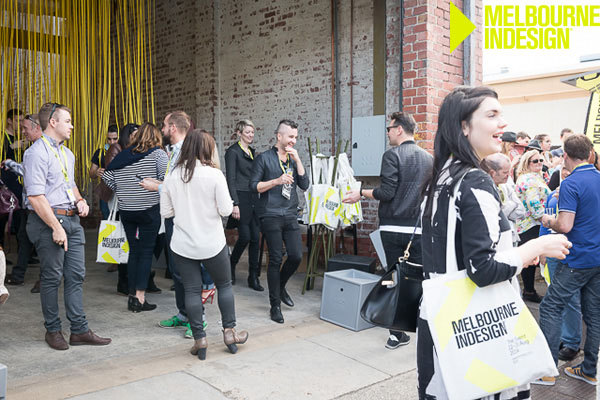
Fitzroy-Collingwood has long been home to a very creative community of designers, architects and artists. That, along with the precinct’s close proximity to the city, has proved highly attractive for suppliers looking to reinvent their showroom experience in raw warehouse spaces, while also better servicing their specifier and retail clientele.
August 26th, 2014
Seven years ago, Fitzroy and Collingwood was predominantly an area of grungy bars, nightclubs, cafés and Melbourne-centric fashion stores. A gradual gentrification of these neighbouring suburbs has welcomed numerous multi-residential developments into the area and, with those, a liberal smattering of high-end fashion boutiques, fine dining venues and coffee houses.
As the Melbourne Indesign event has grown, so too has the Fitzroy-Collingwood precinct. The area’s warren of backstreets revealed a connected cultural hub which enjoys a deeper engagement with the local and global design industry. The collaborative community vibe, encapsulated by the precinct’s Walk the Wood campaign, encompassed furniture, finishes, sculpture, local businesses, and designers both Australian and international.
Interstudio, one of the precinct’s longest standing residents, headlined with a new range from Danish brand, Friends & Founders. Defined by its reductive forms and refined industrial materiality, the collection was accompanied by the founders themselves: Rasmus and Ida Hildebrand.
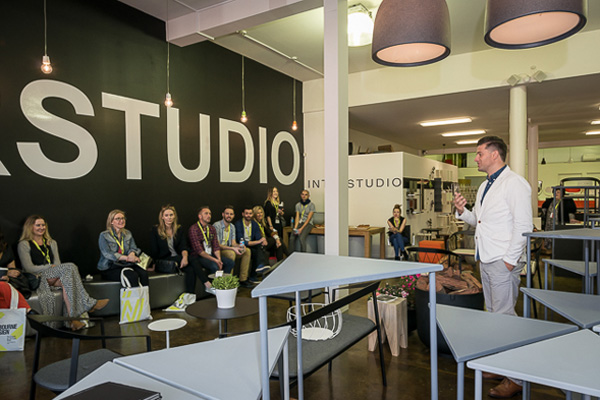
Interstudio
Popping up in the Group GSA site was Apato, catering to the refined, timber toned aesthetic popular in Australia, with Japanese brands Nissin and Conde House. The quiet fusion of age-old technique and modern technology was clearly present in the quality and resolution of the ranges on show.
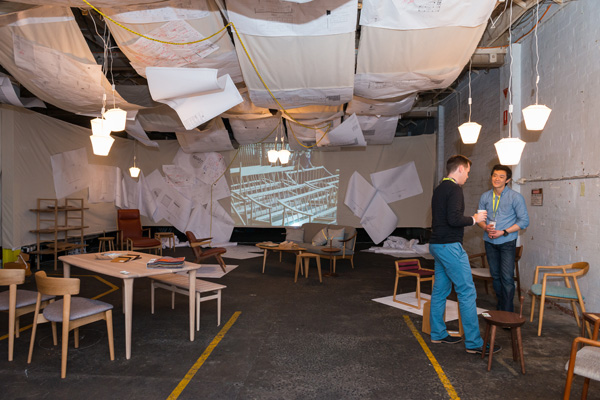
Apato
Set within the tight grouping of backstreets in down-town Collingwood was Café Culture + Insitu who teamed up with DKO Architecture and Hot Black to created a sweeping sea of yellow ribbons which conjured wonder and tingling cheeks as you wandered through the garage entrance and into the showroom beyond.
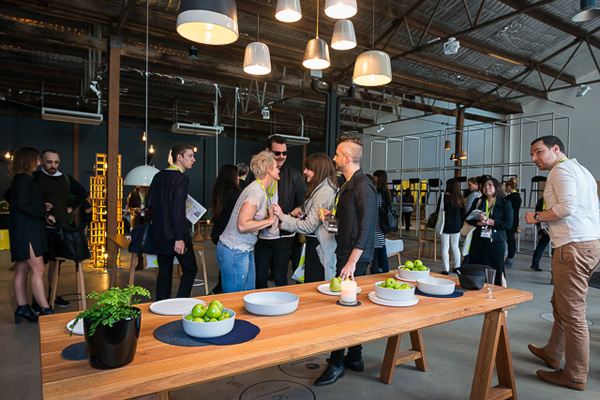
Café Culture + Insitu
Equally sensory was Smeg, who took their showroom space to the next level with a combination of food and excellent DJ beats. The effect was quite exciting, the space humming with energy; it proved to be a great drawcard for crowds.
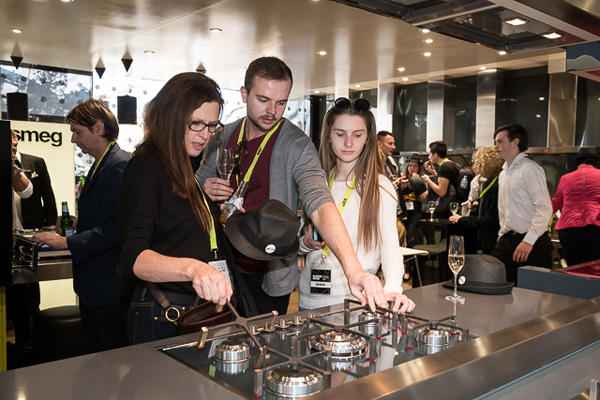
Smeg
Attention to detail was ever present where brand collaborations were concerned. Exhibitors Temperature Design and Lump Sculpture Studio teamed up to transform Temperature Design’s car park entrance into a sculpture park, before a hand-stitched doorway beckoned visitors within. This continued inside where beautiful blanket-stitched ottomans and screens were on show alongside other collections.
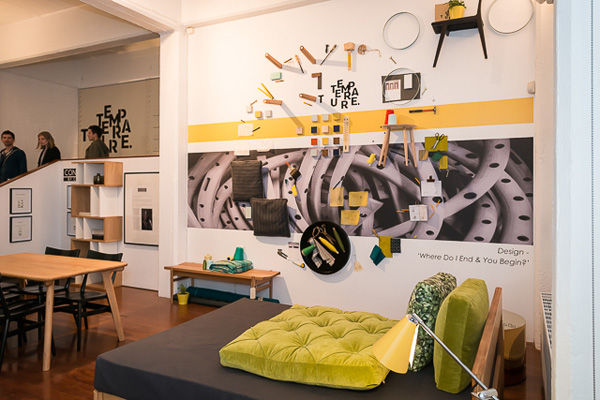
Temperature Design
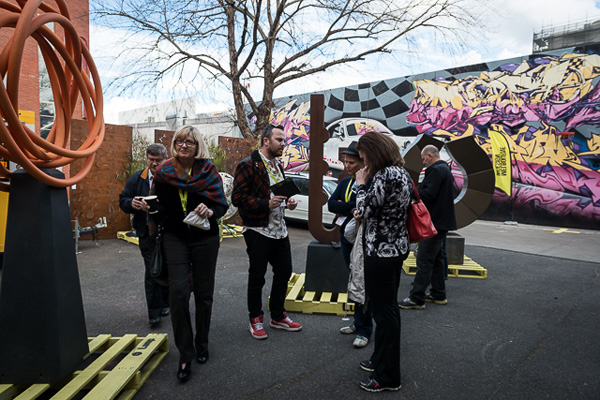
Lump Sculpture Studio
Winspear Group focused on quality of experience from both a haptic perspective, with wonderful samples from their Italian hardwood flooring range, Listone Giordano; as well as a taste perspective, thanks to a curation of food and drinks brought together by luxury hospitality magazine Alquimie. Here, hands, eyes, nose and tastebuds became fully engaged.
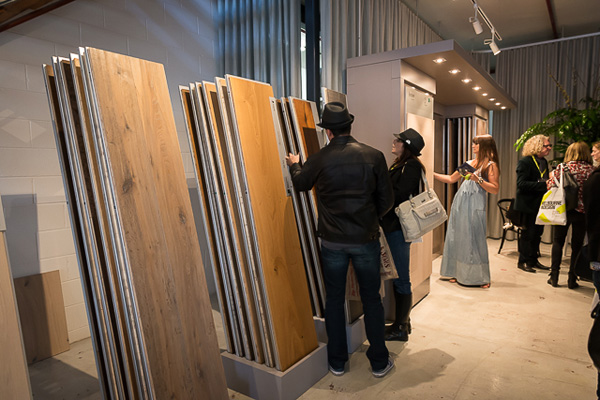
Winspear Group
A temporary showcase within the popular Rokeby Studios, District presented a combination of European and New Zealand product. The carefully curated display offered up many focal points and invited a deeper discussion with New Zealand’s Resident designers Simon James and Scott Bridgens.
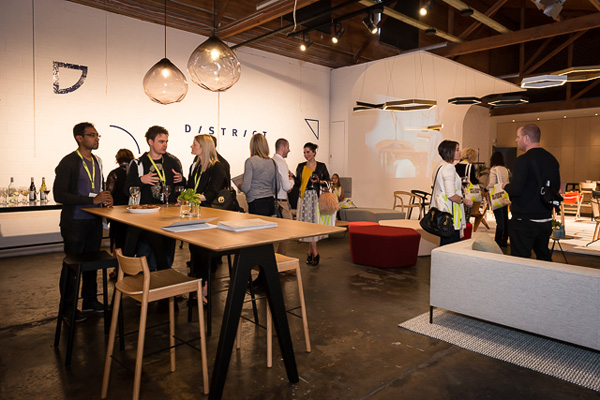
District
Ajar, relatively new to the Johnson Street retail strip, was filled with fine specimens of Spanish design. Flamenco music, Spanish speakers and even a packed DQ Insiders talk created a melting pot of action around this particular shop-front. It was exciting to see such an open exchange facilities by brand together with the local design community.
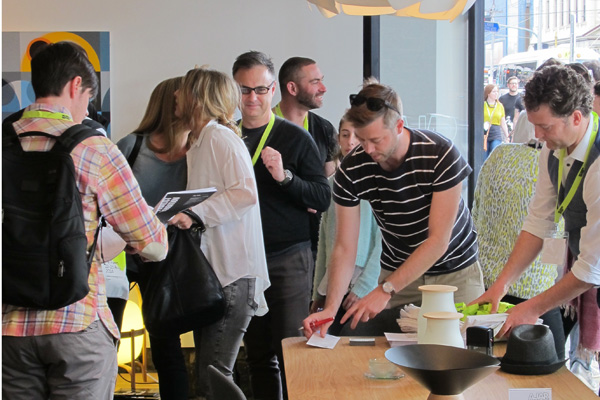
Ajar
Also new to Melbourne, yet already entrenched within the local scene was Weylandts, whose larger than life furniture and living concepts clearly wowed their visitors. South African (SA) by origin, Weylandts forged new connections between Australian and SA culture through the lens of plant life, conducting native and SA plant tutorials with Fitzroy florists, Flowers Vasette.
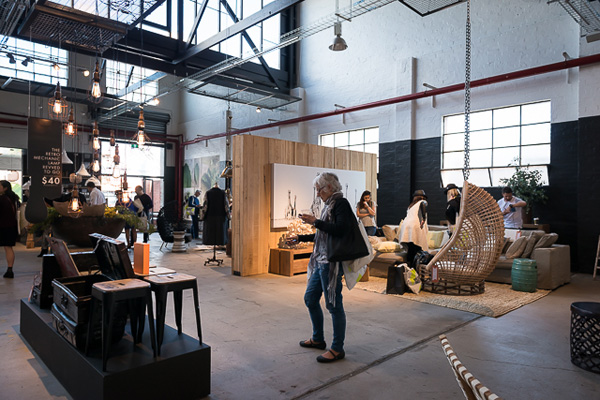
Weylandts
There’s a measure of joy to be found in creative partnerships, and the simple act of creating and sharing has an all-encompassing appeal. This was really apparent throughout the Fitzroy-Collingwood precinct, with exhibitors reaching beyond their immediate design community to bring like-minded individuals and industries into the creative conversation.
Photography by: Fiona Susanto Photography
fionasusanto.com
For more coverage of Melbourne Indesign 2014 visit: indesignlive.com/category/articles/in-review/mid-2014
INDESIGN is on instagram
Follow @indesignlive
A searchable and comprehensive guide for specifying leading products and their suppliers
Keep up to date with the latest and greatest from our industry BFF's!
The internet never sleeps! Here's the stuff you might have missed