The home of architecture and design in the Asia-Pacific
Get the latest design news direct to your inbox!

Get the latest design news direct to your inbox!
Meinhardt Façade share their secrets to creating a visually striking building that performs as well as it looks.
April 19th, 2012
Emerging trends in material technology have made architectural design increasingly competitive as developers and owners seek to create more striking buildings, and architects and engineers are limited only by their imaginations.
Complex shapes and intricate façades that define a city skyline; sustainable solutions that maximise a building’s performance and minimise its environmental impact – these are a must for an urban structure in the modern metropolis.
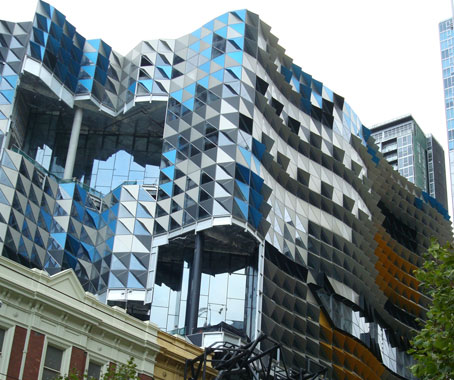
RMIT SAB, Melbourne
The importance of a building’s façade cannot be underestimated. Not only does it create an immediate and unmistakeable first impression; an energy efficient façade with a high thermal performance reduces a building’s reliance on mechanical ventilation, lighting and electrical appliances, leading to enormous savings for the developer and owner.
Meinhardt Façade, as part of the international Meinhardt Group, specialises in design, engineering, fabrication, installation and material science, and know what it takes for a building to look good and operate well by utilising their ’practical imagination’ approach to façade design and engineering.
Here, they share their tips for creating the ideal façade.
1. Choose the right materials. Understand your materials and be smart in your selection; this will help save energy, reduce wastage and optimise the façade design.
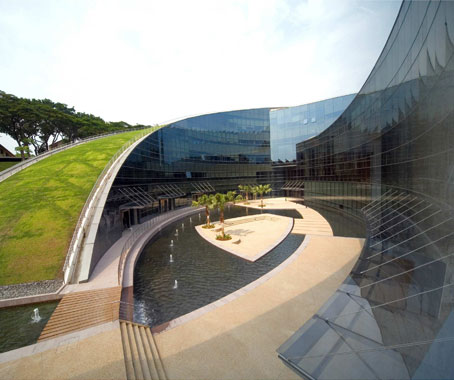
NTU School of Art, Design and Media, Singapore
2. Use recycled. Consider recycled or recyclable materials where possible. For example, recycled aluminium requires only 5% of the energy used to produce aluminium from iron ore. Green concrete can be made with reclaimed industrial materials that would otherwise be used for landfill.
3. Go local. Use locally or regionally-sourced materials where possible; support the local economy and reduce your carbon footprint and avoid expensive transport costs.
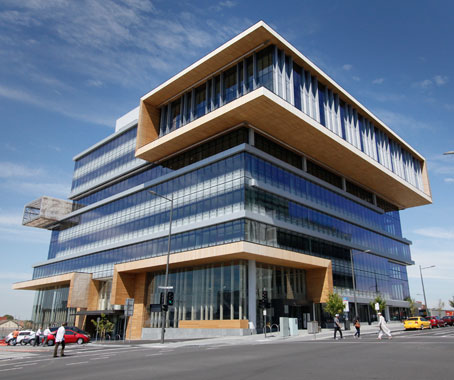
Civic Offices, Dandenong
4. Reduce energy. Choose materials that use energy-efficient coatings, heat-reducing paints or incorporate thermal breaks to help reduce the overall energy consumption of the building.
5. Call a professional. Enlisting an experienced façade consultant from the planning stages will lead to a holistic process in which the building and façade design is implemented quickly and easily, with all considerations taken into account. A façade consultant will advise on local context, durability, materials, efficiency and efficacy for the best result possible.
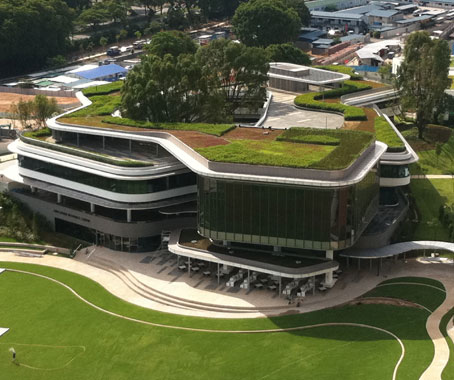
Education Resource Centre, NUS Singapore
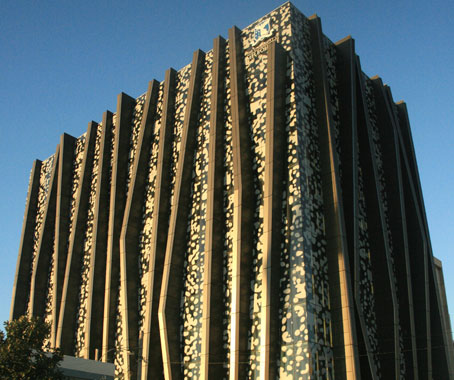
Hero image: 198 Berkeley Street, Melbourne
Meinhardt Façade
mfacade.com
INDESIGN is on instagram
Follow @indesignlive
A searchable and comprehensive guide for specifying leading products and their suppliers
Keep up to date with the latest and greatest from our industry BFF's!
The internet never sleeps! Here's the stuff you might have missed