The home of architecture and design in the Asia-Pacific
Get the latest design news direct to your inbox!

Get the latest design news direct to your inbox!
Students at the University of Sydney launched CIRCA last year with the aim of creating a platform for architectural discourse for students and professionals alike. After a series of successful events, the second issue is under construction.


June 13th, 2023
CIRCA journal had its official launch event last year, coinciding with the end of year graduate show within the University of Sydney’s School of Architecture, Design and Planning. It might, however, be more accurate to call it a resurrection rather than a launch.
As the initial concept was developed by founders Olivia D’Souza and Beverley Lim, the existence of an earlier architecture journal in the university’s history was uncovered. CIRCA70 was a single issue publication from 1970 and it provided something of a model and inspiration for the current journal, not least in its name.
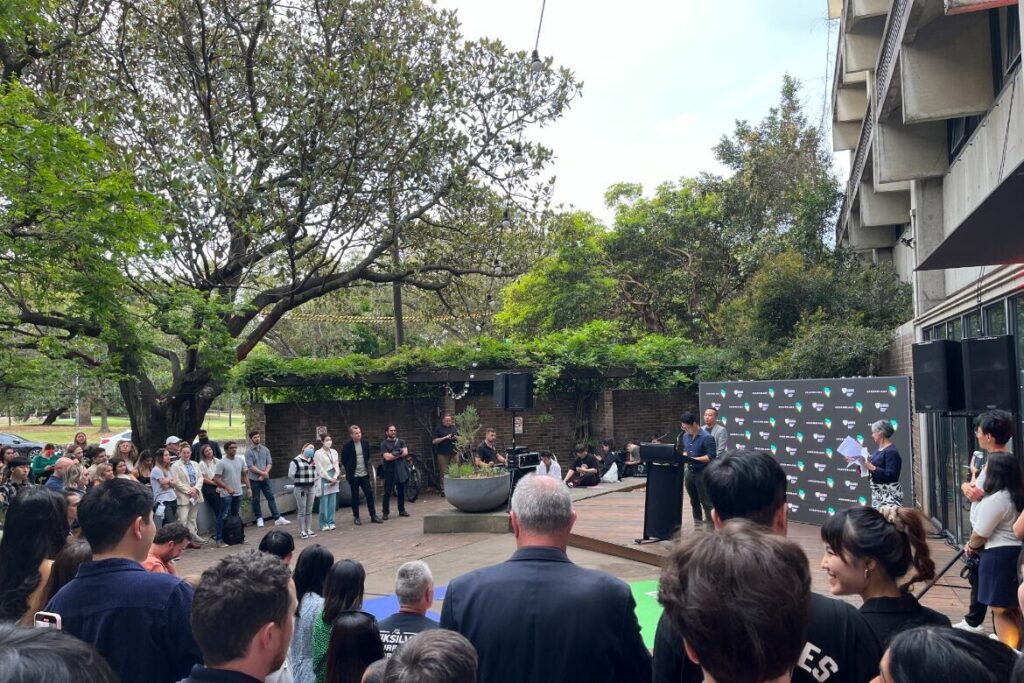
“We want CIRCA to become a platform for innovative ideas, to draw surprising links between disciplines and to delve beyond the surface — ideally becoming part tool and part showcase for students and professionals,” says D’Souza. “This is just the start of the journey and we hope this journal becomes part of the everyday experience for students interested in architecture and design fields.”
At a time when those architecture and design fields have become increasingly specialised and even insular, creating spaces for interdisciplinary debate is vitally important. Architecture has a rich history of print publications drawing in ideas and comment from fields such as literature, film, art, philosophy and politics, and one of the aims of CIRCA is to broaden architectural discourse by bringing different voices into contact.
Related: Woods Bagot’s Jet Geaghan on AI

Importantly, the journal is student-run but publishes a mixture of pieces and is open to submissions ranging from creative writing to historical essays. The editors specifically seek pieces both from within the university, including students and academics, and from without, such as those working in practice. It creates a rich mixture that does not attempt adherence to a single philosophy but rather aims to be influenced by its surrounding currents, holding true to one of CIRCA70’s guiding principles.
D’Souza explains: “From the start it was very important to include articles from both professionals and students. This provides a platform for students and exhibits the work of professionals in a more accessible way.”
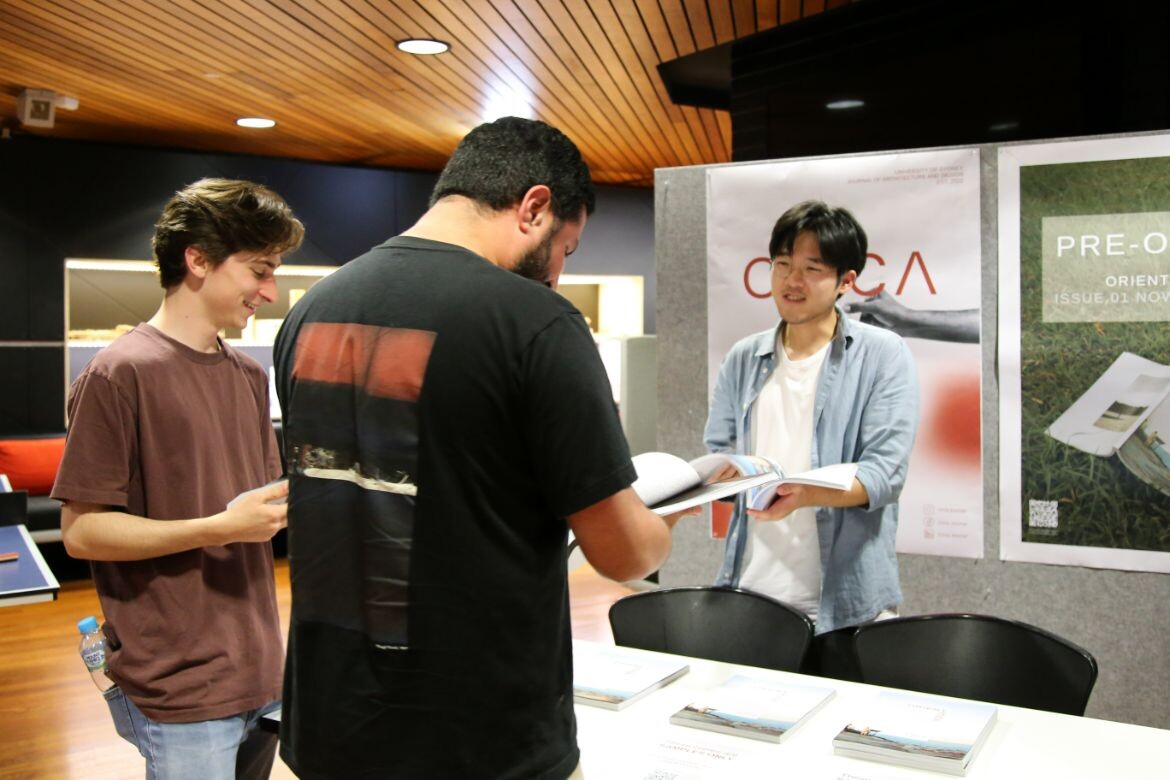
The theme of the inaugural issue in 2022 was Orientation and featured a wide variety of work, from student poetry, memoir and short stories to academic discussions of Sydney’s built environment. The journal is designed by its own creative team, which works alongside the editorial and business teams to bring it into physical, prited fruition. Indeed, copies ran out at the launch event.
CIRCA issue two, on the theme of Veneer, will be published in coming months. In the meantime, students have organised a number of events within the university. They include symposia featuring panel discussions as well as a recent lecture series whose topics ranged from the philosophy of architecture to its global financial patterns. Speakers have included practicing architects such as Luke Hayward, who works between Australia and Japan.

“A key part of the journal is engaging with the student body in multiple ways. Our lecture series, in collaboration with the Architectural Theory Review, has been very successful in broadening our reach,” adds D’Souza. “We have more events for later in the year focused on our second issue Veneer.”
Those working in professional design are encouraged to engage with the vitality of a space driven by ideas and debate, whether by reading CIRCA or contributing to it. Rigid boundaries between the academy, classroom and workplace need to be broken down for architecture and design to foster a culture of rigorous, innovative debate. Drawing on its Sydney past and acting as both a medium and catalyst, CIRCA is aiming to do exactly that.
CIRCA
circajournal.org
Photography
Courtesy of CIRCA


We think you might also like this story on employee ownership in architecture and design.
INDESIGN is on instagram
Follow @indesignlive
A searchable and comprehensive guide for specifying leading products and their suppliers
Keep up to date with the latest and greatest from our industry BFF's!
The internet never sleeps! Here's the stuff you might have missed