The home of architecture and design in the Asia-Pacific
Get the latest design news direct to your inbox!

Get the latest design news direct to your inbox!
Australian architect and designer Eugene Soler gives discarded objects a new lease on life in an installation for the British Institute of Interior Design. Ola Bednarczuk reports from London.
July 2nd, 2013
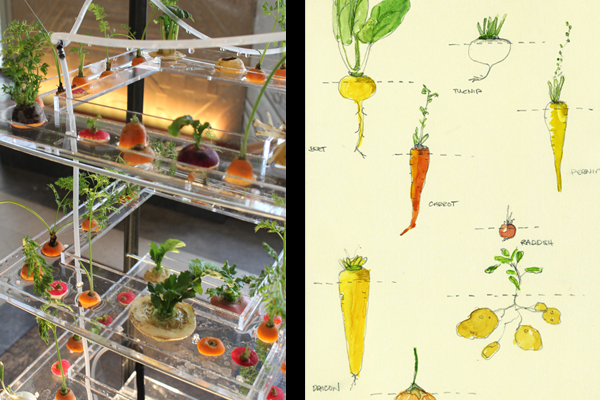
Root vegetable offcuts, normally destined for the garbage or compost heap, are an unlikely centrepiece for an art installation – but in Final Bloom, the latest project from architectural designer Eugene Soler, they provide a quirky and even poetic meditation on nature, science, art and aesthetics.

Final Bloom was commissioned by the British Institute of Interior Design (BIID) to bring to life the theme of its 2013 conference, Design Invention: Art and Science Collide – inspired by the synergy between art and science and its influence on the work of interior designers.
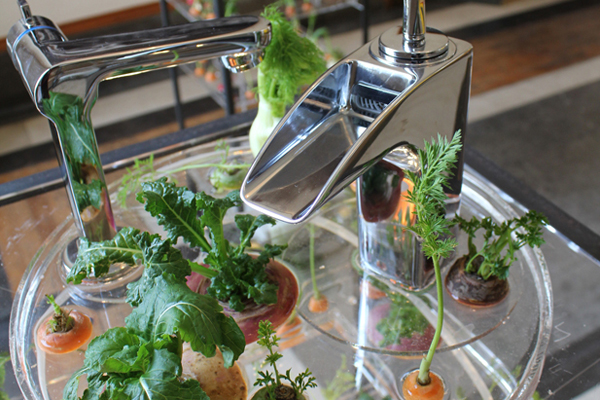
“When I was researching my ideas [for the project], I noticed there was a period where art became a way to express science and science inspired art,” Soler explains. “For example, Da Vinci would have studied the flight of birds to inspire his painting, and a lot of scientists would draw their findings in a very detailed way.” Both science and art were a way of expressing curiosity about the natural world – an idea which became the springboard for Soler’s installation.
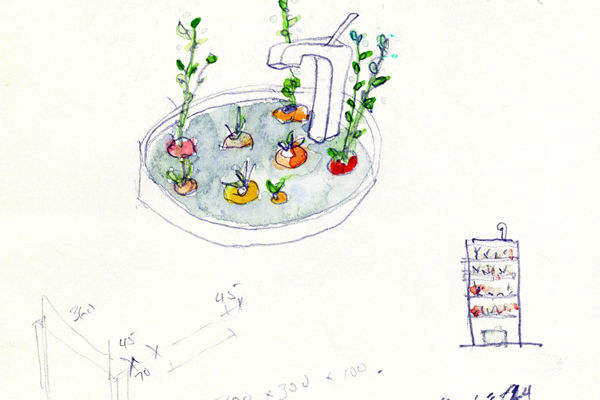
Soler was also inspired to build a display that juxtaposed natural and man-made products and explored man’s relationship with nature and waste. His thoughts turned to the caps of root vegetables, which are thrown in the trash even when they still have the capacity to grow. “There’s something poetic about these sprouts; after you cut them they will keep growing, even though they’ve become waste products already,” Soler says. “I wanted to create an environment for them; an incubator for them to bloom once more.”
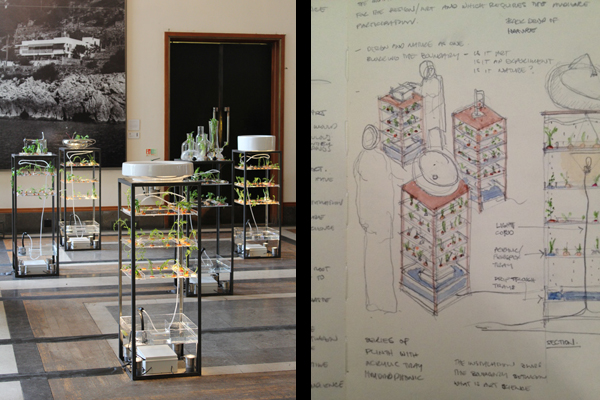
Soler created a series of plinths, incorporating items from each of the conference’s sponsors – bathroom products from Roca, automation systems from Crestron and homewares from retailer Heal’s – to house waste vegetables and replenish them with water. He collected vegetable offcuts from friends and chefs; during the BIID conference, he asked the catering company to provide its offcuts and encouraged conference visitors to place them within the installation. In their new context, the vegetable cuts became things of curiosity rather than waste.
“The idea is participative, to make us more aware that we tend to throw out things that have more potential or beauty in them,” Soler says.
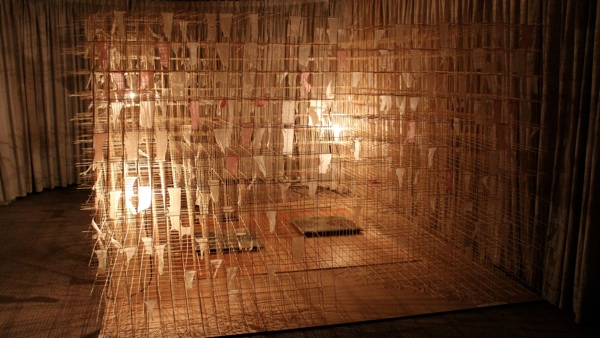
Fragile Tension, Eugene Soler
Ephemeral spaces using recycled materials are a recurring theme in the work of Soler, who studied at the University of Newcastle. His previous work includes ‘Fragile Tension’, an installation exploring mass and form in architecture which incorporated thousands of bamboo rods and sheets of rice paper as cladding.
Atelier Soler
ateliersoler.com
INDESIGN is on instagram
Follow @indesignlive
A searchable and comprehensive guide for specifying leading products and their suppliers
Keep up to date with the latest and greatest from our industry BFF's!
The internet never sleeps! Here's the stuff you might have missed