The home of architecture and design in the Asia-Pacific
Get the latest design news direct to your inbox!

Get the latest design news direct to your inbox!
For Mutual Trust’s Adelaide workplace, Woods Bagot drew on the idea of a stately family home to create an interior shaped by legacy and ease.
June 15th, 2026
At Mutual Trust’s new Adelaide workplace, arrival is treated less as a reception moment than a hosted sequence. Woods Bagot has drawn on the language of a stately family home to create a front-of-house experience that feels warm, composed and quietly formal.
The workplace sits within 83 Pirie Street, the Woods Bagot-designed building in Adelaide’s CBD. For Mutual Trust, Australia’s leading modern family office, the new interior needed to speak to more than day-to-day workplace function. It also had to communicate the organisation’s long-held values of trust, integrity and continuity to clients, many of whom have relationships with the firm that extend across generations.
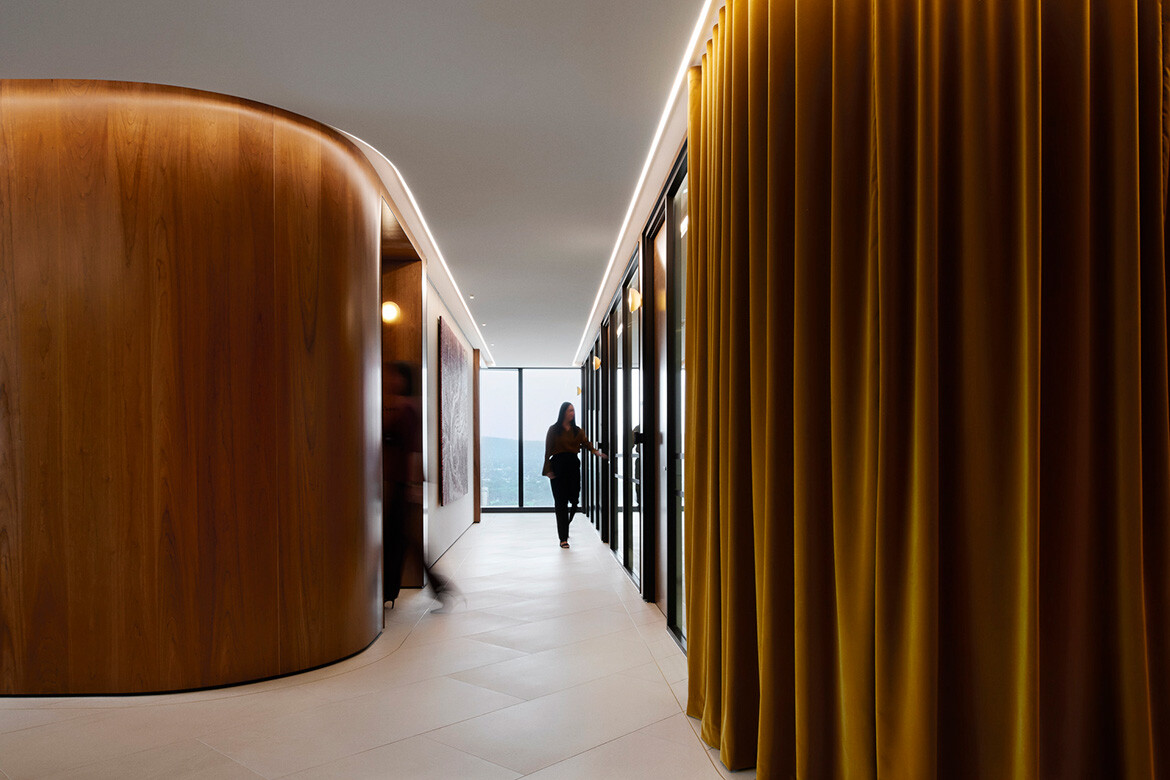
Founded in 1921 by W. L. Baillieu and his siblings, Mutual Trust provides family office advisory, wealth and professional services to families, family businesses, trustees and individuals. That century-long history gave the design team a strong foundation, but also required careful handling.
“We began by immersing ourselves in Mutual Trust’s rich history, uncovering a legacy grounded in enduring values of connection, growth, integrity and trust,” says Woods Bagot Associate Principal Emma Smith. “Rather than expressing this heritage in an overtly literal way, these values became the guiding principles for the design, shaping how the space feels and functions.”
Related: From floorplate to cityscape
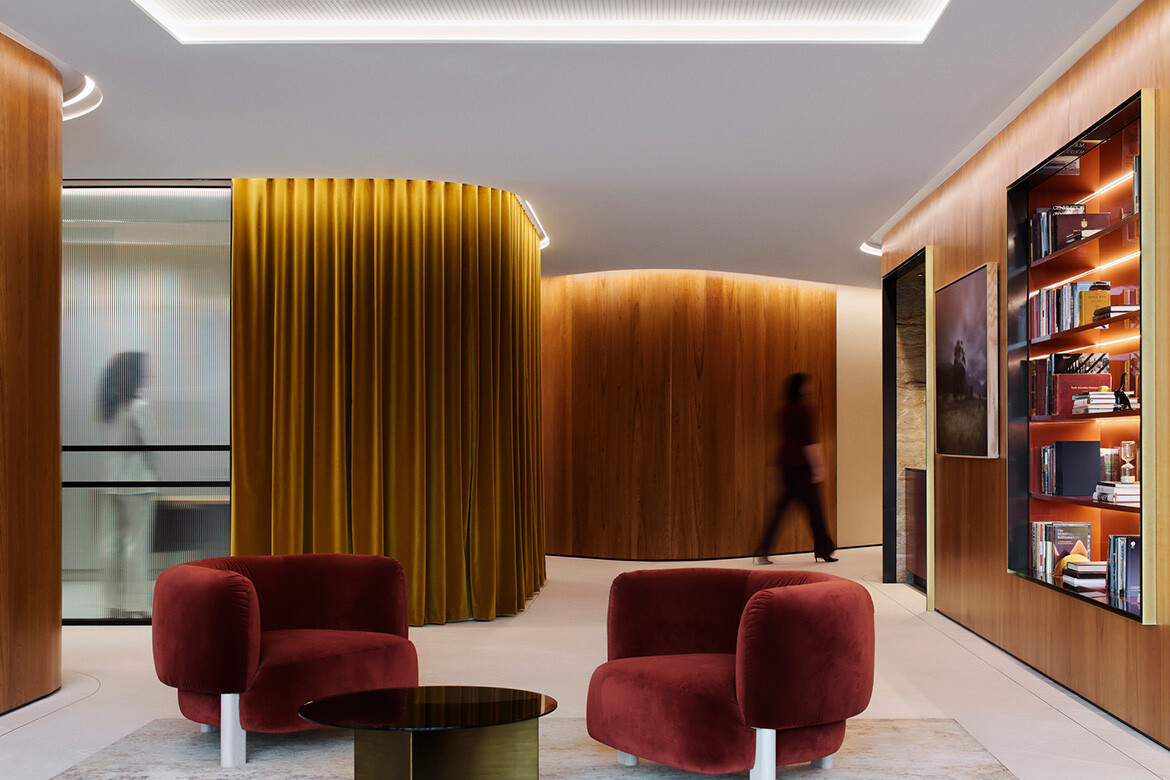
The idea of “elevated familiarity” became central to the project. In practical terms, this meant creating a workplace that felt recognisable and comfortable, while still carrying the polish and precision expected of a contemporary family office.
“The Mutual Trust workplace embraces an intimate footprint, invoking the warmth and hospitality of a stately family home,” says Woods Bagot Director Rosina Di Maria. “Elevated familiarity is driven by nostalgic detail and material tactility, resulting in a narrative-based approach to heritage.”
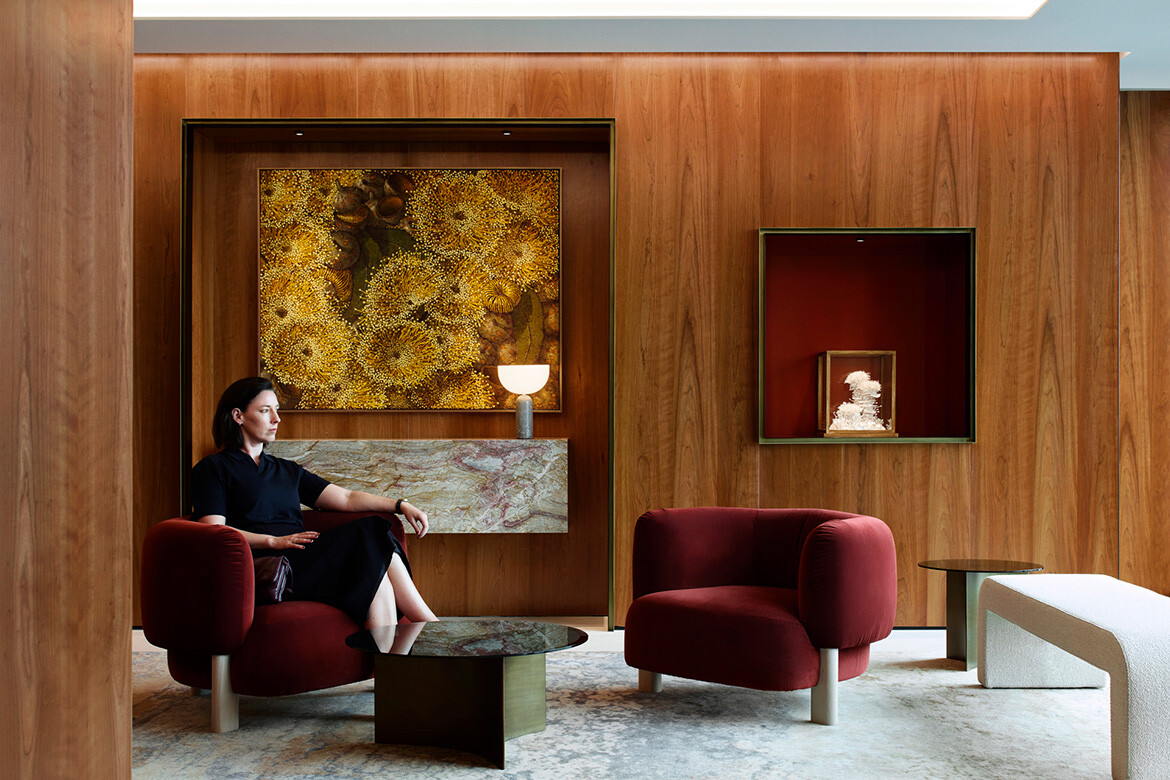
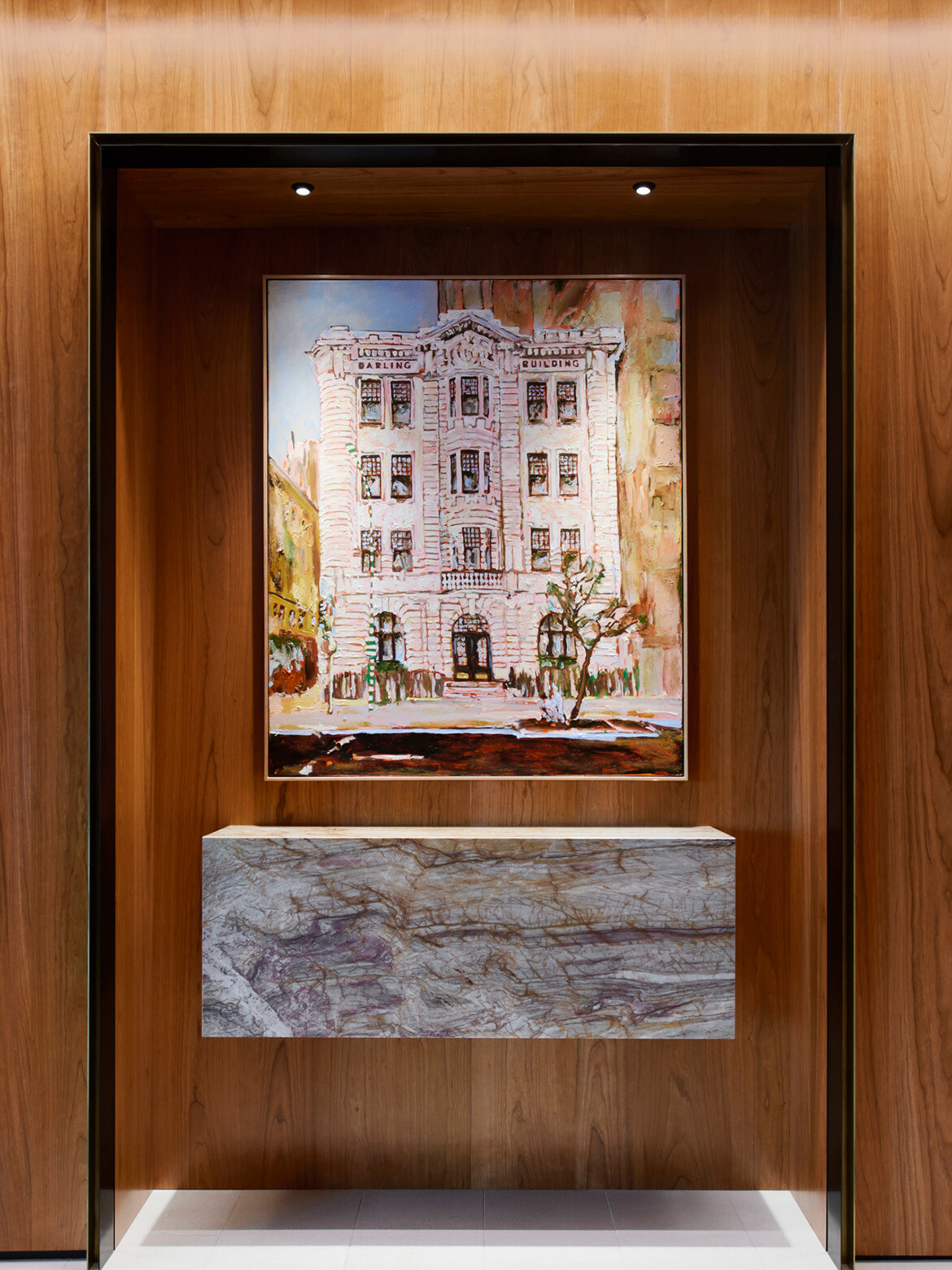
Moving from the commercial lift lobby into the Mutual Trust tenancy, clients are drawn into a more intimate environment of rich tones, layered materials and crafted detail. A hall table with artwork provides an immediate domestic cue, while timber-lined walls and tiled floors introduce a sense of familiarity and permanence.
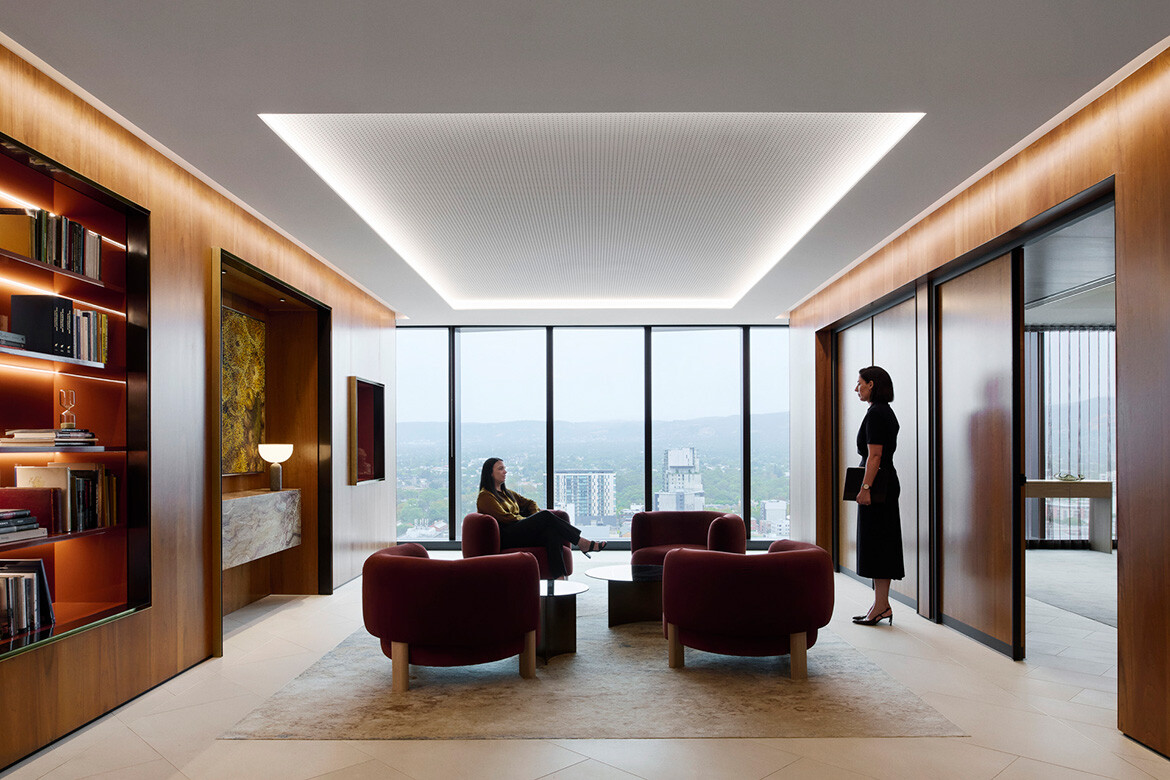
Rather than treating reception as a single transactional point, Woods Bagot has choreographed the front-of-house experience as a gradual progression. Smith describes it as “a sequenced and hosted journey, rather than a transactional entry,” with the planning moving from public to semi-private to private zones. Reception is conceived as a welcoming setting, while the waiting area sits deeper within the plan, drawing clients further into the workplace before they arrive at the more secure meeting suites beyond.
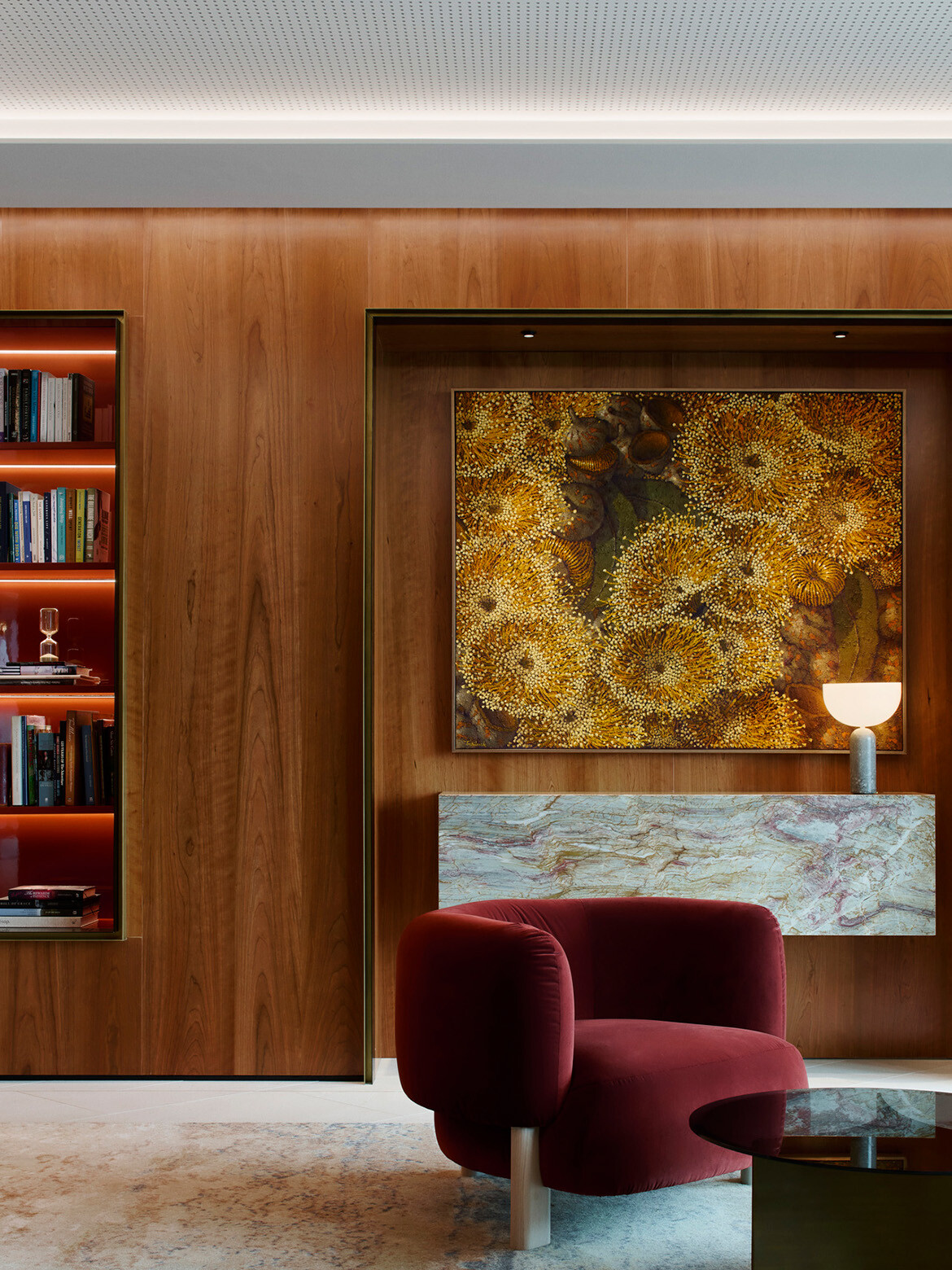
A centrally positioned library reinforces this sense of domesticity and legacy. Curated with books that reflect Mutual Trust’s history and client relationships, it works as both a functional element and a symbolic one, inviting interaction while quietly grounding the space in the organisation’s past.
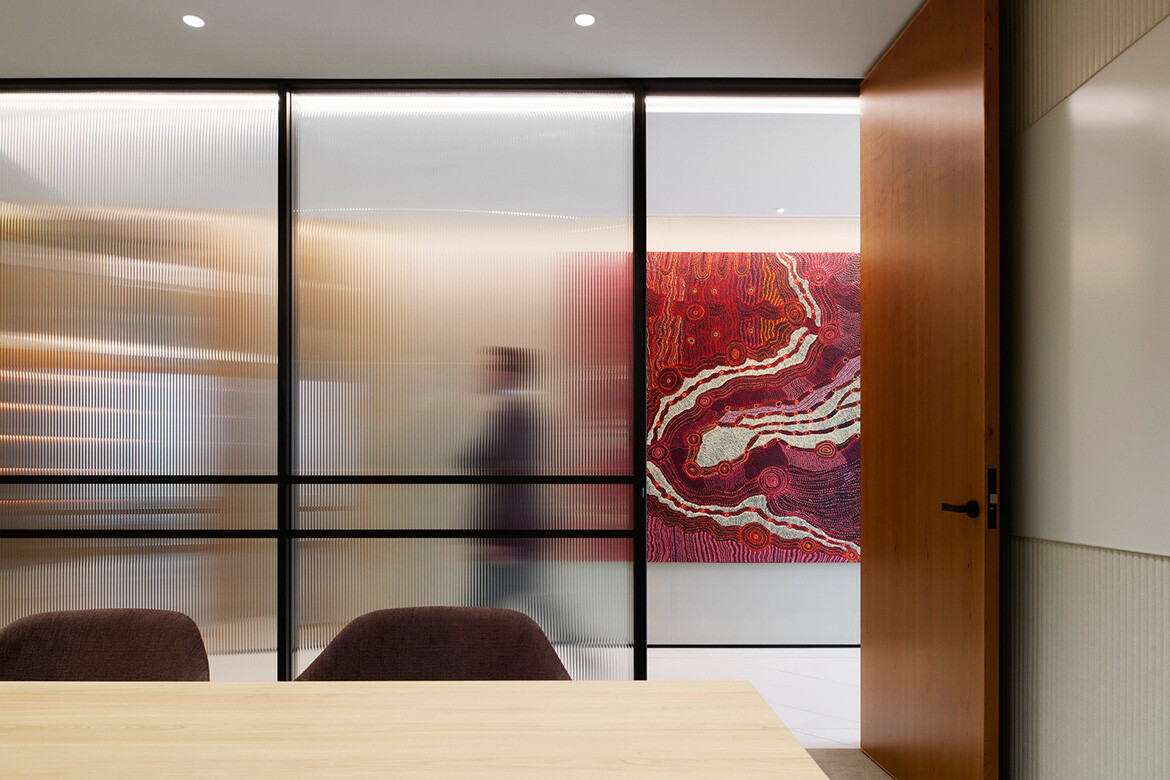
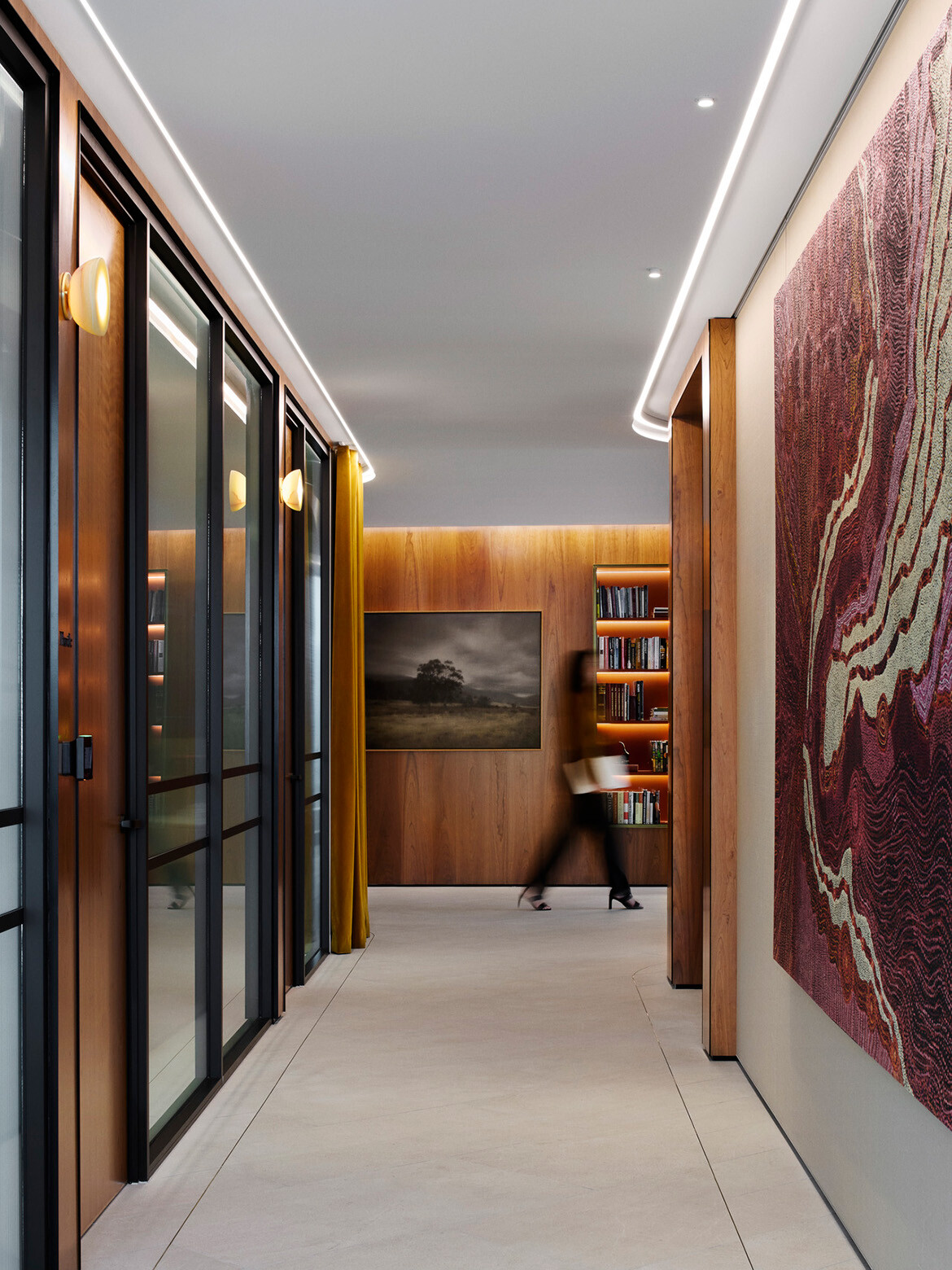
Heritage appears throughout the workplace, but it is used sparingly. Founder portraits hang opposite reception, offering a direct reference to the firm’s origins. Elsewhere, the references become more atmospheric. Bronze and black detailing draw from the tones of those portraits, while fluted glass, high-gloss oxide red lacquer, refined joinery and contemporary furniture introduce a subtle tension between old and new.
“The approach was intentionally curated and restrained, with heritage elements introduced at key moments rather than applied universally,” says Smith. “This ensured they felt considered and meaningful, rather than overly literal or thematic.”
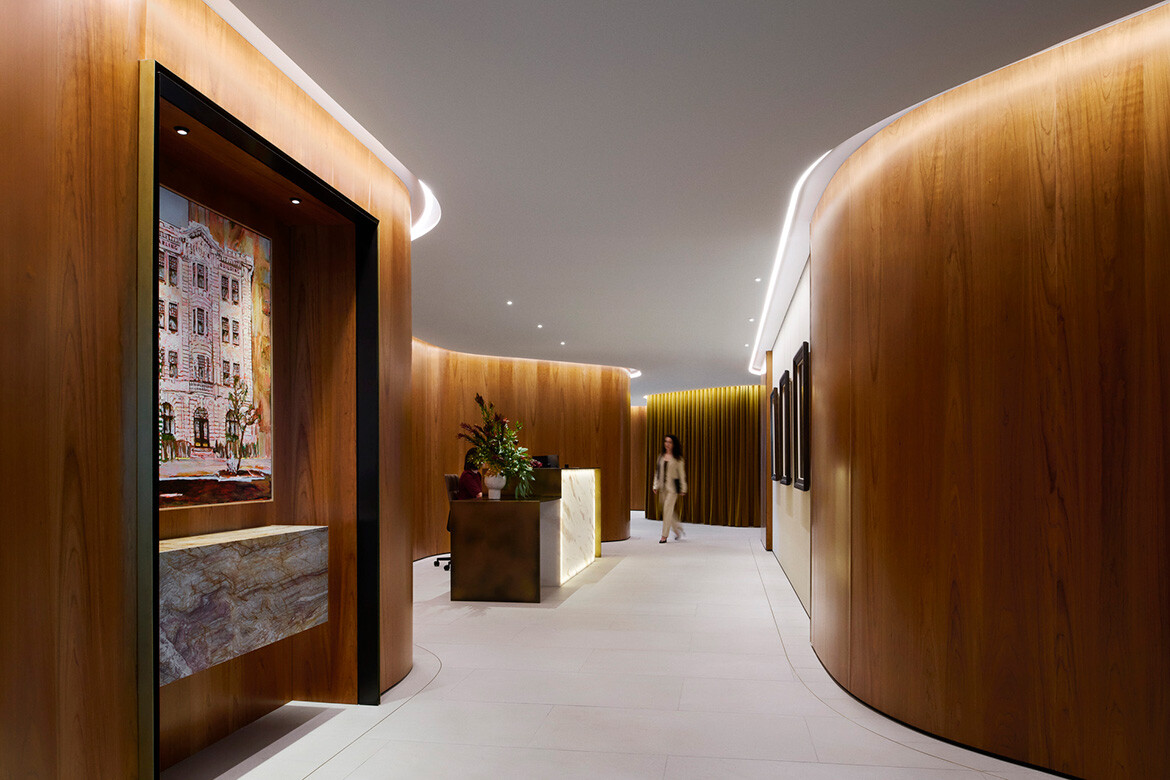
The material palette is rich without being heavy. Cherrywood timber, veined marble, bronze, velvet and soft lighting create a sense of permanence and tactility, while gold velvet drapery and gallery-like portals add moments of gentle drama. Artwork supplied by Hill Smith Art contributes to the residential quality of the space, and a folded bronze reception plinth over backlit stone brings a more sculptural note to the front-of-house experience.
“Our scheme celebrates the organisation’s rich history, characterised by understated luxury, refined materiality and attention to detail,” says Smith.
Behind the client-facing spaces, the workplace also had to support a practical organisational shift. Mutual Trust’s Adelaide team had recently merged with CMS Private Advisory, requiring an environment that could bring two teams together while supporting focused work, collaboration and client hosting.
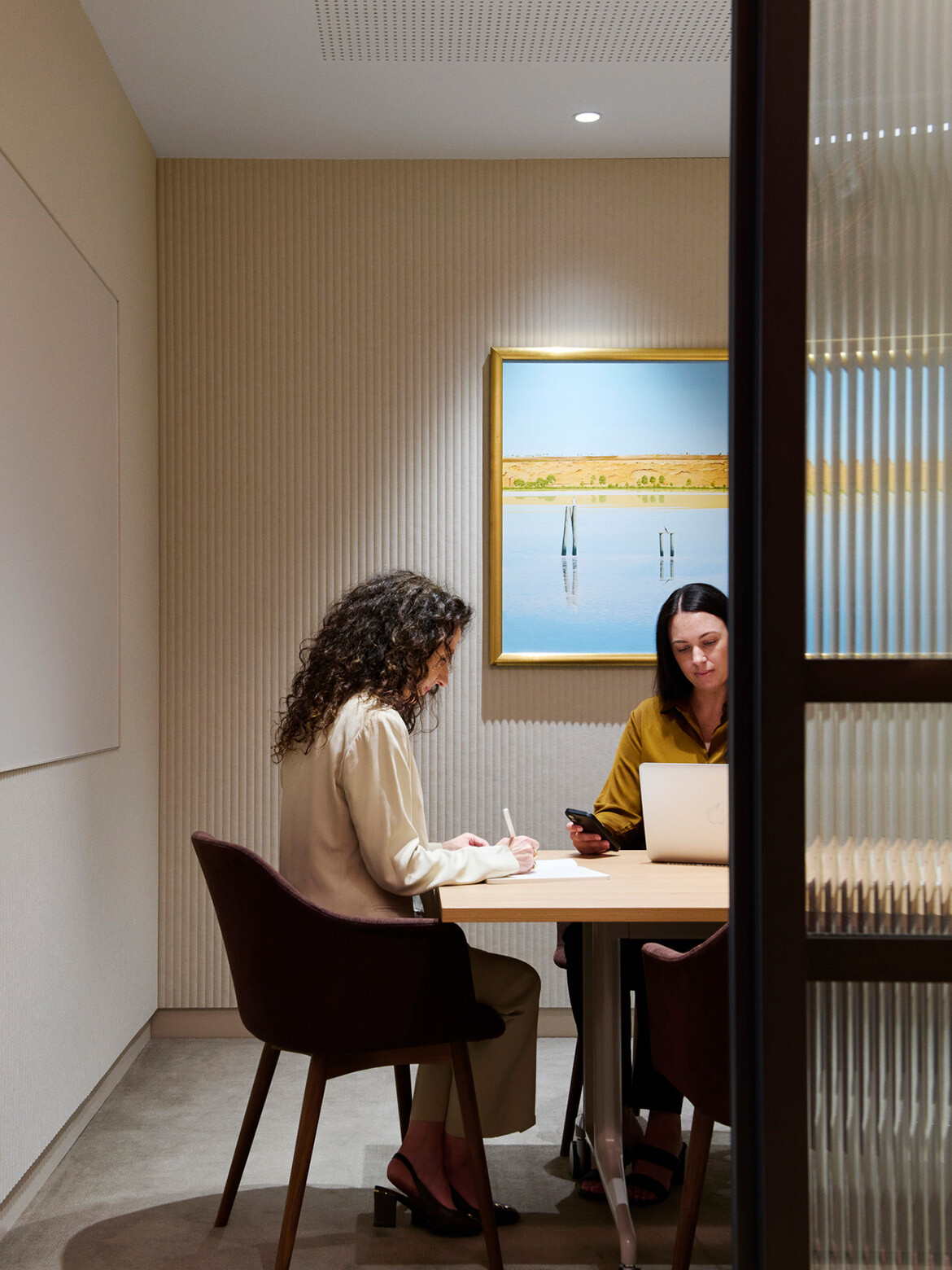
“At its core, the workspace is intentionally simple and highly usable,” says Smith. Sit-to-stand workstations, focus rooms and phone booths support concentrated work, while meeting rooms, a generous kitchen and breakout area create opportunities for informal connection throughout the day.
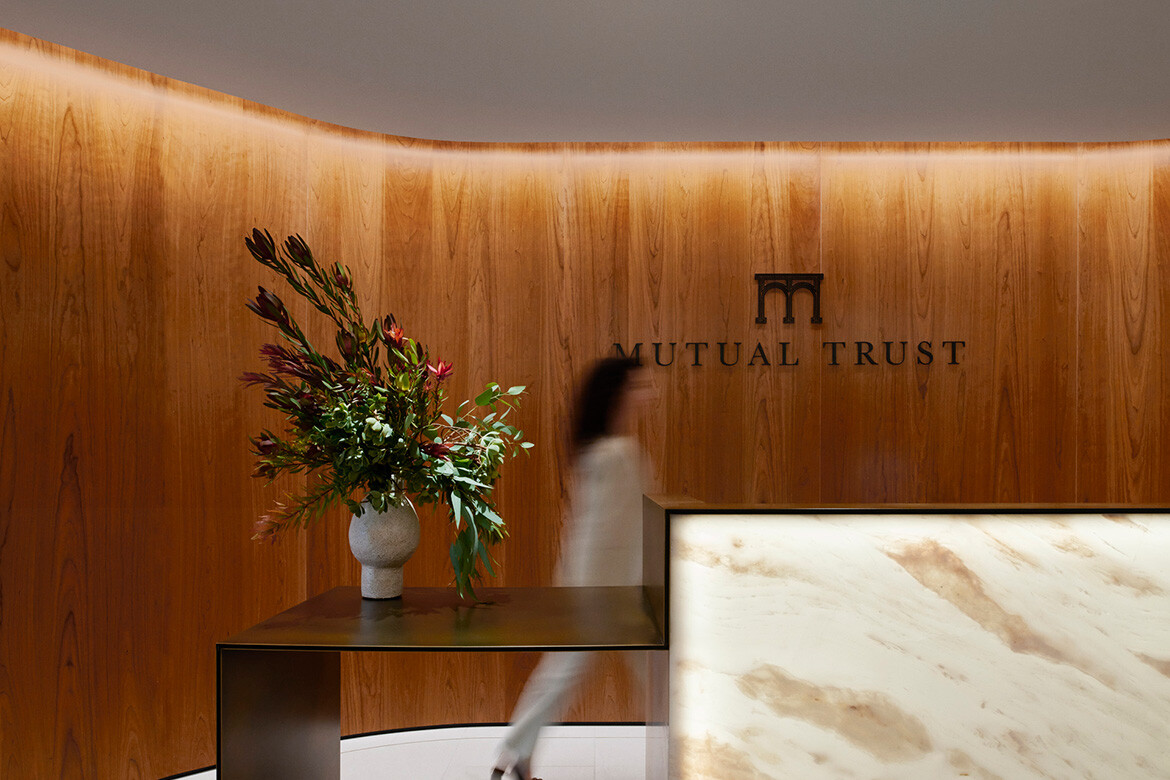
The front-of-house meeting suites also play a dual role. Designed to open up to one another and connect back to reception and waiting areas, they can become a larger function space for private client events, from formal dinners to more casual gatherings. This gives the workplace a social and operational flexibility that feels closely aligned with the nature of the organisation itself.
“The new workplace captures the essence of Mutual Trust and signals the next phase of our presence in South Australia,” says Brad Simmons, Mutual Trust Partner and Head of South Australia. “It creates a strong first impression for our clients — one that feels warm, confident and considered — while clearly expressing our organisational values.”
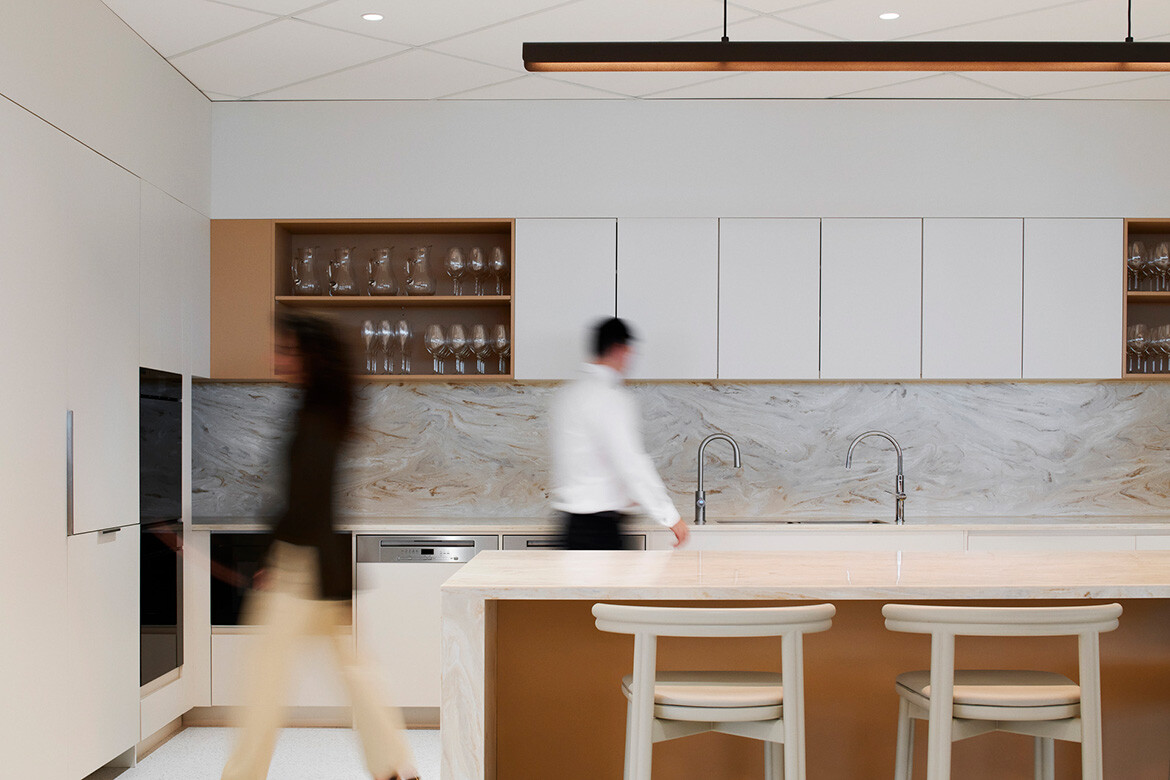
At Mutual Trust Adelaide, heritage is not treated as a display piece. It sits in the planning, the material choices, the slower sequence of arrival and the feeling that clients are being welcomed into somewhere considered, rather than simply checked in.
Woods Bagot
woodsbagot.com
Photography
Nicole England
INDESIGN is on instagram
Follow @indesignlive
A searchable and comprehensive guide for specifying leading products and their suppliers
Keep up to date with the latest and greatest from our industry BFF's!
The internet never sleeps! Here's the stuff you might have missed