The home of architecture and design in the Asia-Pacific
Get the latest design news direct to your inbox!

Get the latest design news direct to your inbox!
A new system, developed by InterfaceFLOR, is set to cut the environmental impact of modular carpet installation by up to 90%.
June 10th, 2008
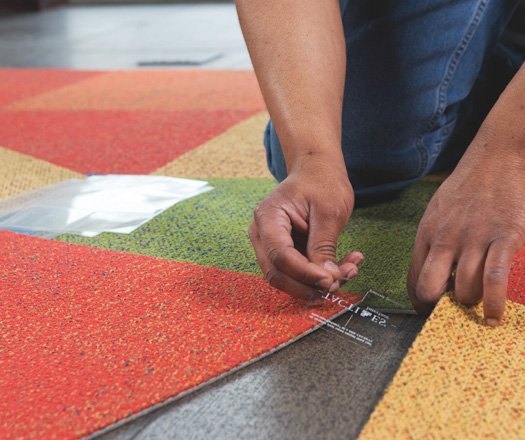
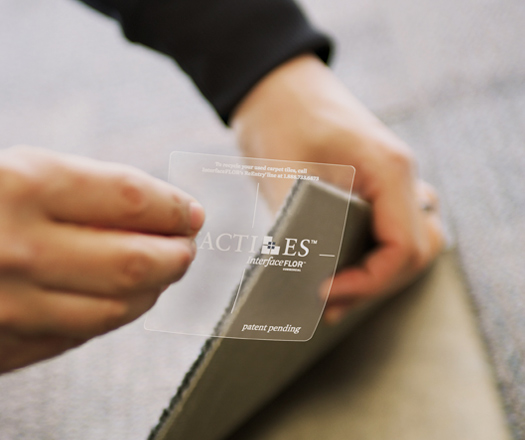
InterfaceFLOR, the world’s largest manufacturer and marketer of commercial modular carpet, has launched TacTiles – revolutionary adhesive squares that bond modular carpet tiles together without the need for liquid glue.
TacTiles herald a new generation of sustainable installation systems. Containing no liquid components, and eliminating the issue of volatile organic compounds, they can be installed anywhere. TacTiles allow professionals to easily replace, remove or recycle carpet tiles without the usual fuss.
According to InterfaceFLOR’s Australian General Manager, Clinton Squires, TacTiles are another step in InterfaceFLOR’s Mission Zero – a pledge to eliminate any negative impact the company may have on the environment by 2020.
“We’re expecting a lot of interest in TacTiles from design professionals. As a whole, there is a great commitment by the industry to become more environmentally responsible,” Mr Squires said.
The launch of TacTiles in Australia comes after three years of development and more than ninety test sites throughout North America and Canada.
InterfaceFLOR are a global leader in corporate sustainability, and in 2007 the company became Australia’s first 100% carbon neutral manufacturing company.
INDESIGN is on instagram
Follow @indesignlive
A searchable and comprehensive guide for specifying leading products and their suppliers
Keep up to date with the latest and greatest from our industry BFF's!
The internet never sleeps! Here's the stuff you might have missed