The home of architecture and design in the Asia-Pacific
Get the latest design news direct to your inbox!

Get the latest design news direct to your inbox!
Take sound decisions for your commercial spaces. The latest 3D acoustic sound tile by Woven Image makes for a bold and functional addition.

indesignlive.sg
October 25th, 2019
Excellent acoustics are vital within the commercial environment, especially in spaces where open plans are commonplace. In workspaces, acoustic considerations can help boost productivity and concentration levels among employees. In healthcare settings, sound acoustic design helps with patient wellbeing and privacy while also supporting communication between staff.

Today, acoustic ceiling and wall tiles have surfaced particularly popular, given their aesthetic advantage as well as their ability to combat noise pollution. Recently, Woven Image added to their collection of high-performing acoustic wall tiles with the launch of Ascent– a 3D tile that helps control reverberation inside a commercial space. After Wave and Dune, Ascent is the latest to join the Woven Image family of contemporary and design-led high-performance acoustic tiles.

Ascent is easy to apply to wall surfaces and can be fixed with a series of small clips that remain concealed once the tile has been adjusted in place. What’s impressive is that it is also available in a range of five on-trend colourways, providing multiple design options within interiors. Colours include cream, charcoal, straw, eucalyptus as well a subtle marble white and grey combination.
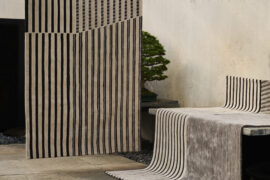
Ascent succeeds in adding depth and texture to flat wall surfaces thanks to its sophisticated 3D corrugated design when tiles are used either horizontally or vertically. The thermoformed tile also helps create dramatic contrasts between light and shadow, while also performing acoustic dampening optimally.

With a Noise Reduction Coefficient (NRC) value of 0.70, Ascent can effectively help reduce noise levels within any given space. Within more demanding environments, the NRC can be raised to 0.90, by adding in an optional baffle infill. What’s more, thanks to Woven Image’s commitment towards sustainability and the re-use of post-consumer waste, Ascent is made up of almost 70% recycled PET. Till date, the brand has recycled practically a 107 million one-litre PET bottles thrown in the trash.
Find out more about how Ascent can improve the acoustics of your interior spaces. Get in touch today.
INDESIGN is on instagram
Follow @indesignlive
A searchable and comprehensive guide for specifying leading products and their suppliers
Keep up to date with the latest and greatest from our industry BFF's!
The internet never sleeps! Here's the stuff you might have missed