The home of architecture and design in the Asia-Pacific
Get the latest design news direct to your inbox!

Get the latest design news direct to your inbox!
What is the next big thing in coworking space design? How do coworking spaces in Asia differ from those in other regions? Bean Buro’s Kenny Kinugasa-Tsui shares insights from his book Co-Working Space Designs.

April 1st, 2019
What makes a good coworking space? What is the next big thing in coworking space design? How do coworking spaces in Asia differ from those in other regions?
Kenny Kinugasa-Tsui, co-founder of interior design studio Bean Buro shares insights from his recently published book Co-Working Space Designs (2018, Images Publishing).
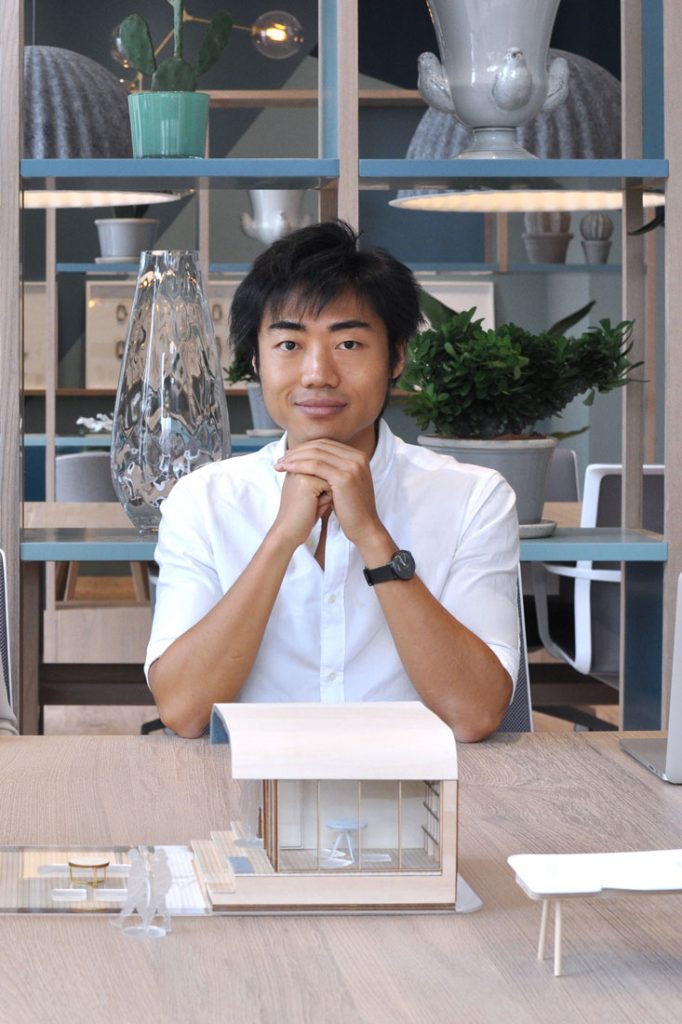
Bean Buro co-founder Kenny Kinugasa-Tsui
The current workplace design trends, in my opinion, have become overly generic, paradigmatic and rational. Through the creative explorations of our own projects, my writing explores other ‘co-’ narratives that are poetic, artistic, and romantic in the design of social spaces in a workplace.
Much of our own works over the past few years at our design studio Bean Buro has been about creating innovative spatial designs stemming out from the sharing-economy culture, where the need for flexibility, hospitality, and wellbeing have been at the forefront of the exploration.
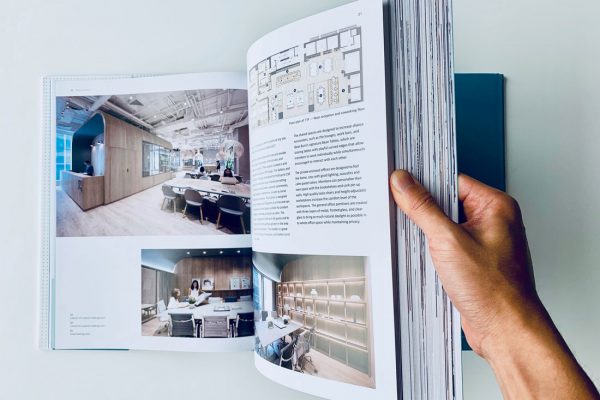
The book represents our design research at Bean Buro and presents some of the most intriguing workplace designs by other designers with over 40 examples from around the world.
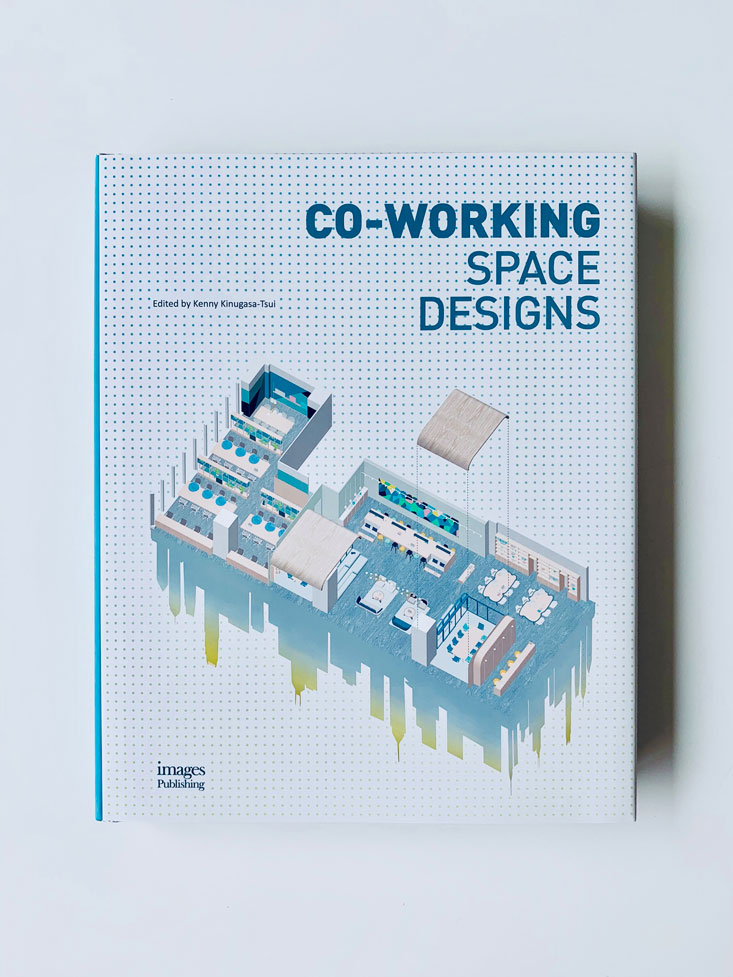
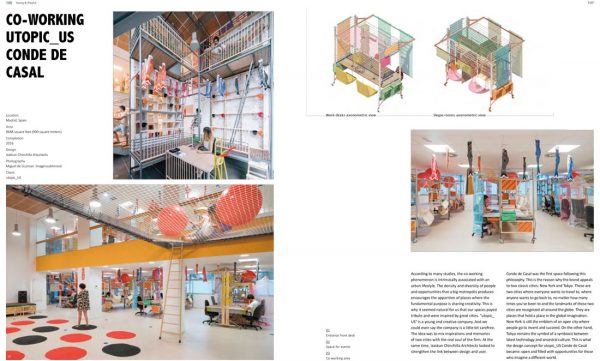
For many years ‘coworking space’ had earned a certain stereotypical image of being casual for young grungy startups. However in recent years, we have seen an explosion of new types of co-working space appearing, and it was my attempt to differentiate them into different categories, such as ‘Matured Lifestyles’, ‘Rustic & Industrial’, ‘Young & Playful’, ‘Larger Communities’, and ‘Bare & Minimal’.
These cover designs not only co-working operators for individual members, but also different companies who created co-working spaces within their own premise for better employees engagement, or for the reason of assigning a fluctuating portion of their staff in a co-working operator’s space as a swing space for experimentation.
Sociable, flexible, inspiring, humanistic, fresh, simple, poetic, engaging. ‘Co’ symbolises much more than just space sharing. A good ‘co’ design should nurture community, connectivity, cohesiveness, collaboration.
In the introduction of the book, I have discussed our own design methodology and projects at Bean Buro to create humanistic designs that are not generic to following workspace trends. Each project has its own narrative, specific paradigms and poetics.
Each co-working environment should be unique to its own setting, such as its city context, the building, and the people. It should coherently respond to an overall ecology where user experience isn’t only considered inside the co-working space, but responding to the external dynamics of the place.
In Asia, we have previously seen co-working space designs that followed trends risen from western cities, but the genre might have evolved and expanded in Asian cities as the environment is very different; In densely populated Asia cities, co-working spaces are ‘parasitic’ spaces often situated in hybridised buildings with complex mixed used functions.
It forms part of a complex ecology that is always pulsating with the fluctuation of needs affected by the economy and contemporary lifestyles that are becoming increasingly flexible and dynamic.
On the other hand, we also see various co-working operators operating within super-large spaces inside mix-used developments, creating co-working environments over hundreds of square metres. This is especially the case in Chinese cities.
In our own project for The Work Project, we have also explored co-working designs for a new demographic of users – those who are not necessarily young startups but mature business with higher-end lifestyle. This has lead to a hotel-like, hospitality-driven, co-working space design that embodies a high level of taste, elegance, with luxury lifestyle events (including wine tasting and music performances).
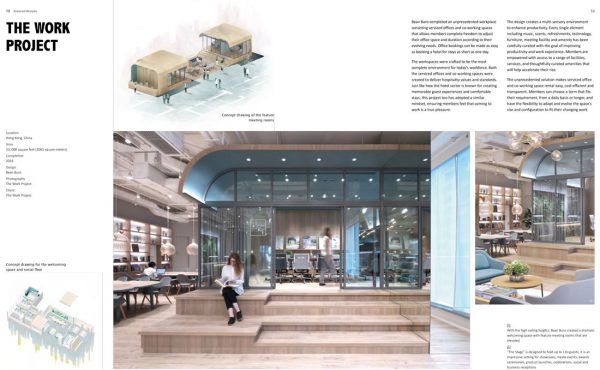
The Work Project Hong Kong by Bean Buro
The above examples differ from the original ‘typical’ co-working space type, which had a generic tone to its rawness and casualness catered towards start-ups, instead, they begin to widen the spectrum of co-working space types and genres such as high-end luxurious, super large scale, and greater demand of flexibility and work setting types offered to the users and a highly dynamic context due to densities in Asian cities.
What will be big in coworking space design in the near future?
Technology will continue to sculpt the way we work. In the coming years, for coworking operators this may include the ‘uberisation’ of space by allowing users to pay for what they want and when they want it, with much more flexible and shorter-term leases of coworking spaces.
The trending VR (Virtual reality) and AR (augmented reality) might change the way we visualise and connect with each other for meetings and collaborations, allowing co-working spaces to be even more agile and dynamic.
For companies own workspace, a hybrid workplace model of coworking and fixed-desk working, could bring some of the advantages of agile working without the full adoption of activity-based work environment to achieve a well-balanced workplace as per the company’s needs. This is likely to be more and more apparent.
How do you think our needs for coworking space will evolve in the future?
Coworking is now an established concept however its definition is still evolving rapidly. More and more coworking types and definitions are appearing around the world. Designers are expanding the terminology of the ‘co’ in coworking.
As spaces in our cities become more and more expensive, and this will continue to drive companies to consider alternative work styles for their employees for reduced costs and more efficient productivity, which means more and more coworking space types will be produced in cities to meet the demands.
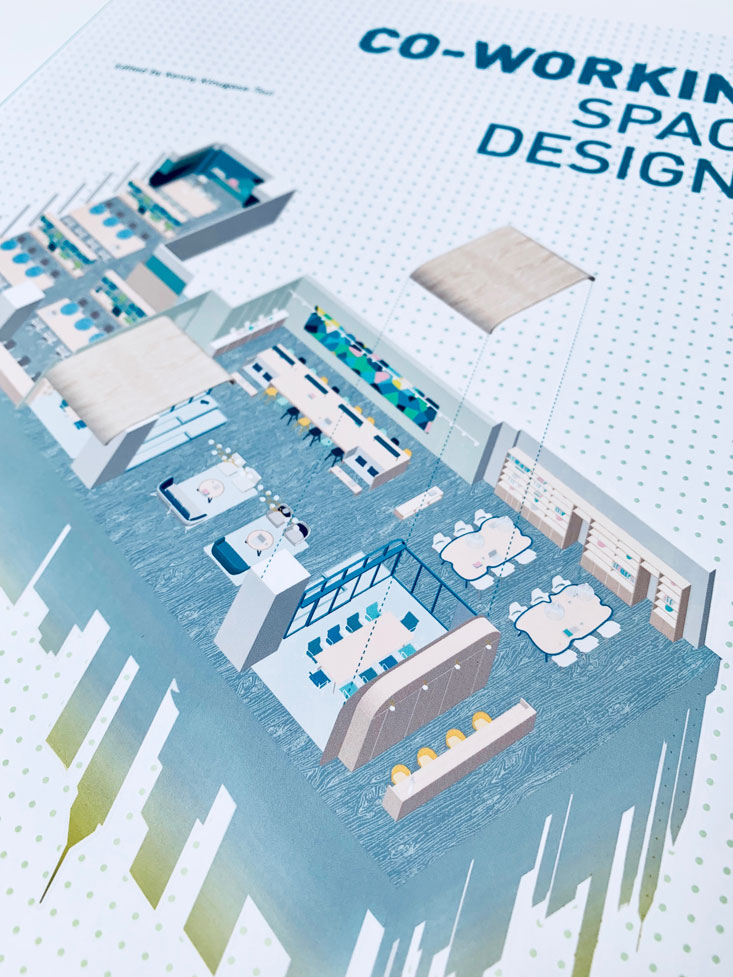
Meanwhile, designers will continue to explore coworking concepts companies suffering from problems of fixed leases to increase space usage efficiency and introduce the essential social qualities to meet the demands of the new generation of employees.
The spectacle of coworking for a more agile and engaging work environment has proven to be an unprecedented force. The enduring trend suggests that the coworking spaces are here to stay. From the point of view of the architecture and interior design disciplines, the coworking field is a powerful strand of development that will continually push the boundaries of design innovations, in parallel developments with technology.

Kenny Kinugasa-Tsui (right) and Lorene Faure, co-founders of Bean Buro
INDESIGN is on instagram
Follow @indesignlive
A searchable and comprehensive guide for specifying leading products and their suppliers
Keep up to date with the latest and greatest from our industry BFF's!
The internet never sleeps! Here's the stuff you might have missed