The home of architecture and design in the Asia-Pacific
Get the latest design news direct to your inbox!

Get the latest design news direct to your inbox!
As founder of the online gallery The Artling and the studio T+, Talenia Phua Gajardo oscillates between architecture, design and art, writes Iliyas Ong.

August 21st, 2014
Talenia Phua Gajardo has one simple yet fundamental criteria when appraising art: it has to be visually intuitive. The founder of online gallery The Artling scours Asia to unearth talented artists, educate the public, and promote the industry in the region. “We are on a continuous hunt to bring these artists to light and make their work accessible to the international market,” she says.
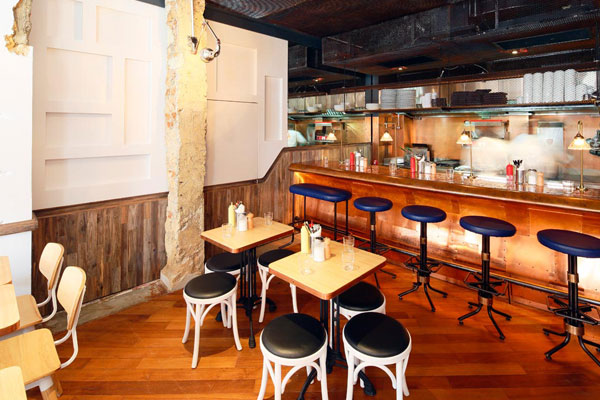
Keong Saik Snacks
But she isn’t an artist herself. Rather, the Singaporean-Chilean considers herself an art consultant and designer. In addition to The Artling, Phua Gajardo founded the studio T+ in 2013, where she creates interiors for residences, hotels and F&B joints such as Keong Saik Snacks and 196 Bishopsgate in London. The studio also produces curious furniture pieces that challenge traditional geometries. In fact, it was her work in interior and furniture design that brought her into the fray of art.

Keong Saik Snacks
“The Artling was born through specifying for my interior design and architecture work,” Phua Gajardo reveals. Currently, The Artling stocks more than 5,000 artworks from both emerging and established artists, such as Singapore’s Dju-Lian Chng and South Korea’s Do Ho Suh. Prices range from US$100 to US$10,000.
More than an e-commerce platform, The Artling offers art consultancy services to private and corporate clients. As the multi-hyphenate describes, “Art consultancy within the interior design and architectural context is particularly valuable when working with the specifiers themselves.” It’s also where her design background has lent heft.
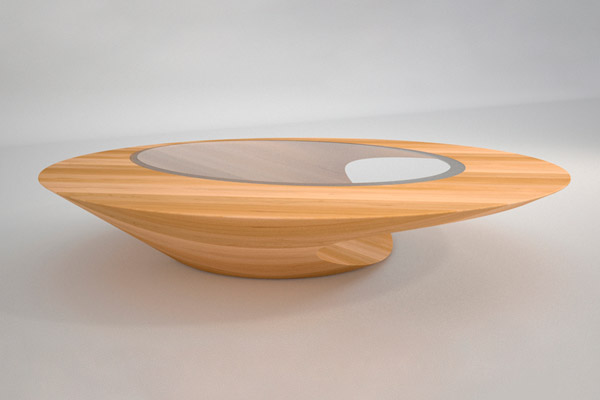
Koffie table
After graduating in architecture from Central Saint Martin’s in 2007, Phua Gajardo worked for Zaha Hadid Architects in London. There, she met Camiel Weijenberg, with whom she would set up the furniture and interior design practice MAKEMEI, the predecessor to T+. Where her stint at Zaha Hadid’s office introduced her to the avant-garde, MAKEMEI established that as part of her style.
“Working at Zaha Hadid taught me how spaces are read and designed, the use of materials, complex geometries, and pushing the boundaries of what we believe to be possible or not—even outside of design. It informed my overall attitude towards construction and design,” Phua Gajardo says, adding that her strong aesthetic sense is influenced but not determined by the brief.
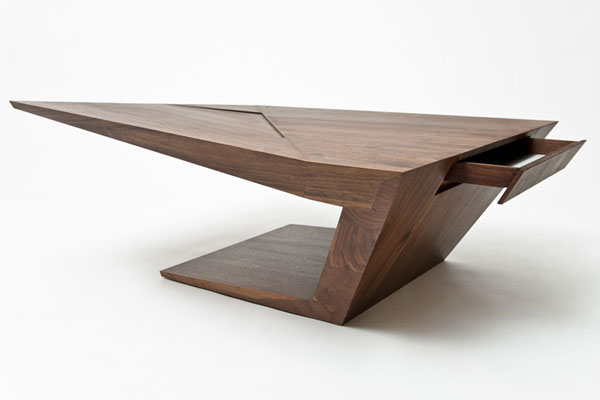
RD table
Take for instance Trees, an urban furniture installation that was exhibited as part of Singapore Design Week 2013. Made of Valchromat, an engineered material that mimics wood, the installation takes the form of its namesake: a skeletal canopy provides sunshade for the mushroom-like benches that sprout beneath it. Like her career, Trees occupies the intersection between design, architecture and art.
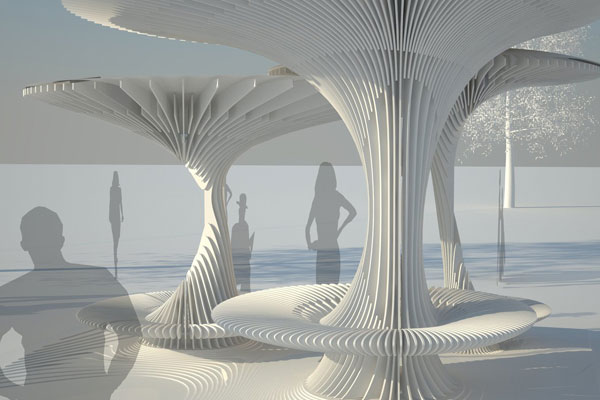
Tree installation
It’s one of the reasons why Phua Gajardo was picked to be an Ambassador at Singapore Indesign, which this year, will be held on Saturday 4 October. An attendee to previous editions of the event, she is emboldened by its growing popularity and impact on the design industry here.
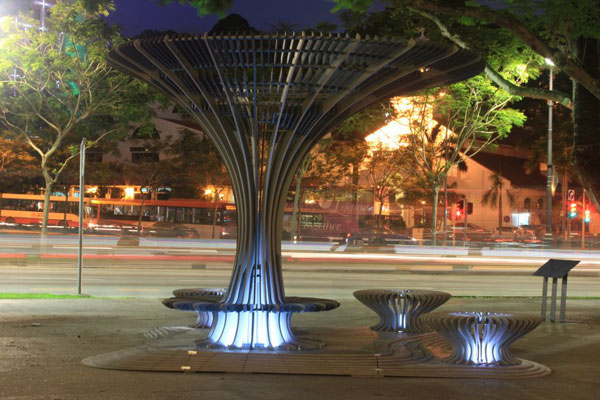
Tree installation
“These events are very important; they are a great platform for both young and established designers to engage in dialogue, and they also attract some of the top names in design to Singapore,” she notes. And with Phua Gajardo, in art, too.
The Artling
theartling.com
INDESIGN is on instagram
Follow @indesignlive
A searchable and comprehensive guide for specifying leading products and their suppliers
Keep up to date with the latest and greatest from our industry BFF's!
The internet never sleeps! Here's the stuff you might have missed