The home of architecture and design in the Asia-Pacific
Get the latest design news direct to your inbox!

Get the latest design news direct to your inbox!
A brise soleil design on the facade of the Cardiff Grove House surprises as it opens, reflecting the joyous approach of MAKK Architects toward domestic design.

February 1st, 2019
The screen is a popular element for houses in the tropics, applied for its efficiency in mitigating harsh sunlight and views within high-density neighbourhoods without compromising on natural ventilation. Its functionality is well documented in traditional vernacular architecture and continues to offer myriad design potential to this day.
A commonly used, straightforward design is that of vertical timber strips with varying gap widths. While timeless, it does not offer much excitement. Thus, MAKK Architects’ brilliantly designed screen on the facade of the Cardiff Grove House in Singapore is a breath of fresh air.

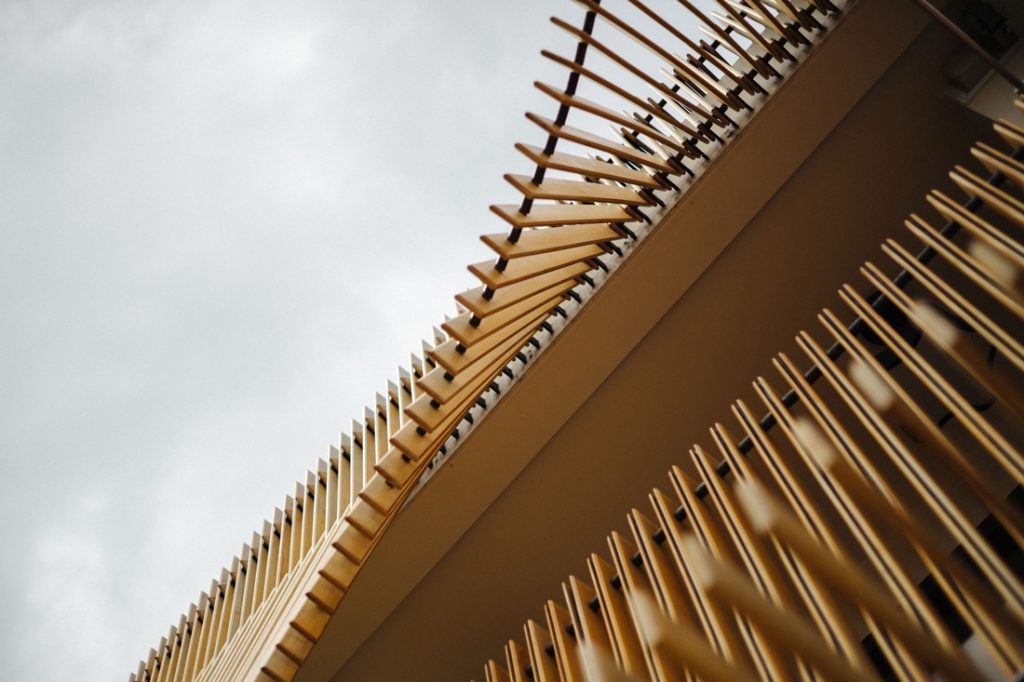
It is innovative in both appearance and operation, providing animation to the simple act of opening a screen. When down, it wraps the front face of the home in an unassuming layer – like a timber curtain – from the tip of the roof to the top of the car porch roof garden. When lifted, this static nature transforms with fluid motion. The raised sides of the screen create a concave profile. It is as if the timber strips are dancing; the lid of the house delights with a tectonic wink.
The house was designed for a couple with two young children, and the screen was mandatory to accord privacy. It also provides sufficient brightness and ventilation to the inter-terrace unit, which only has views at the front and rear. “The screen design amalgamates the client’s intention of shielding while taking the opportunity to turn this response into the key design element of the house. The arm was conceptualised to mimic the action of a traditional timber pole opening a window in a kampong house, so it does not have an overly high-tech look,” explains Lee May Anne, Principal at MAKK Architects. She continues, “I wanted something down to earth but still sophisticated.”
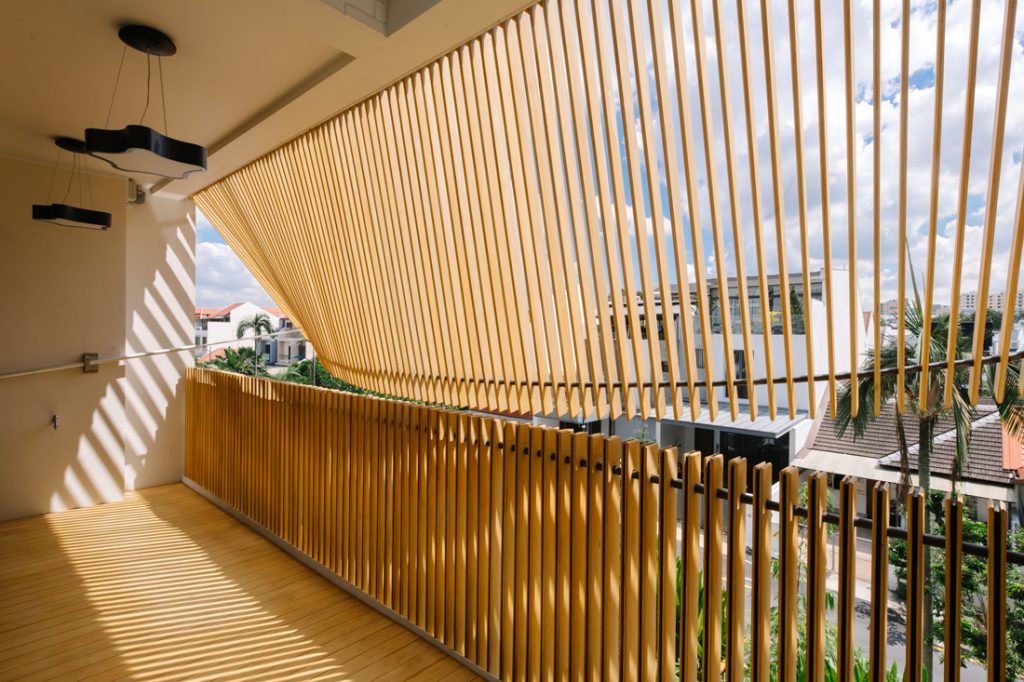
Much thought was applied to ensure smooth usage as well as a clean aesthetic for the screen. Lightweight Accoya timber was used to allow easy lifting of the screen. The weight of the timber strips, steel and cable elements needed to be calculated and calibrated to allow the mechanised arm to lift both sides while maintaining the screen’s fluid look.
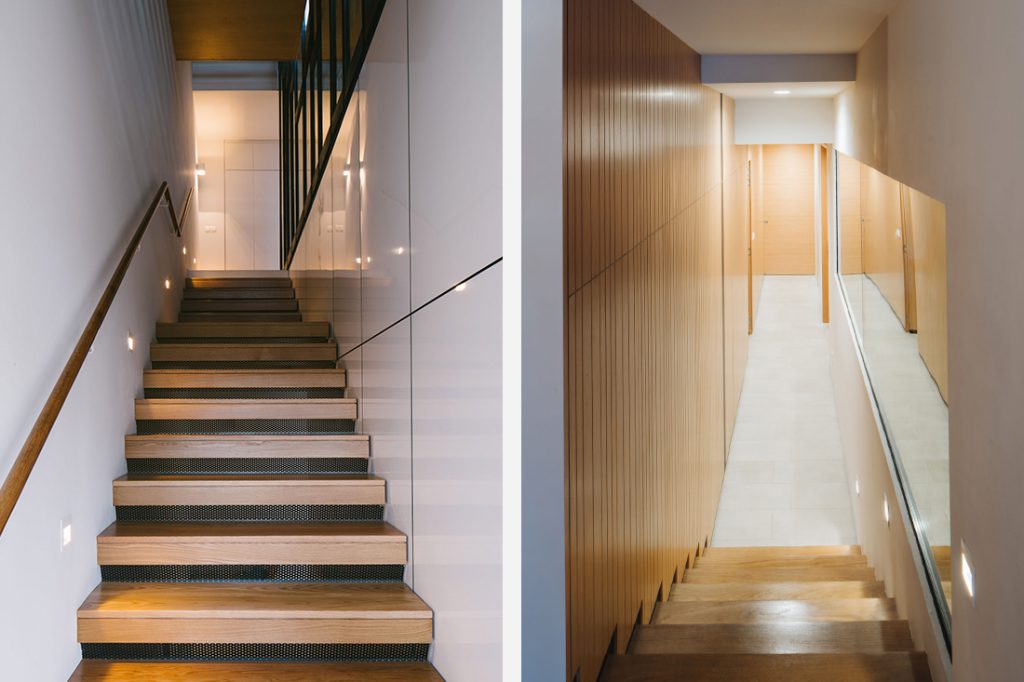
While the screen is the highlight on the exterior, the design of the staircases was paid special attention inside. The stairs leading from the entry level down to the basement have powder-coated perforated risers to allow light to pass through from the upper level, while ensuring the safety of the owners’ infant. From the second storey to the attic, another staircase functions as a library with integrated shelving – the top of which doubles as balustrades with an interesting height play.
The design of the Cardiff Grove House highlights how homes should not just be designed for functionality, but should also delightful. MAKK Architects’ oeuvre, featuring great diversity in approach to house design, makes every project individual.
Says Lee, “To me, every house and client is a new opportunity to provide a different typology and change the typical perception of what a house should look like. I try to steer away from the typical Cartesian box of the modern language, and depending on how receptive my clients are, I test out the varied ways to make a ‘house’.”
INDESIGN is on instagram
Follow @indesignlive
A searchable and comprehensive guide for specifying leading products and their suppliers
Keep up to date with the latest and greatest from our industry BFF's!
The internet never sleeps! Here's the stuff you might have missed