The home of architecture and design in the Asia-Pacific
Get the latest design news direct to your inbox!

Get the latest design news direct to your inbox!
Gallery Crossroad is a good example of adaptive reuse, in which a run-down Taiwanese residential property has been converted into a culture hub for photography lovers.

February 1st, 2022
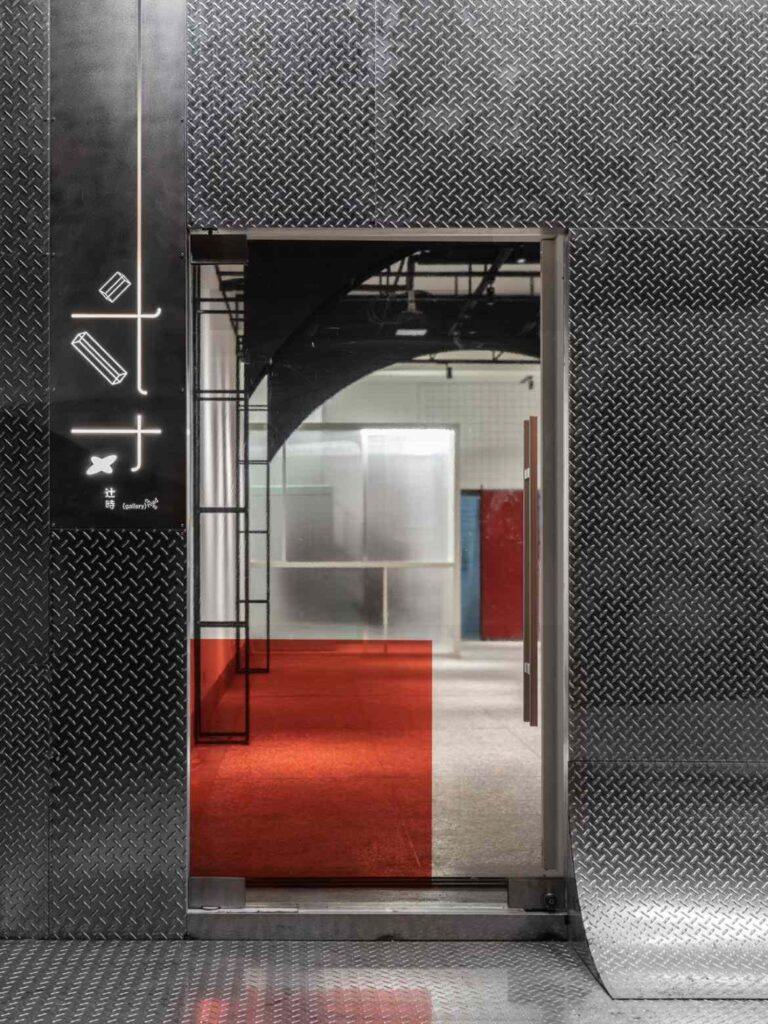
From the outset, Gallery Crossroad aims to revitalise the neighbourhood, offering a new social destination for the public while giving recognition to photographers. The journey of discovery begins outside the gallery, with chequer-patterned galvanised steel used for the facade. A material that is typically used for manhole covers, it imparts a sense of durability to the gallery – a nod to the enduring building built 40 years ago – and presents a blank canvas to what lies inside.

The interior gallery space adopts an achromatic palette and draws inspiration from a darkroom by blocking all windows at the front to create an impactful perception to visitors. Steel wireframe structures were constructed to hang pieces, while their curved arches visually extend the gallery’s depth of space.

Additionally, a semi-clear screen made from hollow boards separates the reception from the gallery area. Its translucent property suffuses an indistinct glow that is resonant with surrealist ambiances; whereas, the existing red door and grid tiles on the walls were intentionally kept intact to create a perceptual contrast and recall the vicissitudes of times.
Photography involves light and framing, and RIS Interior Design has successfully captured the nuances in Gallery Crossroad. Through different angles of framing, shadows of visitors, art pieces, and architectural elements cast dark, tonal effects, sustaining dynamic movements and increasing the illusion of volume despite the gallery’s tiny footprint.

INDESIGN is on instagram
Follow @indesignlive
A searchable and comprehensive guide for specifying leading products and their suppliers
Keep up to date with the latest and greatest from our industry BFF's!
The internet never sleeps! Here's the stuff you might have missed