The home of architecture and design in the Asia-Pacific
Get the latest design news direct to your inbox!

Get the latest design news direct to your inbox!
Helmed by AIM Architecture, the Ruff Well Water Resort is a pure and contemporary experience in the Chinese countryside, created for visitors in search of respite.
June 16th, 2015
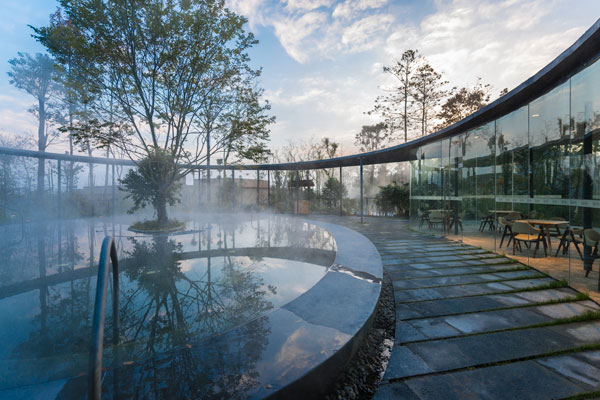
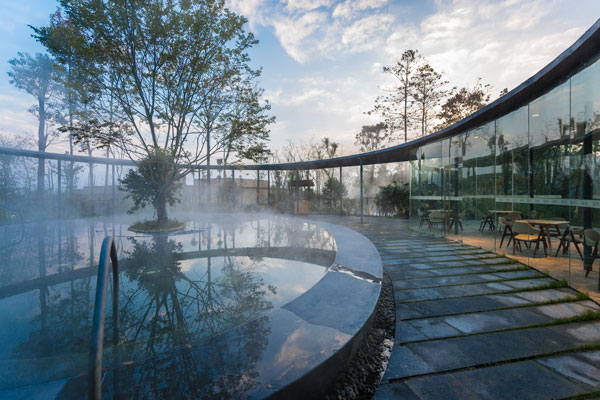
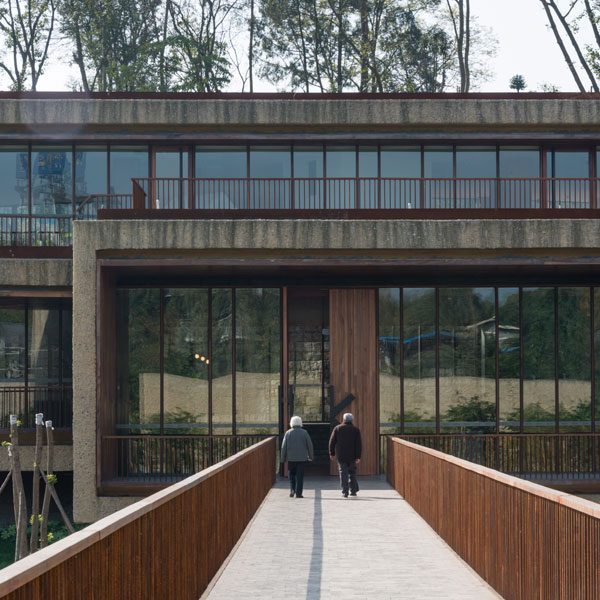
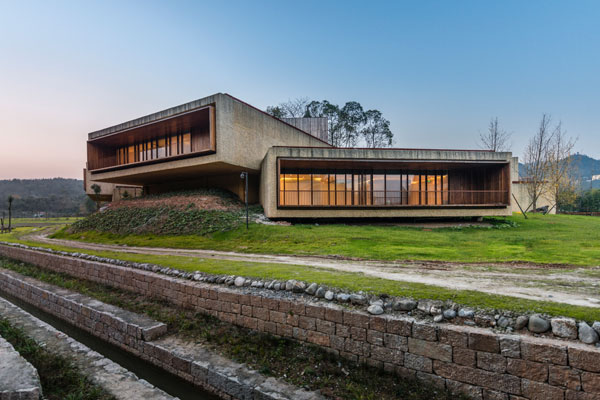
Top: Spa Building. Photo: Dirk Weiblen
The Ruff Well Water Resort sits in the north of Sichuan, China and at the foot of the Luo Fu Shan mountain range. Completed late 2014, the holistic design experience of the countryside resort, spearheaded by AIM Architecture, revolved master planning, architecture, landscape, interiors and custom furniture.
The key attraction of the Resort, besides its countryside scenery, is its extensive range of spa experiences, enhanced by thoughtful architectural features that bridge man-made structures and natural elements.
From the beginning, AIM defined the Resort’s surrounding natural landscape as core inspiration for the project. Temples surround tree-capped mountains in a locale filled with traditional hot springs, where water springs naturally in warm wells. The idea was not to interfere with nature, but to co-exist with the landscape to create an immersive, contemporary retreat.
Strategically wrapping a hill at the center of the site, the spa building overlooks the valley. Progressing through the stages of bathing, one is presented with multiple vistas across the changing landscape.
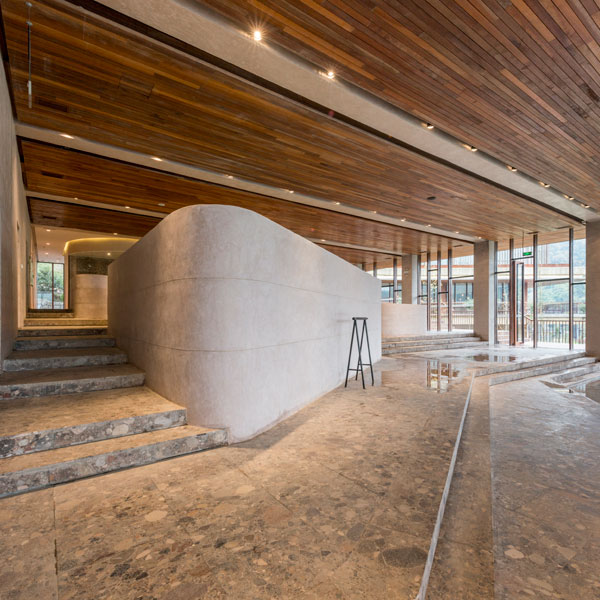
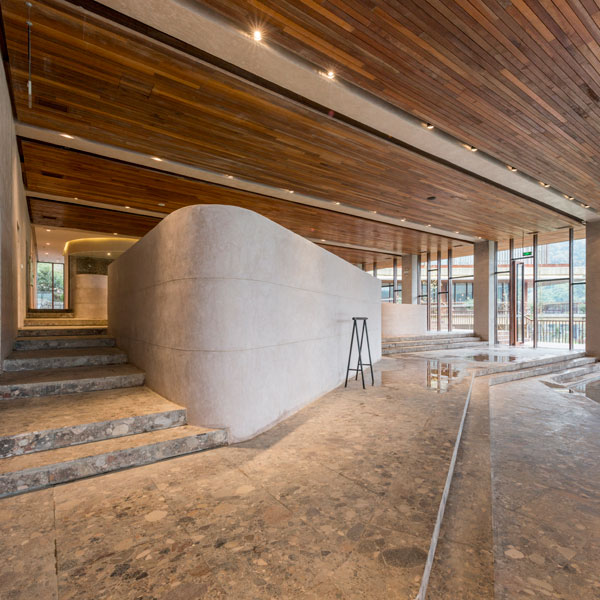
Indoor Pool. Photo: Dirk Weiblen
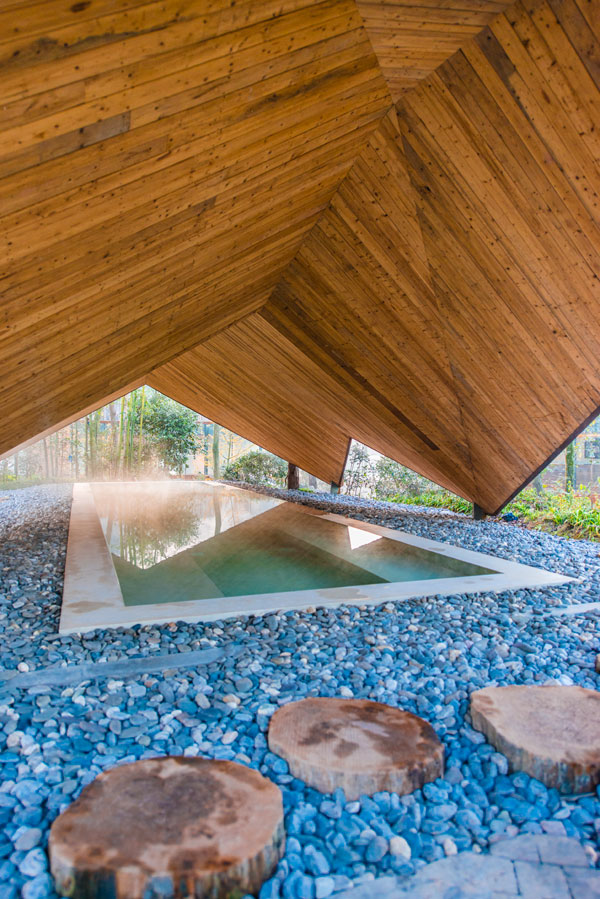
A water theme exists throughout the design experience in multiple forms: steam, ice, fish, herbs, salt and different concentrations of minerals. While some pools are still, others whirl, bubble and massage.
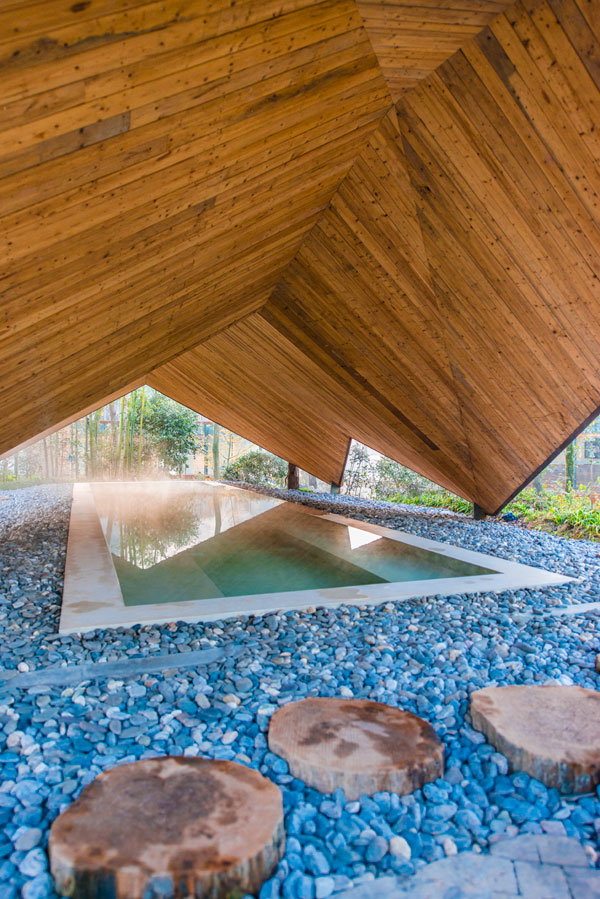
Long Roof Pool. Photo: Dirk Weiblen
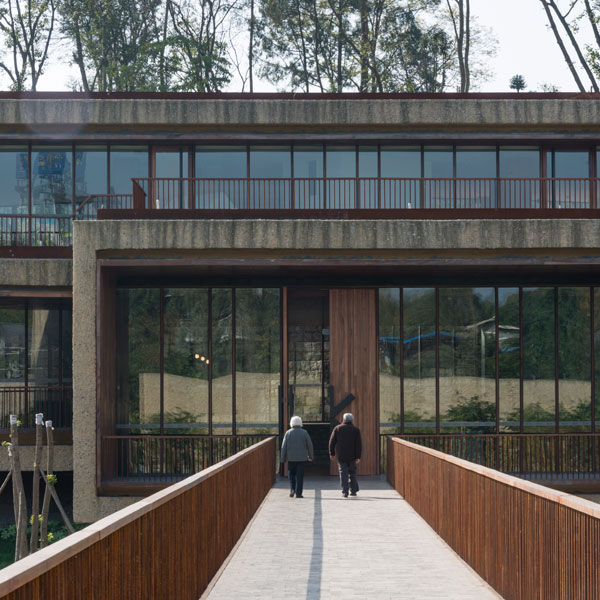
Building materials were carefully chosen for their relevance to nature. Majority of walls were made in clay mixed with pebbles, or stained timber. Central to the material palette is the locally sourced River Stone, made by mixing pebbles that were shaped by water over time. When cut, the River Stone reveals pebbles in various shapes and sizes, as well as a spectrum of natural colours. This stone was used in consistently applied across the Resort, defining floors, villa bench tops and pool seats. It has also been cast into concrete roads, water channels and landscape walls.
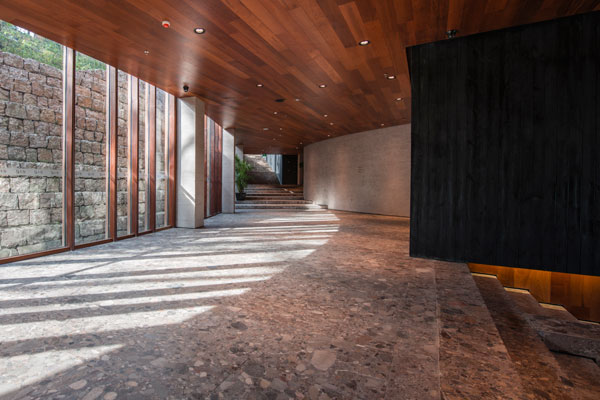
Spa Interior. Photo: Dirk Weiblen
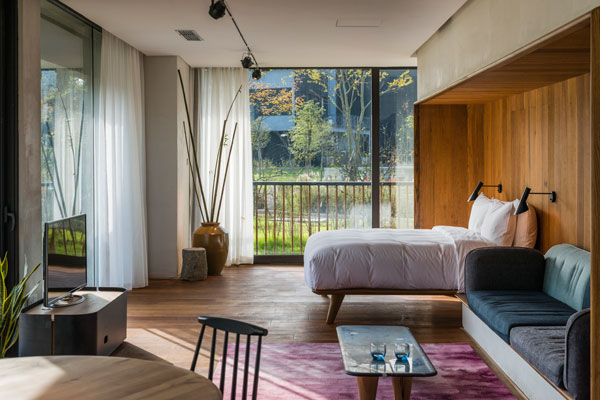
In a more private premise, villas house guests across multiple forms, while they remain consistent in sculptural timber-clad volumes designed to offer maximum contact with nature while retaining privacy.
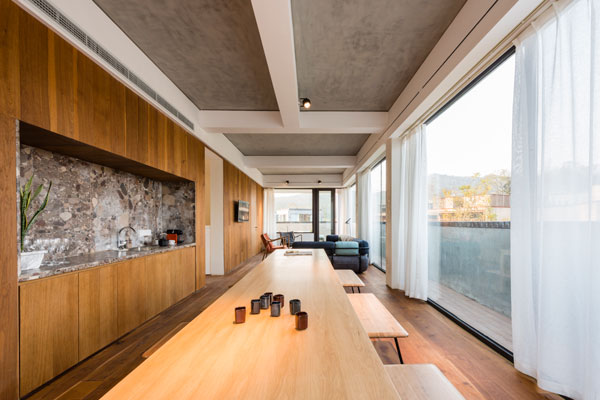
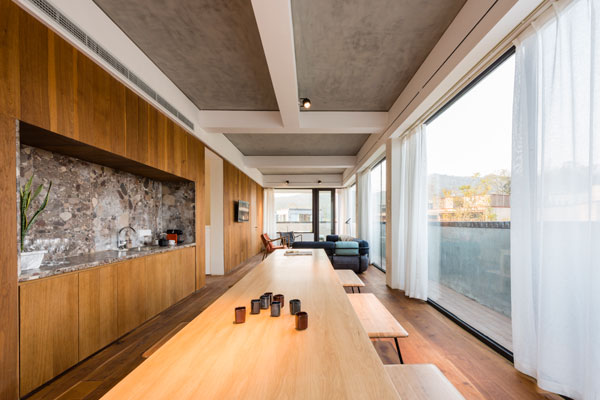
Villa Interior. Photo: Dirk Weiblen
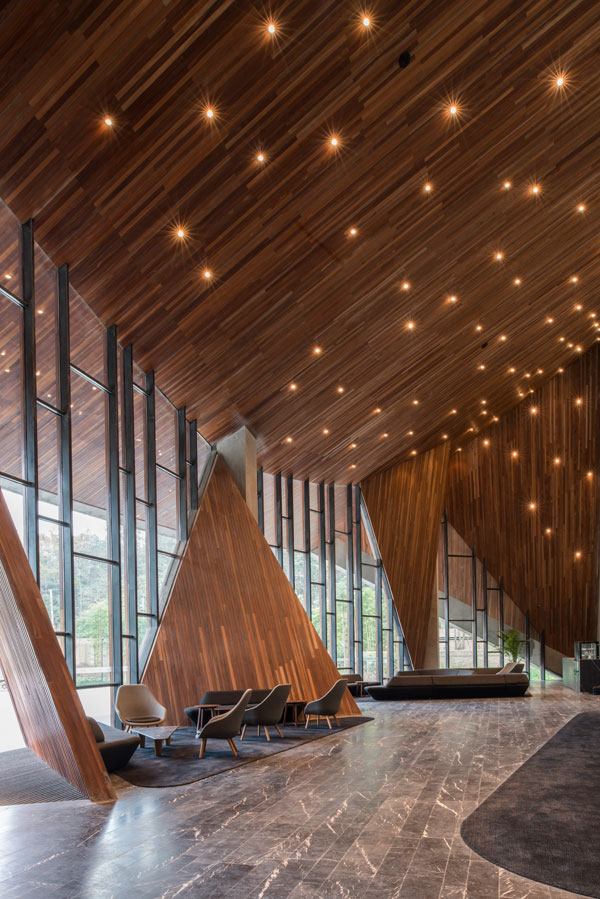
In the MuWeCo building, a small museum, wedding hall and conference space allow the fulfillment of other functions. Its distinctive vault roof creates the shape of a giant tent, as opposed to a conventional building construct. The structure consists of a dramatic entrance lobby and a large deck on the valley, overlooking the spa and its surrounding park.
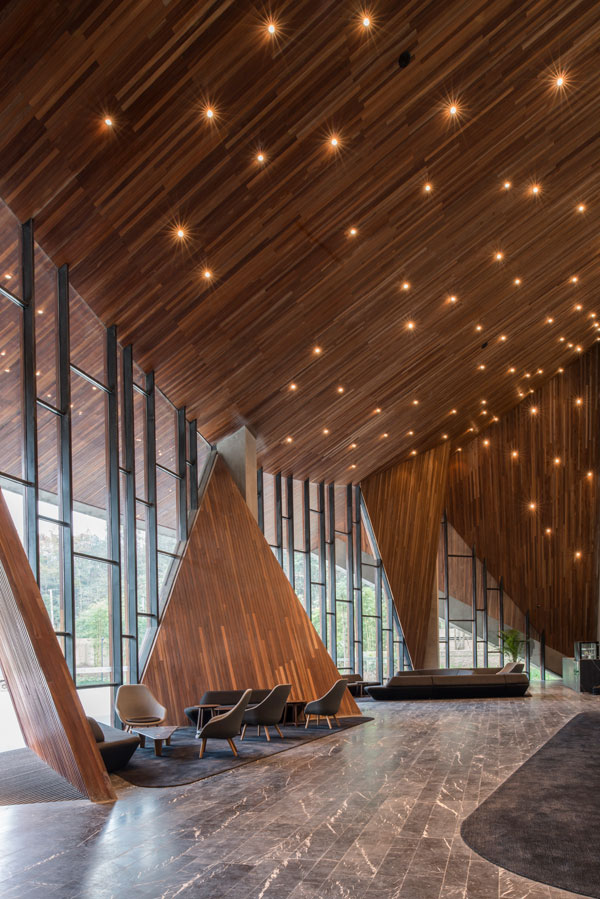
The MuWeCo building. Photo: Dirk Weiblen
Divulging a collaborative approach for this project, AIM says, “The relationship to the builders in this fairly remote location becomes very unique. A project like this requires a close relationship, they often have to build things that are new to them, and we on the other hand learn a lot from their local building methods.”
AIM Architecture
aim-architecture.com
INDESIGN is on instagram
Follow @indesignlive
A searchable and comprehensive guide for specifying leading products and their suppliers
Keep up to date with the latest and greatest from our industry BFF's!
The internet never sleeps! Here's the stuff you might have missed