Why is ‘agile working’ so confusing? Why is it impossible to wrap our heads around what it means? Well … welcome to your education. Let’s get to it!
February 13th, 2017
Agile Working. It’s a phrase thrown around a lot when it comes to modern working, but what does it mean really, and is it all it’s cracked up to be? In brief, agile working is simply where employees are given maximum flexibility and minimum constraints, to work how they see fit.
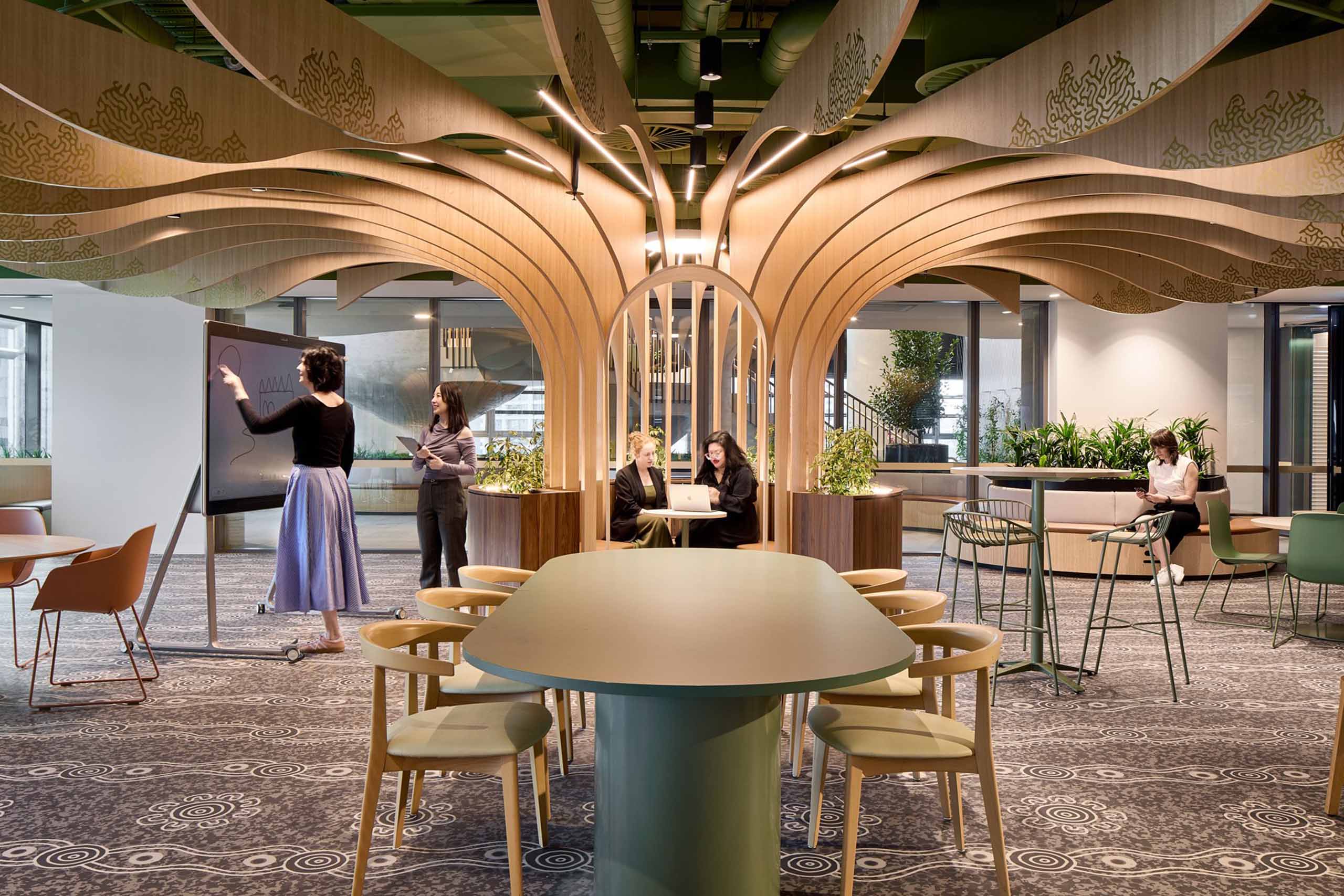
While it may take a fair deal of trust, the reality is that agile and flexible working environments are the direction more and more businesses are heading, and for great reason. More than a desire for a paycheque drives today’s worker, autonomy over where and when you work and a good work, life balance are central to the needs of the modern employee, and indeed central to the best outcome for a company. This is why so many workers today are no longer tethered to their workstations, preferring to hot desk, work out of the office, collaborate in group project areas, and bounce ideas of co-workers in huddle spaces.
With 69% of the millennial, or net generation, wanting to choose when and where they work, it’s no surprise that businesses are turning to agile working to attract the next wave of thought leaders and innovators.
Agile working is more than simply opening up variable office hours, with the mantra “work is an activity, not a place”, serving as a suitable slogan for the practice. Most definitions of flexible working follow this idea, seeing new ways of working as multi dimensional and not just limited to doing the same old work in the same old way, just at a different time. Effective agile working is about more than where, or even when people work, it’s about fostering an environment of freedom of choice for staff; about ensuring a culture where the work carried out is enjoyable and delivers the best possible outcomes.
It’s undoubtedly true that there’s A LOT about ‘agile’ to wrap your head around. But thankfully our industry’s prime agile working research and development team at Haworth have collated all you need to know about agility in the workplace. Their compound infographic series, below, is designed to take you through every element of contemporary agile behaviour, designs and workplace modalities.
Get the complete Agile Working infographic here.
INDESIGN is on instagram
Follow @indesignlive
A searchable and comprehensive guide for specifying leading products and their suppliers
Keep up to date with the latest and greatest from our industry BFF's!
The Geelong College’s Sport and Wellbeing Centre ‘Belerren’ designed by Wardle is designed around bringing in natural light. But Shade Factor’s job was to help modulate and precisely control it for the most important competitive moments.
Blending versatile cooking with smart performance, Bosch AccentLine appliances bring a quieter sense of order and simplicity to the modern kitchen.
Stepping into Intuit’s Sydney workplace certainly doesn’t feel like walking into an office. Why? In this film, we discover that, when joy takes precedence as a design driver, even a high-performing commercial CBD headquarters can feel like an intuitive wonderland that invites employees to choose their own adventure.
In the first instalment of our three-part series exploring what it means to sit your best, we pose the question to Gray Puksand’s Dale O’Brien, who discusses the importance of ease and majority rule when it comes to sitting and reveals why specifying a task chair is not unlike choosing a Volvo.
The workplace strategist and environmental psychologist was in Sydney earlier this year to give a talk at Haworth on the fallacies of the ‘average’ in workplace design.
The Director of Space Design for Haworth International for Asia and Europe tells us all about her global design journey.
The internet never sleeps! Here's the stuff you might have missed
Hosted at Savage Design in Sydney, the first Indesign Social Club brought emerging architects and designers together for a smaller, more open conversation on participation, making and the future of practice.
Powerhouse Parramatta has commissioned more than 50 leading designers from across Australia to shape the spaces and experiences of the new museum, including public, exhibition, restaurant and retail spaces.
For Libertine Parfumerie’s new Armadale boutique, Tamsin Johnson looked to the warmth of the home and the rhythm of old-world shopfronts to make fragrance retail feel slower, richer and more personal.
Scheduled to open later this year on the banks of the Parramatta River, the 30,000-square-metre Powerhouse museum — designed by Moreau Kusunoki in collaboration with Genton — represents a major shift in the geography of Sydney’s cultural infrastructure.