The home of architecture and design in the Asia-Pacific
Get the latest design news direct to your inbox!

Get the latest design news direct to your inbox!
Submissions for Asia Pacific’s INDE.Awards 2018 are open. Not sure if you should submit? Here’s a primer on why you should!
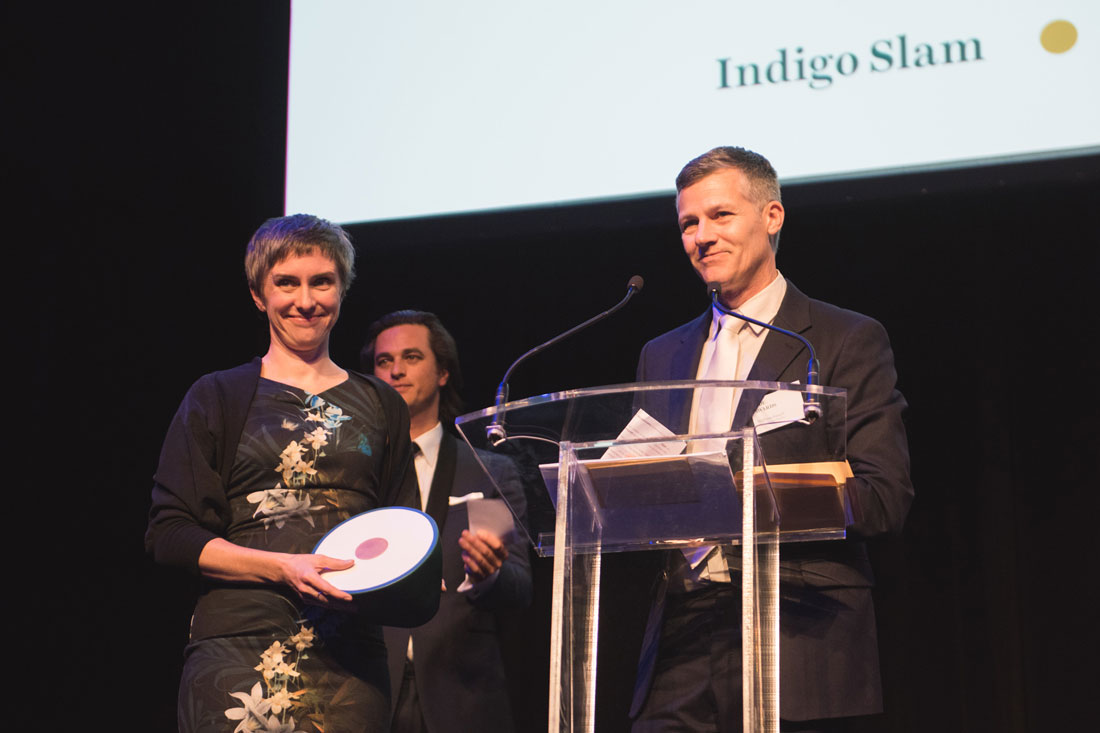
Smart Design Studio taking out the award for The Building at the INDE.Awards 2017. Photography: Tim Da Rin
January 5th, 2018
The design industry has a lot of awards programs. So it can seem easy to wave off their significance. But what there hasn’t been – until now – is an A&D awards program entirely dedicated to the Asia Pacific region. And you, dear reader, being an A&D practitioner in Asia Pacific, therefore have the opportunity to participate in developing the story of architecture and design in one of the world’s most important creative hubs.
So we know that your work is shaped by, and expresses, an astounding variety of place-specific intricacies that characterise life where you are – be it the urban matrix of dense and green Singapore, the rapidly expanding cities of Vietnam, suburban Australia or downtown Shanghai.
The INDE.Awards bring all these threads together to show the world how APAC’s most progressive designers and architects are innovating for the realities of the globe’s most populous region.
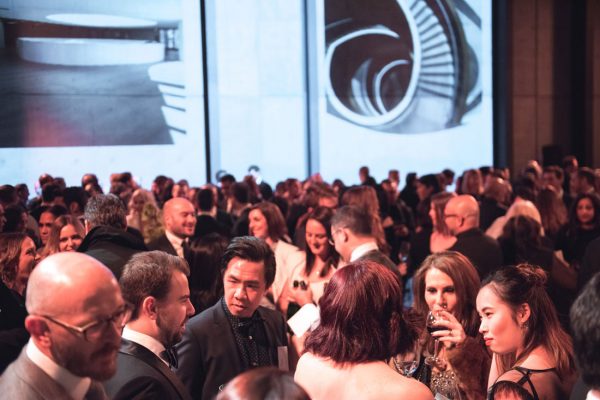
Above: INDE.Awards 2017 gala is Sydney. The 2018 gala will be in Singapore.
This is something that our judges have appreciated from day one. Says 2017 jury member Paul McGillick, an established editorial figure based in Australia but fluent with the design currents of Asia, “The scope of the INDE.Awards, which takes in the region, is really innovative… What makes it special is this issue of place.”
For American designer and 2017 jury member Stephen Burks (Stephen Burks Man Made), there’s much to be appreciated in our region. “There’s obviously such a great body of work happening [in the Asia Pacific region] that it’s definitely commendable that the INDE.Awards exist,” he says.
Both McGillick and Burks return to the INDE.Awards jury in 2018.

Above: Paul McGillick and Stephen Burks (centre), beside fellow jurors and members of the audience at the INDE.Awards 2017 gala.
“Championing the best in design and architecture across Asia Pacific has always been our number one commitment,” says Raj Nandan, Founder and CEO of Indesign Media. This is your chance to be recognised for your part in the story.
Photography by Tim Da Rin.
INDESIGN is on instagram
Follow @indesignlive
A searchable and comprehensive guide for specifying leading products and their suppliers
Keep up to date with the latest and greatest from our industry BFF's!
The internet never sleeps! Here's the stuff you might have missed