The home of architecture and design in the Asia-Pacific
Get the latest design news direct to your inbox!

Get the latest design news direct to your inbox!
What the A-list panellists at Brainstorm Design Conference 2018 put their heads together to discuss and debate.

Photography by Stefen Chow for Fortune/Brainstorm Design.
March 15th, 2018
Global, digitalised, and now subject to disruption and change in unprecedented ways, businesses today face challenges they admittedly feel ill-equipped to handle. It appears that corporations are interested to adopt ‘design thinking’ to chart and navigate these uncertain waters.
But what does ‘design thinking’ mean and entail? Is it more than a buzzword? How are businesses actually engaging designers and design? And in what terms can the results of ‘design thinking’ be measured? These were some questions that the recent Brainstorm Design Conference put forward in its three-day forum.
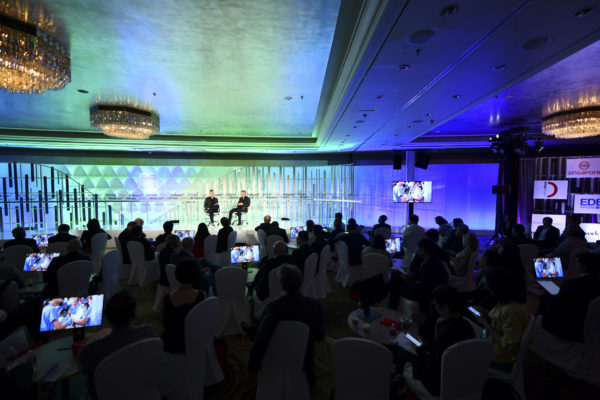
The conference, presented by Fortune, TIME, and Wallpaper* with the support of Singapore’s Economic Development Board, the DesignSingapore Council, McKinsey & Company, and WeWork, took place at The Mandarin Oriental Singapore during Singapore Design Week 2018. Its speakers come from diverse sectors and disciplines, and include leading architects, designers, academics, urban planners, writers, and business honchos from the Fortune 500. Here are a few strands of their discussions:
The role of design in business was discussed on different levels (at various discussions). In the session “Rethinking Design Thinking”, Natasha Jen (partner at creative studio Pentagram) asked that we move “beyond the simplistic understanding of design thinking” to understand it as a complex process and professional undertaking.
Several other discussions in the conference touched upon design thinking as a corporate strategy, design thinking as integrated into leadership and the management level, and design thinking as modus operandi. At the most “design-driven”, it appears that is an actual merging of the design and business, as in the case of Airbnb which its Co-founder and Chief Product Officer Joe Gebbia says “is not so much a tech company that uses design as a design company that uses technology.”
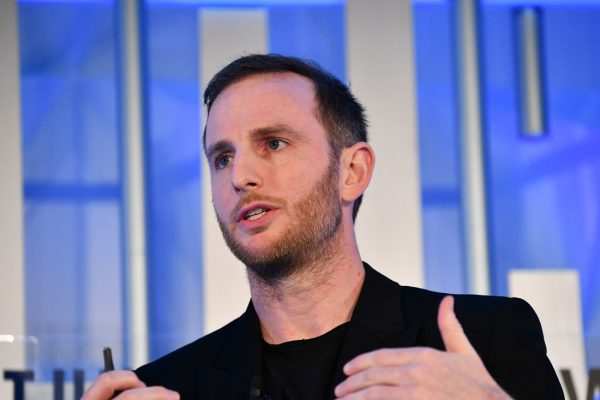
Joe Gebbia
An undercurrent of the discussions was the state of crisis that we are in. This includes troubles faced by corporate bodies, but also environmental and socio-cultural ones of an age of instant gratification and waste. Patricia Urquiola offered an empathic and empathetic precis, saying “we are in an era that is complicated and we feel very out of control.”
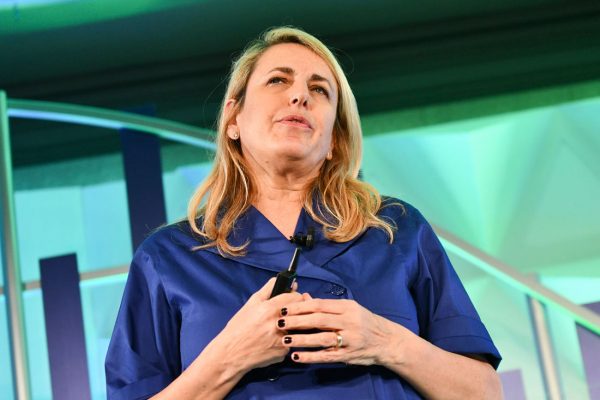
Patricia Urquiola
The issue was addressed by several speakers, including Paola Antonelli (Senior Curator of Architecture & Design and Director of R&D, Museum of Modern Art, New York City) who advocated that we foster a repair culture to fix our ‘broken world” (she referred to the work of Fixperts, and projects of Dutch studio Formafantasma that investigate the role of design in electronic waste).
Dutch artist Daan Roosegaarde maintained that we can engineer our way out of pollution. Tom Dixon shared his ongoing interest in “slow manufacturing” and the alchemic power of design in “turning base materials into gold”. Dixon has been testing out an underwater furniture farm in the Bahamas, which grow chairs using thermo-electricity that creates calcium deposits on metal that eventually turns into stone over a period of several years. Design critic Alice Rawsthorn was of the opinion that there is much more bad design than good ones today, with critical consequences that we are not adequately addressing.
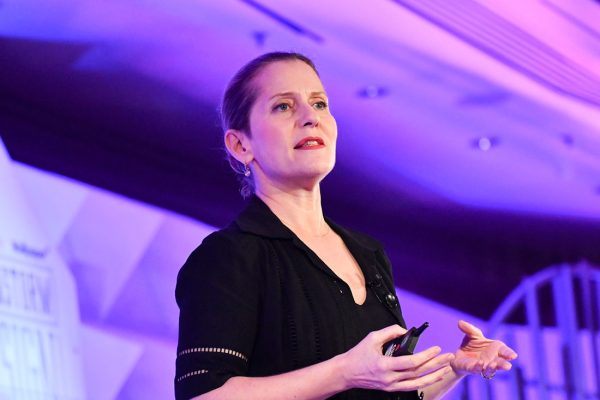
Paola Antonelli
There was an optimistic sharing of how design and business together had played the lead role in supplying solutions, returning to the notion of design as a problem solver. Some of the success stories shared included AirBnB’s activation of its host community in disaster relief and community building efforts, Ant Financial’s leveraging of its wide-reach mobile platform in its tree-planting and carbon footprint reduction projects, Royal Philips’ introduction of healthcare technology in under-served communities (a project involving the introduction of a diagnostic app designed for midwives successfully reduced the infant mortality rate in a remote Indonesian village).

Sean Carney of Royal Philips
Photography by Stefen Chow for Fortune/Brainstorm Design.
INDESIGN is on instagram
Follow @indesignlive
A searchable and comprehensive guide for specifying leading products and their suppliers
Keep up to date with the latest and greatest from our industry BFF's!
The internet never sleeps! Here's the stuff you might have missed