The home of architecture and design in the Asia-Pacific
Get the latest design news direct to your inbox!

Get the latest design news direct to your inbox!
Building a good brand is Lightyears’ strategy to counter copies in the market, the Danish lighting brand’s founder Lars Østergaard Olsen tells Luo Jingmei.

November 25th, 2013
With just eight years to its existence, Lightyears is considered relatively young in the design industry. Yet, the Danish lighting company has already made an impact that can almost equal that of bigger, more established brands.

Caravaggio
Its icon is the Caravaggio lamp, which is part of its first collection, and has remained the brand’s bestseller. Designed by Danish designer Cecilie Manz, its simple, yet sophisticated design reminiscent of an upturned bucket, has been increasingly sighted both in homes and commercial spaces. In fact, it is so successful that it has the same problem many design icons face – that of illegal production. Lars Østergaard Olsen, the Managing Director of Lightyears was recently in town and we asked him about his thoughts on this.
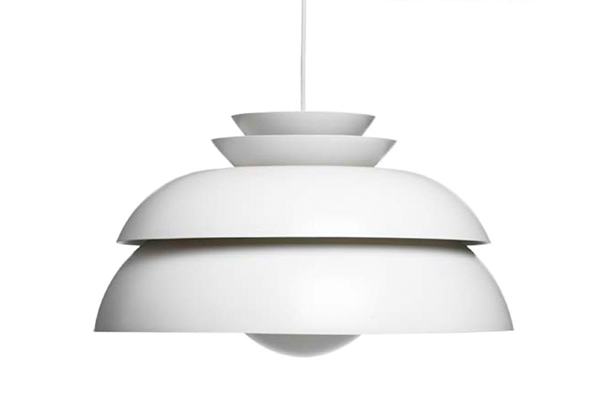
Concert P3
“Of course, it’s no secret that the copy problems you can track [mostly] back to mainland China,” he says matter-of-factly. “[There] we have all the necessary tools, so to speak; we have the design registration and we have the copyright registration. With these two certificates, if we take a case to court, we will win 99 out of 100 [times].”
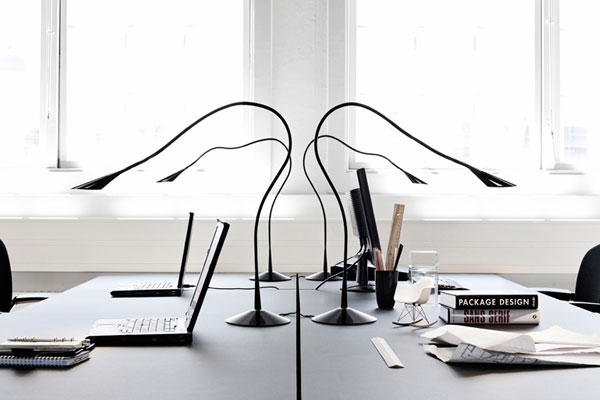
Nosy T Black
However, he adds pointedly, it’s quite impossible to go after every copier. Even the big-name brands find it an uphill task. “No company can stop [all the] copiers. [When you come down on them] they will just move to their cousin’s factory 2km away. When you are at Milan or other fairs, [the brands might say] ‘don’t take any photographs’ but then [the copier] can just go to your website, [and] download [the dimensions]. It’s not very complicated for people to get what they need to make a copy.” What’s more, the culture is also different. “[In Asia], copying is not seen as a criminal act. ‘This is good design, I will do it too’, they say.”
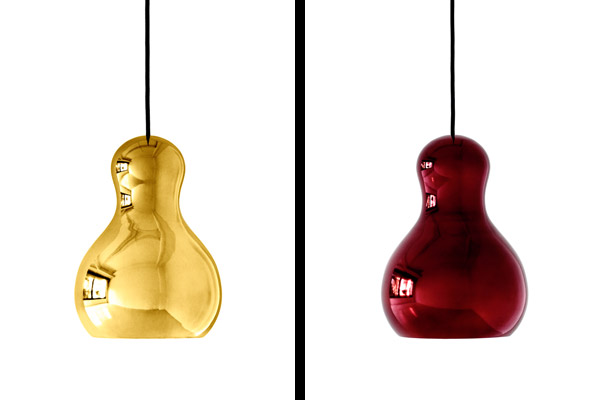
Calabash Gold and Red
The long-term solution, Olsen shares, would be building up the brand’s name and reputation for good design and quality. “I just hope that as time goes by, people will get more concerned about getting the real stuff because the quality is much better. I mean, if you look at an Egg chair copy or an Eames chair copy, or a Lightyears Caravaggio copy,” he says, “maybe if you stand ten, twenty metres away, you might not see the difference. But if you come close and pay attention to all the details, [it’s obvious].”
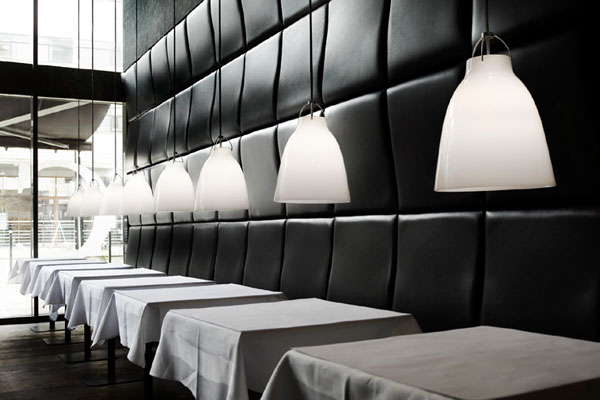
Caravaggio Opal
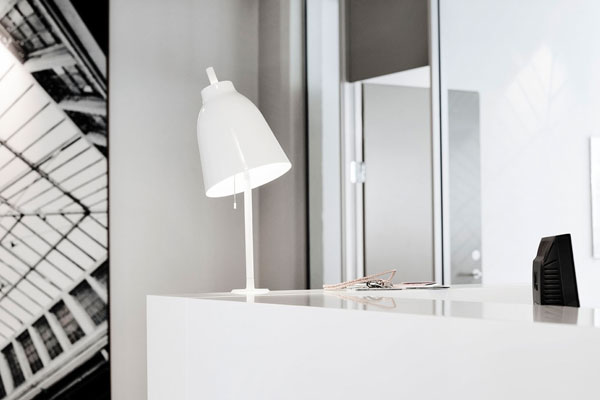
Caravaggio T W
When a product is well made, its value goes beyond aesthetics; it is also sustainable. “If you buy a [copy of a designer] chair, use it for half a year then throw it away, that gets quite expensive. But if you buy the real stuff, you can have it for the rest of your life, and your kids will inherit it from you, and their kids will use it too.”

Orient
It’s a very Danish way of thinking, which is why Lightyears’ products are so well received in Japan. “The Danish and Japanese philosophies of design are very closely related. In a sense, the market is more ready for our designs. A Japanese would never accept a copy. The Japanese are very quality conscious so they are very focused on buying nice design, but also have big demands for the product.”

Pallas White
A simple approach to design, “which is what Lightyears represents,” adds Olsen, also ties the two cultures together. It’s very different for other newer markets, like say in Russia. “They normally would like a more dramatic effect. They don’t appreciate the very subtle. We have to work harder [in such markets]. That’s one of the main reasons why I’m here [in Singapore], because I need to learn more about the Asian markets outside of Japan.”
This interview was made possible by W.Atelier, which is a distributor of Lightyears in Singapore.
Lightyears
lightyears.dk
INDESIGN is on instagram
Follow @indesignlive
A searchable and comprehensive guide for specifying leading products and their suppliers
Keep up to date with the latest and greatest from our industry BFF's!
The internet never sleeps! Here's the stuff you might have missed