The home of architecture and design in the Asia-Pacific
Get the latest design news direct to your inbox!

Get the latest design news direct to your inbox!
Long associated with elegance, subtle luxury and fine craftsmanship, Christian Liaigre has recently expanded the brand’s presence in Asia with the opening of a Singapore showroom on Purvis Street. President Christophe Caillaud talks regional strategy while here for the launch.

December 3rd, 2014
Why has Christian Liaigre chosen to enter Singapore now?
The question is why not earlier (laughs). The reason is because we had not found a suitable location till now. It has long been our intention to come to Singapore because we have clients here, and we feel that this is a hub in Southeast Asia. We have been looking for a space for a couple of years. We didn’t want to be in a mall because that’s not really in keeping with the company’s culture; we wanted a standalone store along the street and there are not that many such options in Singapore.

It’s interesting that your first store in Asia was in Bangkok and that was 10 years ago. Was there already an Asian clientele back then?
In the beginning [our founder] Christian Liaigre was doing some projects in Bangkok and I would say it was more a question of opportunity. Back then it was not that easy because we had to build the reputation of the brand. It has taken some time but we have a very steady clientele here now.
We do not rush our development process. We have selected some areas where we feel we should be but as long as we do not find a suitable place for a store we will wait. We would like to be in Hong Kong but have not found a suitable place yet, and we’ve been looking for more than two years. And if it has to take two more years to find a space, we will do so. Right now in Asia, our showrooms are in Bangkok, Singapore and Shanghai.

How does the Asian market compare to the European and US market? How important is this market for Christian Liaigre?
We are now developing this market, and I think it’s going to become more and more important. The brand has its origins in France and so we have a very strong presence there. And what we found was that more and more Asian clients were shopping in Paris, and also in London, New York and Bangkok. So we felt it was time to develop a presence for the brand in Asia.

How would you describe the DNA of the brand?
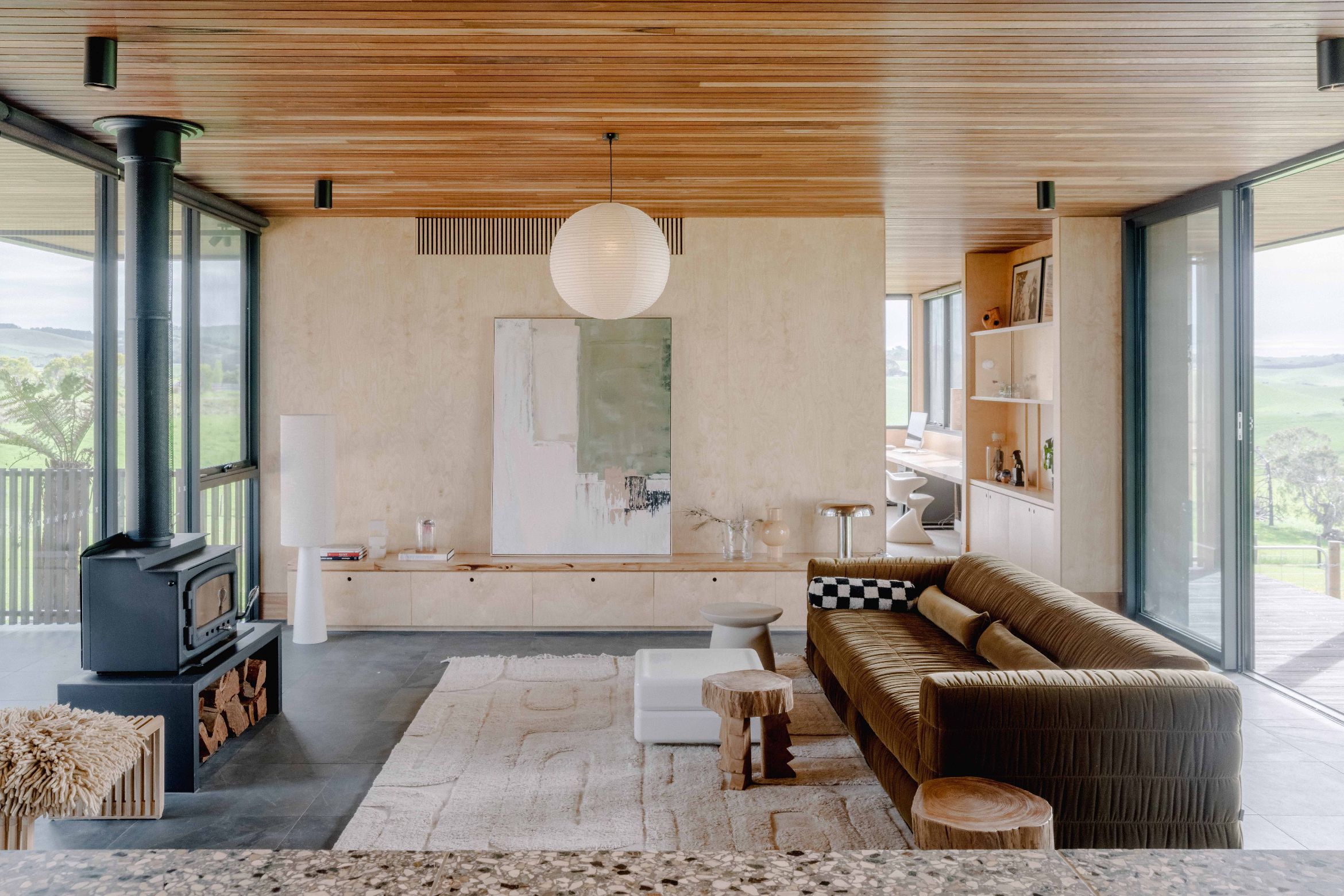
The first thing I would mention is the connection between interior architecture and furniture. It’s not two separate businesses; it’s two businesses that were started at the same time and together. When Christian started working on interior architecture projects, he was also designing pieces of furniture to be integrated into the interior architecture environment. At Christian Liaigre, we create furniture that can form a story with one another. They also need to work with the environment.
Sometimes when people ask us what we do, we say we are not selling furniture. Of course we sell furniture at the end of the day, but firstly we are selling our brand, our brand environment and our brand DNA. And when we are able to communicate what this environment is, why we should mix this piece with the other, then we really develop the concept and of course the furniture in this concept.

And from there you would define the materials and how the pieces will eventually turn out?
Yes. We are probably the one and only brand in this industry that only have one design studio. So there is a consistency and the colour runs in each piece in a way that you would not find with other distributors of furniture who would have several designers from different environments working on different pieces.
The brand maintains an image of ‘elusiveness’. How does that translate to your marketing and branding strategy?
For a long time I would say we were happy to be hidden. It’s less and less true now because we are developing the showroom network, so we have to naturally develop the brand awareness. But for us, the best ambassadors are our clients – how they display our products, how they live with our products. Then of course we have the interior architecture that we display in our books, which is also a good ambassador, and a good marketing and communication tool.

Has anything changed for the brand in the last 29 years since its inception?
I would say about six years ago we had about seven to eight showrooms. We now have 26 and a strong presence in the US. To ensure that we can maintain our brand culture and DNA, there are two things we need to do. The first is not to grow the company just for the sake of growing. Our priority is not to be the biggest company in the world; it is to build the company in a consistent way with a strong image and with locations that we feel comfortable in.
The second thing is that we’ve been able to maintain the French craft. When I joined the company five years ago to help develop the company’s network of showrooms, Christian told me that we first needed to be certain that the production, customer service and supply chain would be able to sustain this development. So we’ve been working with our manufacturer to be sure they will be able to maintain the level of quality, the delivery timeline, and that all the processes will be even more secure in terms of quality control, shipping, etc.

Can you elaborate on the importance of craft for Christian Liaigre?
It’s the essence of the brand. It’s what allows us to differentiate ourselves from others. Not that we [intentionally] want to differentiate ourselves. But we are different. Since the very beginning the pieces we offer can be customised in terms of size, finishing, and in terms of what customers want for their furniture. We can do adjustments within a limit – it is important to us that we keep the shape and inspiration behind the product.
The Christian Liaigre Singapore Showroom is located on 9 Purvis Street, #01-01, Singapore 188588
Christian Liaigre
christian-liaigre.fr
INDESIGN is on instagram
Follow @indesignlive
A searchable and comprehensive guide for specifying leading products and their suppliers
Keep up to date with the latest and greatest from our industry BFF's!
The internet never sleeps! Here's the stuff you might have missed