The home of architecture and design in the Asia-Pacific
Get the latest design news direct to your inbox!

Get the latest design news direct to your inbox!
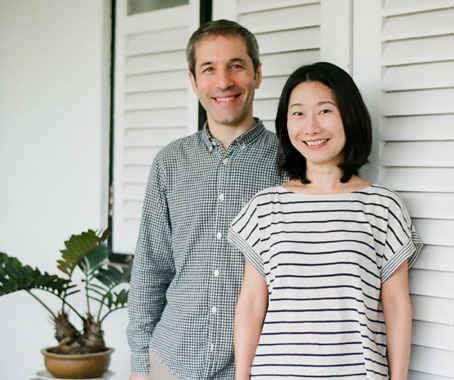
Meet designers Marc Webb and Naoko Takenouchi, the husband-and-wife team behind Singapore-based studio Takenouchi Webb.
indesignlive.sg
July 24th, 2013
Here they share their design philosophy and dream project, and tell us what it’s like working together.
Can you describe your design philosophy?
Our goal is to create a space that gives you a strong emotional response. It is quite rare, when you enter a building or interior [space, to find that it] moves you in this way. This happens when all the various design elements are coherent with each other. You may not be able to point out which particular element of the design is standing out, but it is when all the parts, from the volume and layout to the materials and detailing come together [that this occurs]. When we design we aim to carry through this process and hopefully achieve this goal.

Loof
What is it like working together as a couple?
The great thing about working as a couple is that in the office we can be completely honest with each other. The boundary between work and home also does not really exist, and we are always looking for inspiration together in everyday life.

The Black Swan
What projects are you busy with at the moment?
We have recently completed The Black Swan on Cecil Street, a restaurant and bar housed in a 1920’s building and we are completing a second mezzanine bar there which will open in a few weeks. We are also working on the Potato Head Hotel in Bali designing all the interiors. Besides that we have some residential projects in progress and a couple more restaurants coming up.
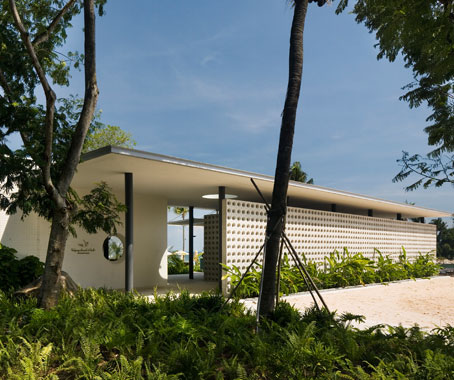
Tanjong Beach Club
Which do you consider to be one of your most memorable projects to date and why?
Our favourite has to be Tanjong Beach Club, as we were able to design the interior and the architecture. It was a great experience to be able to work on all aspects of the design and we hope to be able to do more architectural works in the future.
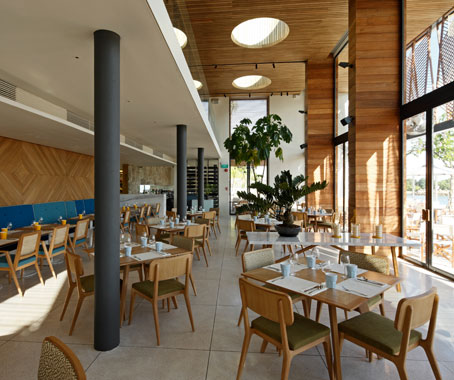
Tanjong Beach Club
Name your top 3 influences.
Charles and Ray Eames, Oscar Niemeyer and Rei Kawakubo.
Name your favourite local landmark/building.
Our favourite is our home and studio. We live and work is a black-and-white walk-up apartment. The way the building is planned and the use of natural ventilation can still teach us a lot about designing and living in a tropical environment.
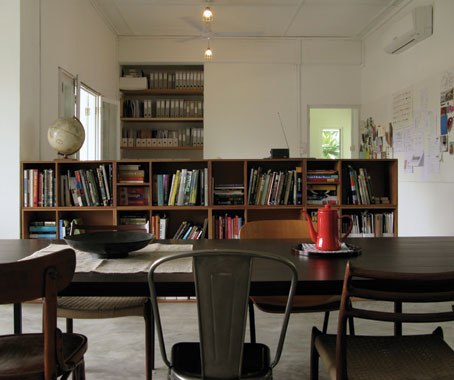
Takenouchi Webb’s office
What is your dream project – real of imaginary?
We would love to design and build our own home. Still very imaginary for now!
Who is your dream person to collaborate with?
We would really like to work with a group of skilled craftsmen to custom-make some of our design items. It would be great to learn from a group of people who are expert artists in their own medium.
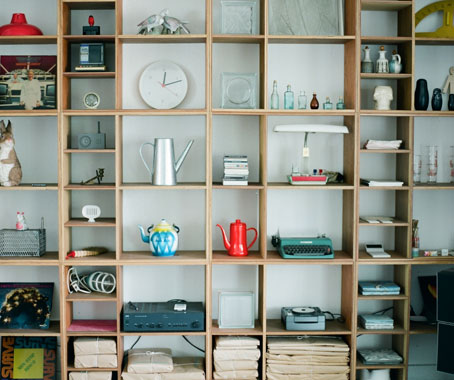
Takenouchi Webb’s office
Name your favourite decade of design.
Donʼt think we have a favourite decade… our influences are from lots of different periods. There are great things to be found in every era.
What is your number 1 concern for the industry in Singapore?
The rising costs of running an office and the difficulty in being able to hire staff. Think this is particularly difficult for small offices like ours.
Name one item in the workplace you can’t live without.
Music.
Takenouchi Webb
takenouchiwebb.com
Check out the conversation between Takenouchi Webb and Asylum’s Chris Lee in the upcoming issue of Cubes Indesign (issue 63), out soon.
INDESIGN is on instagram
Follow @indesignlive
A searchable and comprehensive guide for specifying leading products and their suppliers
Keep up to date with the latest and greatest from our industry BFF's!
The internet never sleeps! Here's the stuff you might have missed