The home of architecture and design in the Asia-Pacific
Get the latest design news direct to your inbox!

Get the latest design news direct to your inbox!
Julianne Schulz, Chair of the Queensland Design Council, discusses the state of design in Queensland, the Council’s progress and where it’s heading.

September 22nd, 2011
If 2010 was a significant year for design in Queensland, with the State Government showing a strong commitment to fostering its design industry, 2011 has been even bigger, with natural disasters and their aftermath forcing the design community to really jump to action.
Over a year after the formation of the Queensland Design Council, the state’s strategic advisory body on issues facing design, and as the Queensland Government continues to progress in its vision for the Queensland Design Strategy 2020, Council Chair Julianne Schulz speaks to Indesignlive.
What do you think is unique about design in Queensland – both in the Australian and global context?
Queensland design is fresh, creative and collaborative – all adjectives you could probably apply to Australian, and Asia-Pacific, design more generally. However, I do believe the generosity and camaraderie of Queensland’s design community is unique.
Because the Queensland design sector is relatively young and small, it has developed a strong sense of community focused on a shared passion for spreading the design message and growing understanding and profile of the sector both within the state itself and nationally.
The generosity of design champions like Michael Rayner, Alexander Lotersztain, Nicola Lloyd, Philip Follent, Timothy Hill, Pamela Easton and Lydia Pearson in nurturing new designers and working across sectors and industries is particularly inspiring in Queensland. I believe this generosity is largely responsible for the incredible growth and innovation we’ve seen come from the state in the past decade.
I also believe Queensland designers are great at dealing with the ’problems of today’ and that our recent experiences, from rapid urban growth to the floods and devastation of cyclones Larry and Yasi, have both confronted and inspired the state’s design community to really design for a better future.
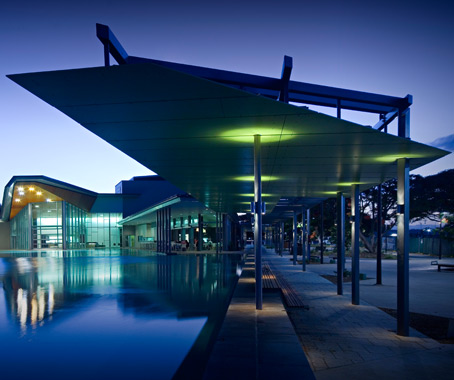
Thuringowa Riverway. Image courtesy Cox Rayner Architects
What are the challenges faced by designers in Queensland at the moment?
We have the important imperative and challenge of getting design at the forefront of the reconstruction agenda following the summer floods and Cyclone Yasi and the Design Council is working with Queensland Reconstruction Authority and other government agencies to achieve this.
As you can imagine, this is a crowded and contested space but good design has a lot to offer in building back community infrastructure, physical and social, so it is important to create opportunities.
Luckily, Queensland has a history of using the rebuilding process after natural disasters to ’future vision’ for their communities so it is an exciting time to be pushing a design agenda here.
As elsewhere we face the challenge of spreading the message that design and innovation are symbiotic and can change the future of industry, economy and culture in Australia.

Scramjet in flight (artist impression). Image courtesy the University of Queensland
I am heartened to see design getting a greater profile in the national productivity and innovation debate, but also surprised that it doesn’t adequately feature in the existing discussion paper of the National Cultural Policy.
Again, it is an exciting time for design, but there is a great deal of work to do in better communicating the economic and social advantages of design and design thinking.
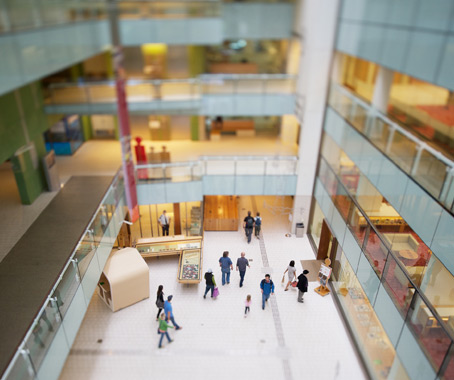
Knowledge Walk, State Library of Queensland. Image courtesy State Library of Queensland
What are your plans for your time as Chair of the Council? What are the key issues you hope to address, and what are the key things you’d like to achieve?
We recently celebrated the Council’s first anniversary and I believe that in this relatively short period we have successfully taken the design message to Government, which is our primary role.
The Queensland Design Council was created to inform the Queensland Government’s design agenda and the direction and priorities of the Queensland Design Strategy 2020.
But I think we’ve done more than that; we’ve generated discussion and debate within the sector and engaged with new industries and new ideas, via the spectrum of interests represented by the council. A lot of this thinking was evident at the Unlimited: Designing for the Asia Pacific event in Brisbane in October 2010.
The website and branding QUEENSLANDERSIGN ™ developed by Council member Sean Cummins is also particularly important in this process. It signals that there is something unique that grows out of the history of the state in terms of design and reaches into all sorts of new domains.
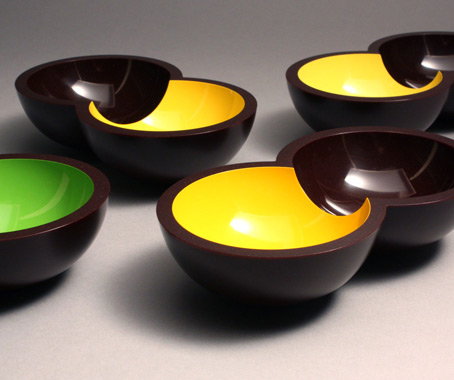
Husque TW. Image courtesy the designer
As more examples are posted on the site we hope that this will become one of the ’go to’ sites for people interested in design and design led thinking.
The key issue is definitely getting design and design thinking at the forefront of the reconstruction agenda and Government policy, more generally, especially around productivity and innovation, education and capacity building. Inspiring people to think beyond the prosaic to well designed and inspiring solutions to problems, the way we live and the things we surround ourselves with.
I would hope to leave this role knowing that the Council has contributed to the Queensland public and state industry having a stronger understanding of design and design thinking.
This is a big challenge, but with the support of the Premier and the State Government, the Council is optimistic that Queensland will become a significant leader in design.
Queensland Design Council
arts.qld.gov.au/policy/qld-design-council.html
INDESIGN is on instagram
Follow @indesignlive
A searchable and comprehensive guide for specifying leading products and their suppliers
Keep up to date with the latest and greatest from our industry BFF's!
The internet never sleeps! Here's the stuff you might have missed