The home of architecture and design in the Asia-Pacific
Get the latest design news direct to your inbox!

Get the latest design news direct to your inbox!
Hinoak, designed by Biasol, is a modern interpretation of a traditional Korean barbeque dining experience with people at its heart.


One of the distinctions of dining in a Korean barbecue restaurant is being an active participant in cooking the meal. That engagement with the process and environment inspired Biasol to look at the work of renowned architect Kengo Kuma for Korean barbeque restaurant Hinoak. Delivering a modern dining experience, the new southeast Melbourne restaurant has been designed with a focus on human scale, natural materials and craftsmanship.
“Our concept for the project took design cues from the elegant work of Kengo Kuma, exploring the relationship between humanity, nature and design,” says Jean-Pierre Biasol. Kuma pursues a connection between consciousness and matter in his architecture and believes people should feel unintimidated and at home in a location. His spaces are designed to allow people to feel as if they are an integral part of the environment, and while being minimalist, they have warmth and accessibility and invite people to participate. The same can certainly be said for the interior of Hinoak.
Vertical slats on the front façade restrict visibility into the restaurant, while allowing natural light and light effects to filter inside. Horizontal slats on the gently pitched ceiling softly curve down the rear wall to create an intimate environment. “This design gesture subtly enhances the sense of intimacy around the bar, allowing a seamless transition from the light and bright tables at the front through to the cosy tables at the rear,” Jean-Pierre explains. This delicate curve continues throughout elements of Hinoak, such as the edges of the custom banquette seating and the sculpted timber benchtops, to soften the hard surfaces.
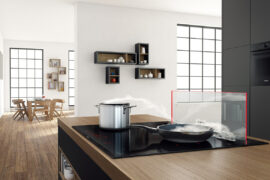
The layout of Hinoak is designed to give guests more room to move, accommodating the participatory style of dining while also maintaining the openness of the space. The client introduced integrated charcoal barbecue grills and flues in the tables (the first in Melbourne), rather than an extraction flue system dropping from the ceiling. This allows for unobtrusive views, minimises smells and offers a healthier alternative to barbecue cooking. Likewise, LED lights remove any visual obstruction from the ceiling and ensure the lightness and openness of the space.
The name Hinoak is a combination of ‘hin’ meaning fire, and ‘oak’ meaning pot, and the branding utilises the Chinese character for fire, commonly used in Korean culture. The symbol has been cut into the external battening, and the symbol and name are debossed into the interior wall. “It represents a sense of place; that you have arrived and this is an experience designed for you,” Jean-Pierre says.
Offering a modern Korean barbecue dining experience, Hinoak is designed to allow people to feel an integral part of not only the cooking process but also the environment, inviting people to participate in both. “It’s very much a modern interpretation of a traditional dining experience with people at the heart of it,” says Jean-Pierre.
Peruse another project by Biasol, No. 19 café in Melbourne.
INDESIGN is on instagram
Follow @indesignlive
A searchable and comprehensive guide for specifying leading products and their suppliers
Keep up to date with the latest and greatest from our industry BFF's!
The internet never sleeps! Here's the stuff you might have missed