Are start-ups looking for something more from their workplaces – some sort of connection with the past and a counterpoint to their ephemeral work and the ‘corporate culture’? We talk to US-based Leeser Architecture to find out.
As young Gen-Y and Millennial companies begin to dominate the start-up world (if not the business world in general), are they looking for something more from their workplaces – some sort of connection with the past and a counterpoint to their ephemeral work and the ‘corporate culture’?
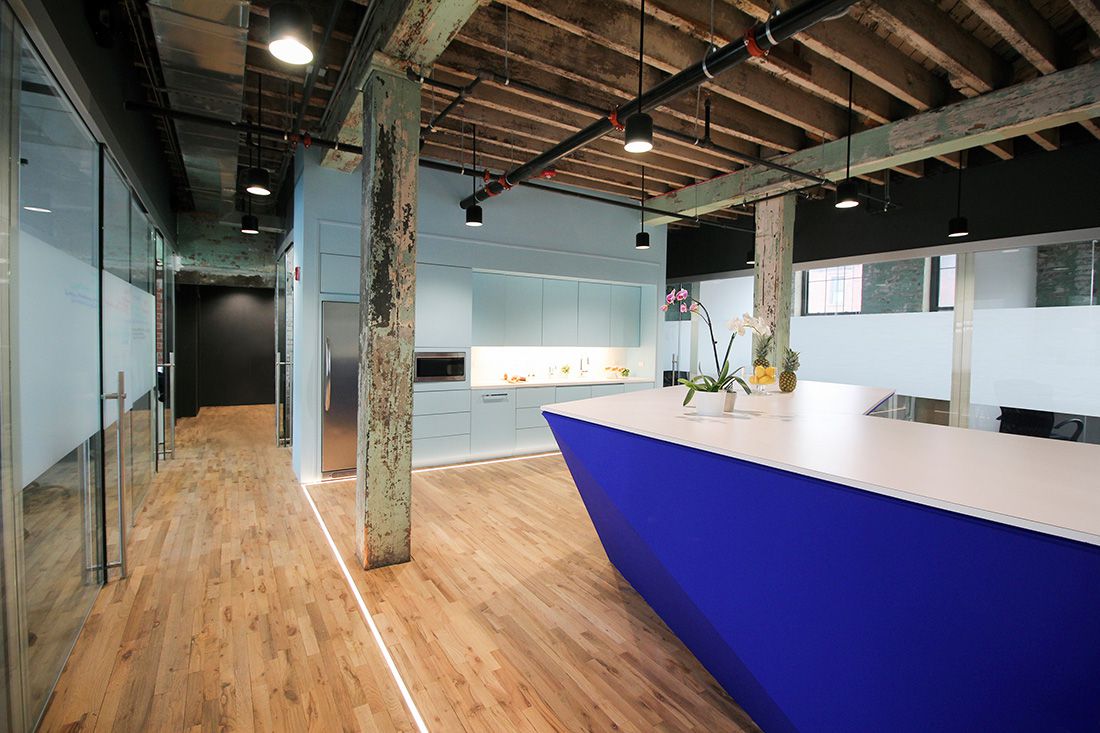
COWORK|RS, a new coworking space catering to small-to-medium start-ups and tech businesses, is taking advantage of the rundown nature of Brooklyn’s Gowanas Canal area to carve out a community and piggyback on the warmth and history of its ex-industrial buildings.
New York-based firm, Leeser Architecture, was charged with turning the old warehouse into a functional workspace, able to meet the very modern needs of some very ‘now’ companies. Their Principal, Thomas Leeser, is excited by the potential of these ‘trash-to-treasure’ buildings, which is evident in the firms striking responses to a challenging brief. “I think it’s a generational shift, that people are more interested in trying their own thing and this sort of space gives them the opportunity to do so”. Within the same building, Leeser has also created a dedicated workspace for another internet start-up – bringing with it its own set of challeneges.
However – regardless of the desire to upcycle these rundown areas and buildings – diversity, community, and culture remain at the heart of successful working environments, something which the young, innovative tech companies are uniquely placed to foster…
See the full story in Indesign #66. Subscribe here.
INDESIGN is on instagram
Follow @indesignlive
A searchable and comprehensive guide for specifying leading products and their suppliers
Keep up to date with the latest and greatest from our industry BFF's!
In the last instalment of our three-part performance seating series, Alex Bain from Architectus explains why sitting well shouldn’t feel like sitting at all and explores an unexpected success metric of the hybrid workplace: the grounding power of emotional support.
The Geelong College’s Sport and Wellbeing Centre ‘Belerren’ designed by Wardle is designed around bringing in natural light. But Shade Factor’s job was to help modulate and precisely control it for the most important competitive moments.
At 3daysofdesign 2026, AHEC’s immersive exhibition traced the journey of American hardwood from forest to finished product.
Aeron Chair’s new shades, Nightfall and Jasper, arrive with a sense of quiet cohesion – no bells and whistles, no loud technicolour; just two timeless, perfectly versatile near-neutrals. But the new hues aren’t just about colour – and their significance is much more profound than their surface-level subtlety might suggest.
Cowork|rs by Leeser Architecture features a colourful puncture throughout the historic shell of the workplace. Here you can see everything that was specified.
An efficacious self-taught Danish designer, Johannes Torpe is what some would describe as a jack of all trades.
The internet never sleeps! Here's the stuff you might have missed
As Woven Image celebrates 40 years, it introduces a new collection developed in collaboration with Australian artist Ben Goss, inspired by his original artwork Where the Kookaburra Sits into a vibrant collection of digitally printed EchoPanel® murals and patterns.
At dedece Sydney, Anna Lenti introduced the Chromatic Alphabet, a new design tool intended to make architects and designers less hesitant about working with colour.