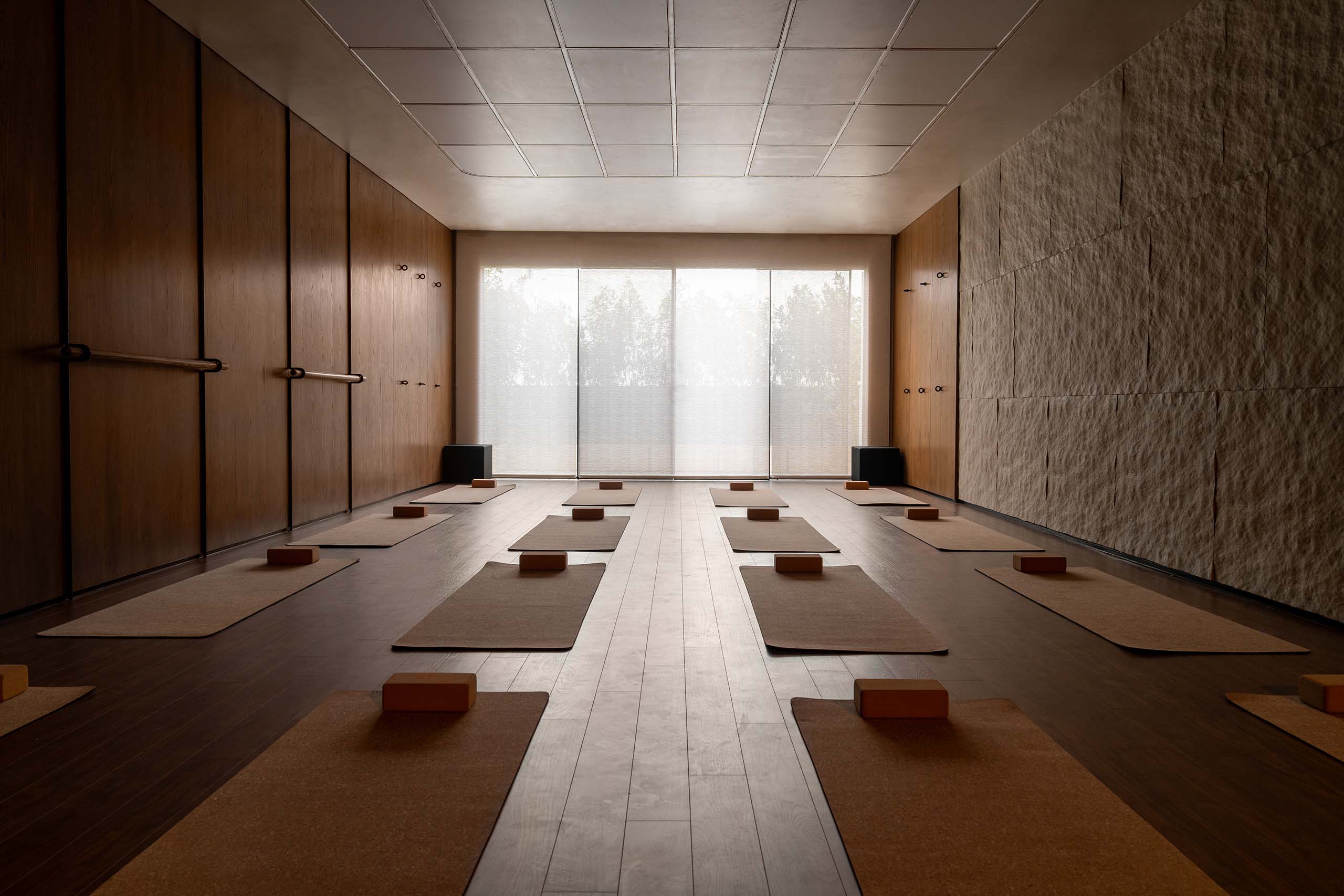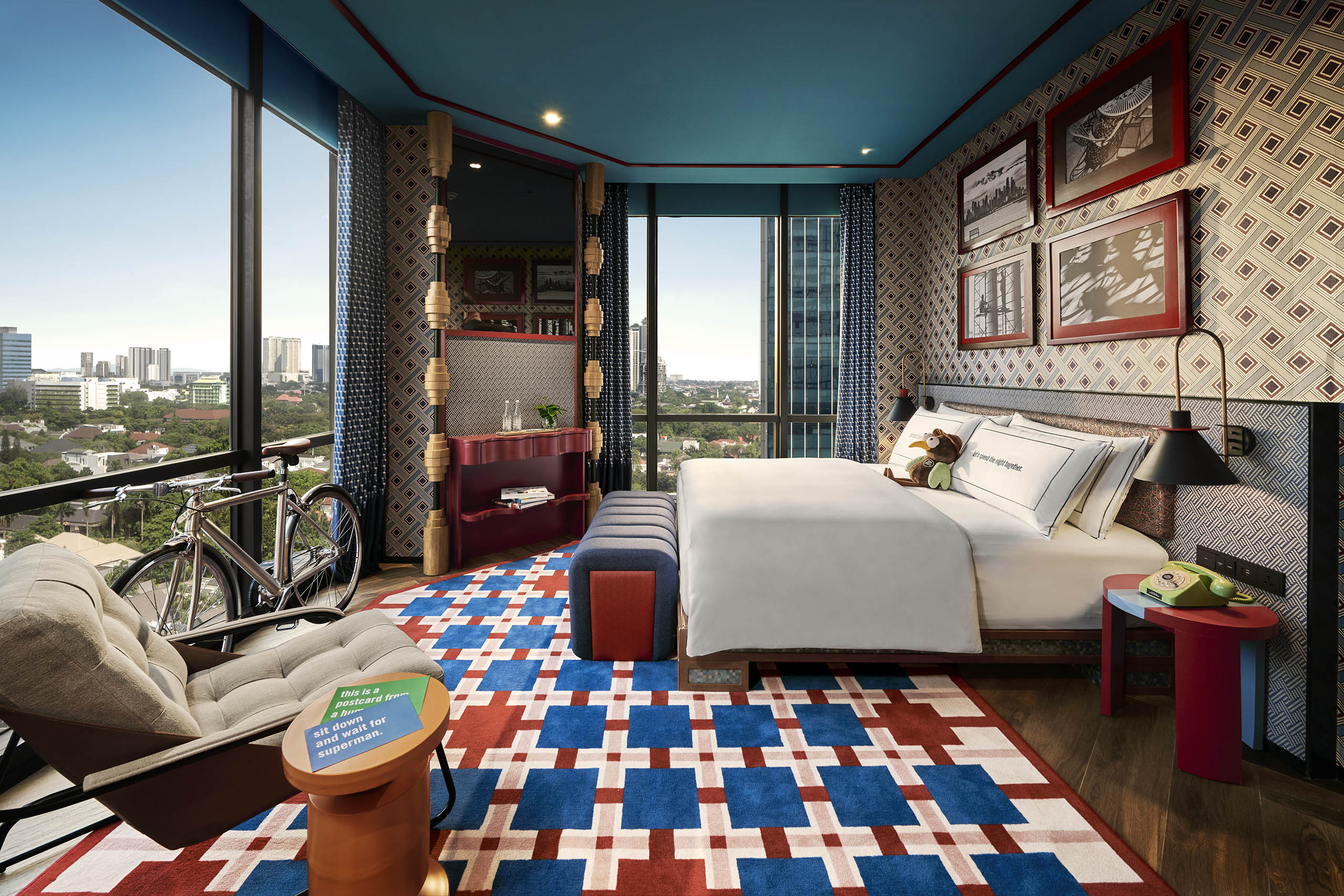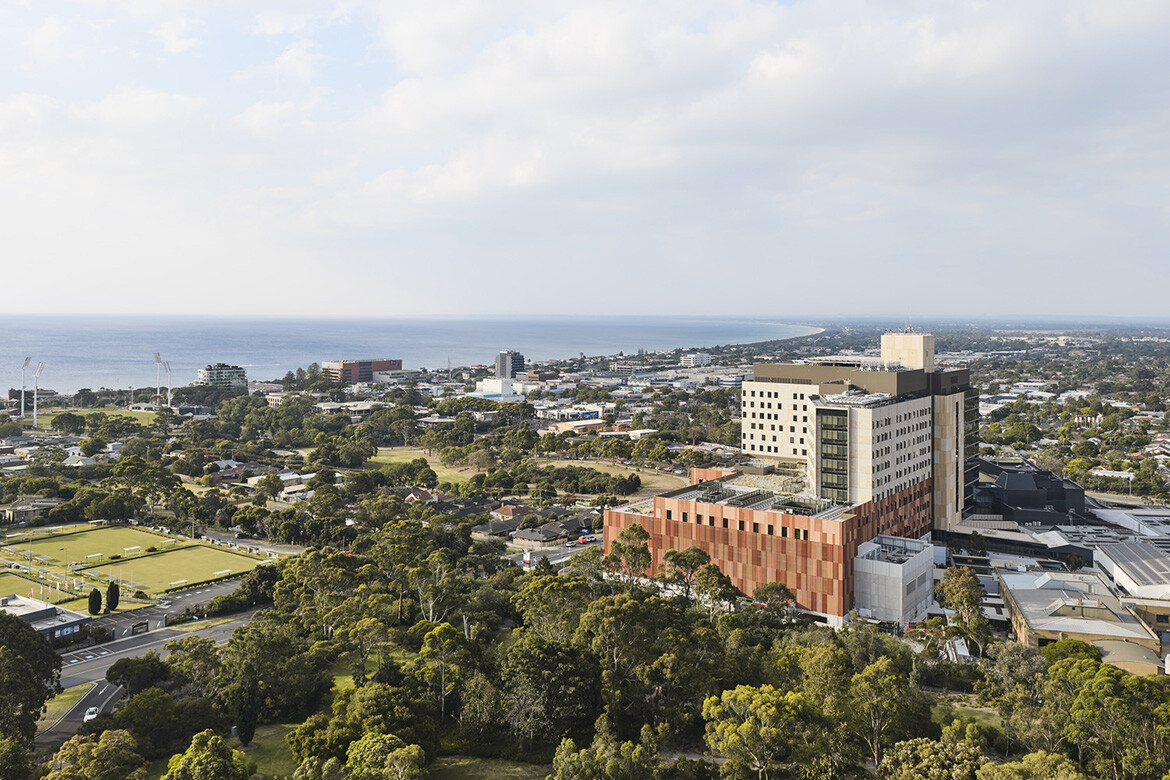
While hospitals are places of healing, they increasingly offer a broader wellbeing experience, designed for the holistic practice of health. The environment for care has shifted significantly in recent years, and an exemplary expression of this evolution is Peninsula University Hospital.
Completed in just five years for the Victorian Health Building Authority in partnership with the Exemplar Health consortium (comprising Capella Capital, Honeywell, Compass Group and Lendlease) and Bayside Health, the project is already making a profound impact on the Mornington Peninsula community.
Bates Smart with Architectus led architecture, interiors and clinical planning, with Urbis responsible for landscaping. The team worked closely with community groups and key consultants, including Jefa Greenaway of Greenaway Architects with Greenshoot Consulting and the Bunurong Land Council Aboriginal Corporation, whose input was integral to the outcome.
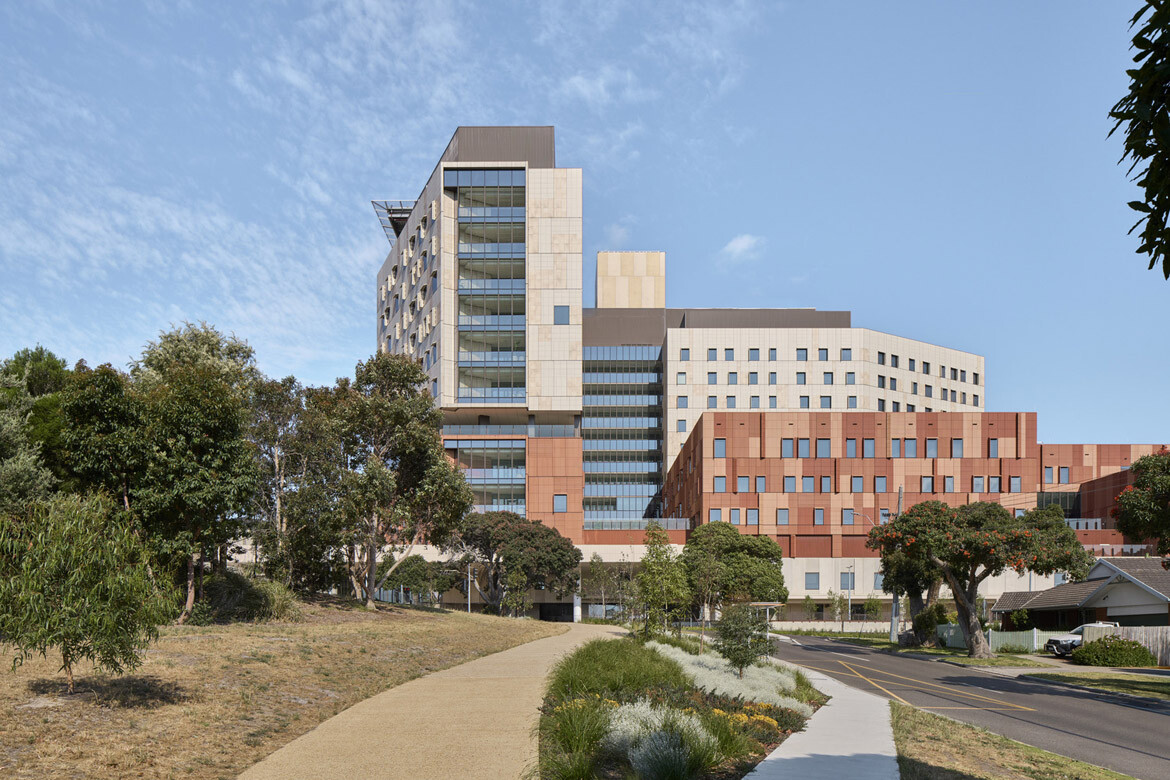
The redevelopment and expansion of the existing Frankston Hospital presents as a vertical campus and embodies a people-centric design approach. The new hospital reflects the spirit of the Frankston and Mornington Peninsula communities as a welcoming and safe place for patients and health employees alike.
“The brief called for an uplifting, joyful and welcoming place. Our response was one of generosity of space, light and views, and a design that is reflective of the community and the context of the wider Peninsula,” says Mark Healey, director at Bates Smart and interior design lead on the project.
Related: A high-tech, future-ready extension for Mumbai’s automobile design hub
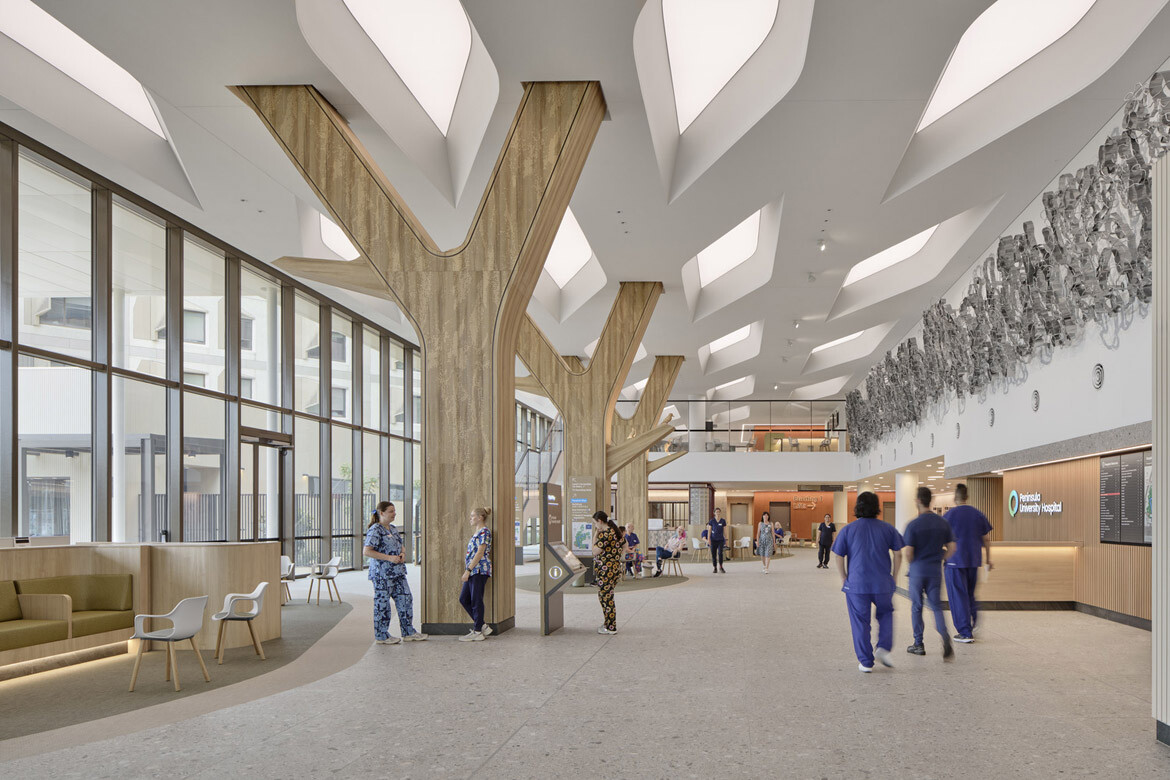
The new 12-storey tower and podium respond to the fundamental challenge of unlocking the site and connecting to the existing hospital, while also ensuring flexibility for future expansion.
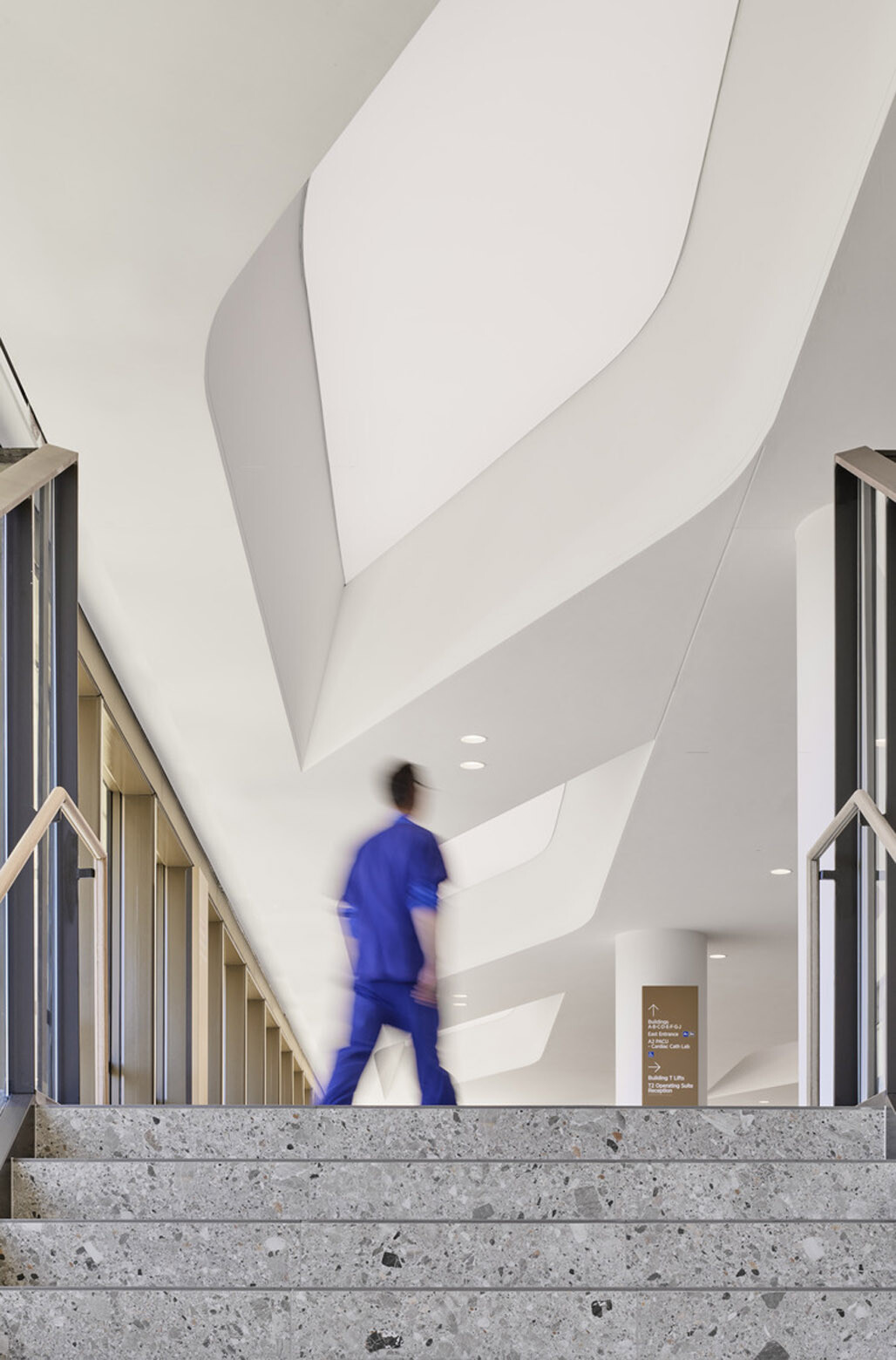
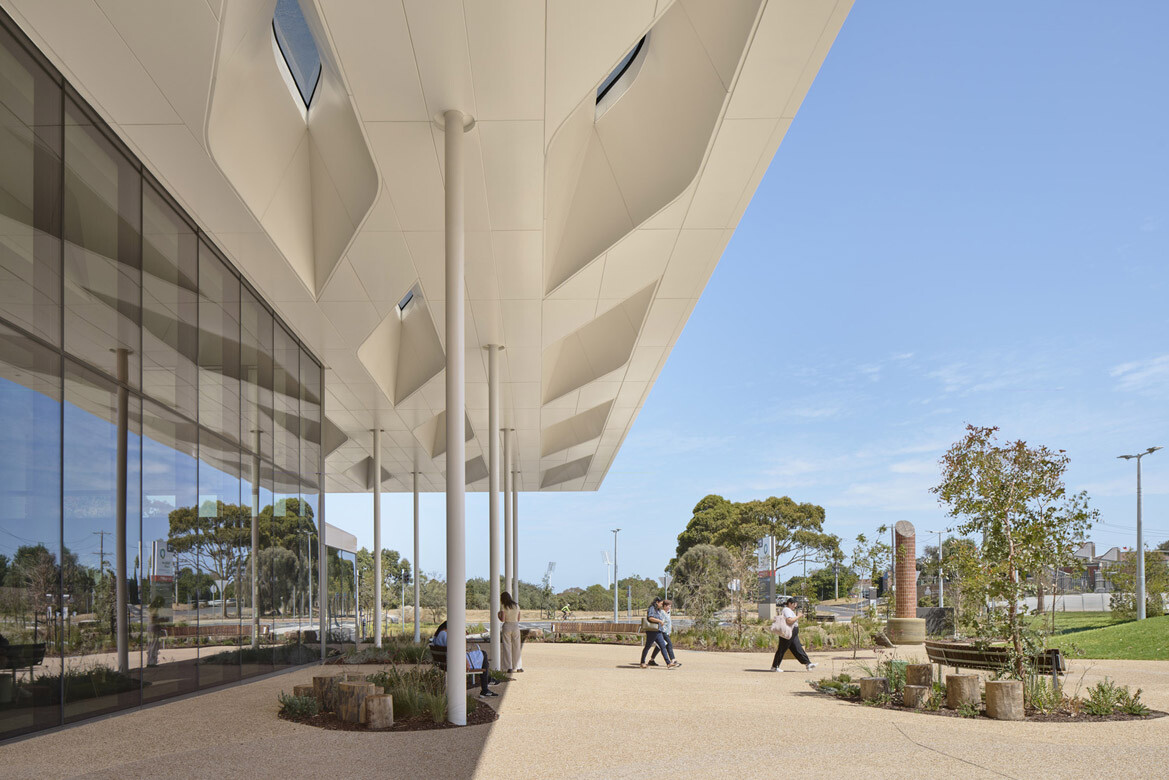
Architecture and interiors respond to the coastal surrounds through organic forms, a palette of natural materials and multiple landscape interventions. Green spaces define the entrance, which is marked by a sculptural verandah.
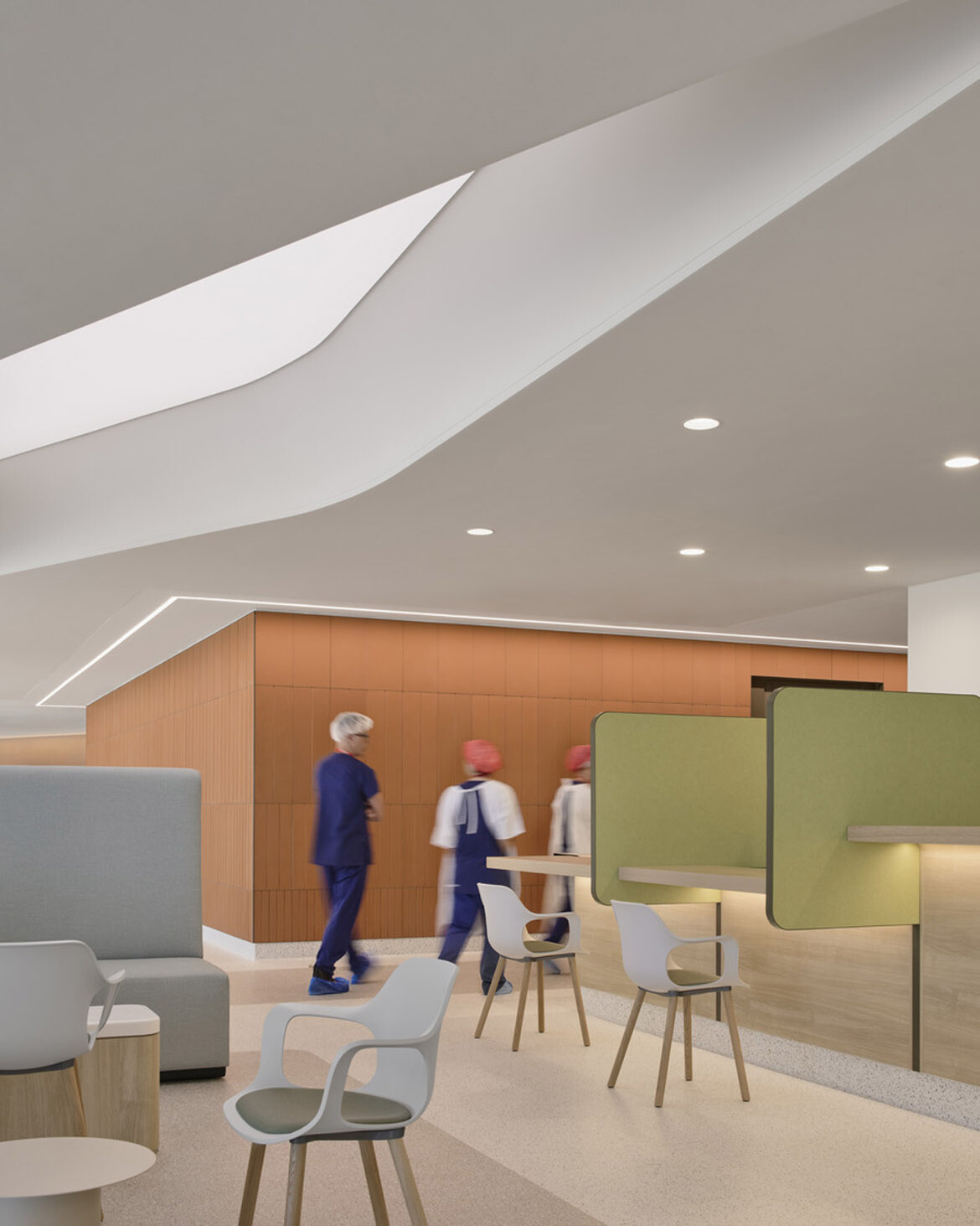
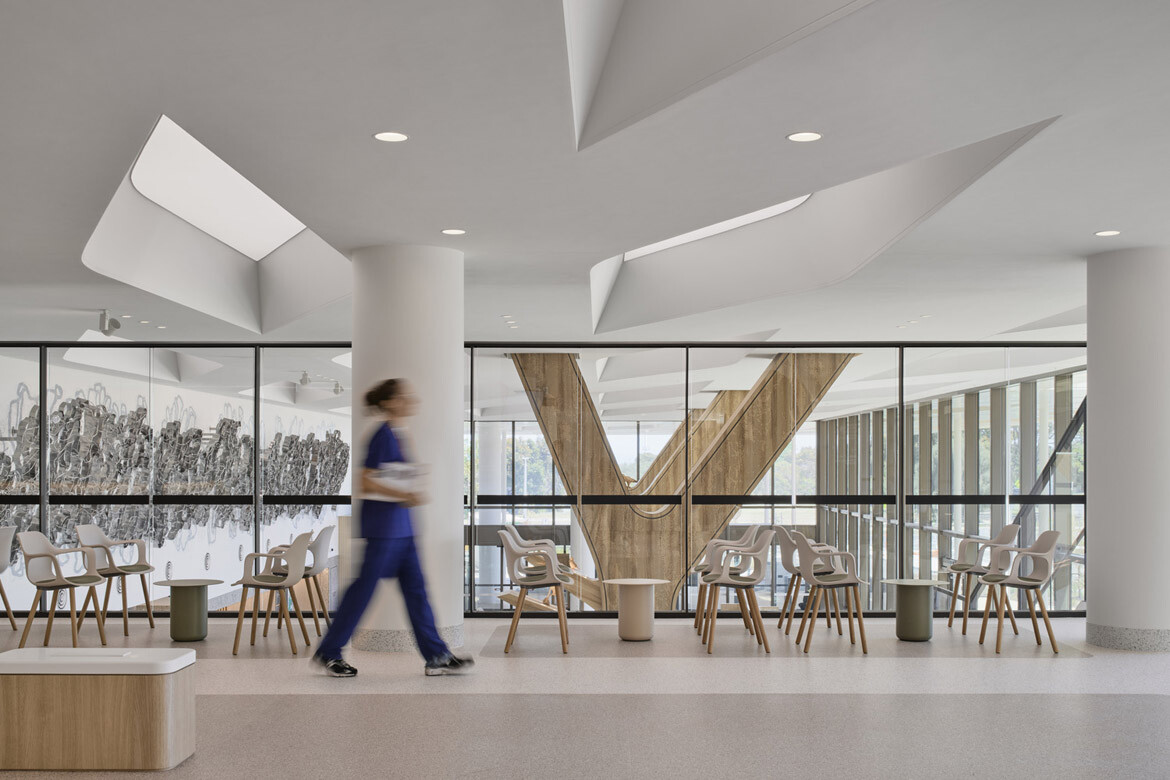
The facility has been planned to optimise connectivity between the existing hospital and the new acute tower, establishing clear separation of public and clinical flows to support a functional and dignified experience for patients and staff. Separate circulation zones allow both groups space to move, as well as moments of privacy and respite.
The 7200-square-metre podium floorplate interconnects imaging, operating theatres, Central Sterile Services, women and children’s services, the special care nursery and birthing departments. The mental health department sits above the podium, benefiting from natural light, ventilation via open courtyards, and views to the George Pentland Botanical Gardens and Port Phillip Bay.
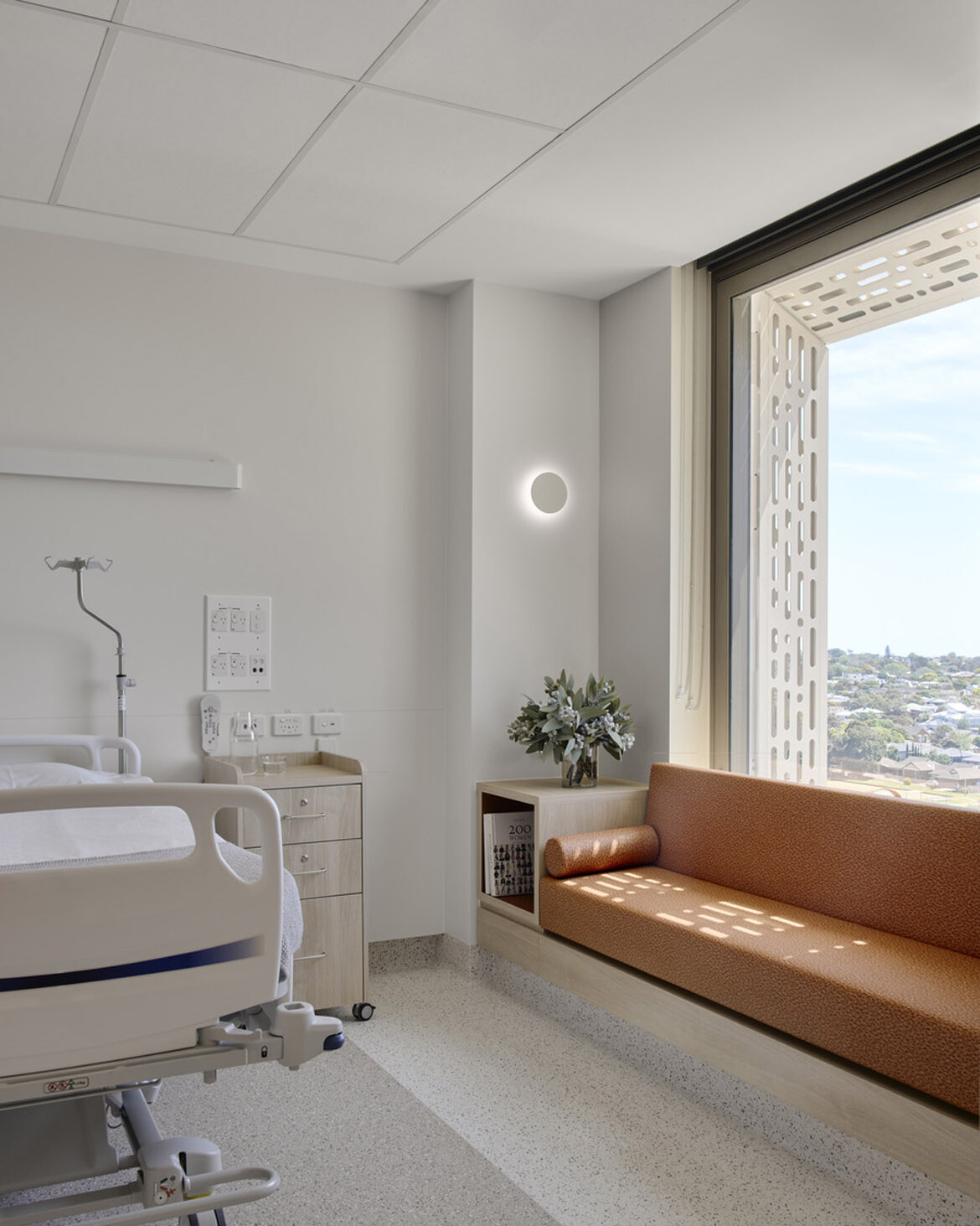
Patient rooms are located high within the tower, with abundant natural light and expansive views that reconnect occupants with the surrounding landscape. Wintergardens on each clinical floor provide access to fresh air and offer moments of respite for both patients and staff. The oncology department, located on level eight, benefits from 180-degree views of the bay, creating a more uplifting environment.
The scale of the project is significant, delivering an additional 130 beds, 15 operating theatres, expanded emergency services and new facilities for mental health, oncology and women’s and children’s care. Overall, patient capacity will increase by approximately 35,000 each year.
What distinguishes the project, however, is its guiding principle: Healing Country, Healing People.
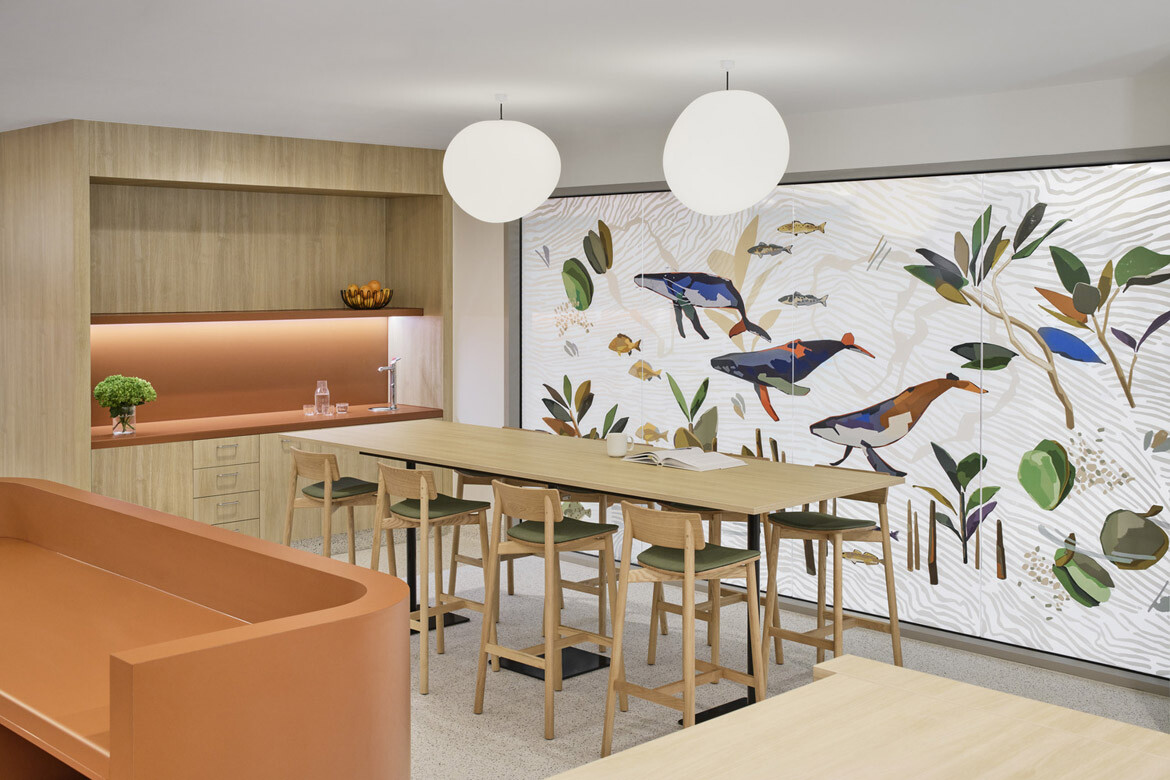
Healey explains, “It was such an interesting process to work through with the community and the hospital. We celebrated active programs on the Peninsula that are involved in Healing Country and used these as inspiration to theme levels of the building. The effects of colonisation were also considered, such as the draining of the Carrum Carrum wetlands and the loss of important freshwater habitats for the Bunurong people.”
Working closely with Greenshoot Consulting and the Bunurong Land Council Aboriginal Corporation, the design embeds cultural knowledge throughout, creating a project that informs, educates and celebrates Country.
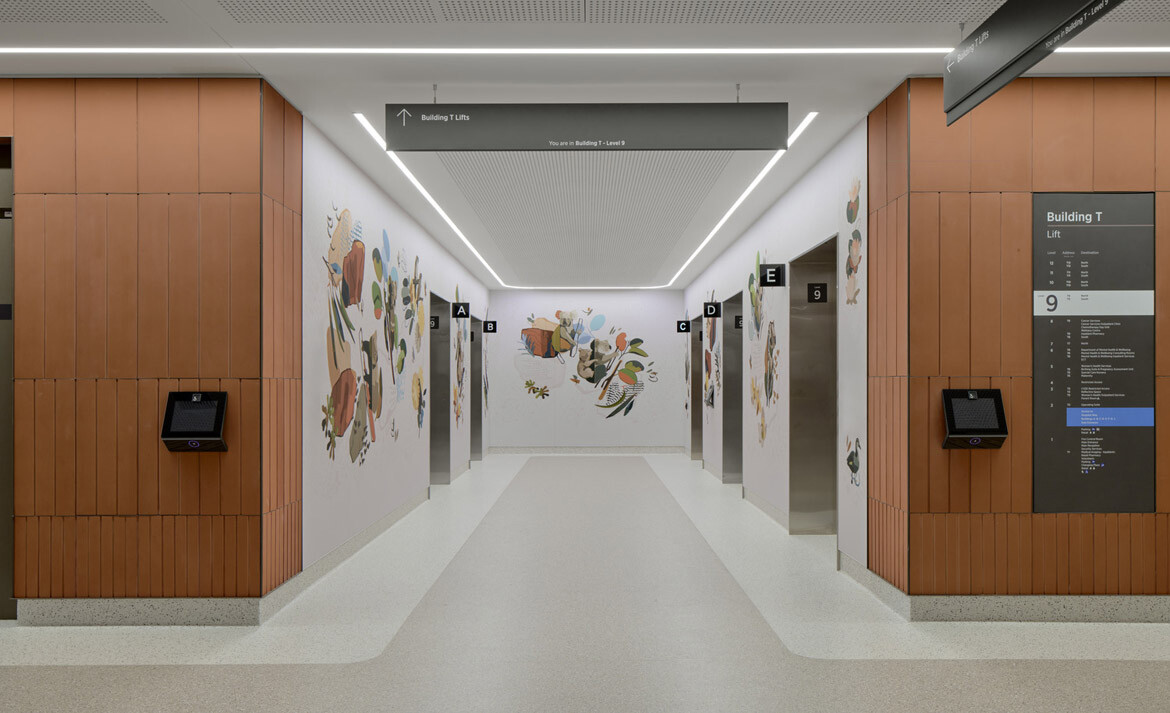
A holistic narrative — expressed through Land, Waters and Sky Country — is embedded in both spatial planning and materiality, creating a layered experience of place. This narrative also operates as a secondary wayfinding system, reinforcing cultural meaning while aiding navigation.
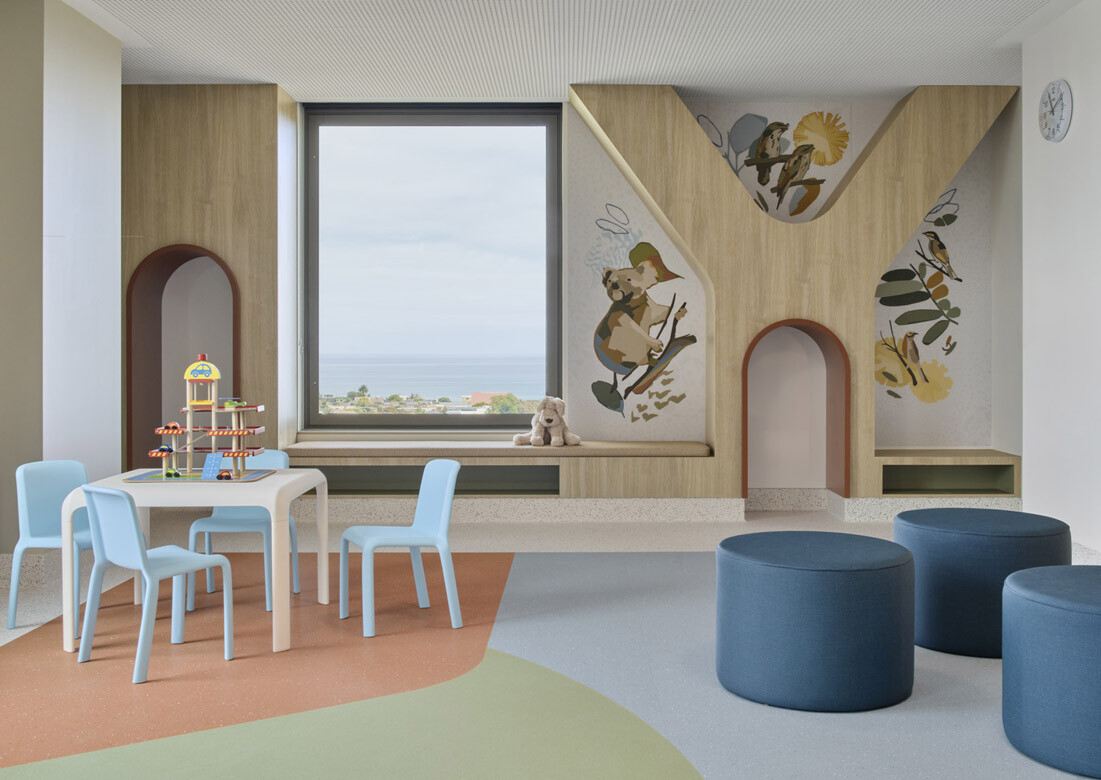
Art plays a central role. Hand-drawn murals by Matthew Walker of Pop n Pac unfold across all levels, while Australian artists Jody Rallah, Dan Elborne, Hannah Quinlivan and Richard Briggs were commissioned to create works for the project.
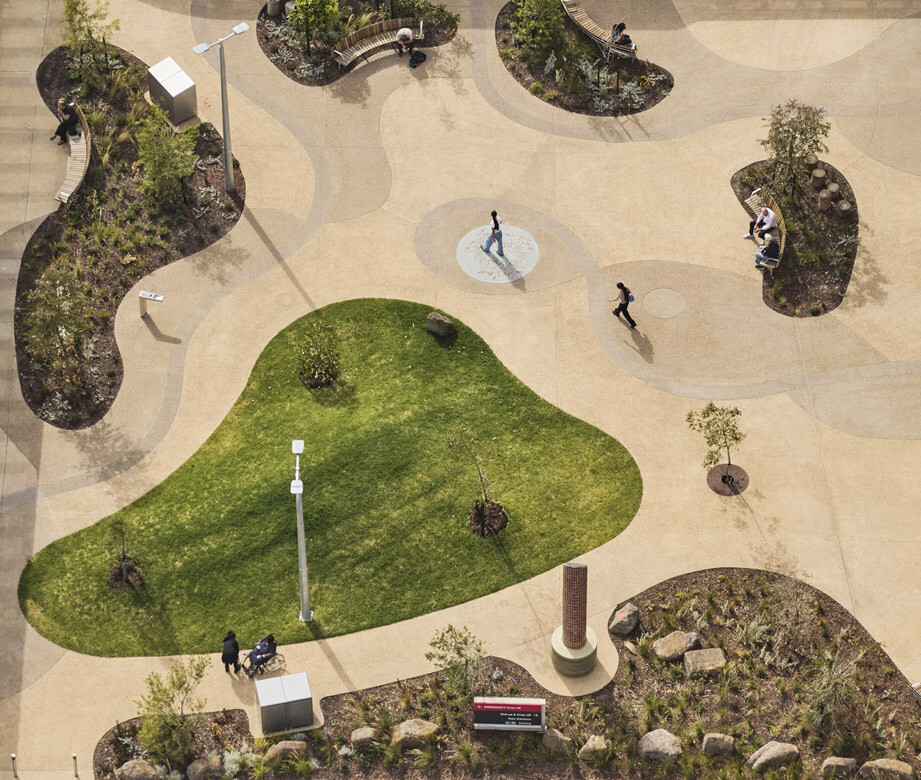
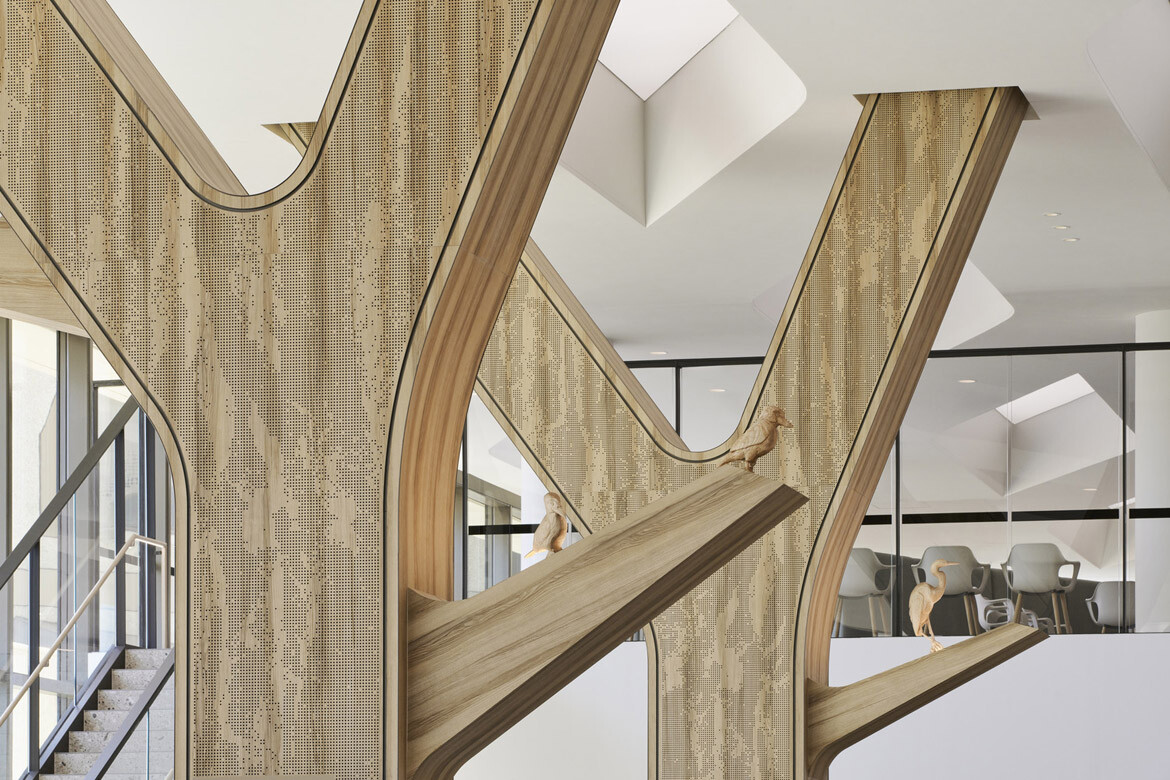
Importantly, cultural engagement is not applied superficially, but woven through operational, clinical and public domains. Even the tree-like interventions in the main lobby feature carved timber birdlife endemic to the area by local sculptor Mike Conole — a small but meaningful gesture that contributes to the overall experience.
The hospital is all-electric, and high-performance, low-leakage façade systems reduce reliance on fossil fuels and operational emissions. Interior planning and material selection are informed by evidence-based design principles, with biophilic strategies integrated throughout.
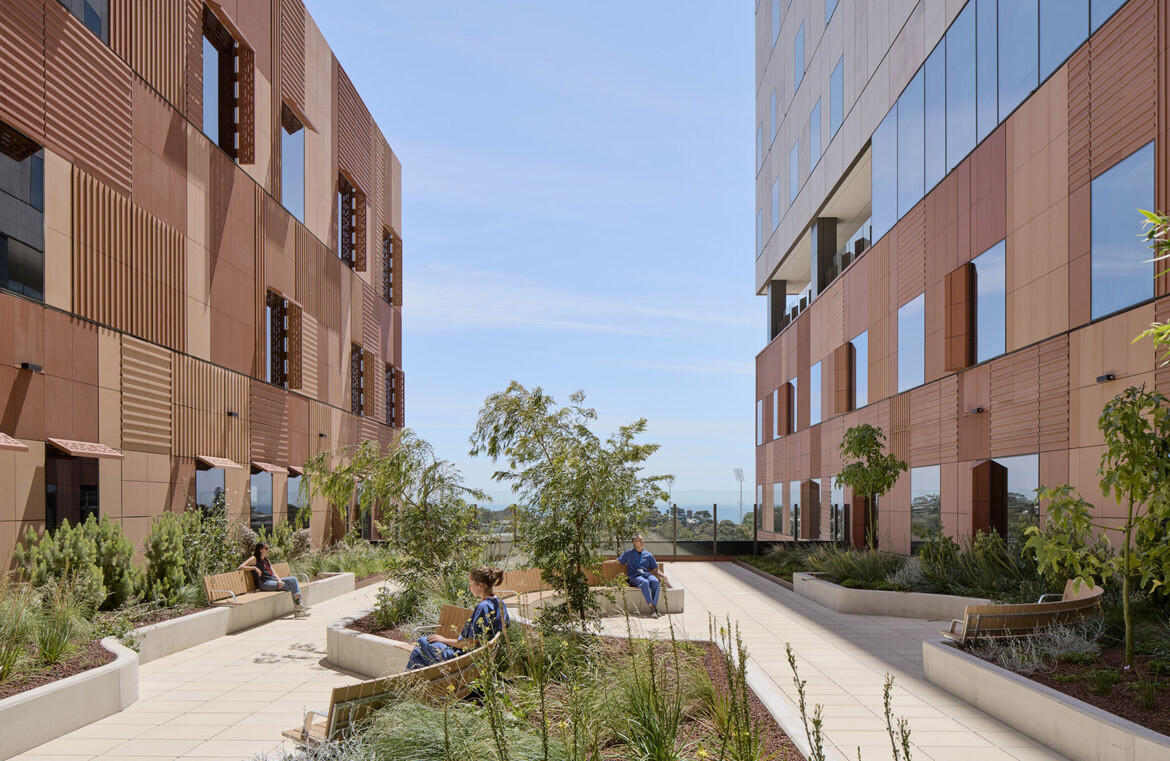
Sustainability extends to construction, with a 30 per cent reduction in whole-of-life carbon compared to benchmark buildings. Passive design strategies, rainwater reuse, low-global-warming refrigerants and solar power are among the many initiatives implemented.
While Peninsula University Hospital provides exceptional healthcare services, the design ensures that this delivery is expressed in a deeply considered way — where culture and art elevate the experience of care.
Despite the constraints of a tight site and an operational hospital throughout construction, the result is a highly resolved project that encapsulates care and the restoration of people and Country at every level — a place where community and culture come together, and ultimately, where healing can occur.
Bates Smart
batessmart.com
Architectus
architectus.com
Photography
Peter Clarke