In today’s world of fast-moving e-commerce, physical retail spaces need to offer shoppers something that goes beyond the simple purchasing experience.
In some cases, this has led to retail environments that are more comparable to immersive gallery spaces – but, for Australian menswear brand Calibre, it meant taking a simple approach that celebrated the clothing itself.
After all, the one thing online shopping can’t yet offer is a visceral and tactile experience of the items for sale.

The Australian menswear and fashion label was launched in 1989 by Gary Zecevic, and has always been defined by its “inventive classicism”.
In response to a changing fashion landscape, however, the brand wanted to push this concept further and celebrate uncomplicated luxury in a bespoke retail environment.
So, the brand approached SJB to bring a new retail vision to life at the Bondi store that would act as a blueprint for all future retail investment by the brand.
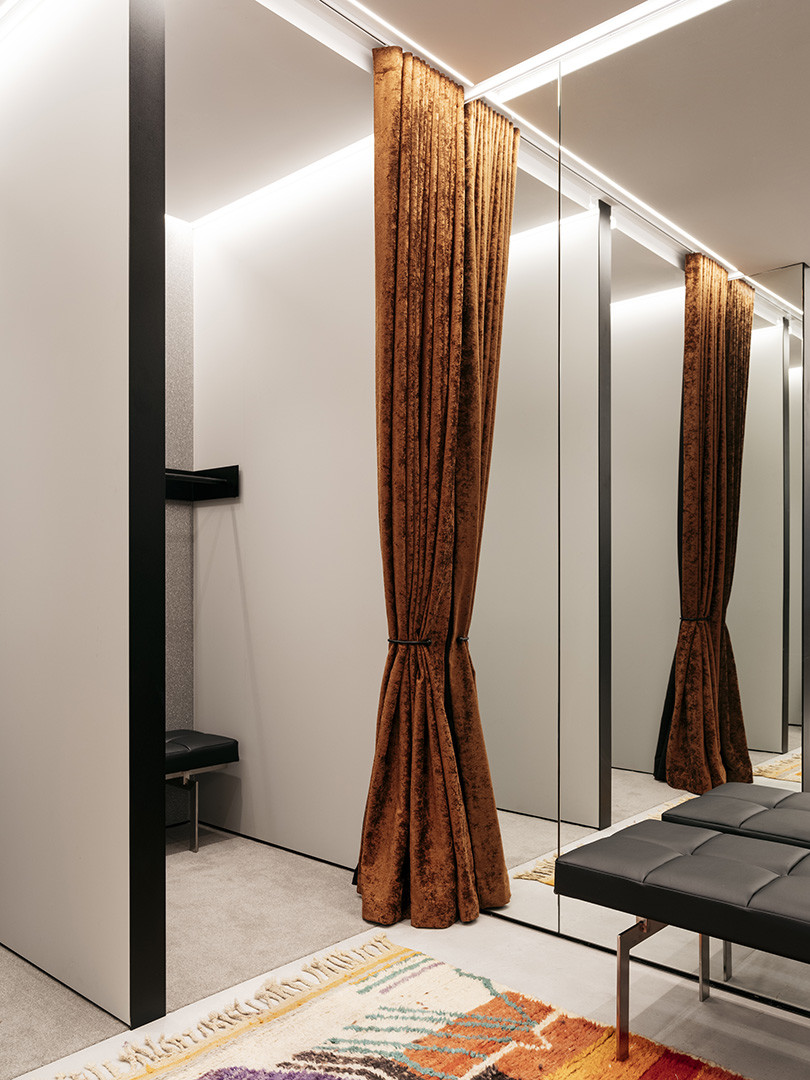
“Aligned to Calibre’s new direction to offer a more refined and tailored product offering, the brief was an exercise in restraint and simplicity – and our design response sought to celebrate crafted simplicity,” says Luke Stokes, associate at SJB.
“We introduced minimalist and architectural design elements that allow for the clothing to be pulled into focus.”
As a result of this approach that puts “uncomplicated luxury” at the forefront, the store is defined by a series of pared-back zones that combine geometric elements with a tactile materiality.
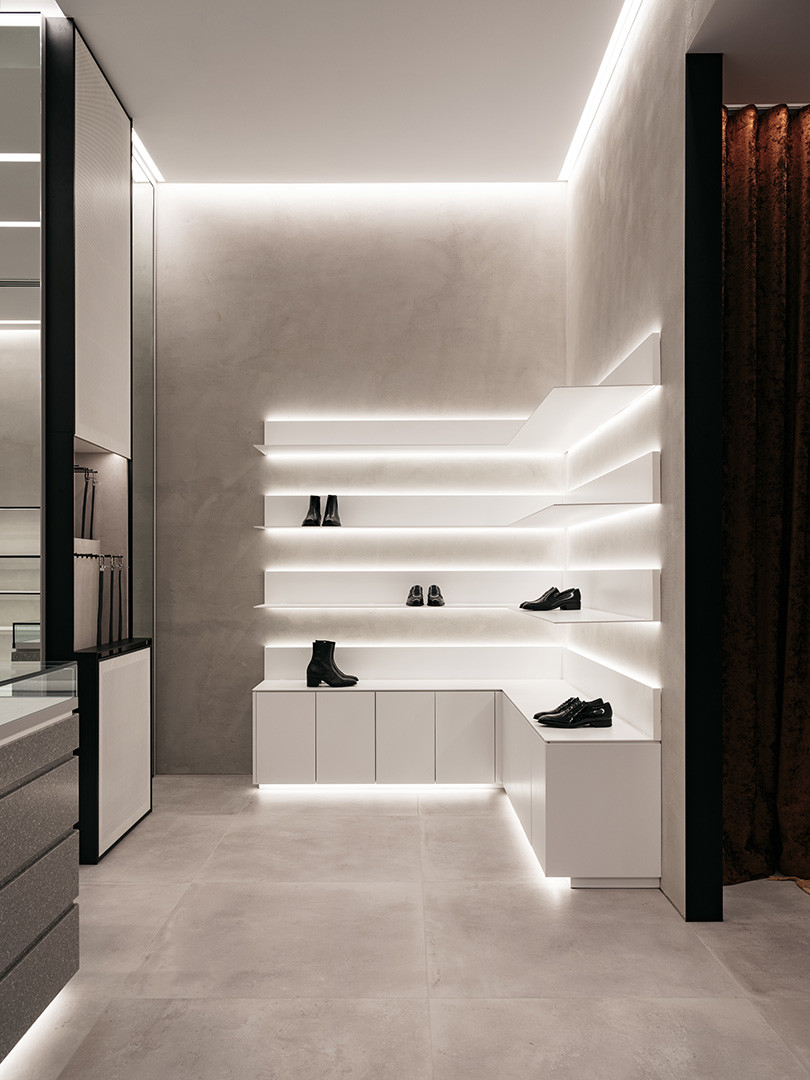
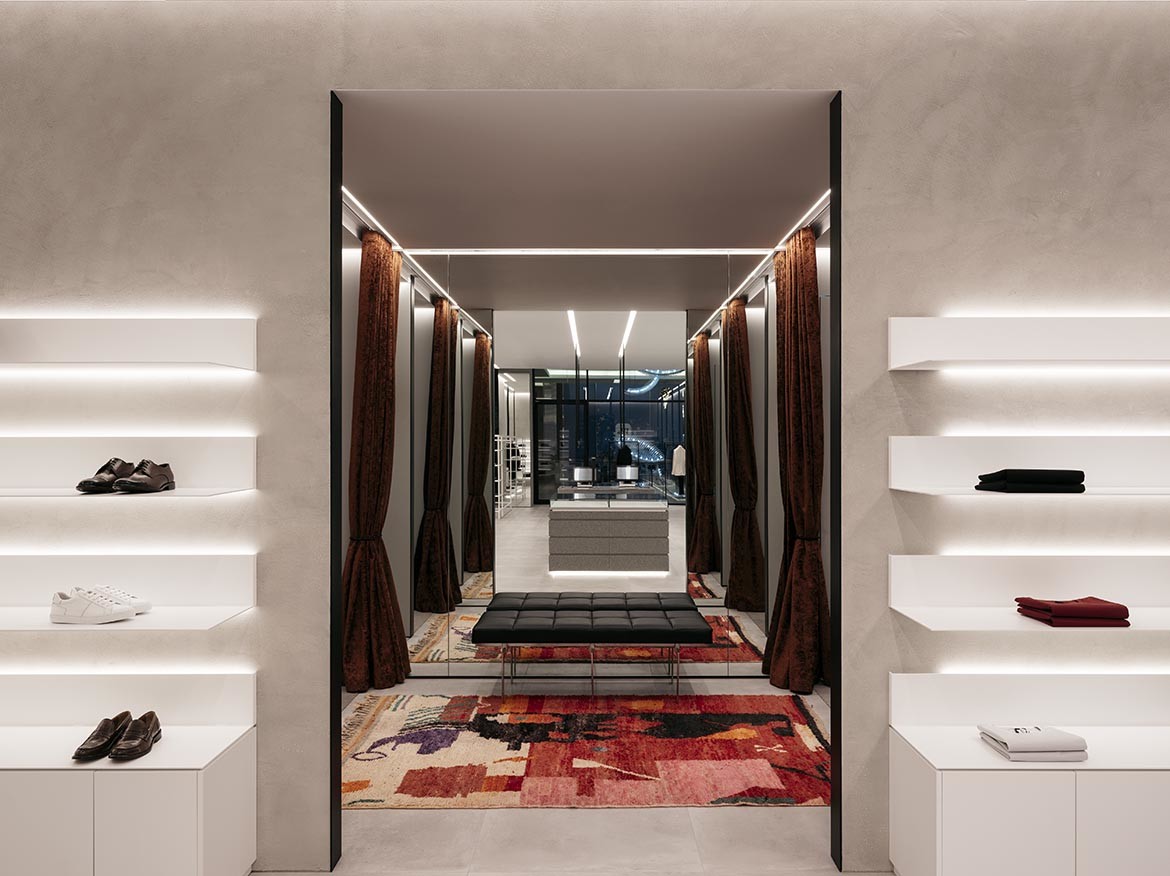
Layered shelving, concealed storage, and integrated point-of-sale devices all work to make the small 100-square-metre space feel spacious, and leave enough space for generous dressing rooms with bench seating.
“It was an important planning investment to create a refined retail experience,” explains Stokes. “While the design outcomes are an exercise in restraint, the project overcomes complex programmatic challenges.”
The colour palette has a similar approach, and is dominated by predominantly natural tones. In less-experienced hands this kind of neutral palette could suffer from a lack of character.
Here, however, the contrast provided by the deep red rugs with graphic tribal patterns and curtains in the same tone elevates the fit-out, providing differentiation and a sense of luxury.
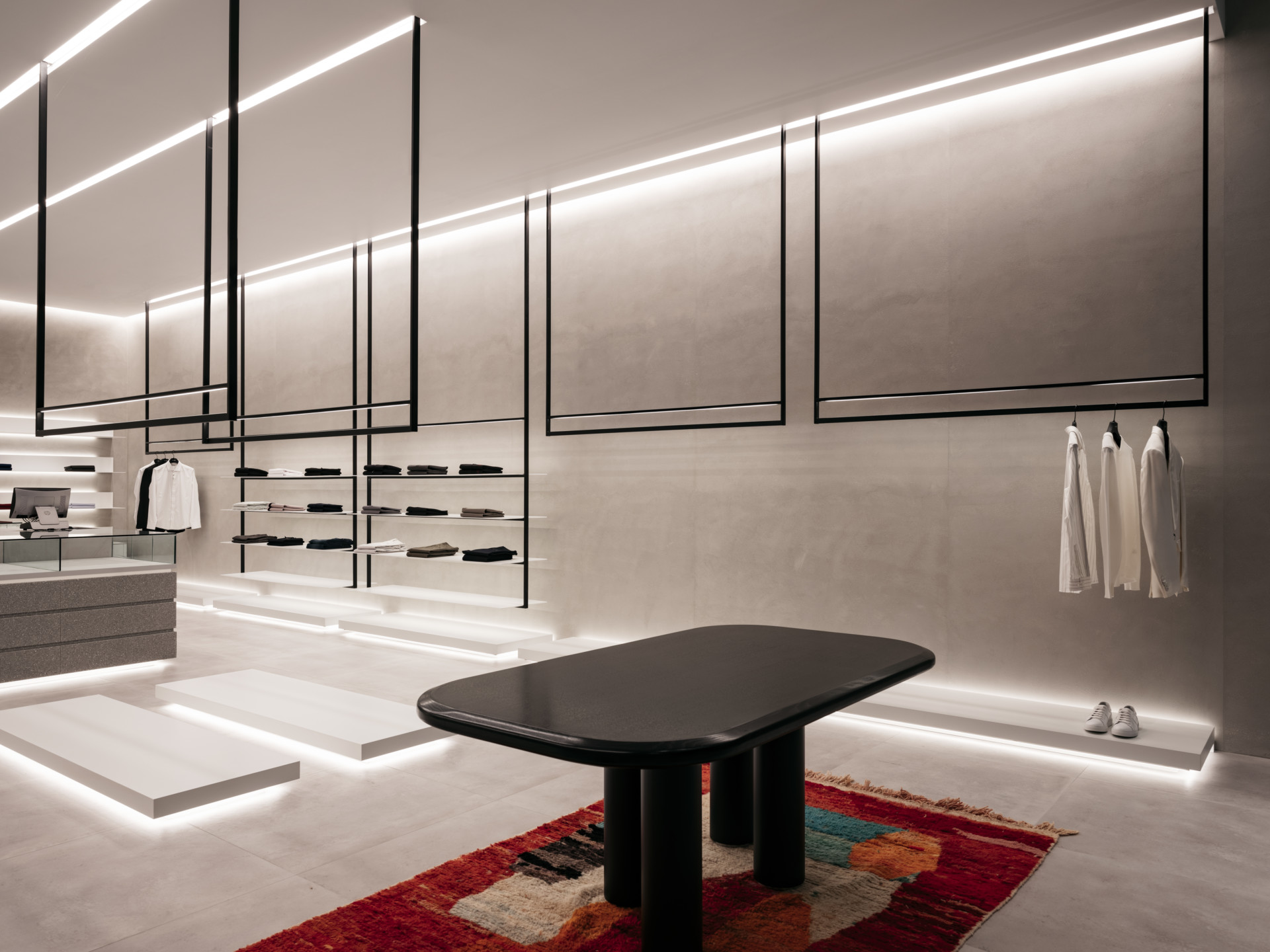
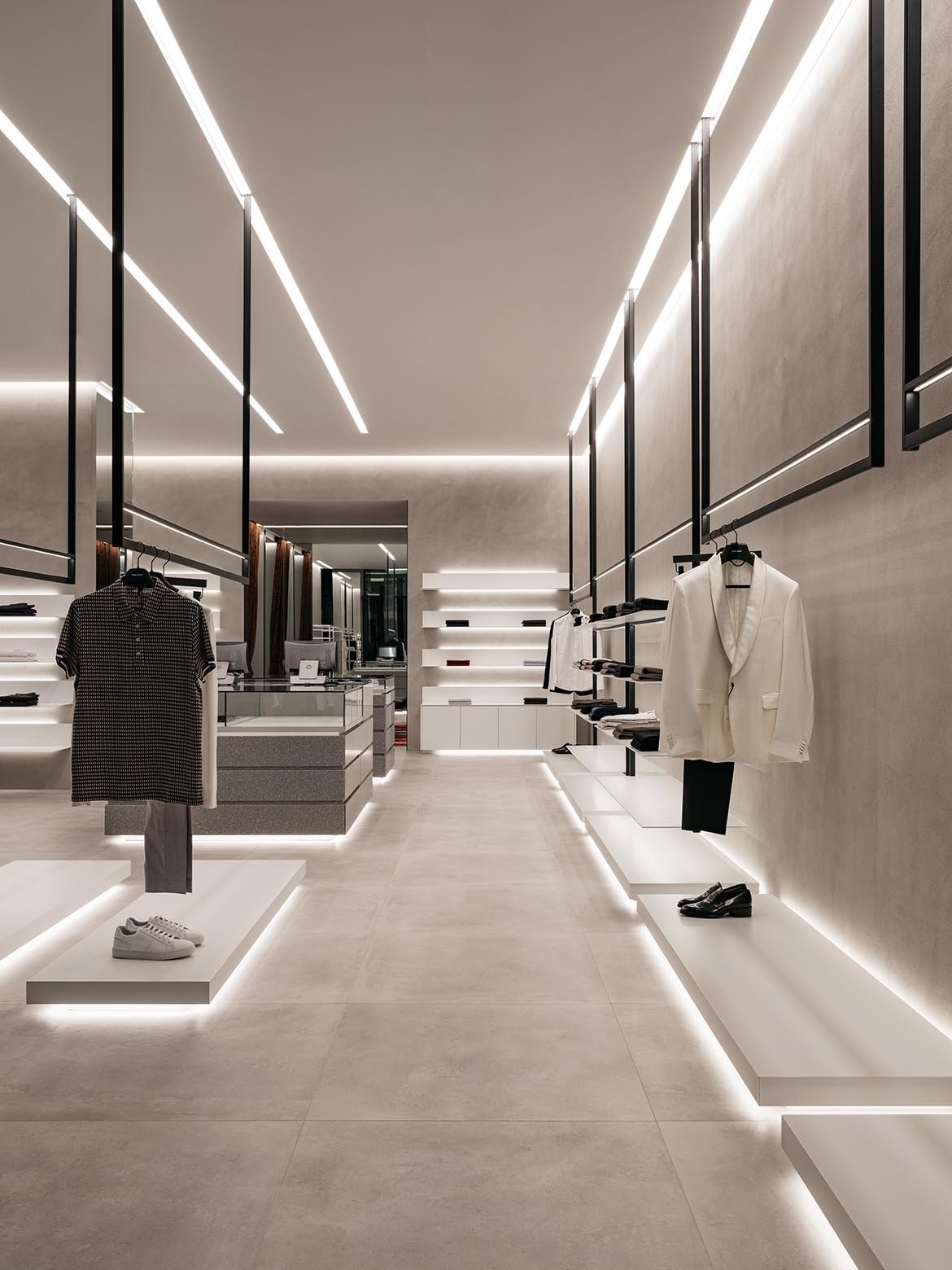
This sophisticated elegance is found throughout the space, with careful details – including considered junctions and shadow lines – balanced with the durability needed by a high-traffic retail space.
And, this meticulously crafted backdrop lets the clothing and accessories take centrestage, in an environment akin to a gallery space.
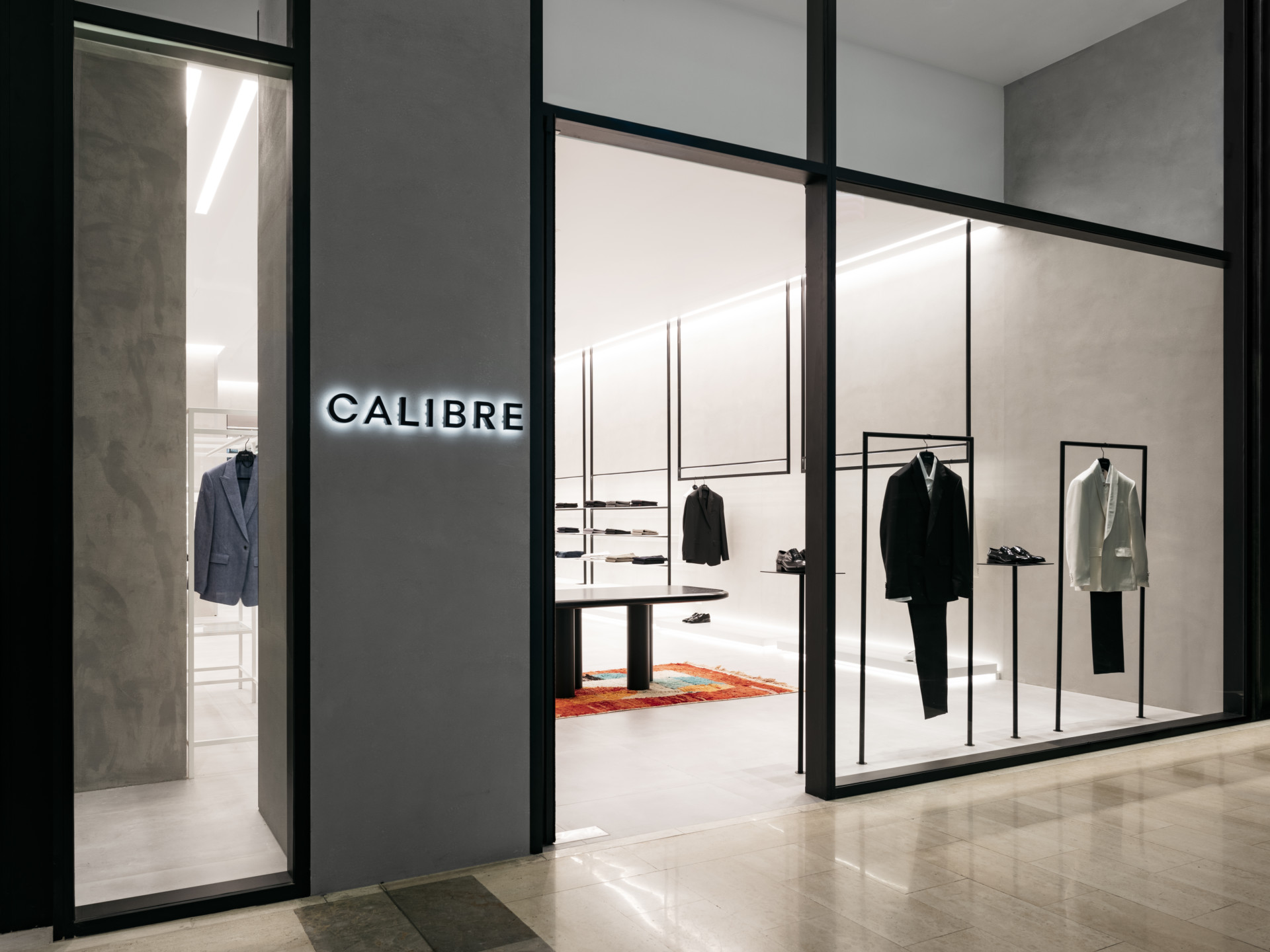
In keeping with this, the exterior of the retail space has also been treated as a gallery. The minimalist Calibre branding is backlit at the entrance, alongside large sheets of floor-to-ceiling glass that frame the window displays.
By keeping the branding discreet, passersby are attracted by the products themselves in a way that feels intuitive rather than directed – a reflection of the more informed consumer habits of today.
“Working with the founder and owner of Calibre, Gary Zecevic, and general manager, Andrew Petersen, we explored everything from sales data, visual merchandise and product diversification to inform the design outcome,” says Stokes.
“It’s been a wonderful experience in helping realise the new direction for Calibre through their retail strategy.”
SJB
sjb.com.au
Photography
Felix Forest
We think you might like this article about the hospitality and retail designers, Child Studio.