Retail is one area that has to constantly be innovating in the digital age. Through design, Ssense by David Chipperfield pushes forward with a new era of physical retail and e-commerce.
May 8th, 2019
The current retail remit has us designing spaces first and the online presence second – but what if it was flipped? British firm David Chipperfield Architects recently accomplished this for Ssense, an e-commerce label that expanded into a bricks-and-mortar retail store in Montreal, Canada. The store provides a physical counterpart to the online brand, and integrated technology was a priority. Within 24 hours of scheduling an appointment online, products can be delivered and tried on by customers at the store.
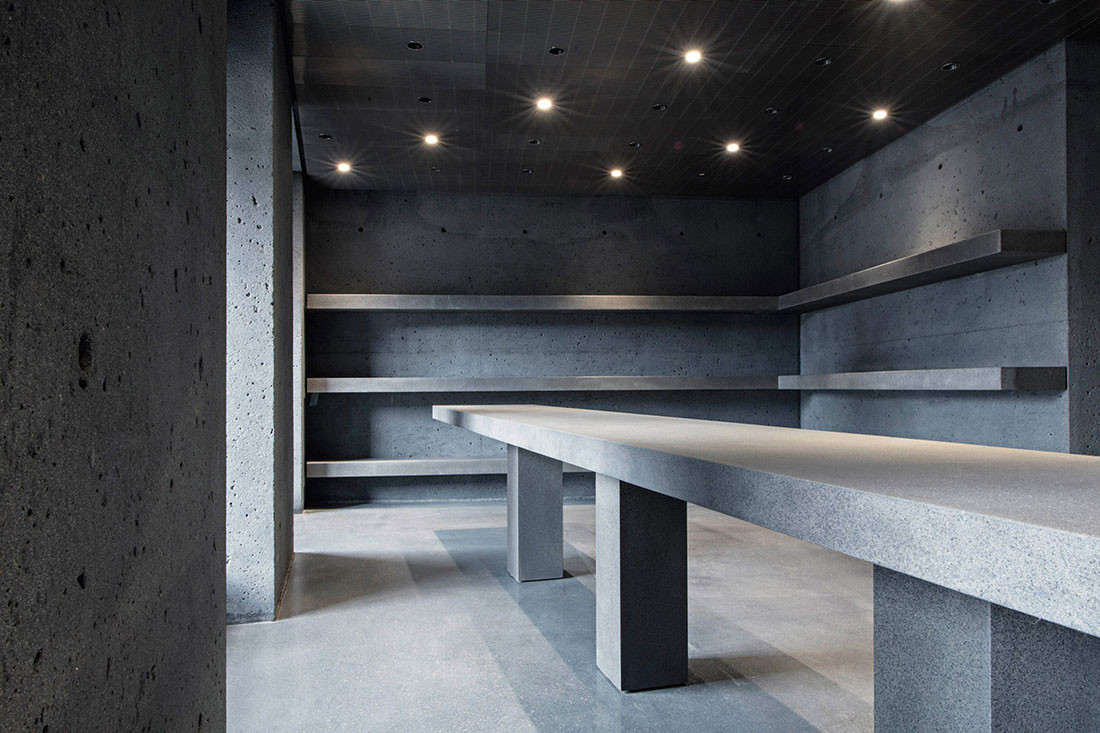
“E-commerce enables scale but is suboptimal in important ways, especially fostering human connection,” says Ssense CEO, Rami Atallah. “A seamless integration with physical spaces fills the gaps in the customer experience.” Along with spaces for displaying clothing and accessories, the building houses a glass-roofed café decorated with concrete benches and tables.
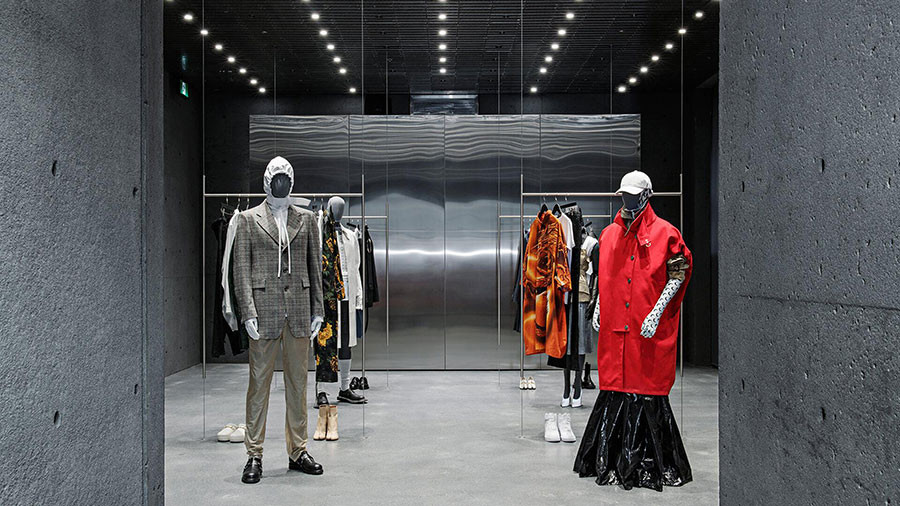
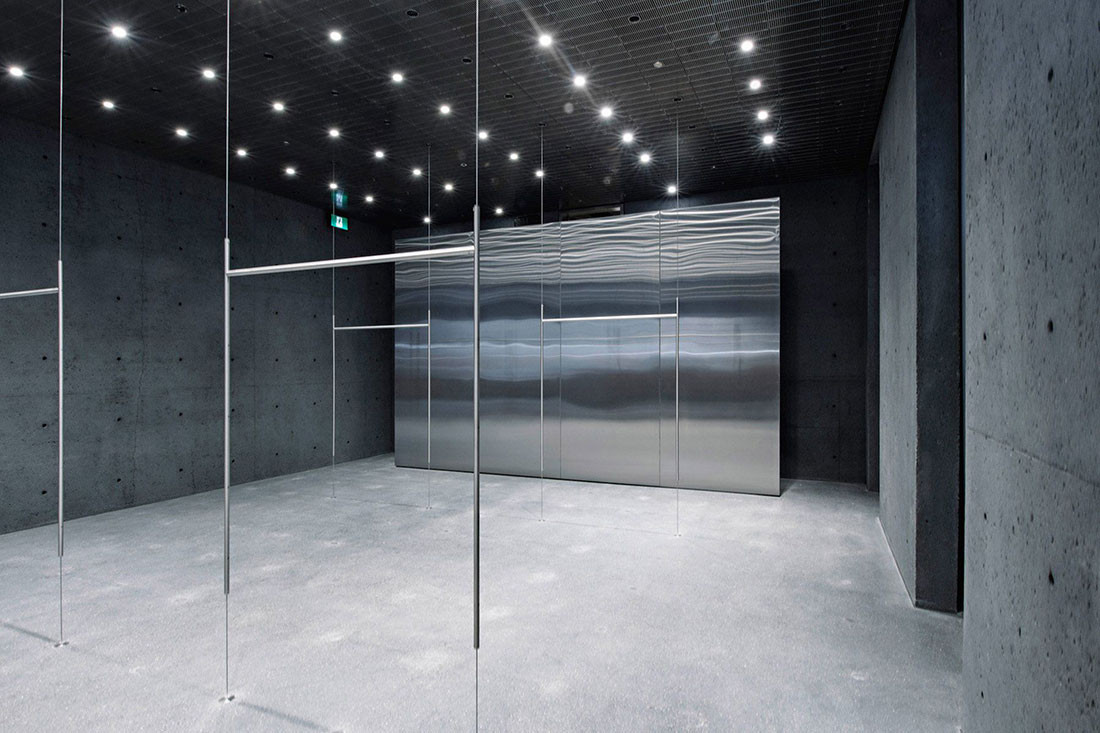
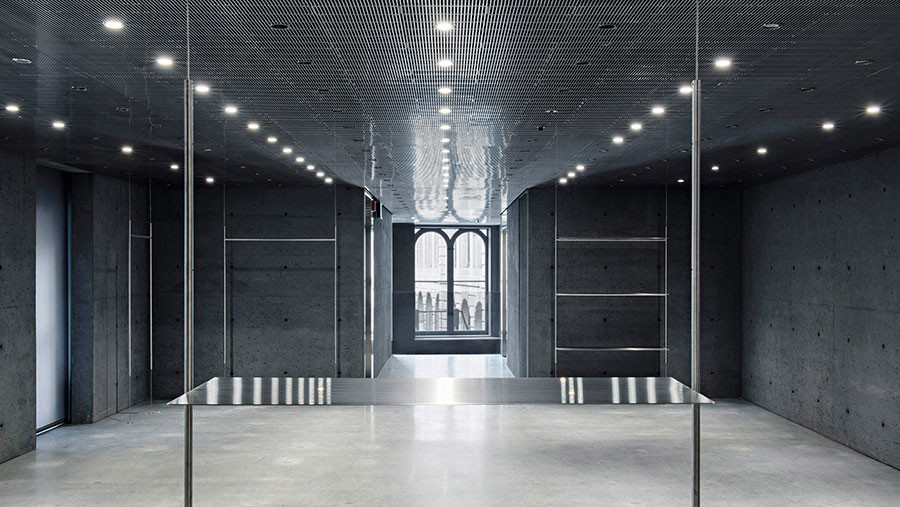
The retail experience is housed within a what was a crumbling mid-nineteenth century building. The internal in-situ cast concrete forms work as both an aesthetic decision but also help to hold up the original shell of the building. Spaces inside have been deliberately left sparse to allow Ssense to adapt and use these spaces for different programming – from fashion and arts events, to the café on the rooftop and display requirements.
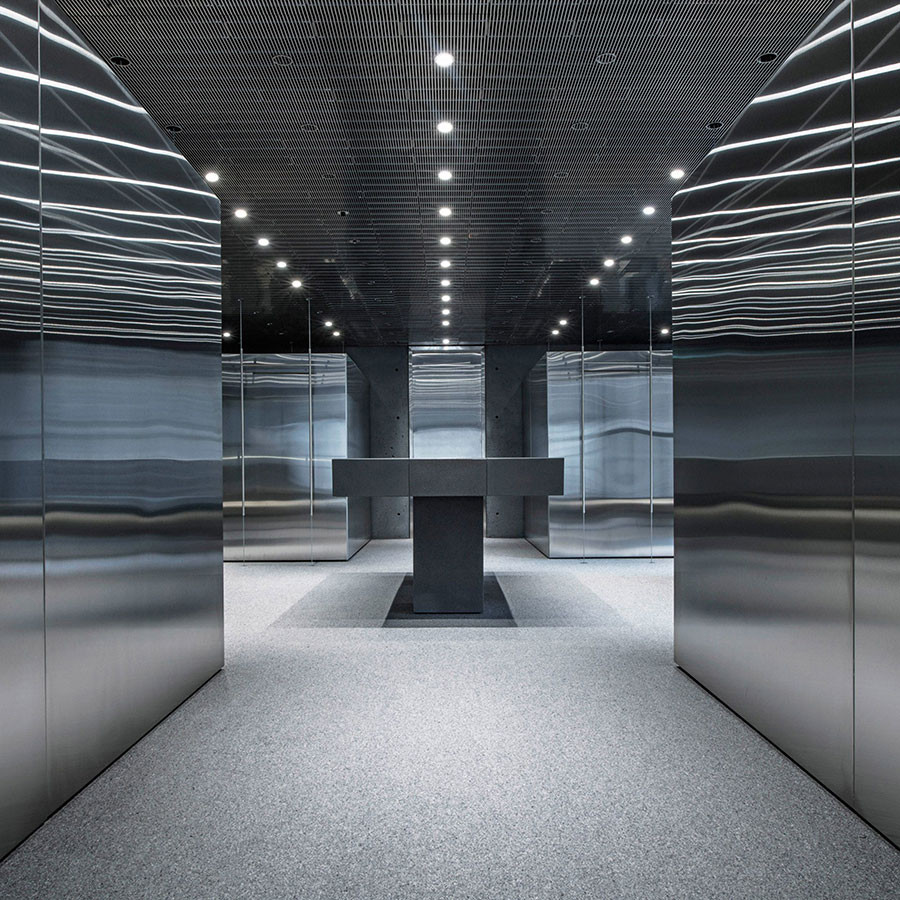
The integration of technology was, of course, an important consideration and thus wiring has been hidden to keep the surfaces as bare as possible. “A grid system is embedded throughout the unforgiving concrete structure, determining the formwork and placement of a hidden convertible socket system for all mechanical, functional, and technical elements,” says Atallah. As Chipperfield tells FRAME, “This is not a sensible project.” But then again, Ssense is not a ‘normal’ company.
We think you would like this Issey Miyake showroom in Japan.
INDESIGN is on instagram
Follow @indesignlive
A searchable and comprehensive guide for specifying leading products and their suppliers
Keep up to date with the latest and greatest from our industry BFF's!
In the first instalment of our three-part series exploring what it means to sit your best, we pose the question to Gray Puksand’s Dale O’Brien, who discusses the importance of ease and majority rule when it comes to sitting and reveals why specifying a task chair is not unlike choosing a Volvo.
Blending versatile cooking with smart performance, Bosch AccentLine appliances bring a quieter sense of order and simplicity to the modern kitchen.
The Geelong College’s Sport and Wellbeing Centre ‘Belerren’ designed by Wardle is designed around bringing in natural light. But Shade Factor’s job was to help modulate and precisely control it for the most important competitive moments.
In the second instalment of our performance seating three-parter, we turn to DKO’s Michael Drescher and Jacob Olsen to peek behind Sayl’s confident architectural form and explore the ideas of inclusivity, adaptability and freedom to move as hallmarks of what sitting your best actually means.
For Libertine Parfumerie’s new Armadale boutique, Tamsin Johnson looked to the warmth of the home and the rhythm of old-world shopfronts to make fragrance retail feel slower, richer and more personal.
Discover Doreme’s Kolkata workplace and showroom — a neon wonderland celebrating children’s joy with bespoke design.
The internet never sleeps! Here's the stuff you might have missed
On the occasion of Salone del Mobile 2026, the Opale collection designed by Patrick Jouin for Pedrali expands with two new iterations: a chair and a barstool with armrests.
Presented by Designer Rugs
Adelaide Design Week returns in October 2026 with the theme every*one, inviting designers, makers, studios, collectives and creative thinkers to submit expressions of interest.
Scheduled to open later this year on the banks of the Parramatta River, the 30,000-square-metre Powerhouse museum — designed by Moreau Kusunoki in collaboration with Genton — represents a major shift in the geography of Sydney’s cultural infrastructure.