Initially conceived as a quick and cost effective fit out to update the slightly dusty venue, the renovation of Nolita expanded in scope as the client and locals provided feedback, resulting in a substantial upgrade for the restaurant. A fluid, progressive brief provoked an equally dynamic response, culminating in a sophisticated trattoria in the prime Perth location.
The client was open to ideas that resolved previous environmental challenges whilst referencing their Italian origins, .thus the design features a juxtaposition of arched forms and jagged geometric patterns composed of robust materials that recall the modern contemporary vibe of Nolita in New York (North of Little Italy). Like a street arcade, the position of the bar and kitchen predetermined the spatial plan, dividing the long, narrow space into two zones.
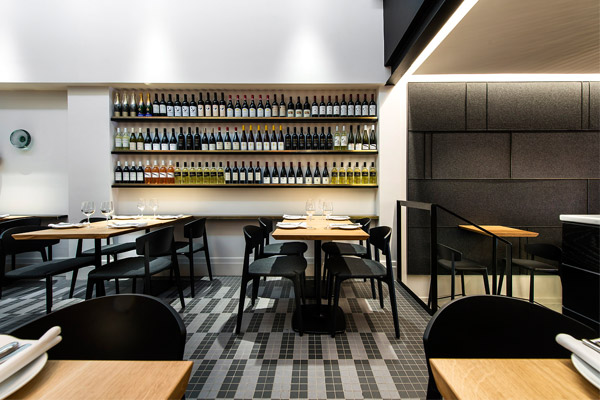
Due to the exposed saw tooth roof, the back dining room performed poorly in the summer heat. A sculptural ceiling with a high light window was created to allow light into the back room with new insulation. E-coustic acoustic panels with stained solid timber trims in the bar area create a feature to address poor acoustics of the previous design.
In collaboration with the local timber craftsman, the new design utilises the skills of a trade that was disappearing locally in Perth. “We believe by drawing upon their knowledge, we may aid in keeping these skills alive,” says Paul Lim, Director of Mata Design Studio. The local carpenter has installed solid timber joinery using details and materials that “expressed what Nolita stands for – a refined, simple product made with thought and consideration.”

Budget was the determining factor in whether or not an element went ahead. The client and designer worked together on the conceptualisation of the statement feature to one side of the main wall, with a secondary finish to the opposing side. Thus stained timber panelling features on the former contrast a paint finish on the latter.
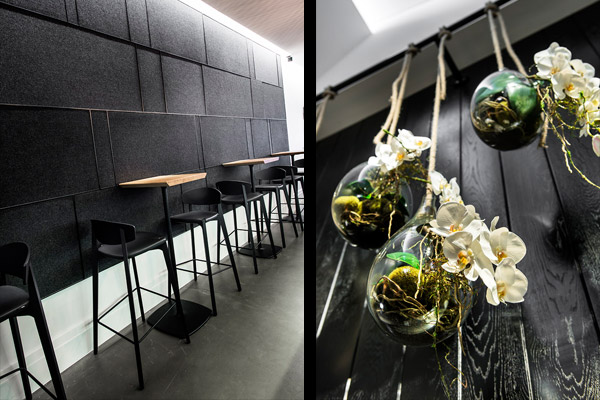
However while the budget was a defining factor, it was carefully administered so as to allow for the inclusion of refined, artisanal elements . The custom hand rails, custom cabinets with integrated lighting, feature acoustic walls, feature solid timber panelling form a collection of individually minor designed elements created to produce impact, that when combined animate the space and infuse it with texture and complexity.

Mata Design Studio
matadesign.com.au
Photography: Joel Barbitta, D-Max Photography
dmaxphotography.com.au
Furnishings by Mobilia:
Tao Stools by Inclass
Ekay Chairs by Ziru
Panelling by Mobilia Custom
Tables by Mobilia Custom