Energy retailer and 100% renewable electricity generator Mercury has united its Auckland team of over 560 people from three offices onto one, central Newmarket site. Moving from a fixed-desk environment to an activity-based working environment has quickly transformed people’s daily experience and work style.
In this new location, business units once separated and siloed are now mixing and talking more, gaining a deeper and more holistic knowledge of the business. Empowering teams and individuals with greater freedom, mobility and choice, the agile environment promotes wellbeing through movement and access to not only public, bright and social settings, but also to quiet and contemplative ones.
Within months of the move, an internal survey found 83% of Mercury people enjoyed working in the new space.
People at the heart of change
“The project was founded on a singular vision of having the freedom to do our best work together,” says Sarah Holt, Mercury’s workforce strategy manager. “We held interviews, workshops and surveys, which gradually revealed how individuals and teams could set themselves up to do their best work. This grass roots feedback informed our strategic brief with four key aspirations: collaboration, flexibility, wellbeing and openness – decision criteria that informed every step with true clarity of intent.”
Since the change process was so crucial to the project’s success, Mercury enlisted the help of Roz Sowerby and Sarah Gardner from The Change Shop to help set up the governance and structure for the whole relocation project.

“People are at the heart of change,” say the pair. “This sort of project has to be business owned and led, as no one knows the business like Mercury do.”
From the beginning, people helped to shape the story, so the design and relocation teams could understand how to best to integrate people, technology and property.
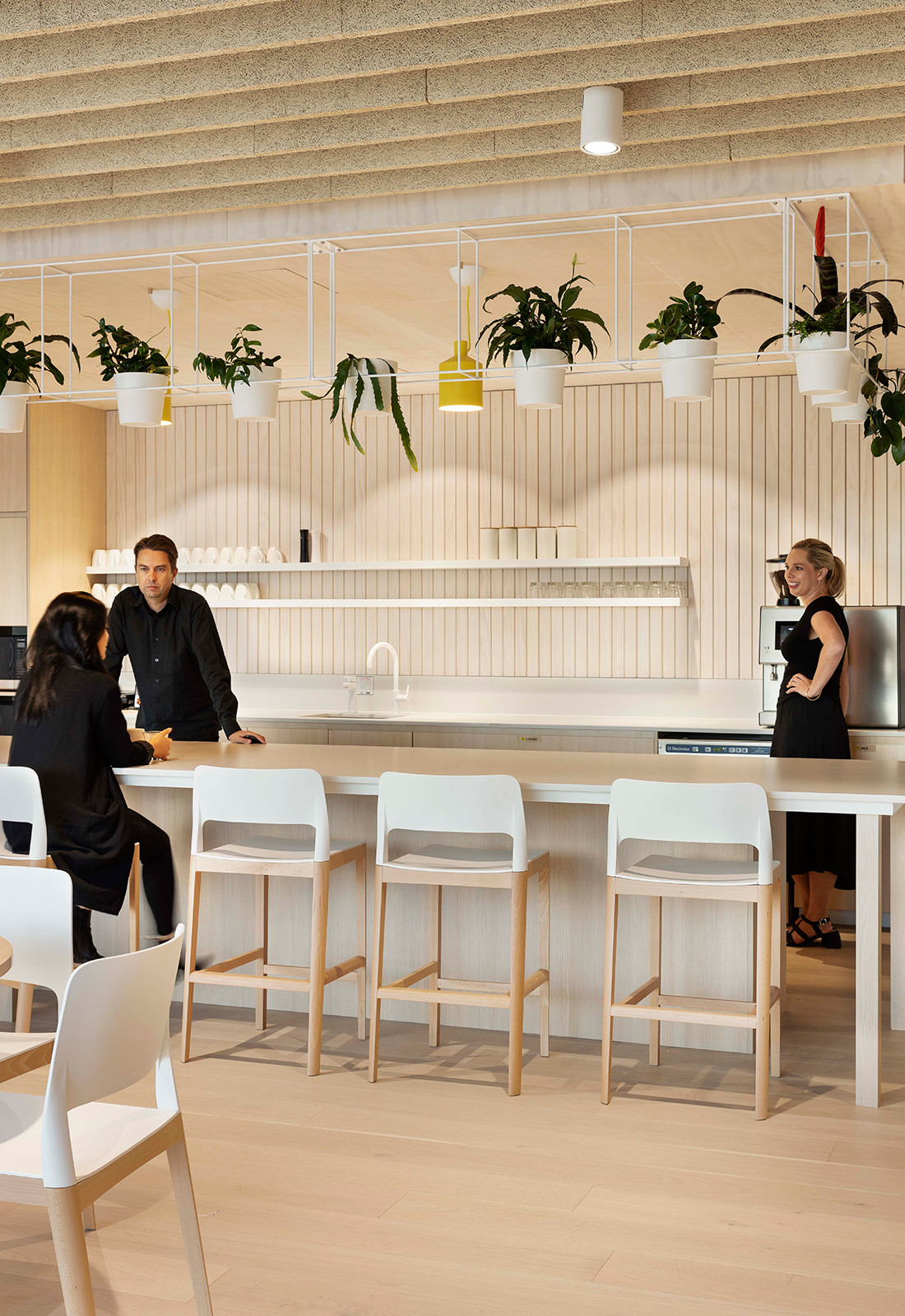
Some of the insights from early engagement included from the customer care team who needed more one-on-one conversation settings and immediate access to amenities due their rostering model. Today, they are located in the heart of the space close to the kitchen amenities and provided with clusters of technology-enabled booths on each floor. This team solve queries faster due to this tailored setting, integrated technology and easier access to other sources of knowledge within Mercury.
Designing the change
In addition to receiving feedback from specific teams, Mercury set up training projects and piloted a shared workspace for people leaders. Given first-hand experience, these individuals could genuinely lead by example, sparking authentic conversations within their teams about what the change of work style meant.
Each manager considered how they would lead a mobile team, how their team would connect, interact and how they would induct new people.
“The pilot started a snowball effect,” says Mercury’s Sarah Holt. “It required a real growth mindset from everyone.”
It was a big change for people who were used to their own private desks with drawers and paper storage.
“We had to tell them they no longer have their own desk, they can’t put things on the wall, and they need to share desks and cupboards. We had to start this conversation early, a good year and a half before moving in.”
Everyone knew the tagline and the four aspirations of the strategic brief. Mercury ran ‘just in time’ communications throughout the process, and quick pulse checks, so everyone knew what they had to focus on at each stage without information overload.

The physical environment
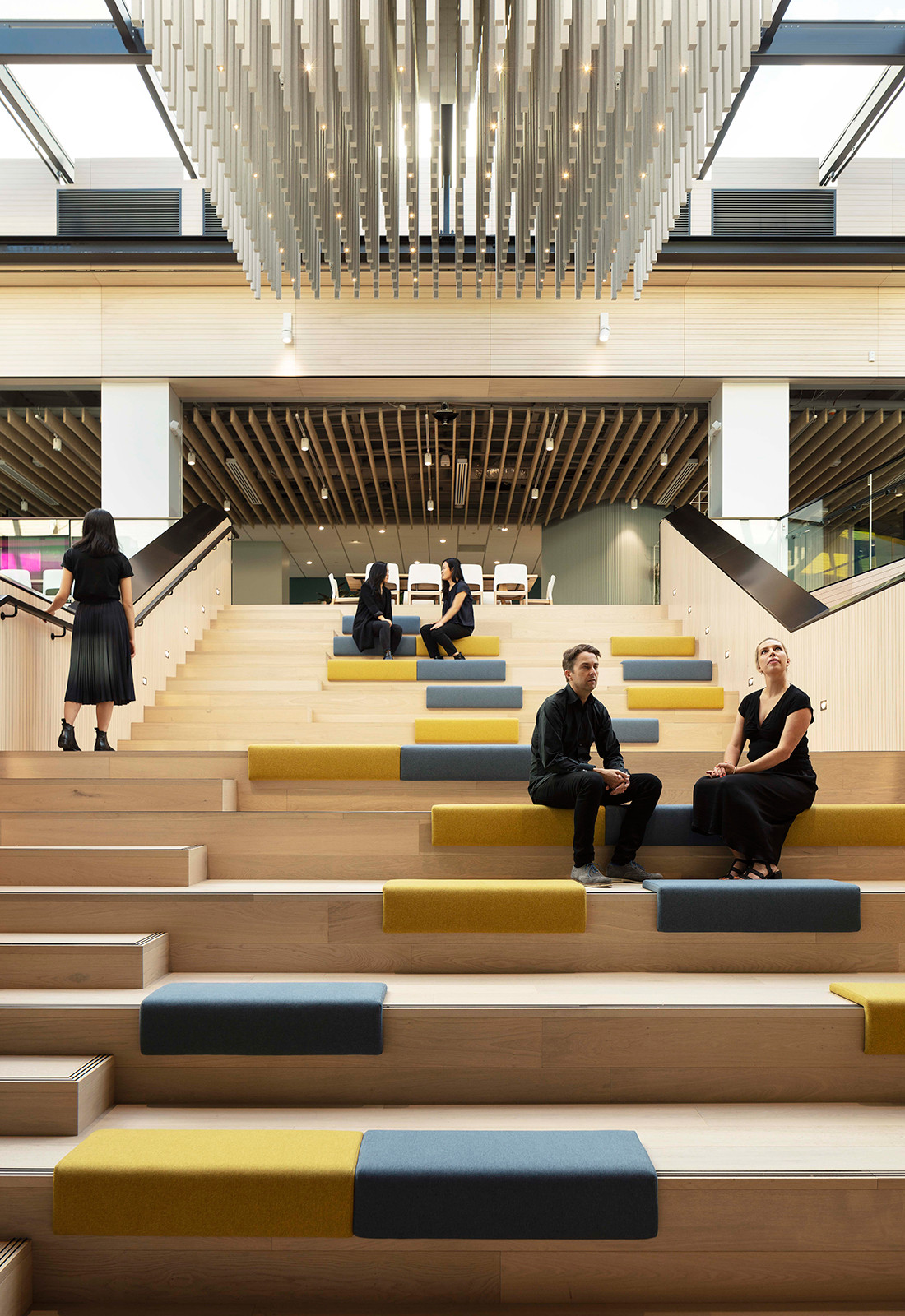
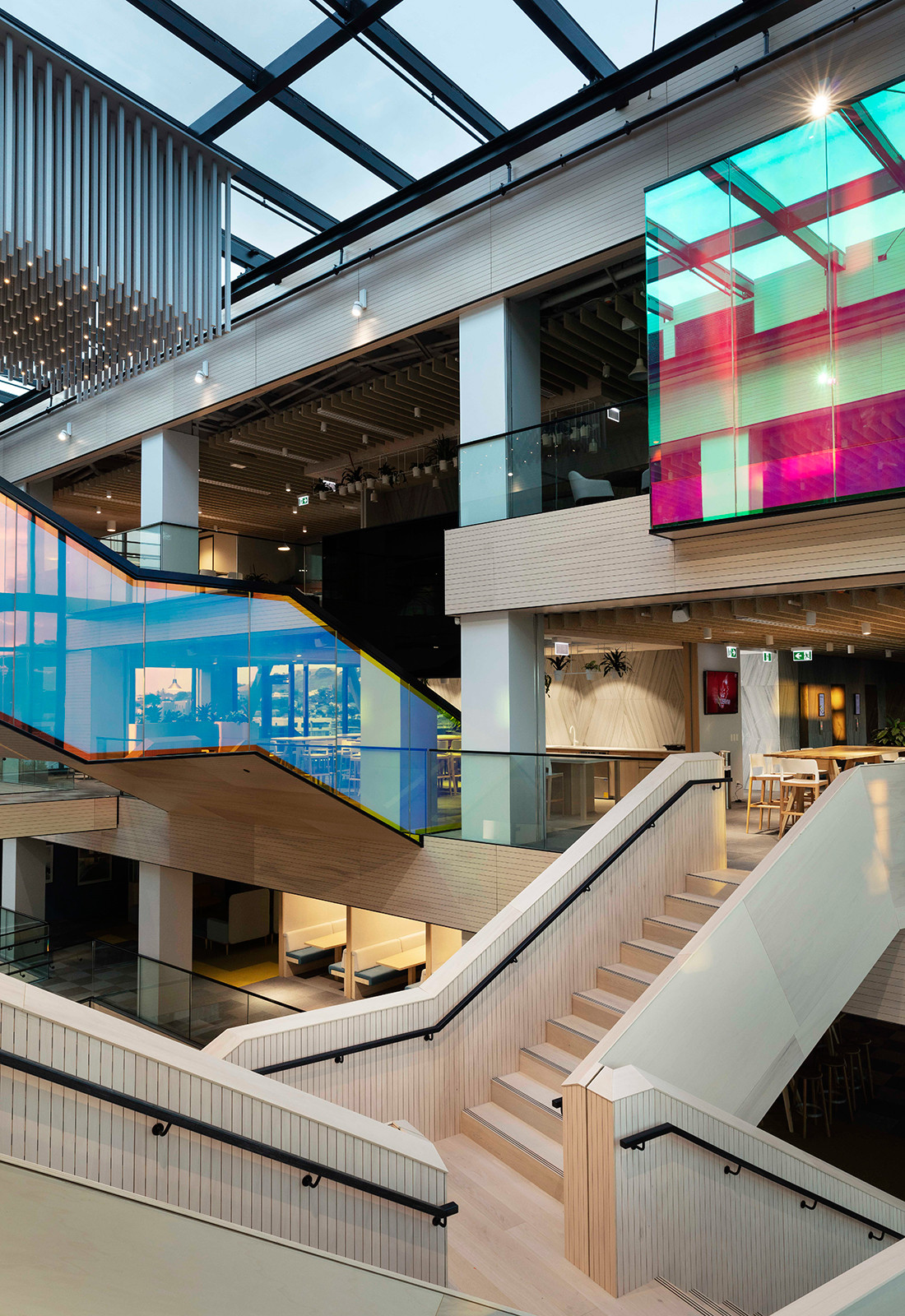
The 6,300 square metre tenancy spans the top three floors of 33 Broadway, Newmarket. Opening to a central atrium with glass balustrades in lieu of curtain wall glazing, scissor stairs connect the six floor plates to promote movement and incidental meetings. A large grandstand stair in the atrium spans from level five down to the social hub at level three. This brings the whole Auckland team together for events, deploying AV to connect with colleagues in other centres.
As well as designing for behavioural change, Mercury’s own people were involved in designing the physical environment. Warren and Mahoney’s interior design leads Holly Campbell and Arron O’Hagan listed closely to the specialist needs of staff.
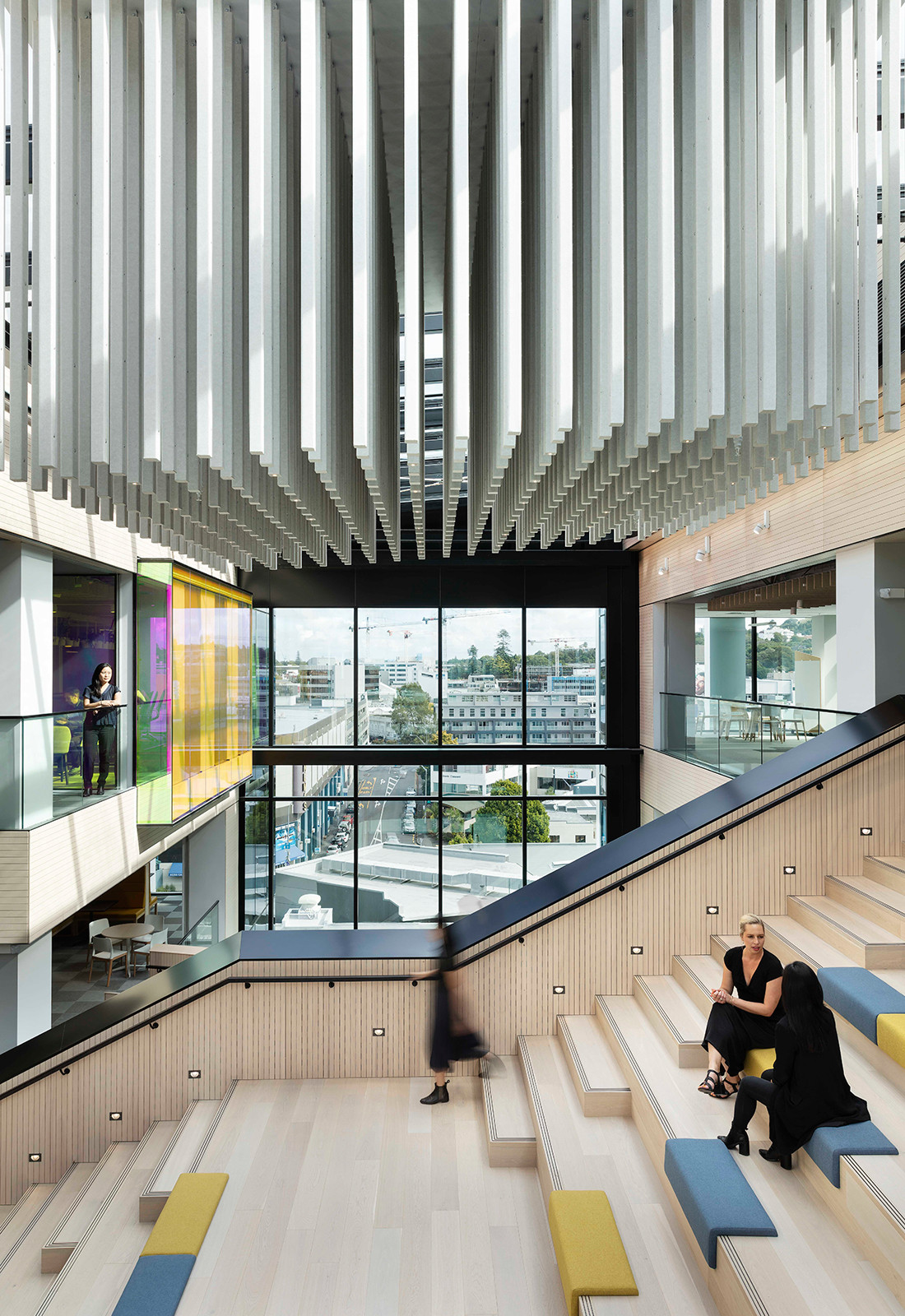
“Design for wellbeing is at the heart of the Mercury work strategy to ensure that comfort and health are supported by the physical environment,” says Campbell. “Our design theme was ‘nature mirrored’, a nod to the sustainable energy provided by Mercury.”
Extensive indoor planting, generous natural light and external views, high volumes of fresh air, end-of-trip facilities and electric vehicle charging all contribute to the building’s five Greenstar rating.

Mercury’s Sarah Holt was part of embedding the new changes with constant communication at team meetings, via digital noticeboards and the intranet, plus videos demonstrating the new way of working.
“I think the success of the process was also helped by continuing support and communications for another four months after the move. Today, we’ve got an equitable setting that supports freedom of choice. This place creates a buzz and empowers people to work more dynamically.”


Photography by Sam Hartnett.