Upon entering the grand lobby of the Memocorp Sydney flagship building, 259 George Street, you’d be forgiven for thinking you’d accidentally wandered into a boutique design hotel. Plush seating and statement furniture abound, while metallic accents offset a powdery palette of pastels that is at once dreamy and inviting. That the lobby, designed by Melbourne practice The Stella Collective, should so strongly evoke a hospitality space is no accident: as Director Hana Hakim explains, “Our client wanted to shape the brief around the ritual of hospitality.”

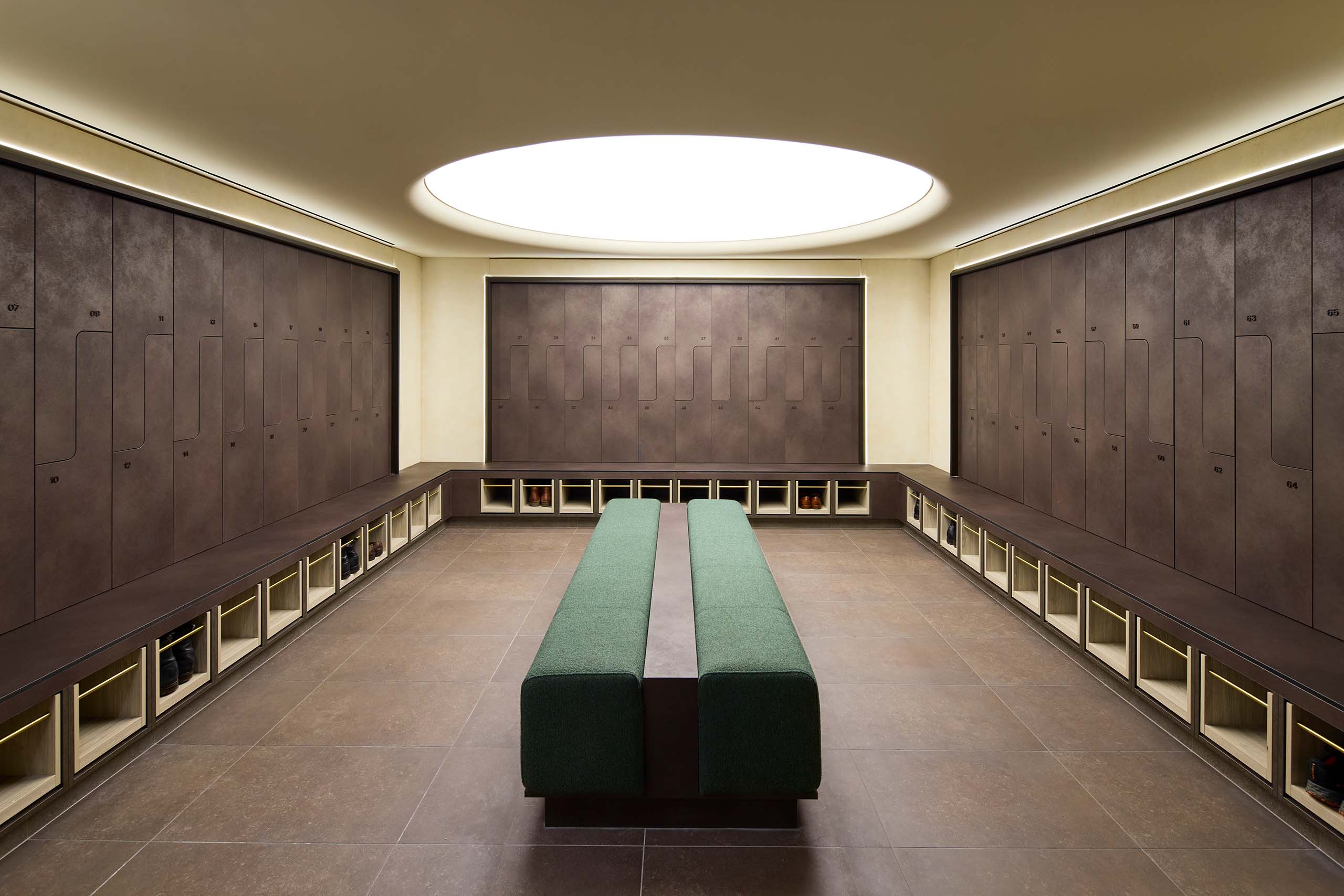
Memocorp tasked The Stella Collective with designing three spaces within the forty-two storey building on Sydney’s George Street: the grand lobby, end of trip facilities, and the property group’s own penthouse office. As the designers behind acclaimed hospitality spaces including Melbourne’s beloved Kettle Black, Brighton’s Red Roaster (the UK town’s oldest coffee house), and the newly opened Naim restaurant in Brisbane, Hakim and her team were the perfect fit for the project.
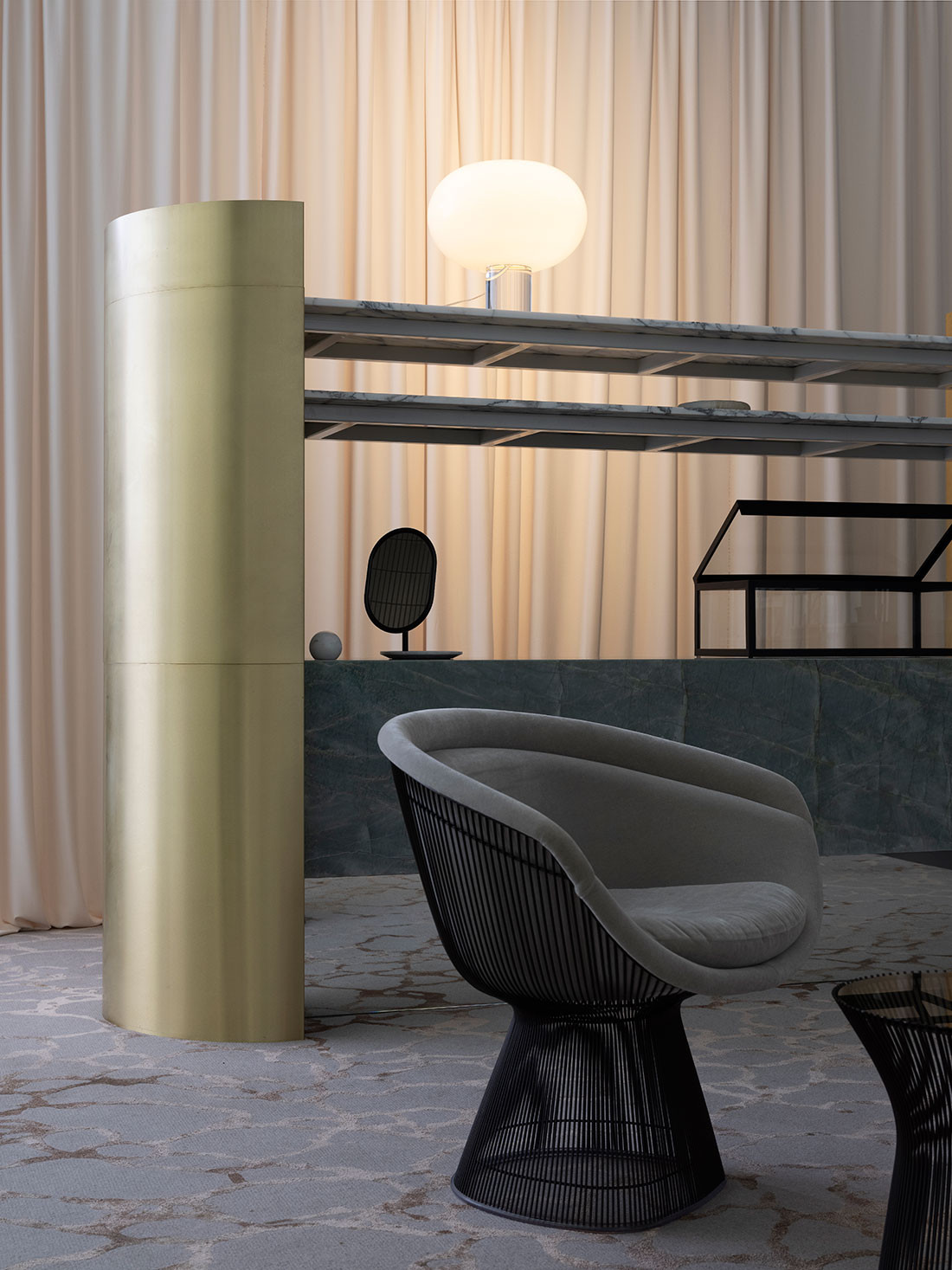
From the beginning, Hakim recognised that a business-as-usual approach to corporate design wouldn’t cut it. “I really think that everything needs to have the heart and soul of hospitality,” she muses, “This is the place where people spend almost all of their time away from their family, and it should be a wonderful experience.” Hakim rejects the notion that corporate environments must be sterile, impersonal spaces, and instead champions a vision of workplaces that support and delight their occupants. “Why can’t we create a work environment that adds positivity to people’s days and lives?” she asks, “Isn’t that why we design?”
.
“Why can’t we create a work environment that adds positivity to people’s days and lives?” – Hana Hakim, The Stella Collective
.
This drive to create a genuinely positive environment is evident throughout the tripartite project, but perhaps most clearly in the grand lobby. Here, The Stella Collective inverts the typical understanding of the lobby as a transient zone for passing through to instead deliver a destination space that invites people to linger. Proof that subtle acts are often the most transformative, the lobby effectively dismantles the accepted framework for corporate design and replaces it with a warmer, more fluid approach that eschews showiness and imposition. “It’s not too forceful, and it’s not too distracting: everything just falls perfectly into place,” says Hakim, “Design doesn’t need to be over the top at all.”
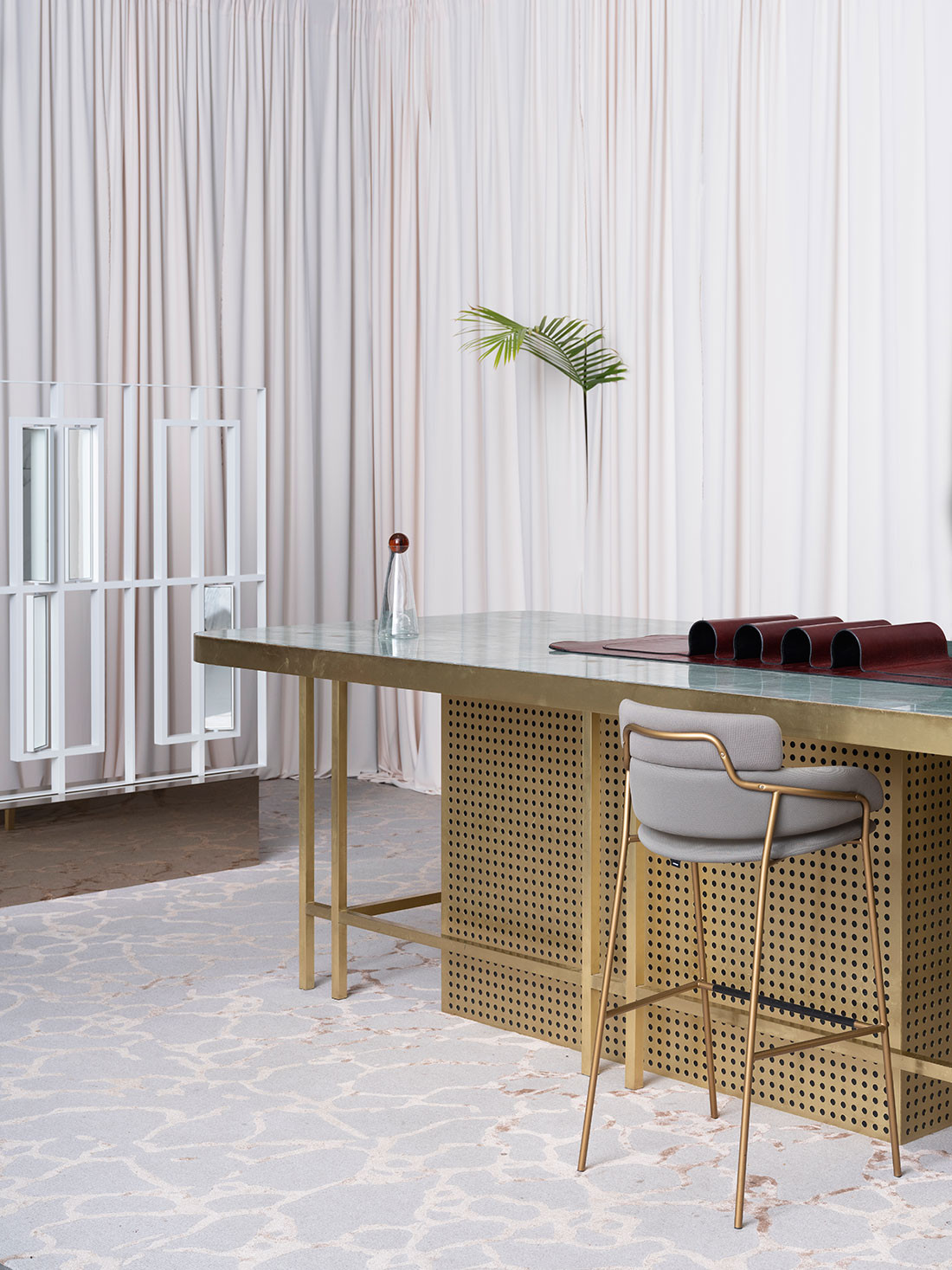
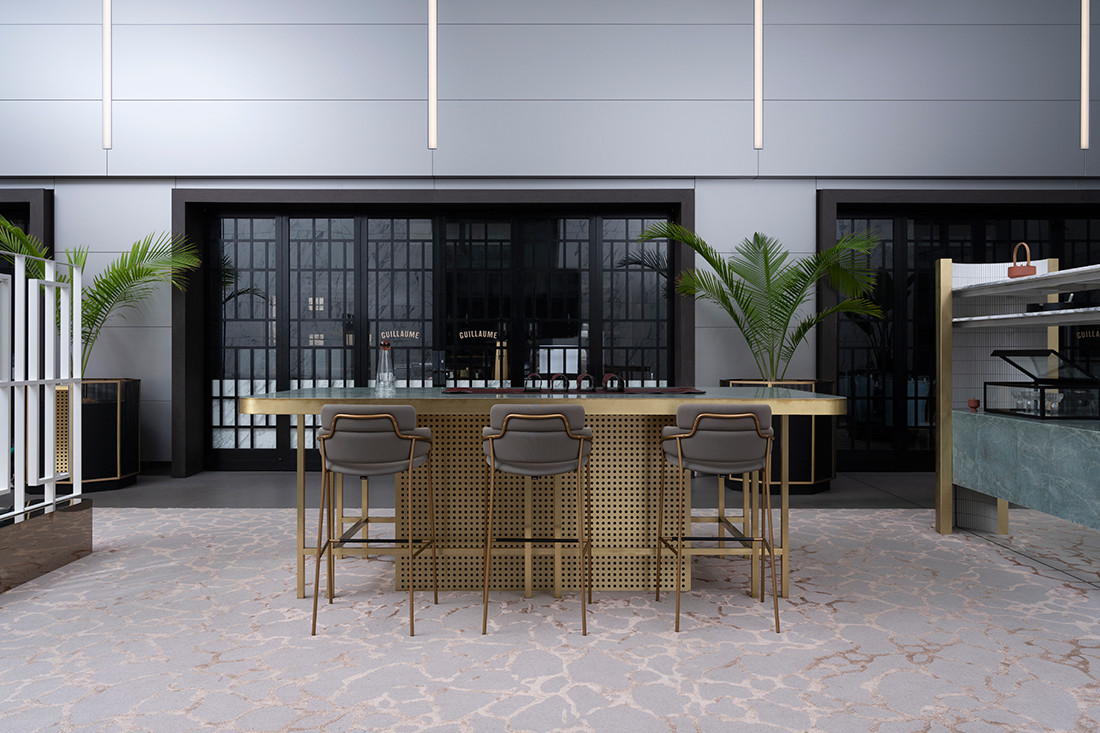
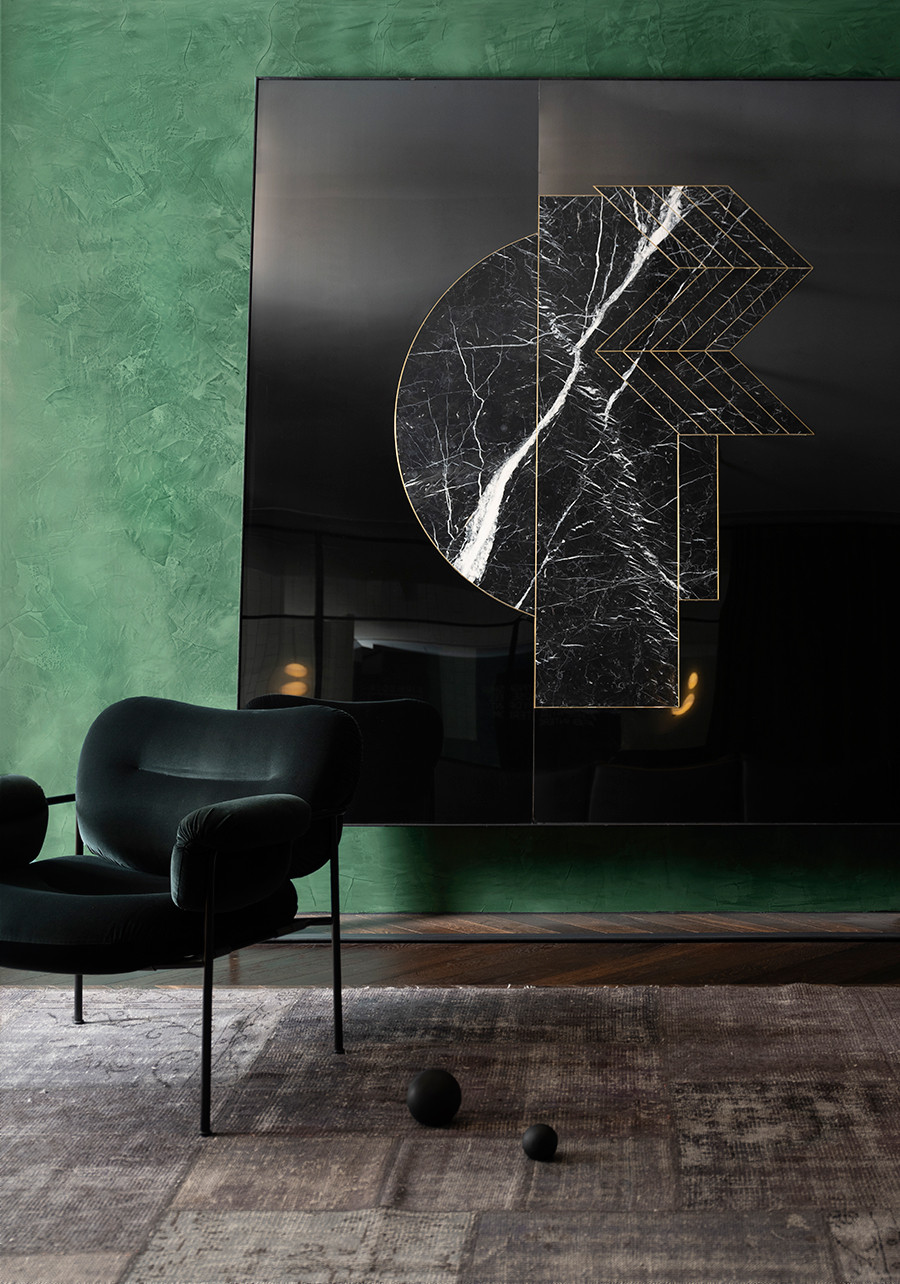
Taking cues from Bistro Guillaume, the iconic French restaurant and patisserie that moved into the space in 2016, the Memocorp grand lobby is a mille-feuille of layered details translated from the visual vocabulary of hospitality design. Gone are the hard lines, monochrome palette, and harsh fluorescent lighting often associated with contemporary corporate spaces, and in their place is a picture of contemporary luxury that combines striking pieces – a brass bench, a smoke glass-topped coffee table – with comfortable furniture, atmospheric lighting, and a granular focus on detail.

Oxblood accents add a further touch of sophistication, as does a dense, high-piled carpet in cool grey veined with pearlescent pink. In Hakim’s own words, the space is a “desert-at-dusk landscape” whose sensitive, understated approach belies its nature as a bold, radical breaking of the corporate mould.
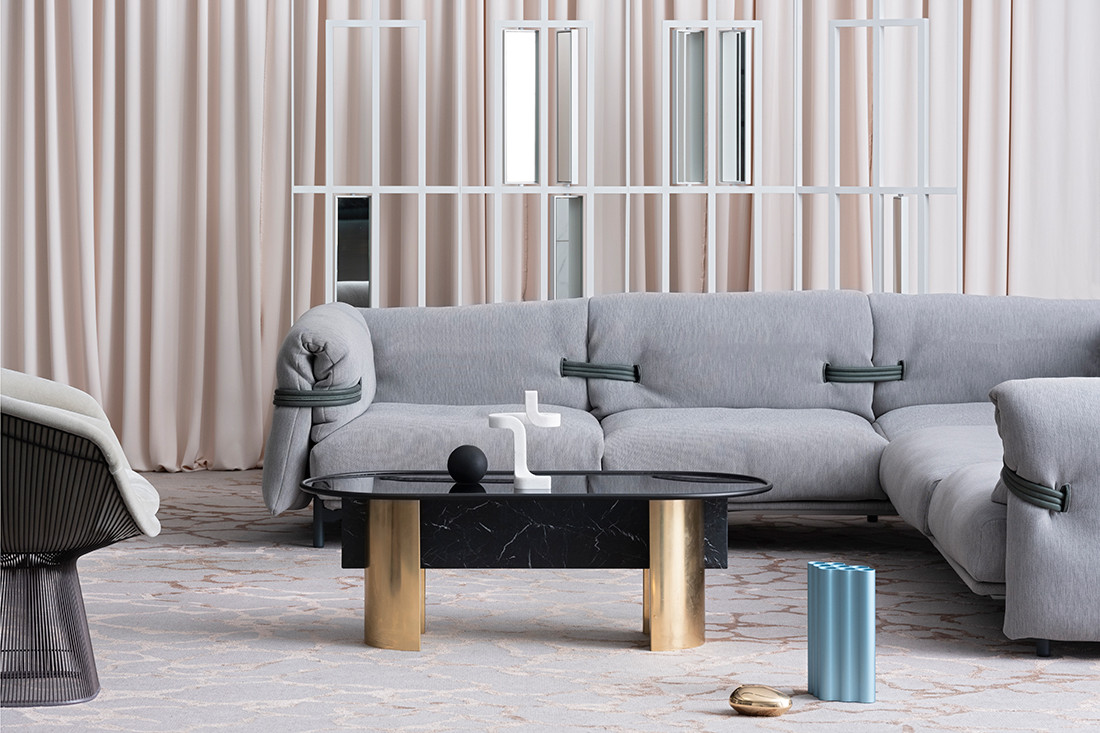
Still, Hakim speaks modestly – if enthusiastically – about the project, explaining that for The Stella Collective, the goal was not subversion so much as finding the best way to address the client brief in a fresh and functional way. “Our goal was just to make people feel amazing in the workplace and set the tone for creativity,” she says, acknowledging that Memocorp represents a new breed of client whose embrace of the power of design enables a flexible approach.
.
“Our goal was just to make people feel amazing in the workplace and set the tone for creativity.” – Hana Hakim, The Stella Collective
.
As Hakim puts it: “I have definitely seen a leap of faith in terms of clients now believing what design can do for people. They’re now a lot more trusting.” With good reason. If the grand lobby of 259 George Street is anything to go by, the menu for corporate design is changing fast – and we can’t wait to see tomorrow’s specials.


Photography by Felix Forest.
This story originally appeared in Indesign magazine #76. Sign up for our newsletter to get even more design inspiration.