Earthy materials and idiosyncratic elements combine to create a lively and contemporary Japanese restaurant.
June 3rd, 2015
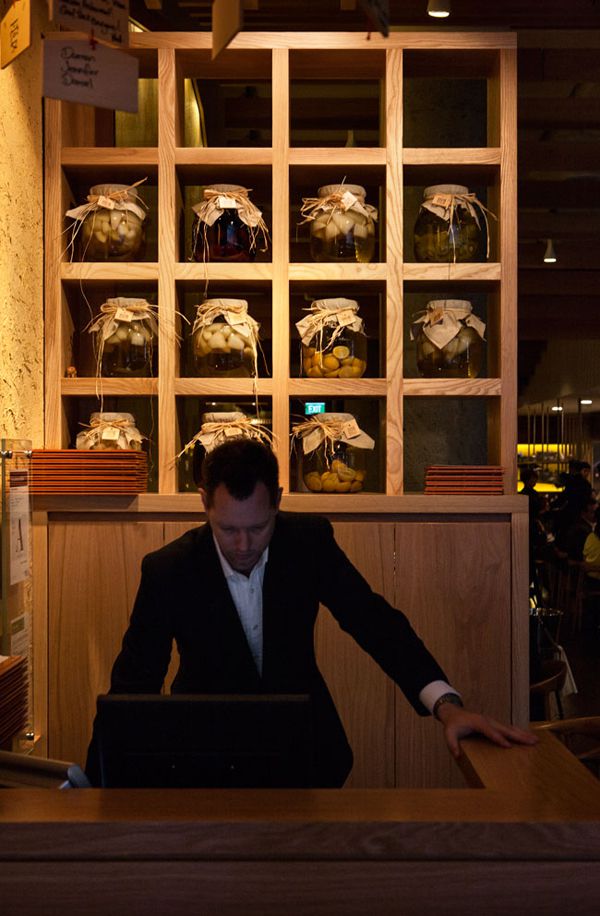
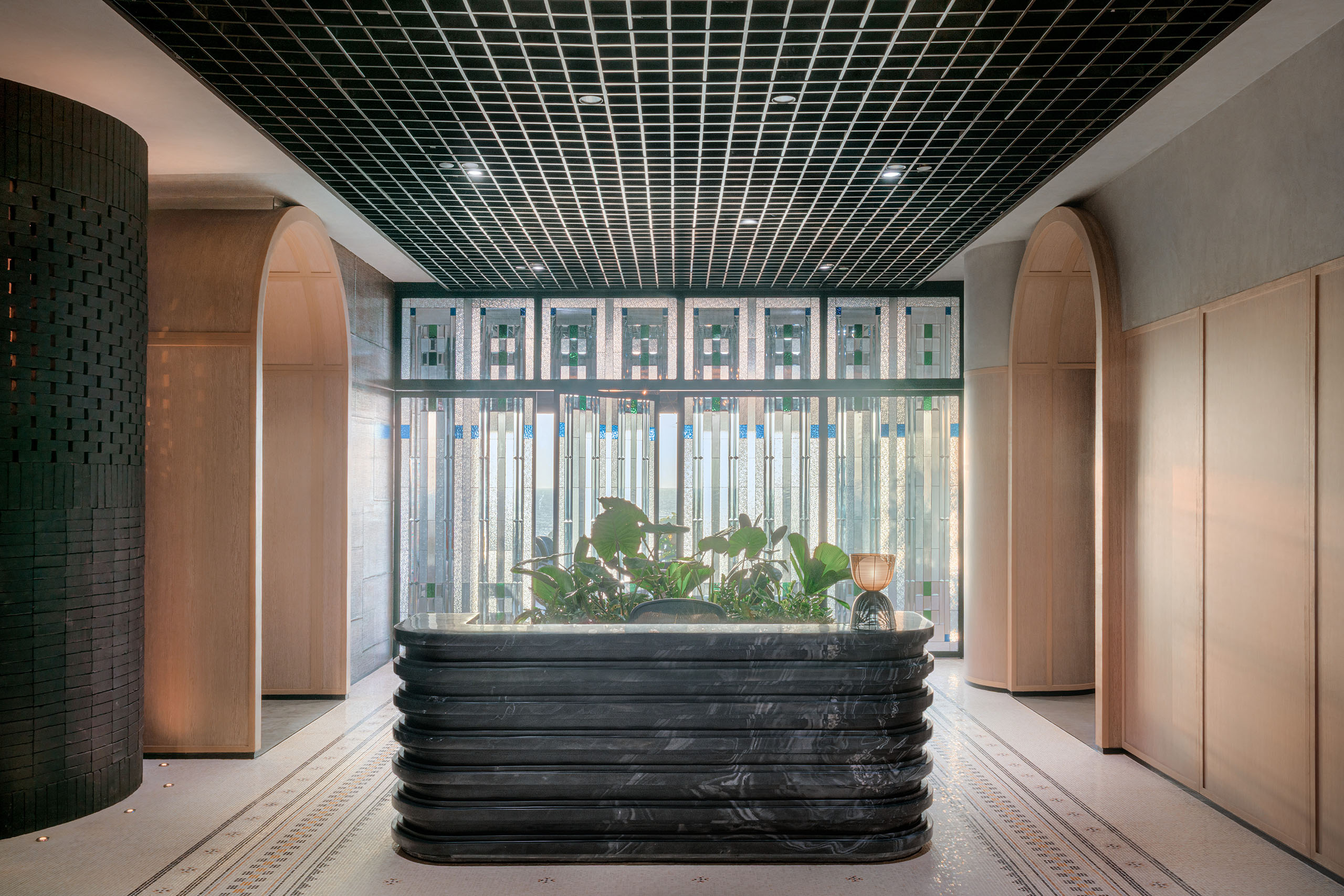
Rich in timber and craft, and full of charm and sophistication, Masu’s interior was a collaboration between chef Nick Watt and architect Gordon Moller. Moller’s approach to craft, and knowledge of Japanese design, combined with Watt’s intimate knowledge of Japanese kitchens and service has created a soft warm interior that belies the high degree of precision behind its construction and operation.
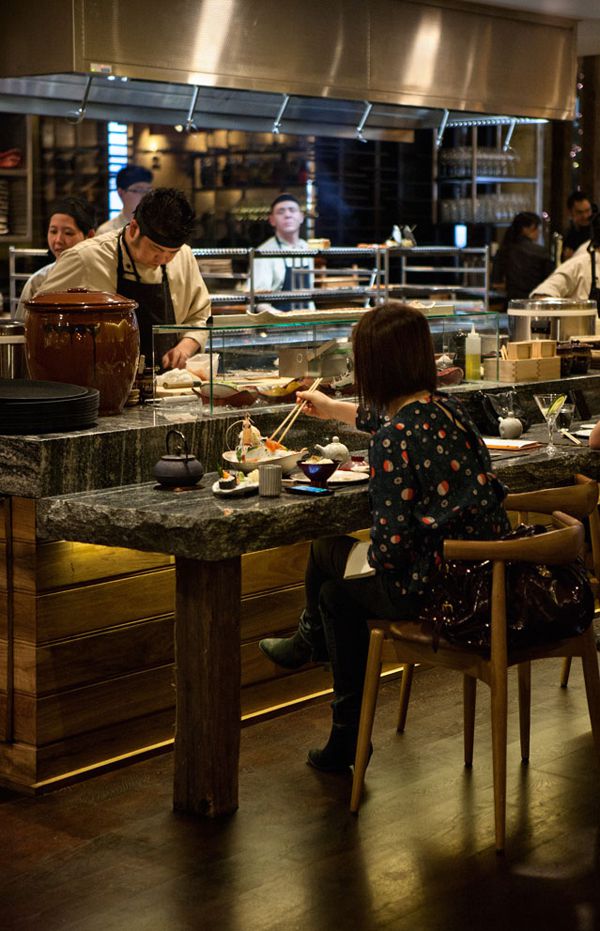
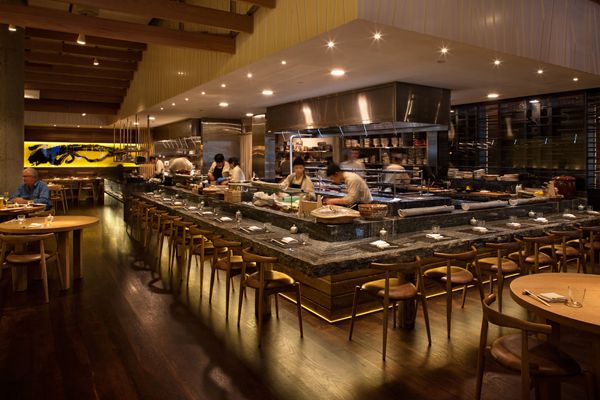
It is a relatively large restaurant with seating for 150 guests. But it has been designed to feel comfortable even with just a few. This is achieved through a variety of tables, ceiling heights, spatial qualities and textures, and through clever manipulation of light.
Theatre is a recurring theme, from the food preparation and serving, to sawing blocks of ice for sashimi and drinks, and even the large painted dragon above the chef’s table.
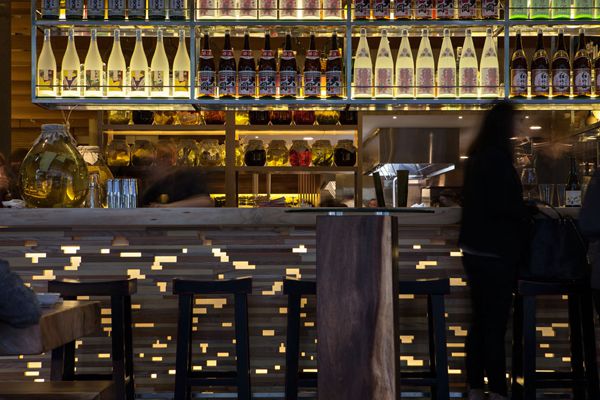
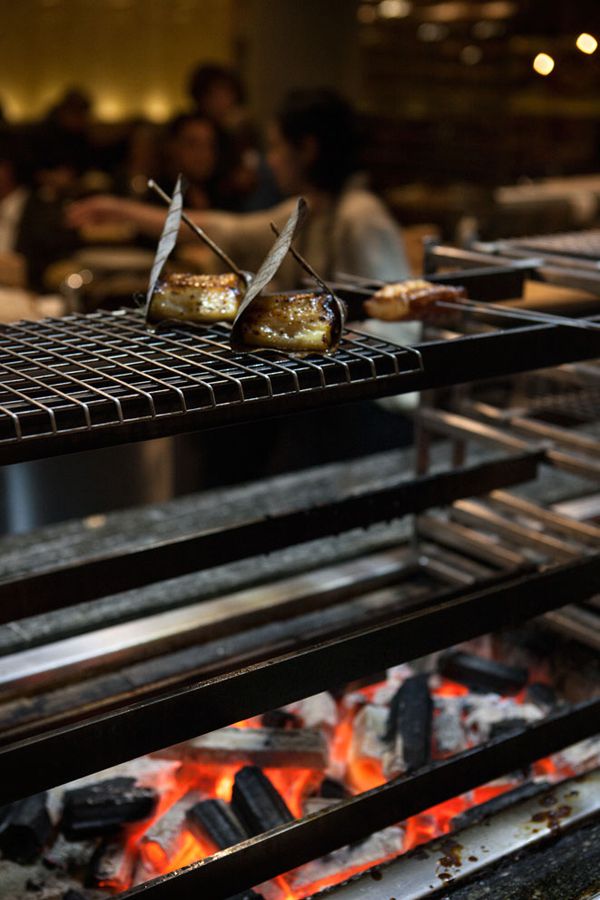
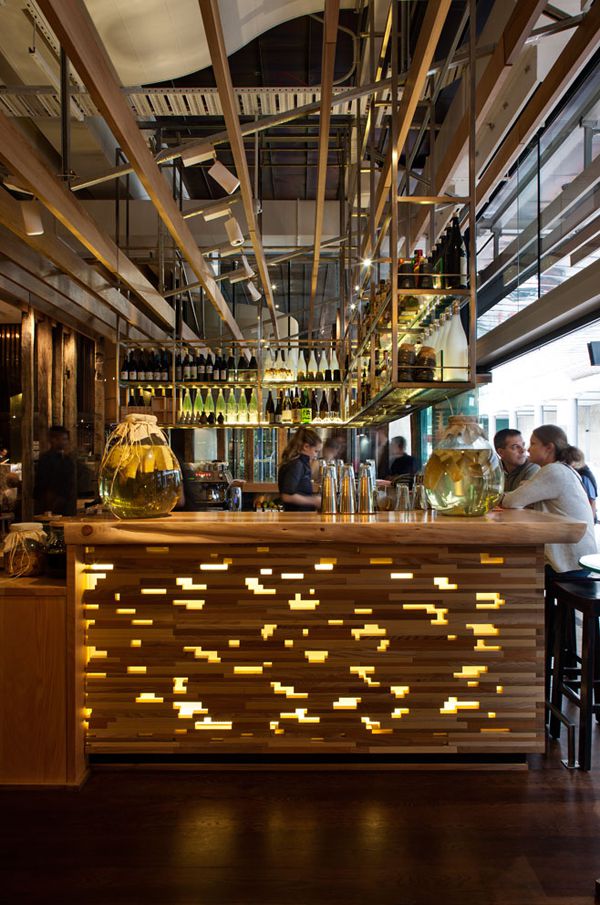
Three elements anchor the large room: the impressive robata grill, a three-metre long charcoal burner that can be seen from every table, a long curving banquette wall, and a lane-side bar.
Within this framework, and sheltered below a contemporary timber pergola, the main dining room is filled with round wooden tables. Surfaces are lit with pin-spots that quickly fade to shadow, highlighting the food and subduing the background.
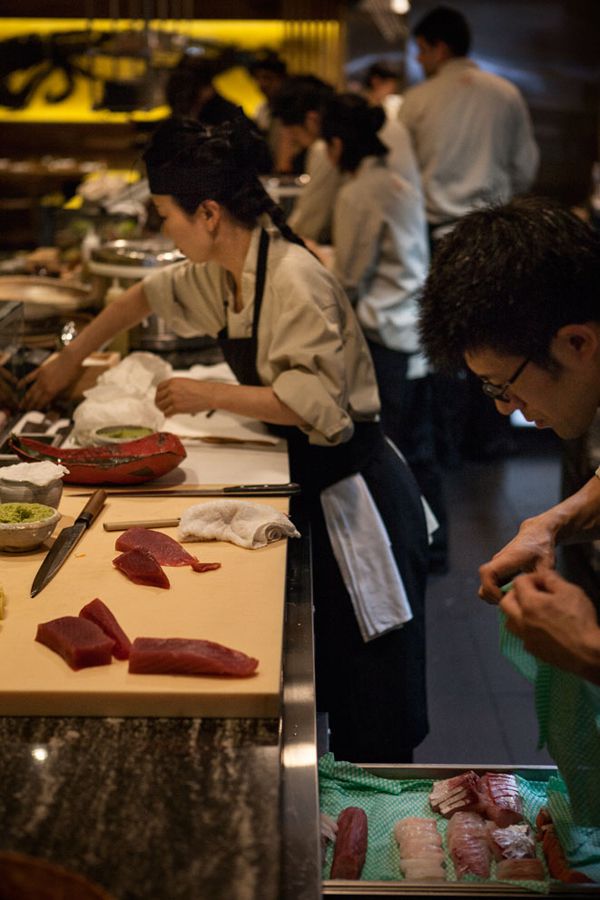
Sound is an essential ingredient in the experience of this restaurant, and beyond the hiss and sizzle of the grill, contemporary music fills the room. It feels glamorous but not intimidating on account of this lively atmosphere and its rich but warm interior.
Read the full article in the Hospitality issue of Indesign magazine, out on June 7, 2015.
Moller Architects
mollerarchitects.com
INDESIGN is on instagram
Follow @indesignlive
A searchable and comprehensive guide for specifying leading products and their suppliers
Keep up to date with the latest and greatest from our industry BFF's!
The difference between music and noise is partly how we feel when we hear it. Similarly, the way people respond to an indoor space is based on sensory qualities such as colour, texture, shapes, scents and sound.
True luxury strikes a balance between glamorous aesthetics and tactile pleasure, creating spaces rich in sensory delights to enhance the experience of daily life.
Herman Miller’s reintroduction of the Eames Moulded Plastic Dining Chair balances environmental responsibility with an enduring commitment to continuous material innovation.
In an industry where design intent is often diluted by value management and procurement pressures, Klaro Industrial Design positions manufacturing as a creative ally – allowing commercial interior designers to deliver unique pieces aligned to the project’s original vision.
A collaboration between PTW and LAVA has transformed the lobby of the old Sydney Water Board building into a organically shaped display suite that pairs nature with technology.
Revolutionary bi material injection moulded chair (poly colour over-moulded in acrylic), Also outdoor option. Delivery time: Height 81/46 x width 52 x depth 51 Applications: Hospitality Variations: Stacking, armchair and bar stool Finish: 12 colour / 6 frame colours + chrome Manufacturer: Italcomma, www.italcomma.it Designer: Alessandro Andreucci, www.alessandroandreucci.com
The internet never sleeps! Here's the stuff you might have missed
The extraordinary French architect, Manuelle Gautrand, has recently completed PHIVE, a major civic project in Paramatta, NSW. We took the opportunity to talk with her about architecture.
In a tightly held heritage pocket of Woollahra, a reworked Neo-Georgian house reveals the power of restraint. Designed by Tobias Partners, this compact home demonstrates how a reduced material palette, thoughtful appliance selection and enduring craftsmanship can create a space designed for generations to come.