Imagine if, instead of buying a bottle of top-quality whiskey from the bare refrigerated aisles of a liquor store, you could do it from the comfort of a Chesterfield couch in someone’s finely decorated apartment. The brief for HASSELL by spirits company Proof & Co. was for a space that felt residential but just happened to sell fine spirits. The result is The Proof Flat in Singapore.
The company’s brief was symptomatic of a broader hunger within the consumer market for hybrid stores that trade in the unexpected, and for fully realised ‘experiences’ in place of less-than-intimate pay-and-go transactions. More and more, in both commercial and retail settings, experience – and the associated tangible elements of touch, sight, scent and sound – are becoming tradable commodities in the quest to give visitors a heightened sense of experience; one that cannot be tapped through the cool monotony of digital interfaces.
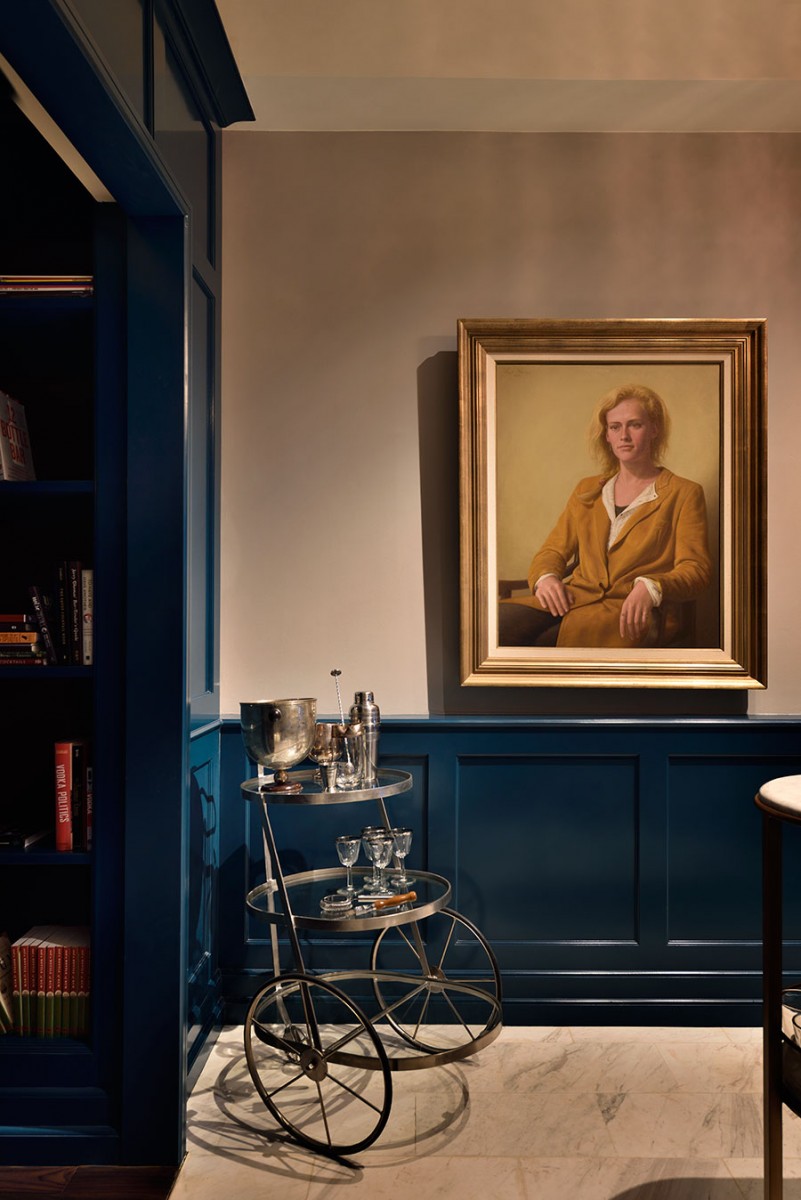
The Proof flat is a retail space with an overtly residential feel.
Instead of the company itself, the “client” for the project was an imaginary character, the fictional Proof & Co. brand ambassador EC Proof. This character was a fictional embodiment of the brand’s own values and identity (Proof & Co. was one of the companies that helped revolutionise Singapore’s bar scene during the new ‘golden age’ of cocktails in Asia, and so the resulting values aligned closely with quality, innovation, and new customer experiences).
“Proof & Co. had talked about the idea of their own retail space for many years. But they didn’t want it to be one in the traditional sense, where you’ve got a shopfront and you open the door, walk in, take something off the shelf and pay for it,” says HASSELL Principal, Paul Semple. “They wanted to convert the space that was originally their office into this retail environment, with the underlying brief that it was to feel like an apartment.
“So they created EC Proof, who’s sort of the ambassador for Proof & Co. He’s not a real person, but a set of principles and ideas and passions that created the framework for us to tell the story and design this apartment.”

Each subsequent decision HASSELL made was intended to please EC Proof’s tastes and pre-empt his at-home behaviours; the architects occupied themselves with imagining “what this guy was into, the kind of art he collected, the clothes he wore, the luggage he would use, what he liked to drink [and] how he liked to live,” says Semple.
.
“They wanted to convert the space that was originally their office into this retail environment, with the underlying brief that it was to feel like an apartment.” – Paul Semple, HASSELL Principal
.
The warmly lit, furniture-filled apartment-cum-retail store is more than what you’d expect from either typology. A strong thread of mystery runs through the project, stemming from HASSELL’s refusal to do anything normally. Instead of displaying the retail elements in the obvious places, they created a hidden library and a “vault”, the former of which can be accessed by pushing a secret button and walking through a concealed sliding door.
“You could be in that space and not get a sense that there’s something behind it until it’s open,” says Semple. “So it’s always about this experience of discovery. Retail, even more than it used to be, has to be about the experience; about creating experiences for people that they remember.
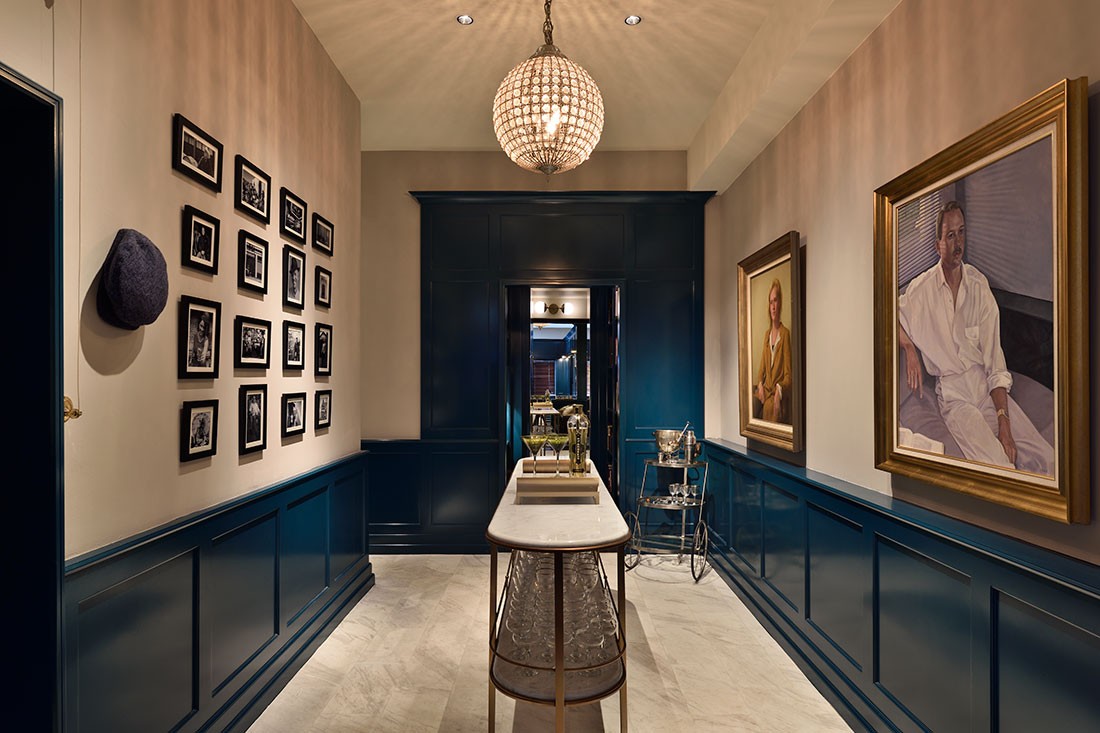
“If The Proof Flat was an apartment in the traditional sense, the vault would be his closet,” adds Semple. “When you go to the apartment, a lot of people walk through and wonder: ‘Can you buy stuff here?’ And you absolutely can, but it’s integrated into the whole experience of the space.”
More than just a series of design features implemented for shock value, the resulting apartment is a wholly considered and integrated concept – again, with every element conceived in response to EC Proof’s imagined behaviours.
.
“When you go to the apartment, a lot of people walk through and wonder: ‘Can you buy stuff here?’ – Paul Semple, HASSELL Principal
.
When visitors enter The Proof Flat, the first thing they do is take off their shoes, in line with the region’s domestic traditions. Once inside, guests are greeted, invited to sit down in the lounge, to chat, and to take a stroll through the space, which itself is filled with little lounge and dining nooks that have been included to bolster the sense of it being someone’s home. All the while, the experience is amplified with a selection of music, art and scents that have been specially chosen for the apartment.

The apartment features a secret library.
“From my personal experience, when you go to The Proof Flat, you end up sticking around for much longer than the time it takes to buy whatever you went for,” says Semple. “You ask questions, talk about other people in the industry that you know and what they’re doing. You end up hanging out and having a drink, breaking down that barrier of the transaction, and making it less transactional and more personal.”
Check out this typology defying project by Siren Design.
–
Want more stories like this straight to your inbox? Sign up for our newsletter.