Iconic Australian fashion store, CUE, is undertaking a wider brand repositioning and who better to work with than Geyer, a strategic design consultancy with a focus on commercial and workspaces interiors. Geyer is providing the design finesse for stores across Australia, from WA to Double Bay – with more on the way.
The Melbourne CUE store has provided the opportunity for Geyer, along with its in-house construction team, Valmont, to really showcase the retail brand’s changing identity. The completed project illustrates the importance of design in all sorts of ways, from creating immersive user experiences to curating retail identity through colours, materials and spatial layout.

Perhaps two features stand out immediately for the new visitor: the store’s soft, curvaceous formal language and the green tones threaded into the design in different ways throughout.
“We drew inspiration from CUE’s dynamic brand strategy evolution and translated it into a tangible design,” says Cesar Valencia, senior architect at Geyer. “Our vision introduced captivating curves and a diverse palette of materials, all working harmoniously to bring the brand’s essence to life.

“By assigning four distinct colours to four unique states – for instance, a lush green symbolising Victoria, and a serene blue evoking the New South Wales ocean – we’ve not only captured the essence of each location but also curated an engaging and enriching spatial experience.”
Valencia explains that the aesthetic in the Melbourne store references natural materials as well as celebrating a rich textural palette that includes, for example, microcement used on the floor. The redesign as a whole emphasises special finishes in order to foreground tactility and the immersive retail experience for visitors to the store.
Related: Sydney Fish Market reaches retail milestone

“We introduced soft curves into the rectilinear aesthetic while also introducing a fresh array of materials,” explains Valencia. “Preserving the original shopfront was a conscious choice, aligning with our sustainability values to reduce waste while seamlessly integrating the new design elements.”
Beyond the colours, textures and surfaces, the really distinctive move that Geyer has made is in terms of floorplan and layout. The new space is uncongested, with the designers employing an approach of less is more in this retail context – a trend that Valencia notes as coming all the way from Milan and some of the most prestigious clothing brands in the world.

The garments on sale are displayed with a sense of generous space, allowed to stand alone as objects in the round. Ultimately, it’s also about inviting the visitor to circulate around the space. “We also made a deliberate effort to ensure that the shades and material choices within the design harmonise gracefully with the colours of the clothing,” adds Valencia.
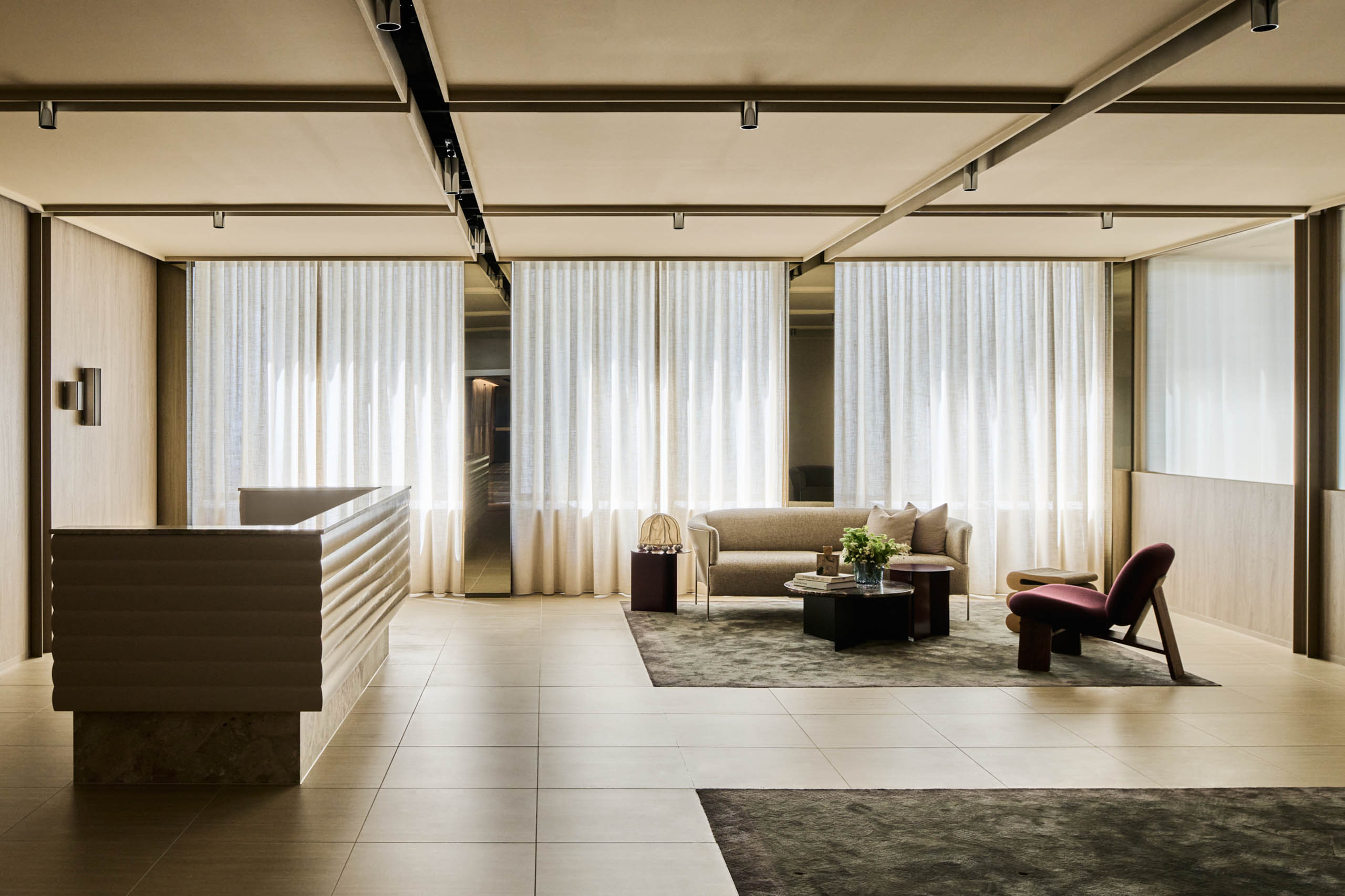
This idea leads to the use of a relatively neutral colour palette, with concrete finishes in beige tones, for example. The varied tones of green are a further extension of this, with carefully placed pops of colour forming the exception to the overall quieter palette.
The language of understatement allows the clothing to take centre stage, and continues with small details and joints. Where the floor meets the wall, for instance, the joins aren’t over-articulated with the designers eschewing skirting for subtler shadow gaps instead.

Geyer has customised every aspect of the design, from joinery in general to furniture. The designers worked with Living Edge to customise items such as the sofa and stools.
From individual objects to the consistent aesthetic shaping the Melbourne store – and indeed other CUE stores around the country – Geyer has created a new retail space that aligns with the latest international developments while maintaining a connection to local Australian qualities.
Geyer
geyer.design
Photography
Nicole England


We think you might also like this story on five of the most curvaceous retail spaces of 2023.