My enduring image of dental clinics is of high tech, sterile whiteness; a place where decay is the villain and treatment is short, sharp and painful. With ‘before’ and ‘after’ photos scrolling across a screen, I am supposed to feel reassured – that I will be moved from a state of decay to a state of health. But it is a rather unsettling ‘sell’ as it presupposes there is a problem.
What a welcome surprise then is the new fit-out for The Tooth Company, the Auckland-based dentistry practice founded by Dr Andrew Campbell. After one too many awkward dinner party conversations, Campbell decided it was time to make a change. “Going to the dentist shouldn’t be that hard,” he says. “I listened to peoples stories and asked them what could be done better, and at the top of their list was a more welcoming environment.”
After refurbishing a heritage warehouse space in the city, for this second branch in Takapuna Campbell has taken the concept a step further with the help of Nat Cheshire and Emily Priest, of Cheshire Architects. “We are interested in very humane, experienced-based architecture, focussed on the human beings who use it,” says Cheshire. “So creating an incredibly soft environment was our creative way of transforming a medical space into one that manifests health and wellbeing.” He and co-designer Emily Priest proposed a Scandinavian spa aesthetic, one that is “warm and inviting; a conscious shift from the typical dentist space,” says Priest.
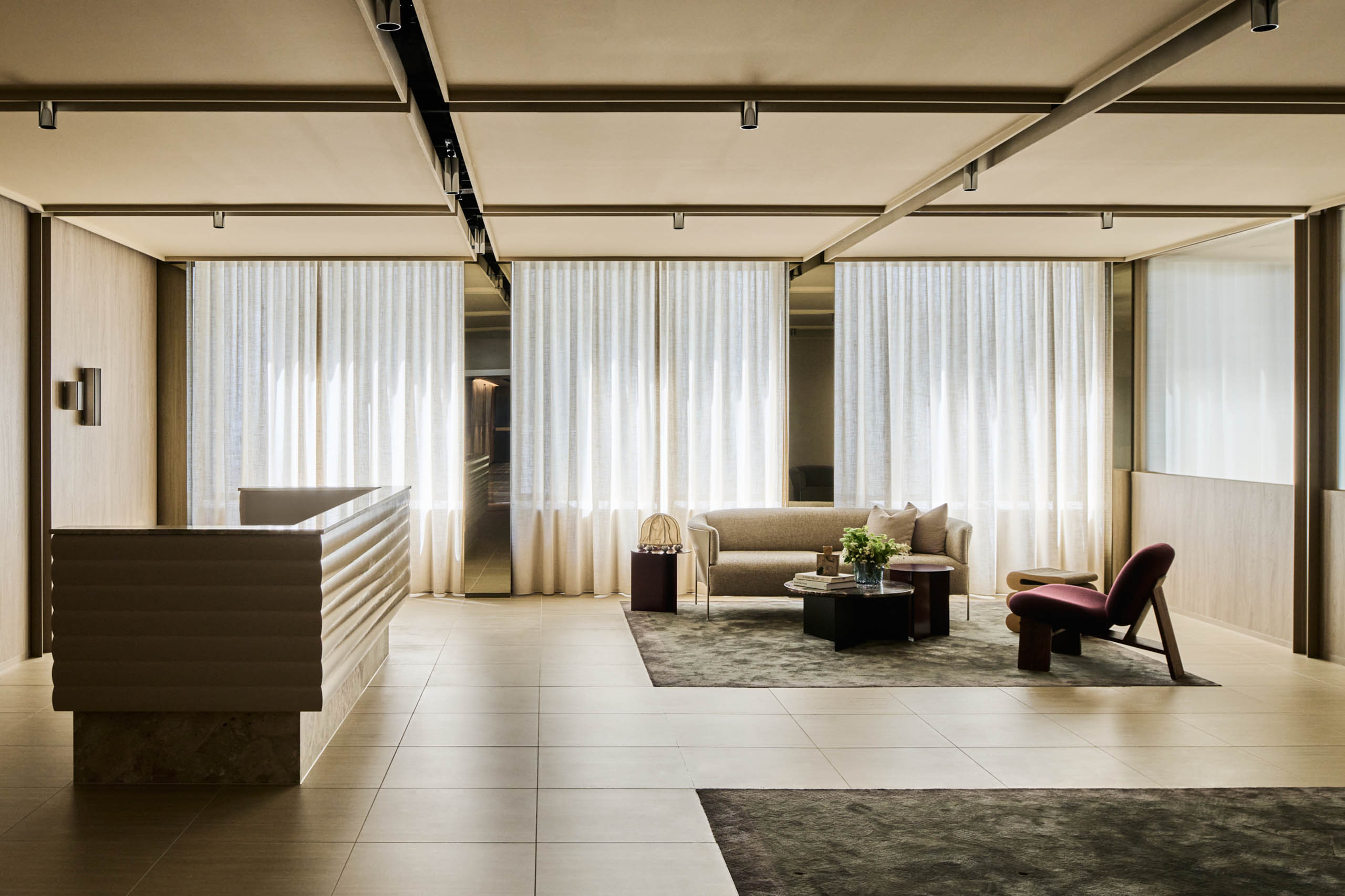
Designing a softer, less formal clinical environment can be a challenge. On the one hand, it must still invite trust and professionalism, but also allay any anxiety around treatment, and help enhance health and wellbeing outcomes. In this case, the new image is of an easy confidence, one where skill, experience and high tech gear is a given, and where the guest experience comes first. The public spaces feel non-medical, and the consulting rooms are equally devoid of much of the clinical paraphernalia we often associate with dentists.
The design works at macro and micro levels to achieve this – from sweeping timber curves that disguise a tough concrete shell to finely-scaled joinery surfaces. A cloud of floating rice paper lanterns brings a residential scale and softness, while felt ‘bubble’ seats are casually dotted around the waiting area. Curves become the metaphorical foil to the hard, cold image of dentistry, and serve as a useful device to manage sightlines and privacy. Each element works functionally, aesthetically and economically; signalling a different approach to dentistry and guest care, one based on a very personal and individual experience.
Design serves to change our perceptions and thus our experience. In this case, design convincingly paints a picture of wellness for a profession too often seen in a negative light.