The home of architecture and design in the Asia-Pacific
Get the latest design news direct to your inbox!

Get the latest design news direct to your inbox!
Red Design Group’s new Coles Local store may herald a new type of retail design. Marg Hearn reports.
December 1st, 2011
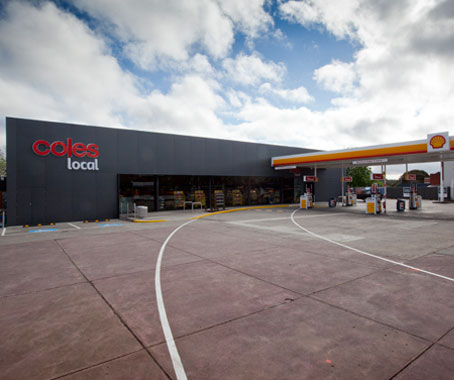
A new look and feel store format known as Coles Local pitched at the time sensitive, top-up shopper opened in South-East Melbourne’s leafy Ashburton in October 2011.
Red Design Group partnered with major Australian supermarket chain, Coles, to transform a former small Coles Express on a Shell servo site.
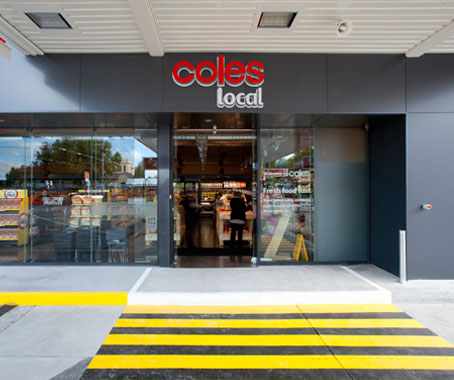
The resulting store design for what is a new brand has as its core “a strategy of fast, fresh, local food store plus fuel,” says Darren Hose, Design Principal, Red Design Group.
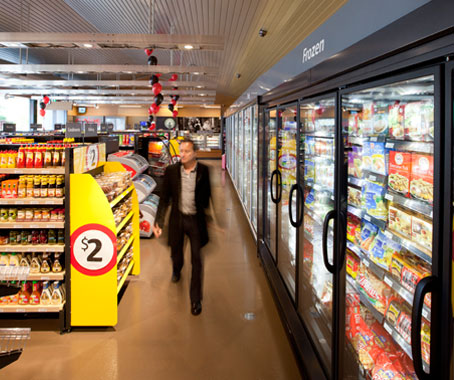
A key point of difference to the traditional supermarket is Coles Local’s very clean, simple and contemporary interior design that has an emphasis on good lighting and clear, strong branding.
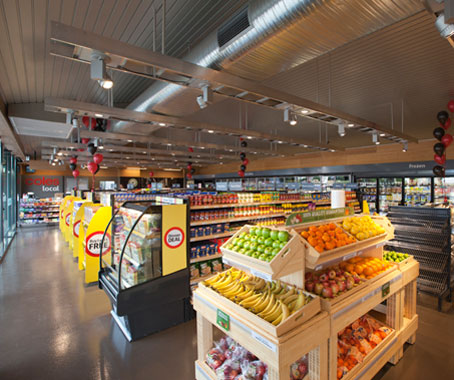
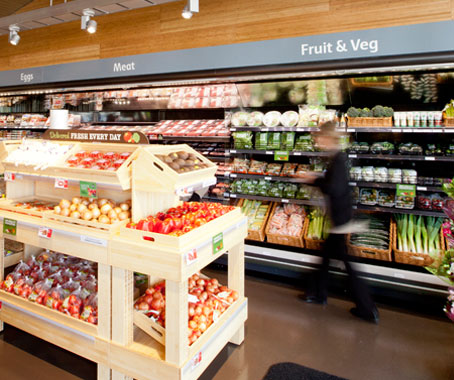
To overcome perceptions that a fuel stop express store is typically an opportunity to pick up chocolate and chips “we felt that a fresh approach was needed architecturally to inspire customers to think food first, fuel second,” Hose says.
The solution is founded on an understanding that if the shopping experience and parking is convenient, people will return.
Opening up the shopfront with full height glazing that stretches the width of the store purposely exposes the much broader selection of grab and go ready-to-eat food and meal solutions and fresh produce.
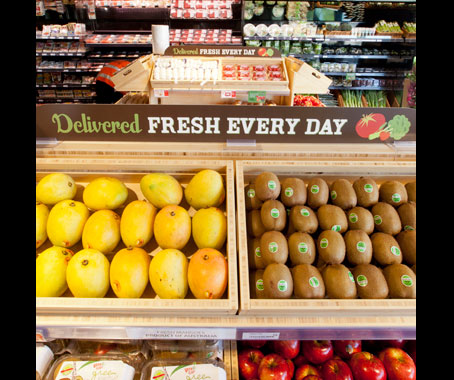
“The idea is to create an immediate visual impression of the product range aided by good sight lines,” explains Hose.
The concept is akin to a mini Coles but with product lines targeted to appeal to the local demographic and with the aim of attracting higher frequency visits.
As retail and hospitality design specialists, Red Design Group’s scope of work also involved collaborating with Coles on research and site analysis and with traffic engineering consultants to critically achieve additional parking and increased available in-store floor space from 50m2 to 230m2.
“There were telling examples from our research that small format supermarkets are a major growth trend in the UK – namely Waitrose, Tesco and Morrisons, along with examples in Europe and the USA. Locally there were also some good cues emerging that indicated an opportunity to break away from the traditional supermarket grid and convenience store model.”
When the increasingly convenience and lifestyle driven public is considered, this project may well be on the cusp of a new retail trend in Australia.
Photography: Richard Kendall
Red Design Group
reddesigngroup.com.au
INDESIGN is on instagram
Follow @indesignlive
A searchable and comprehensive guide for specifying leading products and their suppliers
Keep up to date with the latest and greatest from our industry BFF's!
The internet never sleeps! Here's the stuff you might have missed