The home of architecture and design in the Asia-Pacific
Get the latest design news direct to your inbox!

Get the latest design news direct to your inbox!
World famous high-end furnishing brand Walter Knoll has cut through the newspeak of thinking globally, acting locally. At last!


Once a principle of global commercial systems, then a business management tool, now a political slogan – ‘think global, act local’ – seems to infer so much. It also seems to infer nothing at all. One of the biggest culprits for this over-abuse of what might actually prove to be a viable call-to-action is … well, us. The A+D community across the Asia Pacific region are wont to often hyperbolise, misconstrue or (dare we say it?) ‘have designs’.
When we say ‘think global, act local’ what are we really saying? Are we talking about sustainable practice? Building a global design economy? Responding to global market trends? Fostering local talent? Designing on and for the world stage? Well, yes, that’s what we’ve been saying. Sorry to break it to you all, but that’s a chronic misuse of the idiom.
‘Think global, act local’ is not about bringing the home-grown to the world, it’s about bringing the world to the home. And that is a distinct difference, one that truly opens up the parameters of possibilities for the A+D community. It’s the distinction of winning a world game on home turf, not losing the home game on a foreign one. We don’t mean to wax exaggeratedly – but it’s high time we actually started to put our money where out mouth is.
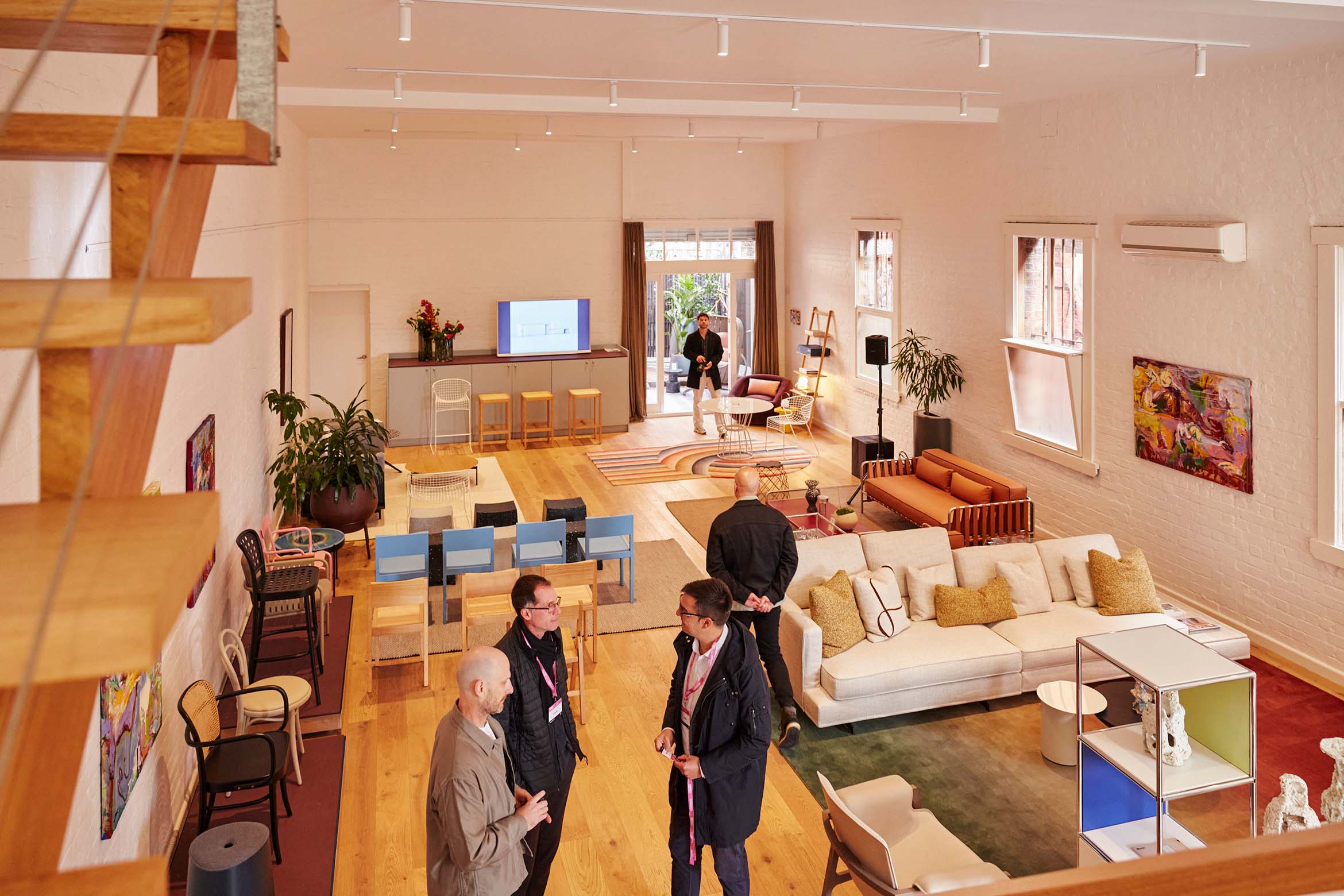
Luckily, we don’t have to look too far for an exemplar. The Australian outpost of German luxury furnishing dynamo Walter Knoll, down in Adelaide, has been brining a piece of European design into the worldly Australian home for almost a decade. Walter Knoll Australia represents one of those genuine lightbulb-moments that not only prove it is possible to think globally and act locally, but that in order to do so significant changes to industrial practice across all levels of design, manufacture, logistics, and dispatch is necessary.
Walter Knoll Australia is in many ways a response to a uniquely Australian problem. With taste for European design continuing to grow, servicing this demand for the Australian market required Walter Knoll Australia to get products on the spec, stat! Launching in 2007, the solution to integrate design and supply into the feedback loop generated between designers, planners, production, testing, trading and consumer, is inspired.
Walter Knoll Australia is just one example in a suite of international showrooms, manufacturing facilities, logistics and trading locations that cannot be counted on two hands. Understanding that the nature of thinking globally and acting locally entails, firstly, being able to adequately deliver to demand within a reasonable timeframe and, secondly, being able to customise ranges to either local taste, climate and user-necessity. An impressive success-story, Walter Knoll’s international premises all provide an uncompromised and complete brand service.
While this integrated management approach has ultimately triumphed over protracted lead-time periods without compromising on ethical manufacture, the lasting result is something far more tangible: contemporary designs that are foreign but feel always, still, right at home.
INDESIGN is on instagram
Follow @indesignlive
A searchable and comprehensive guide for specifying leading products and their suppliers
Keep up to date with the latest and greatest from our industry BFF's!
The internet never sleeps! Here's the stuff you might have missed