The home of architecture and design in the Asia-Pacific
Get the latest design news direct to your inbox!

Get the latest design news direct to your inbox!
The 2018 Staron Design Awards are done! After countless entries and hours poured over the details, these are your 2018 winners…

March 15th, 2019
Launched to create exposure for designers, architects and students using Staron in outstanding applications, the Staron Design Awards is a real highlight on the annual competition calendar for design. The winners of the Staron Design Awards 2018 have been selected across three categories: Commercial, Residential and Concept…
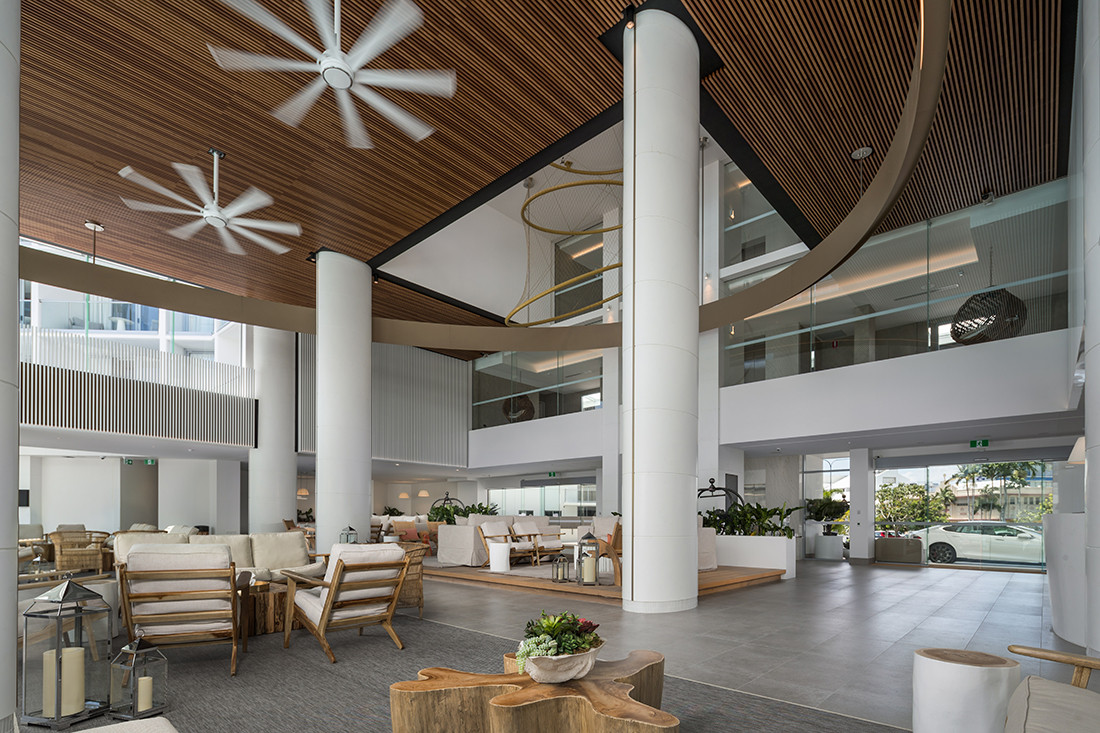
The Staron Design Awards 2018 winner in the commercial category is Tim Bentley of ThomsonAdsett, for his work on the Crystalbrook Collection’s flagship Riley hotel in Cairns.
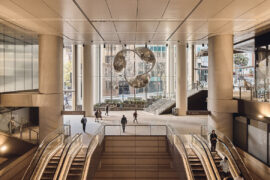
The hotel is the first new luxury destination to be built in the city Cairns, with a design that mixes a beach themed interior with a tropical esplanade location. The foyer of the Riley hotel has been designed to reflect the beauty of the location without interrupting the direct views to the esplanade foreshore.
Staron cladding was selected for its superior finish and ability to mould monolithically into curved cladding around the existing columns. The elliptical shape is the key design element to the foyer – drawing the eye over the pool and out to the esplanade. Staron Solid Surfaces in colour Delphi was curved through thermoforming and wrapped around the impressive columns from the floor up to the meet the high ceiling. The height of the columns creates an open, luxurious and welcoming feel.



The hotel reception counters were also clad entirely with thermoformed Staron to emulate the curves of the columns. Likewise, Staron was also clad to the large planter boxes throughout the lobby area.
The Staron Design Award, residential category winner is Gavin Hepper of Concepts by Gavin Hepper for a kitchen space in a family home on the sunny South Coastline of NSW.
The centrepiece of the kitchen project is the impressive, over-sized kitchen island – bringing concealed functionality into the heart of the home. Using Staron Solid Surfaces in Sanded Heron colour as the benchtop means a seamless connectivity is present within the monolithic island and its concealed beauty. When the centrepiece of the island rises electronically, as if by magic, additional functions of the space are revealed, including a storage, cooking station with pantry essentials, study nook and fully stocked bar.
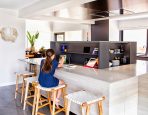


When the centrepiece is closed, the two Staron surfaces meet again to become one large island surface. Staron in Fog has also been utilised for seamless integration in the servery and wet areas. At night, the LED stripe lighting recessed into the surfaces illuminates this space to create a beautiful ambiance.
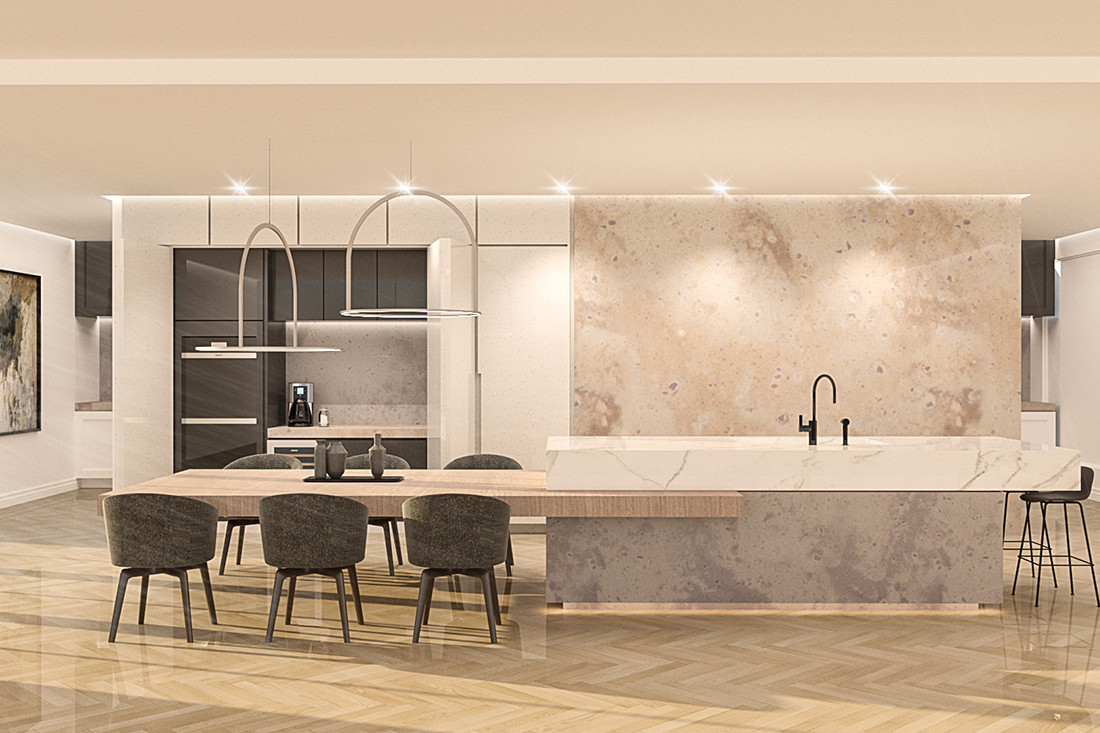
The Staron Design Award for the concept category is Luke Cable, a student of Billy Blue College of Design, for his conceptual design of a contemporary kitchen space. Employing several Staron colours across different parts of the kitchen – including benchtops, splashback, clad to cabinetry and as feature wall cladding – the concept shows a clear knowledge of spatial reasoning and interior design.
Luke designed a dynamic kitchen space with a service area that homes a wine fridge, main fridge, food warmer, coffee facilities, purified water dispenser and quick access cupboards. The clever design features doors clad in Staron Aspen Glow that can be completely closed off and hidden when not needed. The design also incorporates a hidden rear kitchen that functions as a traditional kitchen, hidden from the view of the living areas by the front service kitchen and display wall that is clad in Staron Dandelion.

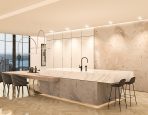
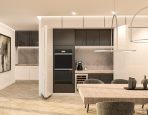
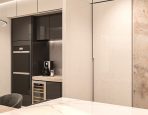
The Staron surfaces are an integral part of the harmonious and luxury aesthetic of the kitchen. Due to the minimalist lines and large surface areas of the kitchen, the application of Staron creates the visual interest which invites the observer to immerse into the pure geometric form of the kitchen.
The Indesign team joins Staron in congratulating all of the winners of the Staron Design Awards 2018. The program is set to return this year to bring light to more Australian designs. Keep your eyes peeled for program open dates to be announced soon!
INDESIGN is on instagram
Follow @indesignlive
A searchable and comprehensive guide for specifying leading products and their suppliers
Keep up to date with the latest and greatest from our industry BFF's!
The internet never sleeps! Here's the stuff you might have missed