The home of architecture and design in the Asia-Pacific
Get the latest design news direct to your inbox!

Get the latest design news direct to your inbox!
Healthy office spaces don’t need to be bland, style-free boxes, as Staron Surface Solutions proves.
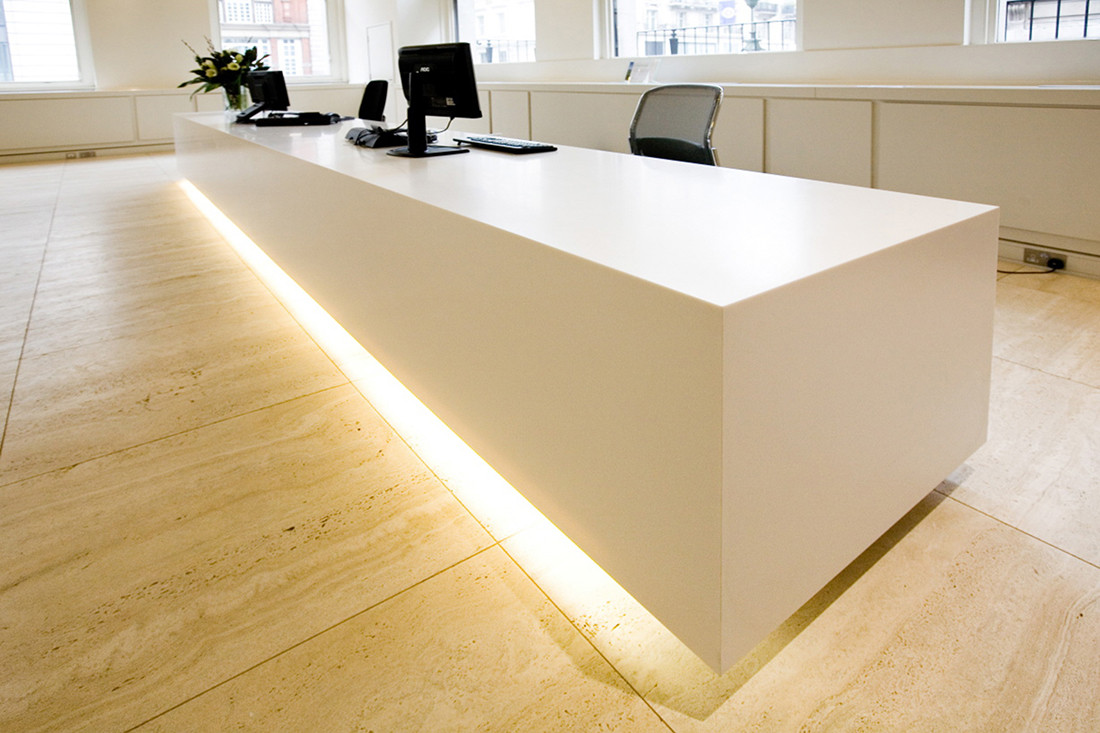
Staron Solid Surfaces clad entirely to reception cabinetry.

Design routered into Staron sheet used as wall feature.
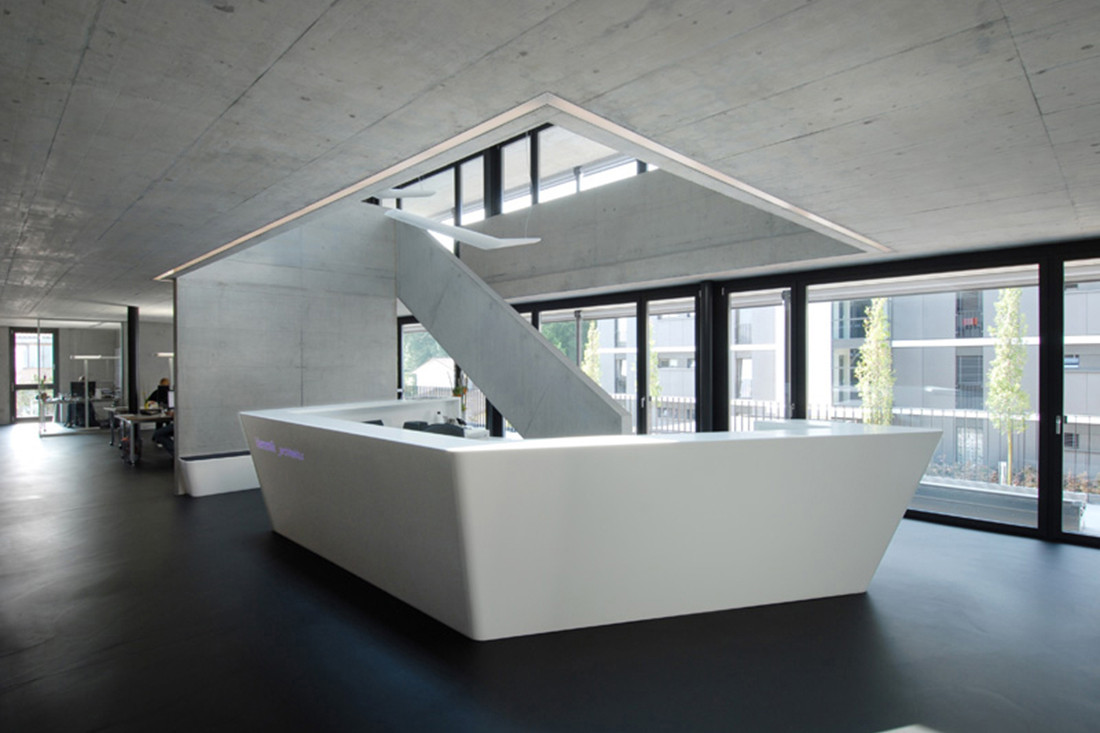
Staron Solid surfaces curved and clad to reception cabinetry.
When used in an office environment, Staron® offers a clean and hygienic surface to fit any space. Healthy office surfaces are important – since we use these spaces to hold everything from telephones, to computers and food, as well as the hands of countless employees. The hygienic properties of Staron® means that the office will be a clean workspace and avoid cross contamination.
Staron® Solid Surfaces is comprised of a natural and pure mineral derived from bauxite ore and blended with an advanced pure acrylic resin, resulting in a premium surface material. Staron® Solid Surfaces is suitable for endless applications in a commercial or residential project. With a silk-like finish and a range of over 90 colours to select from, Staron® is both aesthetically and functionally pleasing.
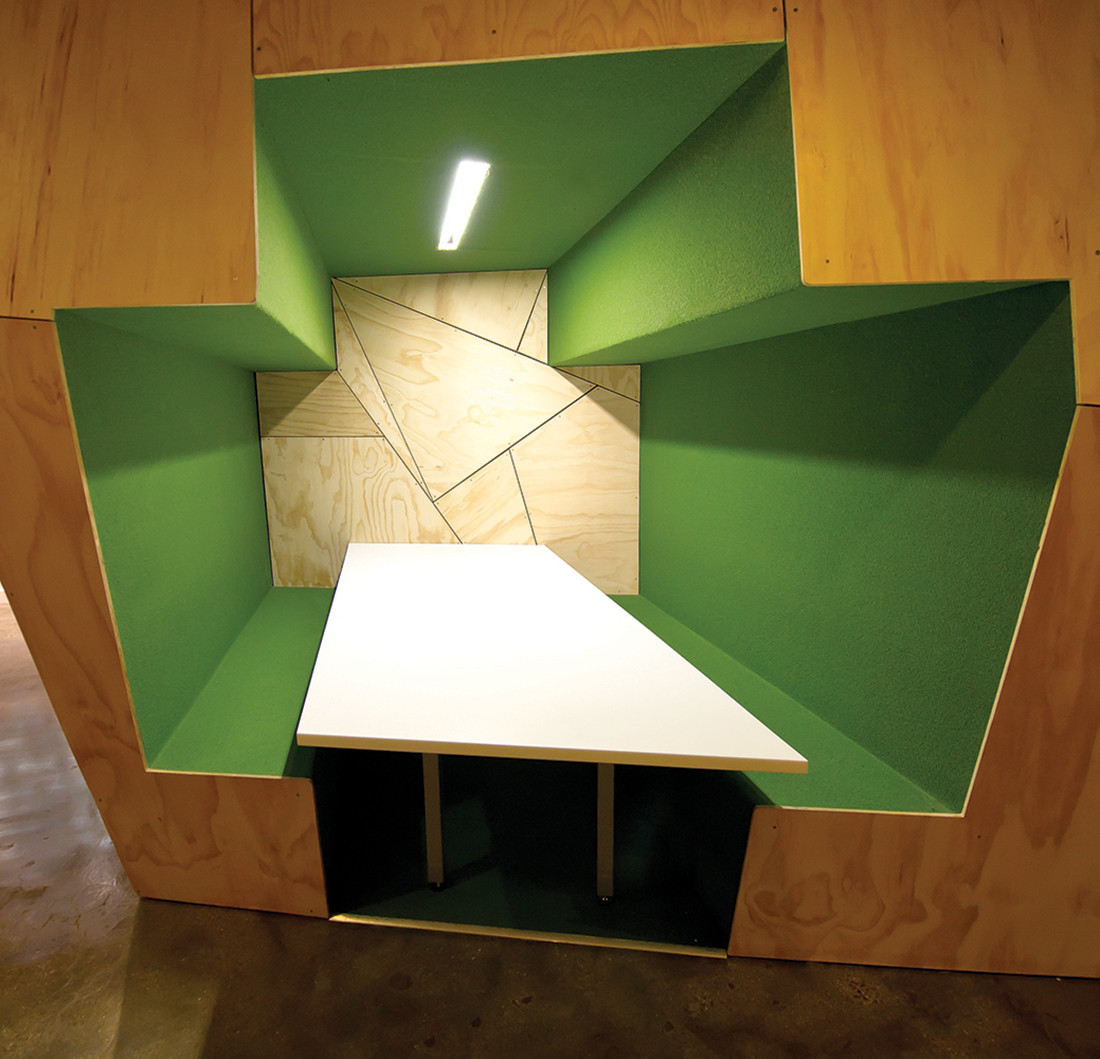
Meeting tabletop made with Staron Solid Surfaces. Design by Plus Architecture.
Thanks to its scientifically perfected formula, Staron® does not promote the growth of bacteria, setting it apart from other surfaces on the market. The non staining nature of Staron® also means that the surface will remain looking good for years – with no office coffee or tea stains in sight.
The monolithic and thermoformable properties of Staron® push the boundaries of ordinary design, transforming the workplace into the health office space employees deserve. Inspired designers can create long continuous lines that curve to provide easy use and effective design.
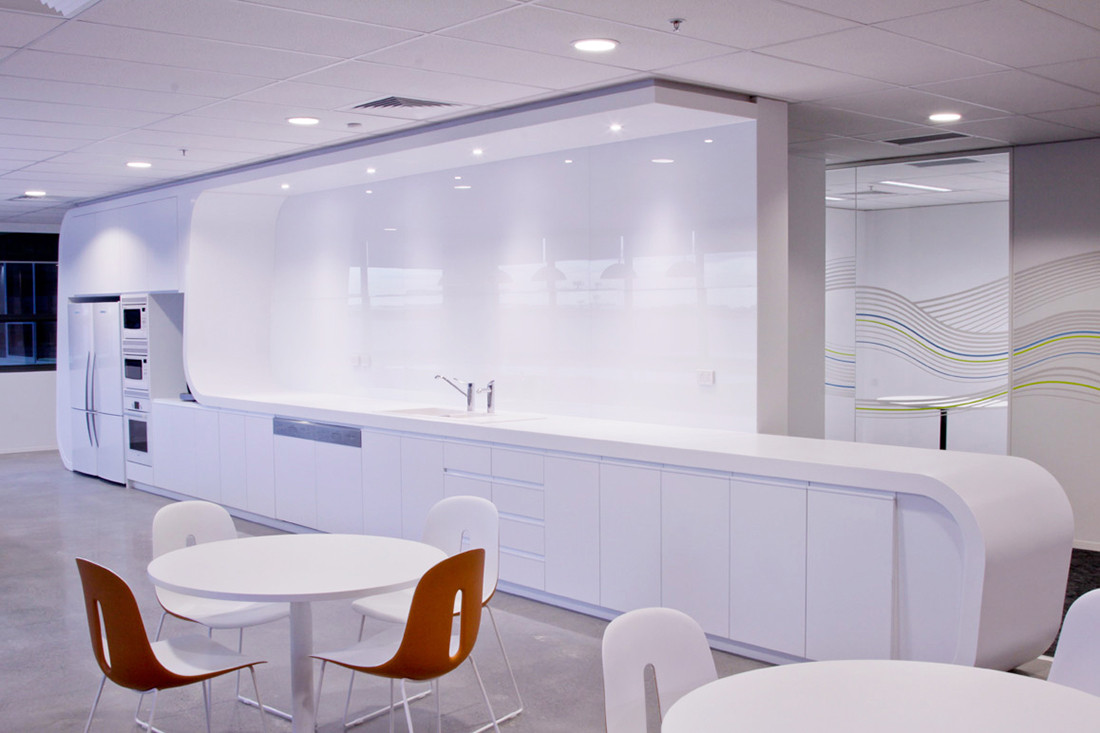
Office kitchen space featuring Staron Solid Surface benchtops and table tops.
Staron® has no open joins which eliminates dirt trapping crevices and creates long, monolithic continuous surfaces, and is totally renewable. This means that after years of use in your office project, the surface can be sanded back and restored to its original condition. Staron® can be formed and moulded into any shape or design imaginable. It can be sculpted to fit around curves or be carved into logos, designs or sculptures.
Staron® can be used to create desks, toilet partitions, bathroom vanities, table tops, wall paneling, kitchenettes, furniture and can even clad an entire reception desk top/front/sides to create one continuous surface.
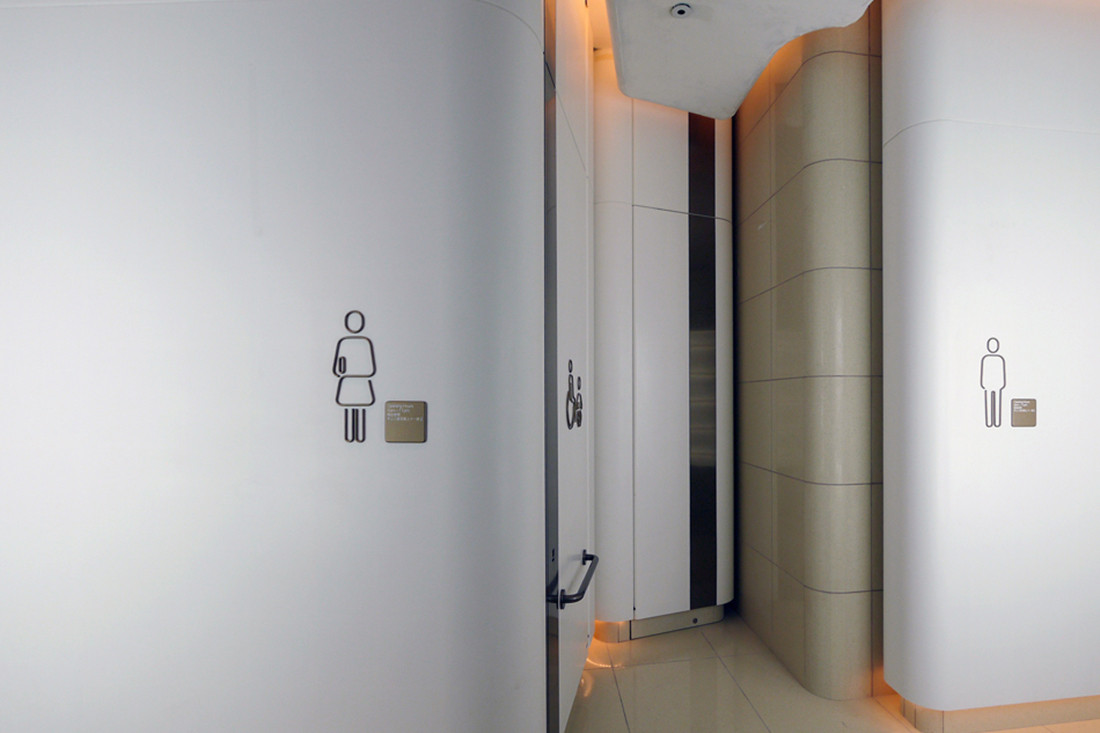
Toilet facility walls clad in Staron Solid Surfaces.
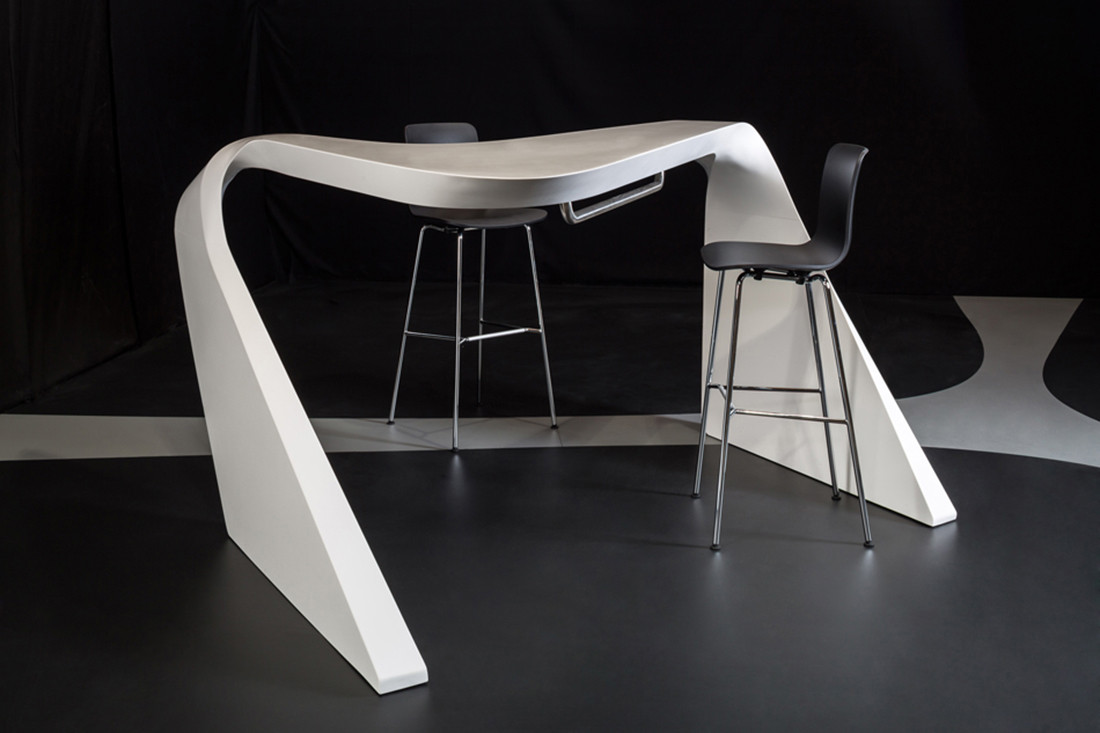
Curved desk made entirely of Staron Solid Surfaces.
INDESIGN is on instagram
Follow @indesignlive
A searchable and comprehensive guide for specifying leading products and their suppliers
Keep up to date with the latest and greatest from our industry BFF's!
The internet never sleeps! Here's the stuff you might have missed