In an environment saturated by products that often favour style over substance, it’s worth remembering that good design must also answer a problem. In the case of the Ulna system, the design answers more than one.
December 5th, 2014
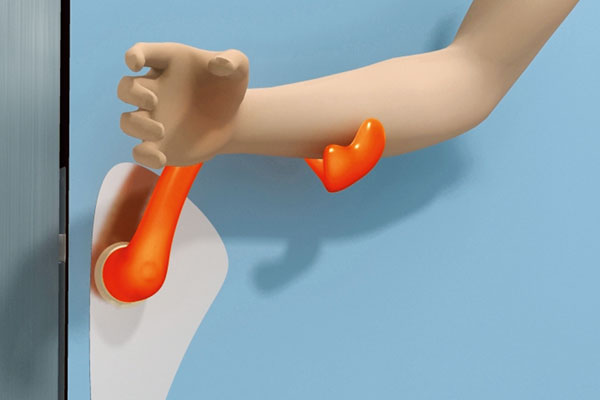
“Instead of trying to kill germs in a wound, wouldn’t it be easier if they never entered?” asked Louis Pasteur. The Ulna system responds to his question with a clever design that minimises the transferral of germs through one of their most prolific carriers – door handles.
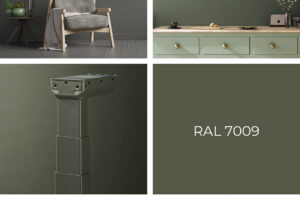
The curvaceous design completely negates the need to touch the door handle with your hands. Instead the elbow becomes the driving force, nestling comfortably against the ergonomic contours of the Ulna – particularly helpful with loaded arms. Whether in a healthcare environment, or a public space, the Ulna encourages hygienic behaviour.
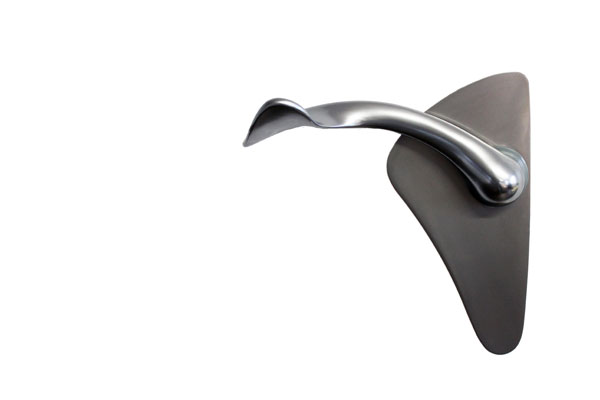
While being perfect for hands-free use and for disabled people, this unique system is also height-adjustable to nine levels to fit the needs of users, and easy to clean with a rounded form and an absence of screws. Ulna has been highly commended at the Innovation Awards in both 2005 and 2008 and continues to forge new ground with the development of the new Ulna system – Silver in 2011.
With a design-focused satin aluminium finish, Ulna Silver highlights even further the elegant form of the handle, modelled, like its name, on the most elegant form of all – the human body.
Active Mobility
activemobility.com.au
INDESIGN is on instagram
Follow @indesignlive
A searchable and comprehensive guide for specifying leading products and their suppliers
Keep up to date with the latest and greatest from our industry BFF's!
Natural stone shapes the interiors of Billyard Avenue, a luxury apartment development in Sydney’s Elizabeth Bay designed by architecture and design practice SJB. Here, a curated selection of stone from Anterior XL sets the backdrop for the project’s material language.
In an industry where design intent is often diluted by value management and procurement pressures, Klaro Industrial Design positions manufacturing as a creative ally – allowing commercial interior designers to deliver unique pieces aligned to the project’s original vision.
The difference between music and noise is partly how we feel when we hear it. Similarly, the way people respond to an indoor space is based on sensory qualities such as colour, texture, shapes, scents and sound.
At the Munarra Centre for Regional Excellence on Yorta Yorta Country in Victoria, ARM Architecture and Milliken use PrintWorks™ technology to translate First Nations narratives into a layered, community-led floorscape.
Arne Jacobsen originally designed the Pot lounge for the SAS Royal Hotel in Copenhagen in 1959. Today, the lounge chair is relaunched from Cult.
Australia’s leading designer producer and supplier of quality global floor coverings, GH Commercial is now proudly certified carbon neutral.
The Web Chair by Krost brings together extensive research and development with a unique, contemporary aesthetic.
The celebrated Melbourne Design Market is being staged this Sunday July 11, 2010. Federation Square’s undercover car park will be overflowing with wonderful design products from 10am – 5pm. Entry is free. Somehow we have managed to squeeze more new products into our Market than ever before. They include the release of White Widow jewellery, Hobe shoes, Karim Rashid’s Baby Bottle, custom made bikes from Jellybean Bikes and SpeakrBox by Buka Projects.
The internet never sleeps! Here's the stuff you might have missed

Materialised’s new Magic Garden Collection with Kingdom Home brings expressive botanical design to Australian interiors through locally printed, performance-grade textiles.
A simple and stark silver box juts out into the street. It can be no other than architectural practice TAOA’s new studio.
Colin Seah discusses the philosophy behind crafting meaningful social spaces, the importance of emotional intent in architecture, and how “creative amnesia” helps his studio stay ahead of trends.
Byera Hadley Scholarship-winner Michael Jones is about to set off on a research trip across five countries. He tells us why his research focus, straw, is a sleeping giant in the context of climate crisis and built environment waste.