UK product designer, Barry Jenkins, has had quite the varied career in design. In fact, he’s nothing if not a well-rounded designer, having worked and educated across all kinds of nooks of the design world. The common denominator is working in contract furniture, and the new Venue range of tables is notable for its sheer versatility.
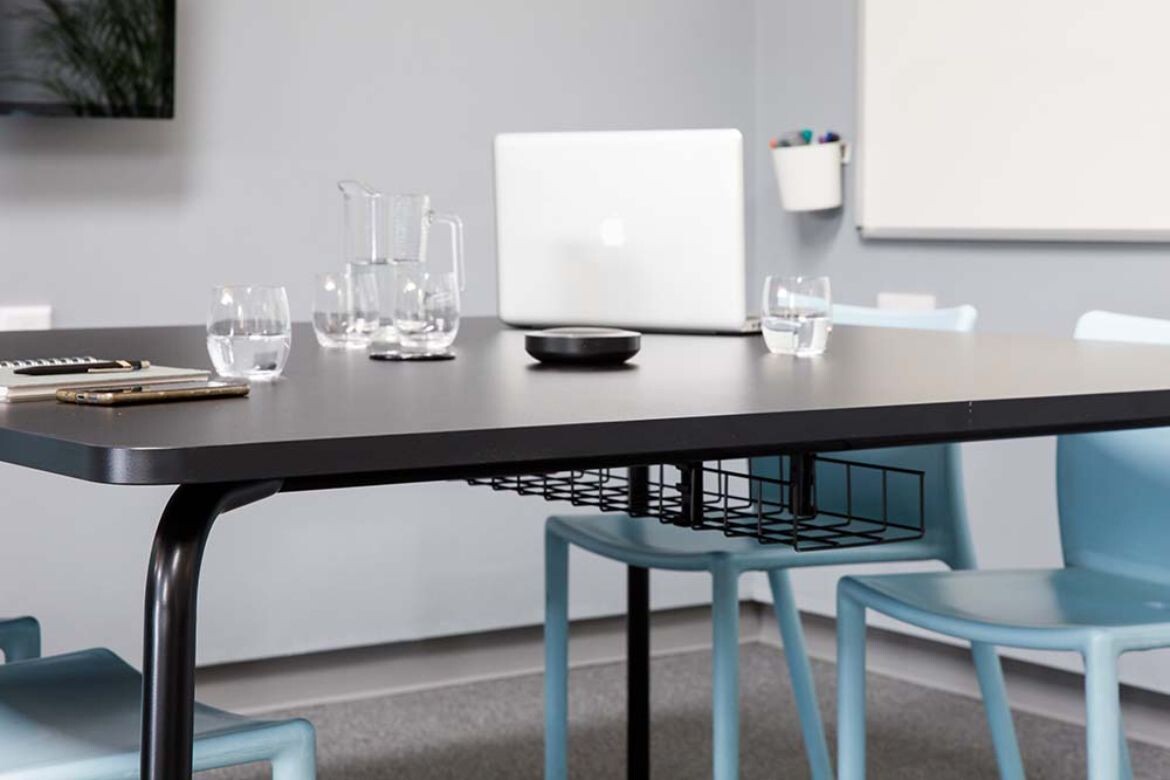
Perhaps the defining design feature of Venue is the modular frame. Indeed, the entire range is made from just three components – interlocking tubular steel members act simultaneously as table legs, horizontal frame and bracing, allowing for different configurations. The actual tabletop provides, of course, the finishing touch.

Jenkins emphasises the clarity of the project and the sense in which the process strips back some of the unnecessarily complicated layers of product design: “The first question was to ask if there is a different way to design a table,” he says. “This led to a second question – are complex assemblies and large inventories of tool parts valued or necessary?”
It’s a refreshing approach in an era that too often conflates complexity with virtuosity. Jenkins is also keen to emphasise how this kind of minimal, modular thinking overlaps with sustainability concerns.
Related: Reporting from Orgatec Cologne
“We’ve tried to eliminate anything that is unnecessary, superfluous or indulgent,” explains Jenkins. “The basic principle of Venue is that it is simple, adaptable and efficient.”
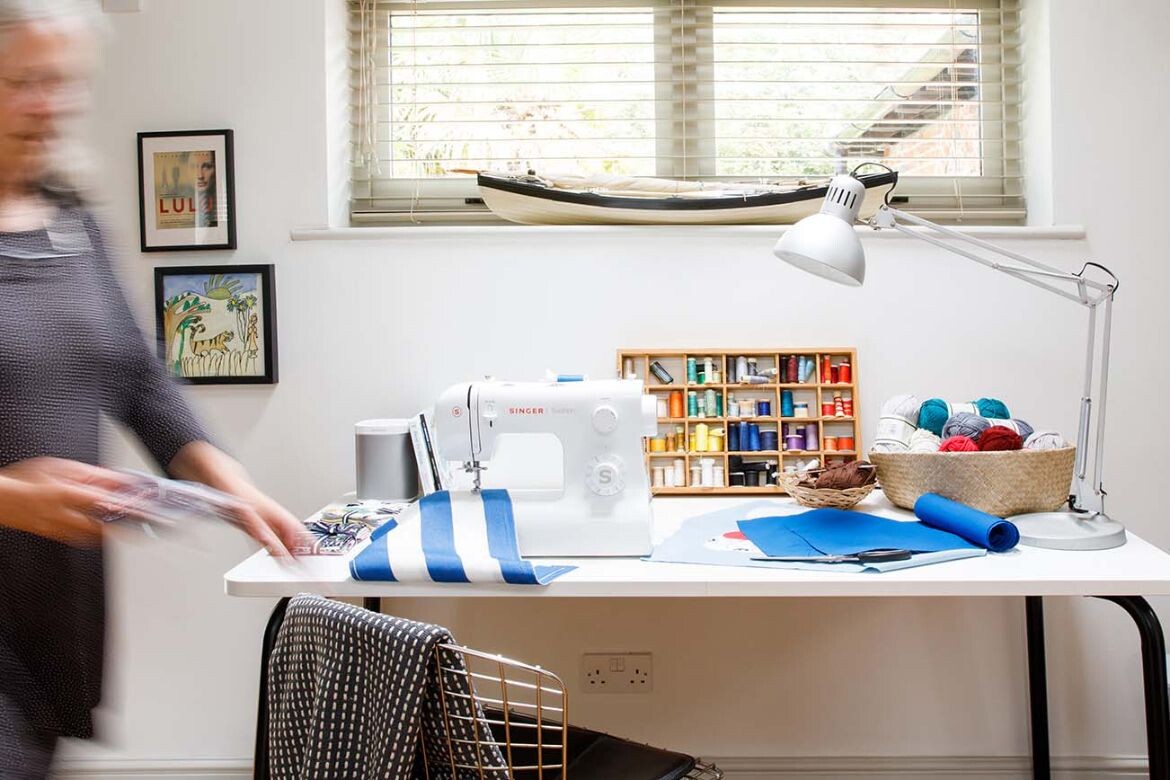
Venue has been designed with all kinds of settings in mind, from workplace to domestic. This versatility is achievable because – like all good modular design – it doesn’t restrict choice or limit the product to a single expression. For example, different table heights are available (72cm for seated and 105cm for standing) and the same tabletops – which also come in more or less rounded shapes – fit on to both. Meanwhile, in terms of colour, even more variation is available.

Having previously worked as director at a prominent London agency, Jenkins established Broome Jenkins two decades ago and has collaborated with prestigious global brands in that time. However, the connection with TCW goes even further back, with Jenkins having first worked with TCW director, Kasim Ali-Khan, in London in the 1980s. In an anecdote that speaks to the importance of established reputations and international events in the design community, the pair recently met again at Orgatec and it was there that the idea for the current collaboration was born.

Kasim Ali-Khan, owner of TCW, recalls the encounter: “The reason I travel selflessly to international events is to have these serendipitous moments, meetings of chance and develop opportunities to bring to market products like Venue that have a great story and benefit the ESD piece.”
Jenkins adds: “Tables are universally practical – they define a setting.” Again speaking with a clarity that hints at the aesthetic itself, he continues: “I think where we need to get to with design is to be really honest and to avoid indulgence. We decided that what we wanted to do with this project was to scope something out that would be a complete project from end to end.”
TCW
t-c-w.com.au
Broome Jenkins
broomejenkins.com




We think you might also like this story on the interiors at Sydney’s Allianz Stadium.