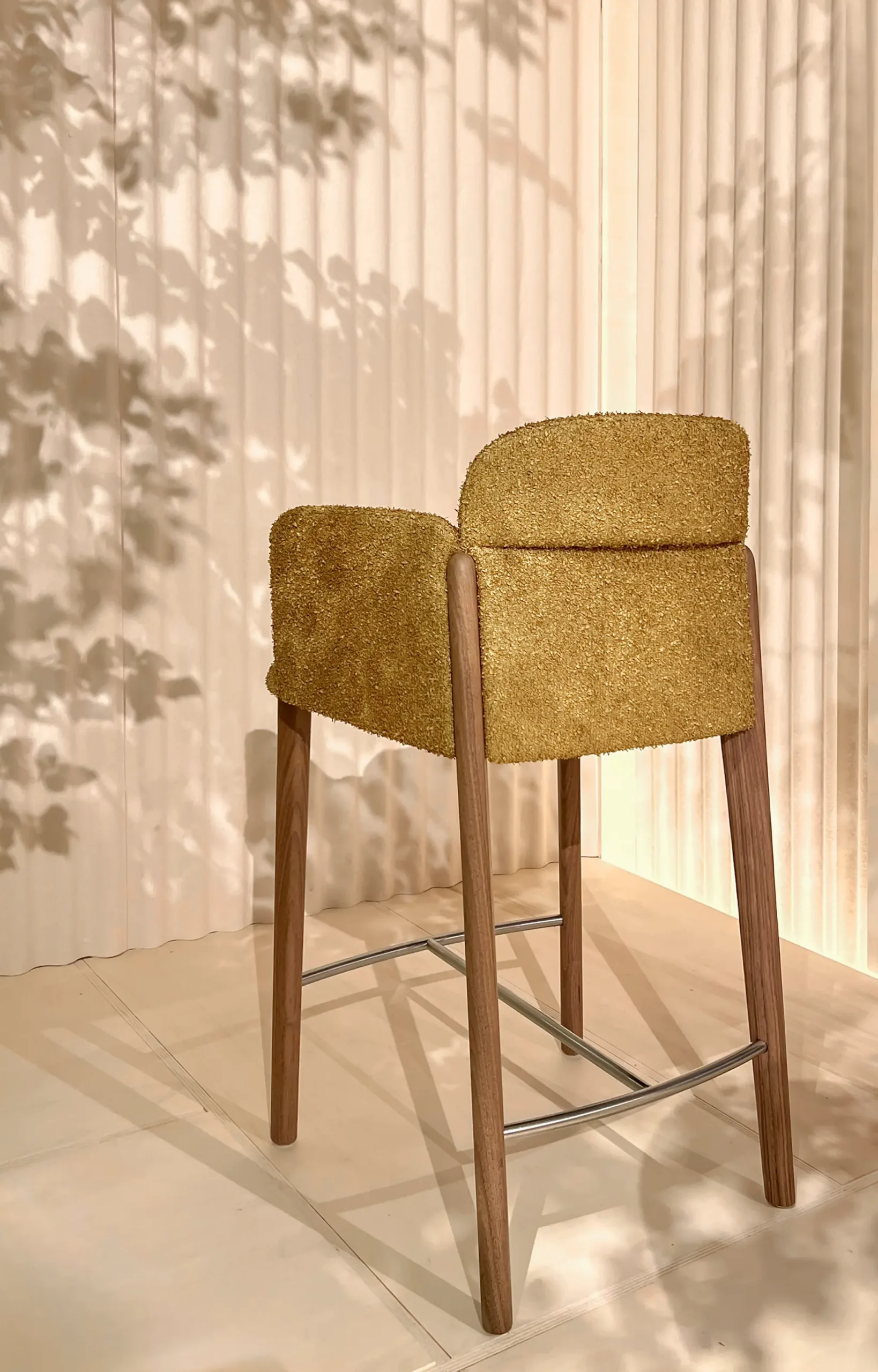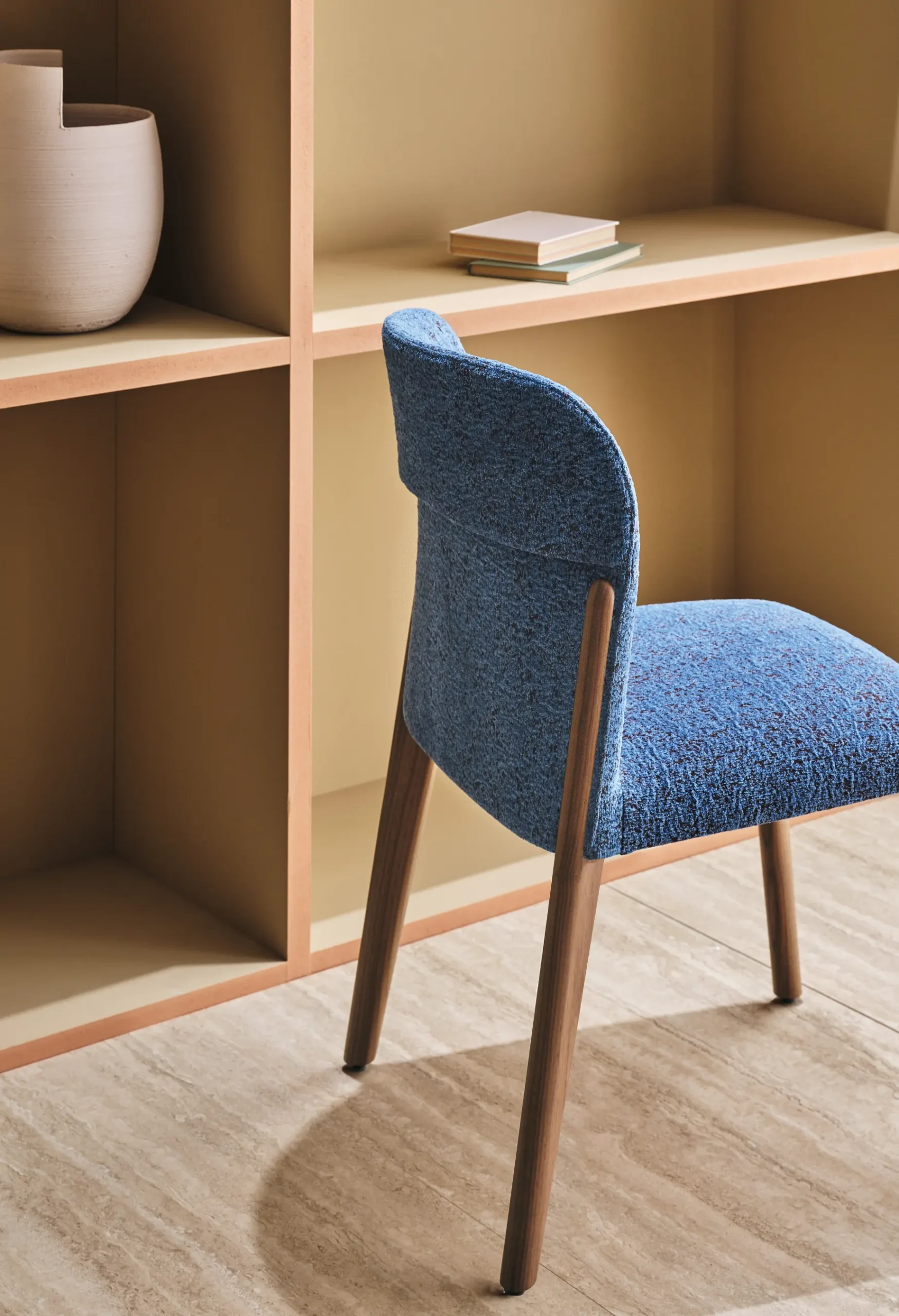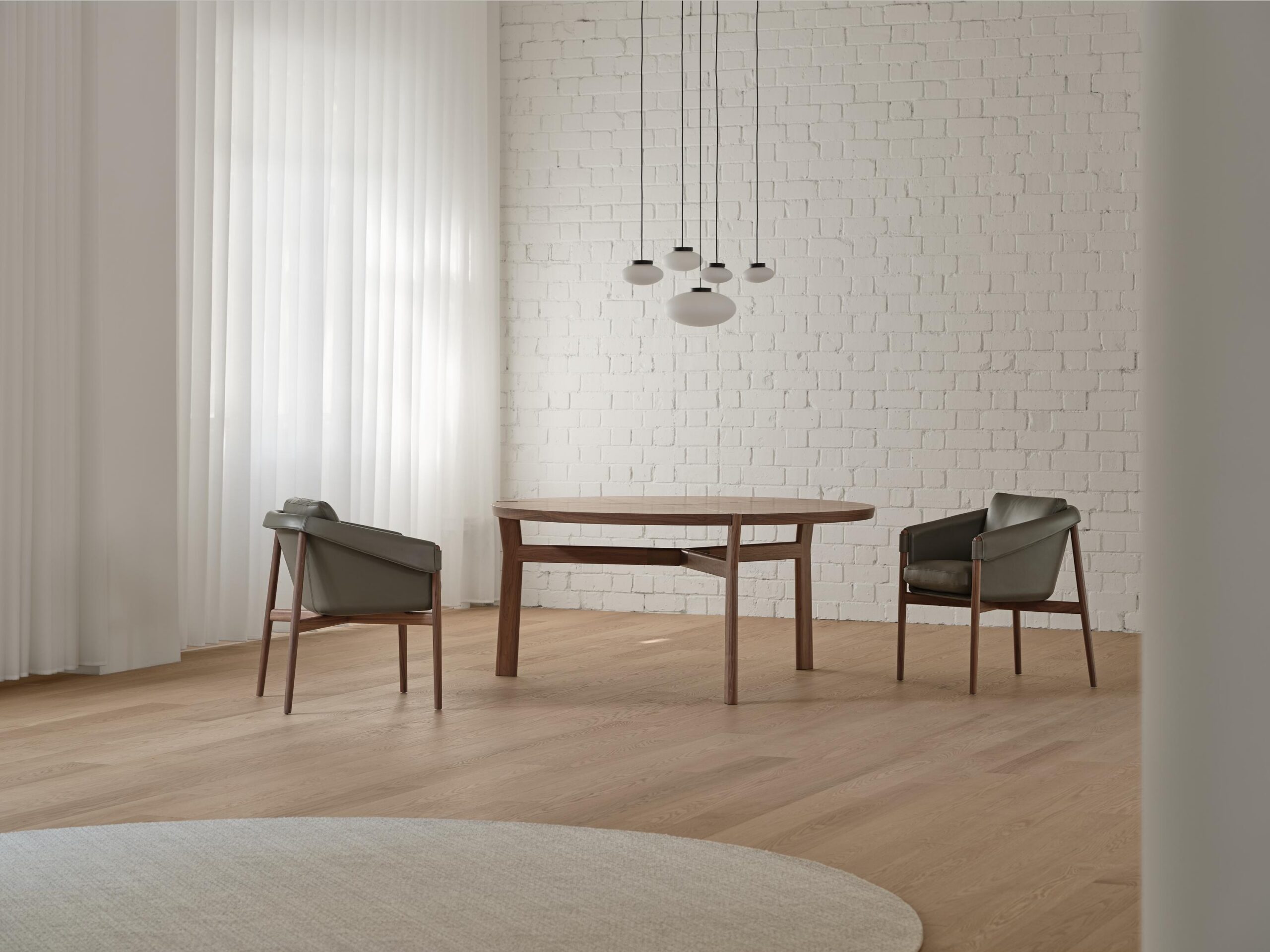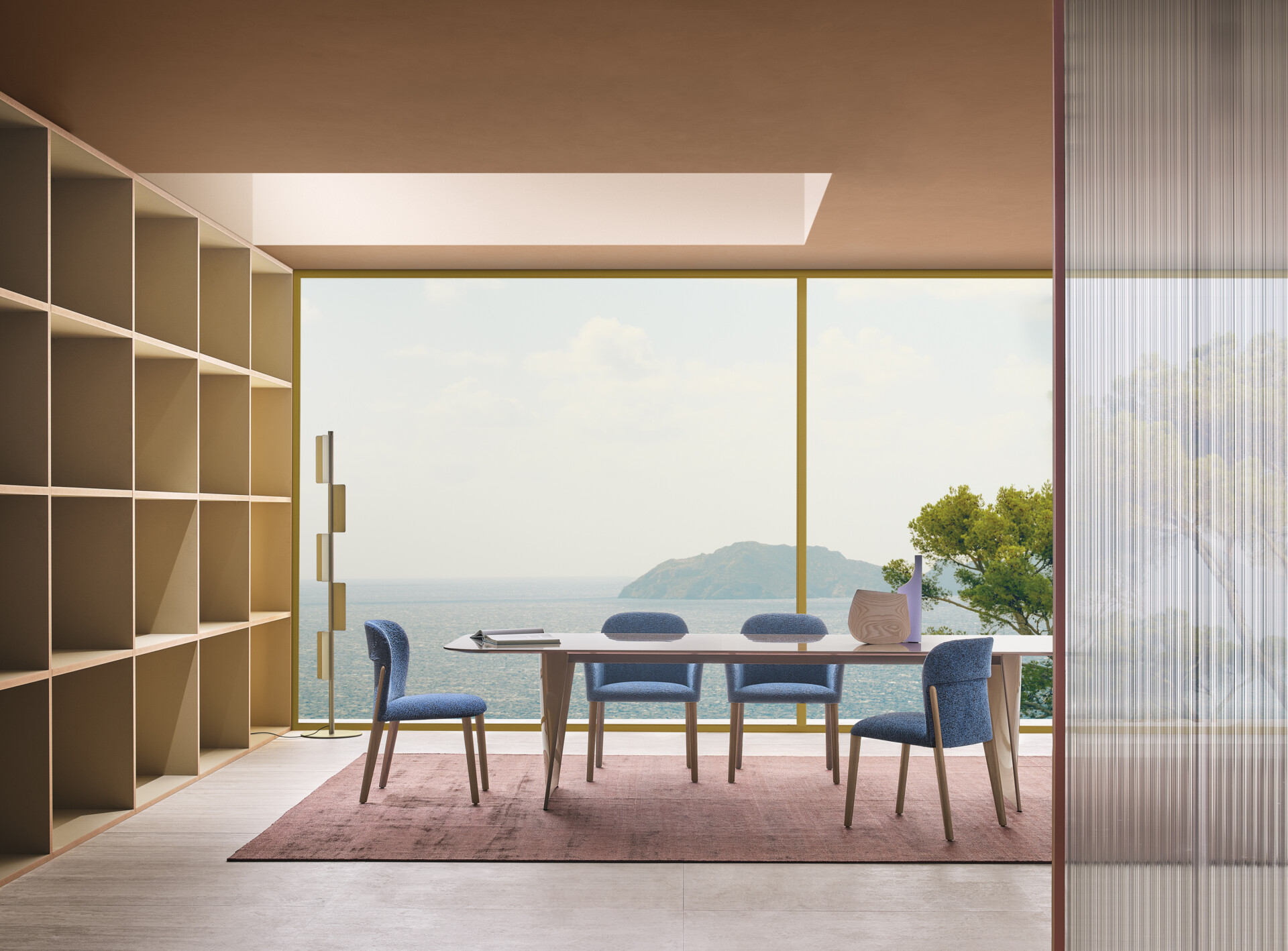
Both the chair and barstool recall the distinctive features of the Opale armchair, where elegance and comfort engage in a thoughtful and balanced dialogue. “We have returned to our first love with this collection. More than ten years after Ester, we have imagined a new seat where elegance and comfort engage in a thoughtful and balanced dialogue,” says the designer Patrick Jouin of the original Opale armchair, designed for Pedrali, at its Salone presentation in 2025.
Continuing Jouin’s fluid design language, the Opale chair and barstool are characterised by soft, organic shapes in which every line is conceived to ensure continuity and aesthetic harmony. The solid ash wood or walnut legs integrate between the backrest and armrests, forming a subtle joint that defines the profile without interrupting the continuity of line. “The seat is not only an upholstered shell put on four legs. The wood is making a protection for the upholstery,” says Jouin.
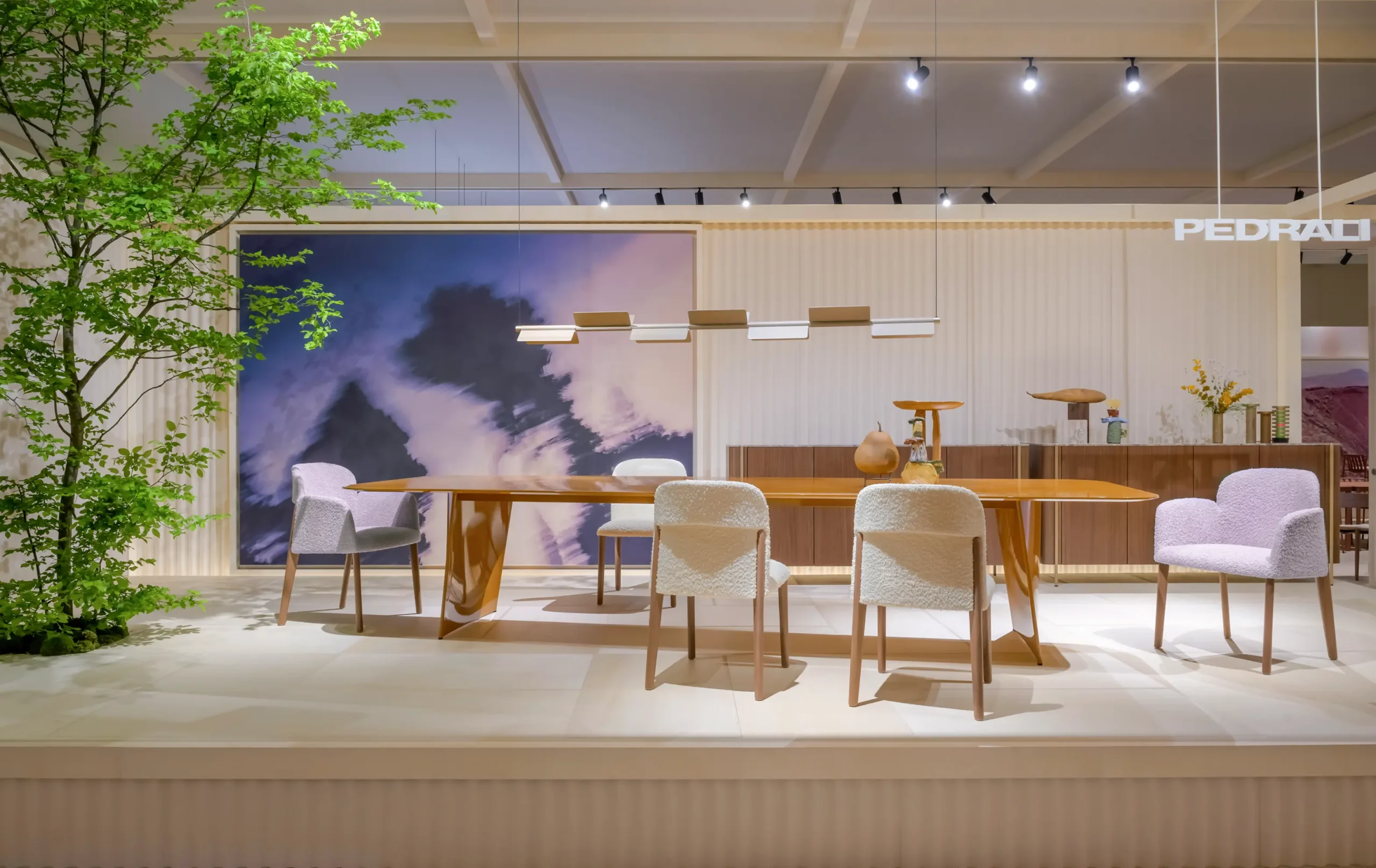
Lightweight and easy to handle, Opale is the perfect solution for elegant residential and hospitality spaces. With the introduction of the chair and barstool, spaces can be coherently structured through alternating typologies and playing with heights and rhythms, while maintaining a shared identity. With each, the oval section gradually tapers downwards into a round, slender shape, adding a sense of lightness.
Thirteen years after the debut collaboration between Pedrali and Jouin (starting with the Ester collection) the Opale range marks the evolution of a shared vision that combines comfort, sophistication and technological innovation. The seat, for example, offers outstanding comfort thanks to the elastic belts, while a functional handle is integrated into the rear of the backrest, so that it blends into the chair’s silhouette, enhancing its three -dimensional look, while providing an easy lift. Describing the design process, Jouin explains: “When I design a chair, every time I will think first about the gesture. I know there is a very important moment and it’s when a guest arrives and waiter is moving the chair. And I know it’s a very delicate moment, and that is where the project begins. The chair has to be something which is easy to move, the gesture needs to be natural and elegant. So, in the shape of Opale there is a very discreet handle, that adds volume to the backrest.” The result is a light, practical and elegant armchair – ideal for refined, welcoming interiors where a polished and distinctive solution is required.
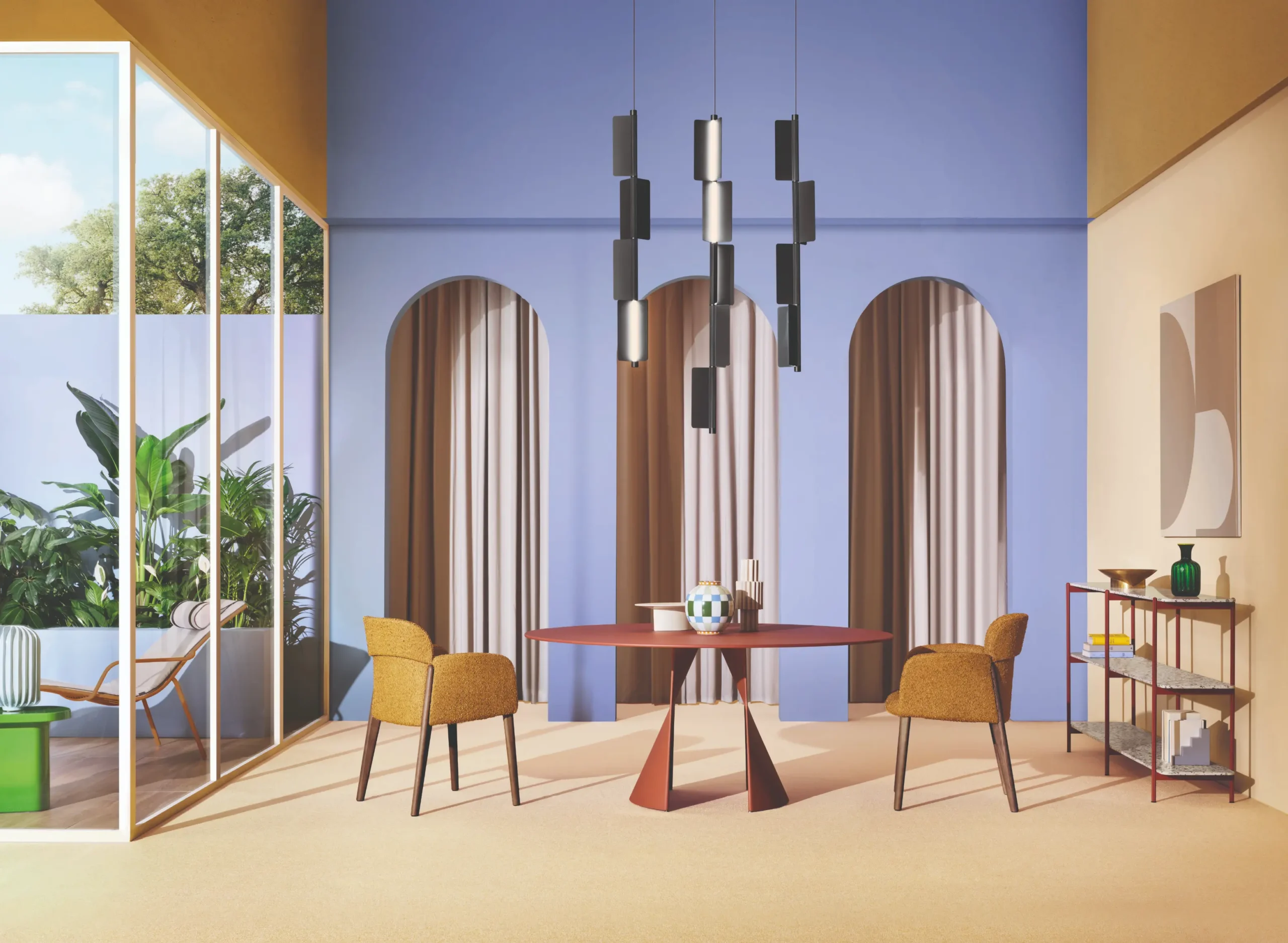
In expanding the Opale range with the introduction of the chair and barstool, spaces can be coherently structured through alternating typologies and playing with heights and rhythms, while maintaining a shared identity. Moreover, the elegance of the Opale armchair is clearly articulated in the chair and barstool. The junction of the leg, armrest and backrest, for example, forms a subtle joint that defines the core of the chair’s silhouette. While celebrating its materiality. “The wood is a warm, natural material, it’s the future. In Opale collection, the rear legs go very high on the chair, becoming decorative elements that merge with the upholstery. Hard and soft together and so the silhouette is telling you comfort, but also elegance and protection at the same time,” says Jouin.
As a 100 per cent made in Italy company, Pedrali is quite rightly proud of its commitment to excellence in production. The whole Opale range continues this tradition with meticulous attention to detail, where each line ensures continuity and aesthetic harmony.