Maarten Gielen, Tristan Boniver, Lionel Devlieger, Michael Ghyoot, Benjamin Lasserre and Melanie Tamm are Rotor, a Belgian architect and design collective exploring ideas of waste, the processes of production and the use and lifespan of materials.
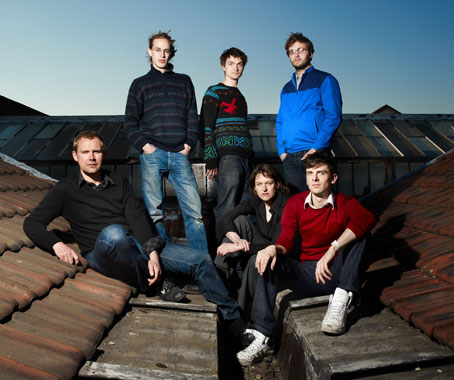
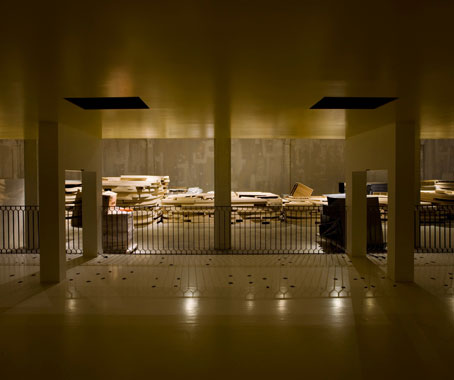
Their recent installation at the Fondazione Prada on Via Fogazzaro in Milan featured the structural components from fashion house Prada’s past runway shows.
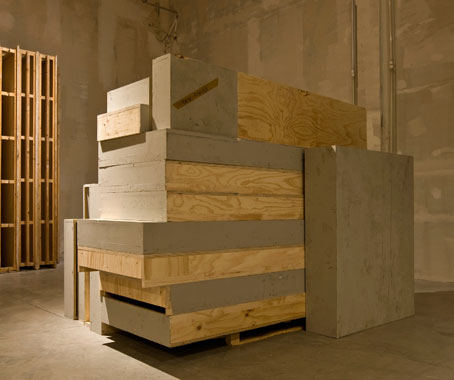
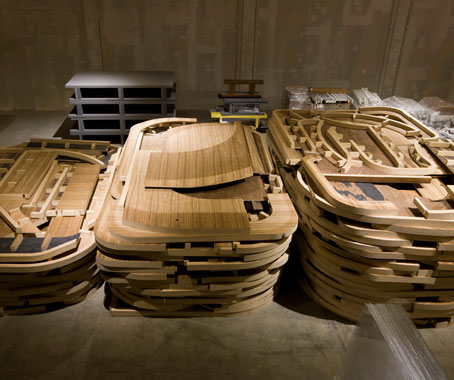
Deconstructed, reorganised and put on display, these discarded materials were returned to the space where they had first been used, this time the focus of the show rather than just props.
These otherwise waste products that were probably overlooked in their previous appearance are brought back to life and put on full display. They evoke the memories of past Prada shows and all the actors involved in making the shows possible.
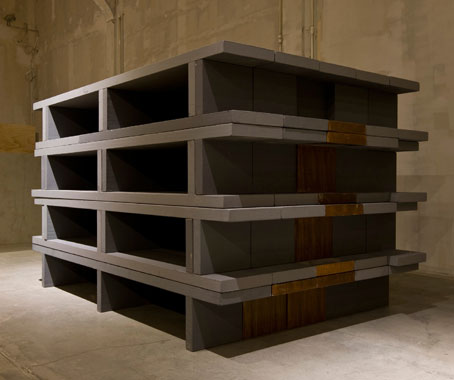
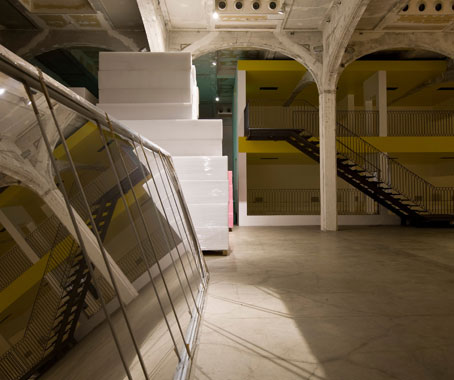
Each piece represents an idea that was made material, used once and discarded.
Ex Limbo’s commentary on material resources, waste and reuse strategies, manifested in the collective’s physical work, is developed through exhaustive research and exploration.
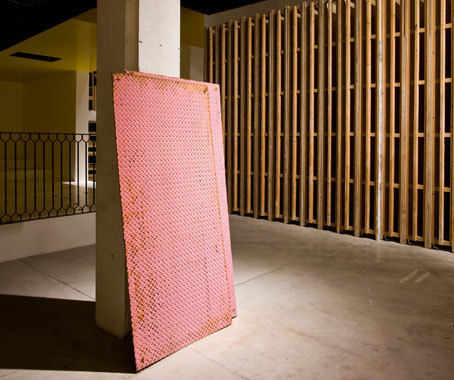
The research often leads to fascinating discoveries about the origin and lifespan of products.
“We were startled recently when researching a brand new product,” said Rotor’s Lionel Devlieger when asked about surprises and twists that come up in the research process.
“In Belgium, we discovered, ingredients as diverse and unexpected as dead chicken, contaminated oils, dredging slib and fake bank notes can enter the composition of cement. Not bad, don’t you think?”
Rotor’s next project is an exhibition of the work of architectural firm OMA at London’s The Barbican.
“We were invited by OMA to act as guest curators for this important overview of OMA’s work,” said the group.
They’ve been given unprecedented access to the firm’s archives and daily practice, collating their findings from a range of materials, relics, documentation, imagery and models to glean a fresh perspective on OMA’s projects and conceptual work.
“Our ambition is to make a portrait of OMA accepting its contradictions. What we try to do is reach beyond polemics to create a space where nuance is possible.”
Rotor
rotordb.org