The home of architecture and design in the Asia-Pacific
Get the latest design news direct to your inbox!

Get the latest design news direct to your inbox!
Nick Gentry explores issues of waste culture and identity with his floppy disk based artwork, writes Lisa Kappel.
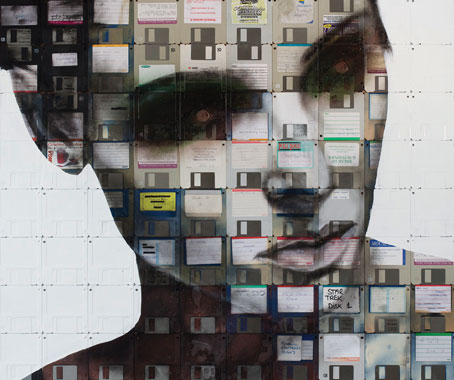
June 15th, 2011
UK artist Nick Gentry belongs to a generation that observed technology advance and then be deemed obsolete at lightning speed. His work speaks volumes of the way this process impacts on society.
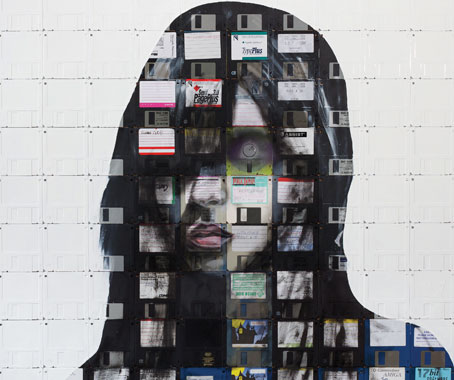
Creating striking portraits on canvases constructed entirely of floppy disks, Gentry comments on the evolution of technology, waste culture and identities eternally locked within his materials.
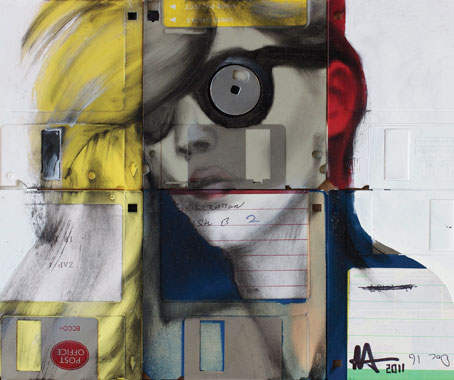
“Sociological changes are taking place all the time and technology is coming to have an ever-increasing prominence in this,” Gentry explains. “With the introduction of the internet we are now entering a crucial tipping point in how people interact with one another.”
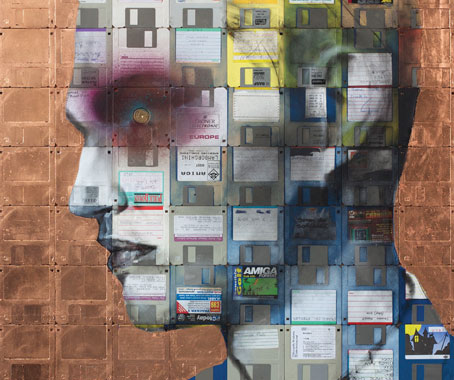
Likening floppy disks to “discarded digital fossils of peoples’ lives,” Gentry’s art pushes one to question what comes next in the cycle and how internet culture will influence human existence.
His work has already been exhibited in the UK, USA and Europe where it sparks questions of identity and society’s shift away from real world objects and towards lifestyles largely dependent on intangible data files.
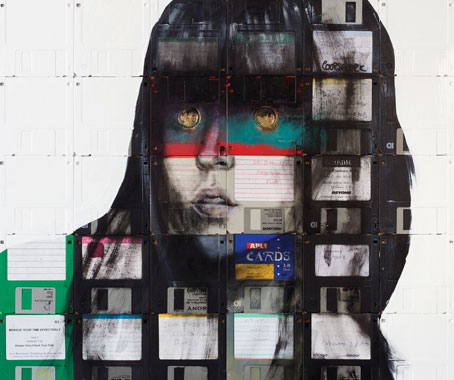
Adding further relevance to his message, Gentry prefers to use donated floppy disks.
To the artist, the disks’ conditions and the handwriting on their labels generate ideas as to their history and what kind of information they hold, inspiring the entire creative process.
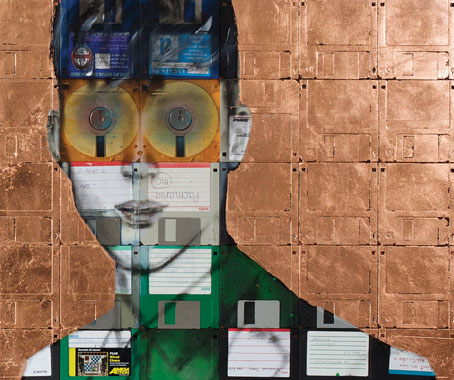
With a book of his work (the aptly titled Artefacts) recently published, a solo show set for August and exhibitions planned in Miami and Belgium next year, Gentry’s outdated materials are sure to leave a permanent mark on the world.
Nick Gentry
nickgentry.co.uk
INDESIGN is on instagram
Follow @indesignlive
A searchable and comprehensive guide for specifying leading products and their suppliers
Keep up to date with the latest and greatest from our industry BFF's!
The internet never sleeps! Here's the stuff you might have missed