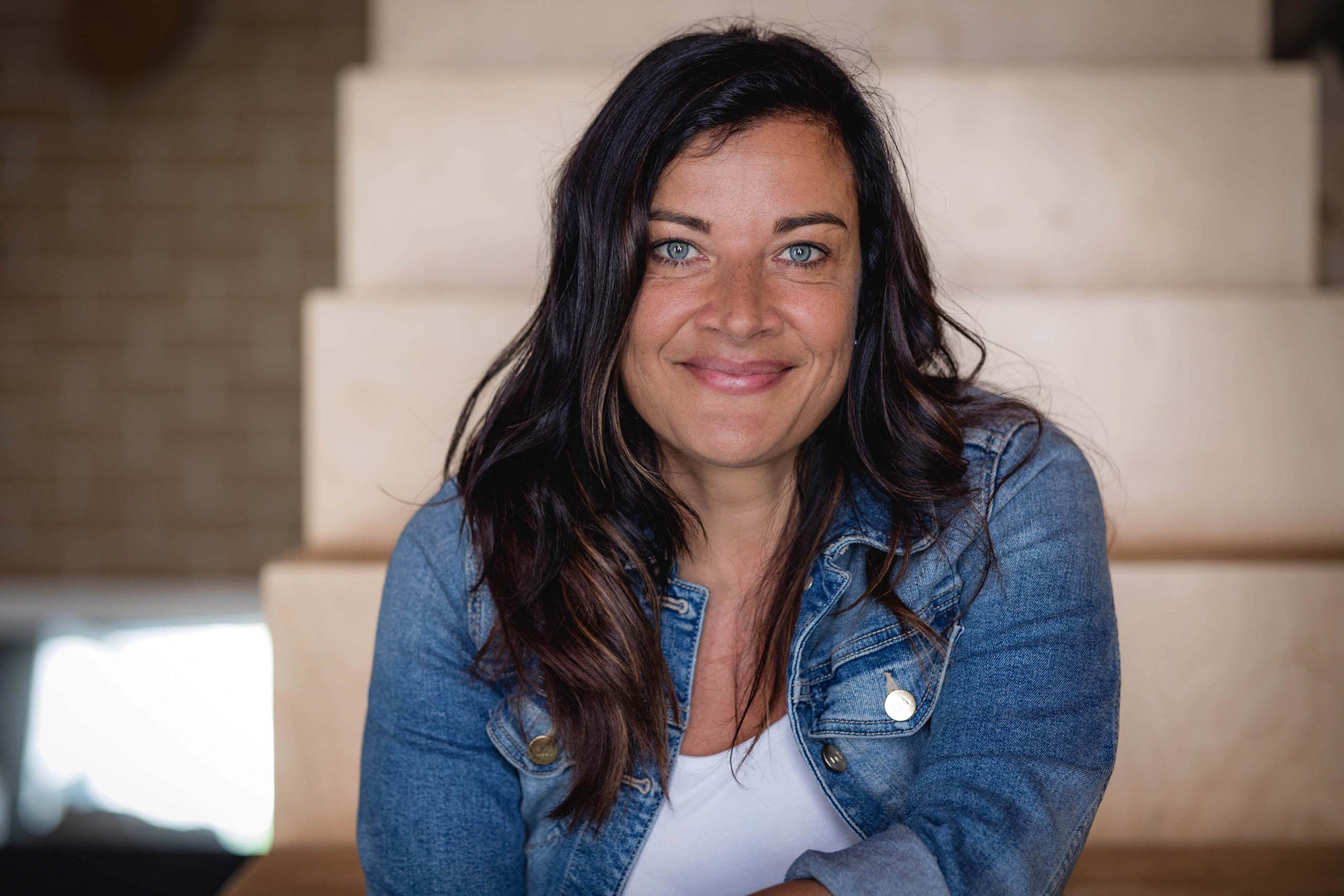
On an unseasonably cool day in spring, The Studio* Collaborative office provides welcome respite from the elements. Nestled in a five-storey converted warehouse in Sydney’s Surry Hills, the space is warmed by morning light amplified by whitewashed walls and timber floors. It’s sunny but understated – much like Melinda Huuk, the practice’s founder and director of design and strategy. “We don’t feel the need for this to scream,” Huuk explains. “We’d rather it just be a space where people can come and feel comfortable.”
People centricity has long been a focus for Huuk who, after 20 years, stepped away from an associate role at Geyer to start The Studio* Collaborative in 2017. As for the reasons for her transition, she cites a desire for a more hands-on role and freedom from the organisational rubric of a large firm; as the head of a team, she found her time divided between design and administrative tasks. “I found coming in, setting up projects, and giving creative direction but not seeing the project through myself very unrewarding,” she says. “The smaller model means we can come in and see the relationships and dreams that we’ve built with clients through from beginning to end.”

At The Studio* Collaborative, Huuk heads up a tight-knit team that has spent the past year working with clients including Westpac, Apple, and THE ICONIC. It’s a big win for Huuk, for whom The Studio* Collaborative is her first foray into business. “It was a bit of a baptism of fire, really. My learning curve has been steep and I’m still on it,” she laughs, quickly adding that it’s been worth it, saying: “I don’t know why I waited so long to do it, to be honest.”
.
“The smaller model means we can come in and see the relationships and dreams that we’ve built with clients through from beginning to end.” – Melinda Huuk
.
Still, she’s grateful for the experience afforded by her prior life at Geyer, and reflects that it has shaped the way she still designs today. Hulk insists that while her environment has changed – and the shift into the pilot’s seat for every project is enormous – little else has changed. “You start to evolve a more efficient way of doing things, but I don’t think the way that I design has changed,” she muses.
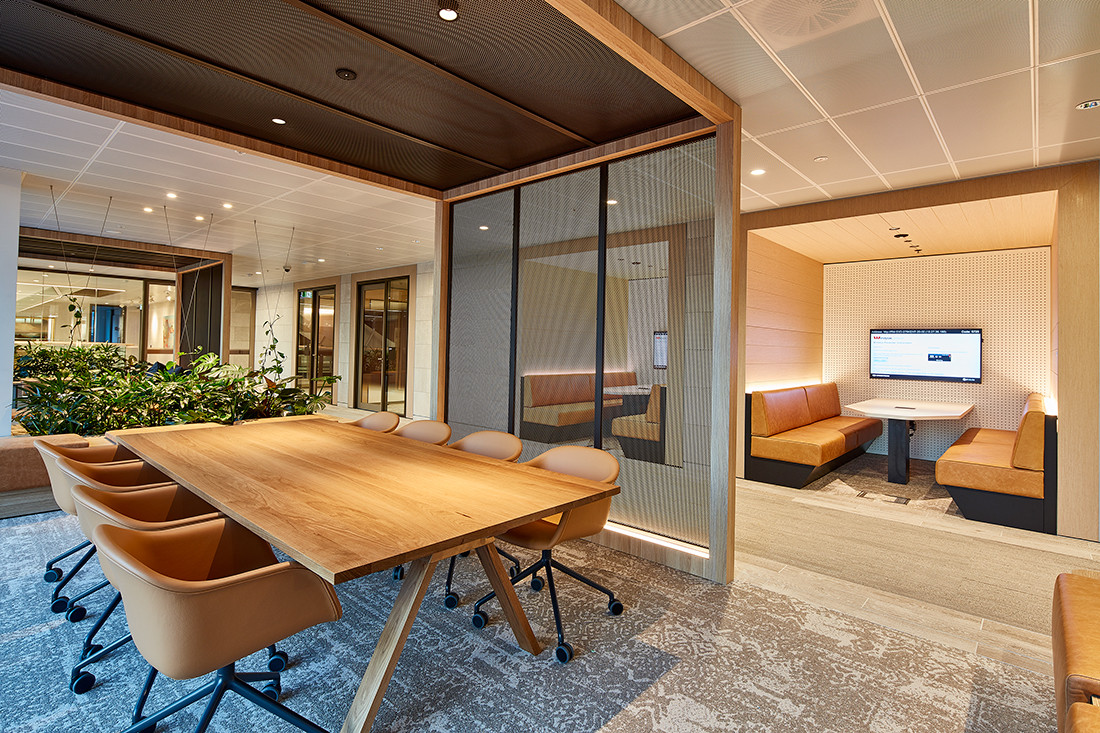
Positing that relationship-building between peers and prospective clients alike is more crucial than ever, Huuk notes that procuring work has required a combination of drawing on existing connections and pitching for projects. She admits: “We’ve noticed that when we go out cold and don’t have somebody fighting for us it’s a lot harder. I want to start diversifying so that we’re not always drawing on our old contacts – I’d like our income streams to come from different places than in the past.”
Which is not to say that she’s had enough of corporate projects. “People often think that corporate clients are boring,” Huuk observes. “But I find them absolutely fascinating because you’ve got such diversity of people trying to come together.” She’s particularly intrigued by the evolution of the workplace into a social space in its own right. “People are drawn to community and connections. Spatial cues can help with networking and building different little ecosystems, and that’s something I find fascinating.”
.
“I want to start diversifying so that we’re not always drawing on our old contacts.” – Melinda Huuk
.
For the recently completed Westpac Executive Zone and Project Hub, The Studio* Collaborative looked to engender a culture of accessibility, connectivity and hyper-collaboration through openable offices and façades (to allow for varying levels of permeability), informal meeting spaces, dock in offices and team huddles. “The design embraces an approachable vernacular that connects people. A tone that is conversational, modern and expert,” she notes.
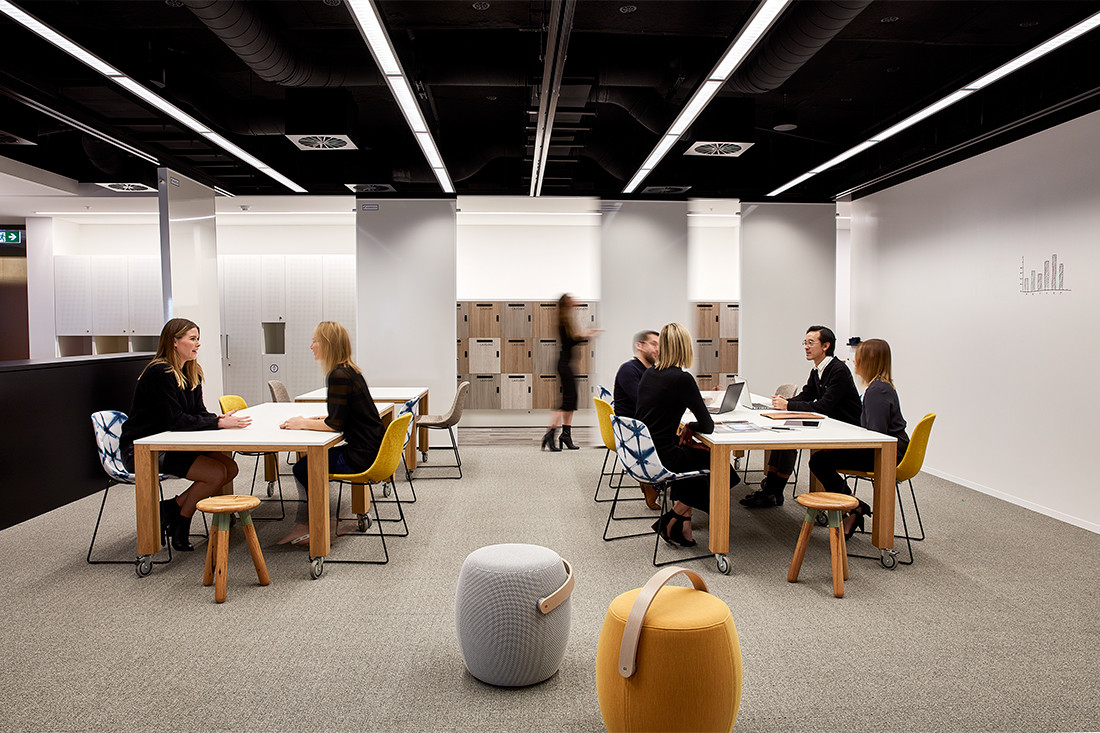
To ensure they’re always hitting the right cues, The Studio* Collaborative also holds workshops with clients at the early stages of every project to tighten the brief and find the correct angle. For Westpac, Huuk and team undertook numerous workshops with the executive team, including one-on-ones with the CEO, as well as individual executives in a discovery space. “This enabled them to visualise a new way of working and personalise their ‘kit’ to align with their teams’ work styles,” notes Huuk.
.
“I don’t think there’s a ‘work me’ and an ‘at-home me’.” – Melinda Huuk
.
Collaborative in name and nature, the practice also works with experts outside the realm of design – including strategists and culture specialists – to fully understand the ways in which space can influence people.

As her practice continues to develop, Huuk is not only optimistic for the future but also more driven than ever. “You’ve got to have that passion,” she says. “I don’t think there’s a ‘work me’ and an ‘at-home me’: it never really stops. And that’s exciting.”
Portrait photography by Charles Dennington. Project photography by Steve Brown.
Melinda Huuk was a speaker at the FRONT Forum in 2018, discover who will be joining us at FRONT 2019.